Results by title
1787 books match the query 'Literary Collections' and 28 start with n

Naming the Dawn
Abdourahman A. Waberi
Seagull Books, 2018
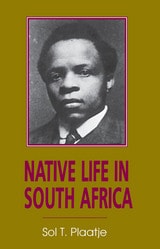
Native Life In South Africa
Before and Since the European War and the Boer RebellionSol T. Plaatje
Ohio University Press, 1991
First published in 1916 and one of South Africa’s great political books, Native Life in South Africa was first and foremost a response to the Native’s Land Act of 1913, and was written by one of the most gifted and influential writers and journalists of his generation. Sol T. Plaatje provides an account of the origins of this crucially important piece of legislation and a devastating description of its immediate effects.

Native Voices
Indigenous American Poetry, Craft, and ConversationsEdited by CMarie Fuhrman and Dean Rader
Tupelo Press, 2019
In this groundbreaking anthology of Indigenous poetry and prose, Native poems, stories, and essays are informed with a knowledge of both what has been lost and what is being restored. It offers a diverse collection of stories told by Indigenous writers about themselves, their histories, and their present. It is a celebration of culture and the possibilities of language.
Featuring forty-four poets, including Ishmael Hope, Bojan Louis, Ruby Murray, Simon Ortiz, Leslie Marmon Silko, Luci Tapahonso, Joy Harjo, dg okpik, Sherwin Bitsui, Heid E. Erdrich, Layli Long Soldier, and Orlando White.
Original influence essays by Diane Glancy on Lorca, Chrystos on Audre Lorde, Louise Erdrich on Elizabeth Bishop, LeAnne Howe on W. D. Snodgrass, Allison Hedge Coke on Delmore Schwartz, Suzanne Rancourt on Ai, and M. L. Smoker on Richard Hugo, among others.
And, a selection of resonant work chosen from previous generations of Native artists.
“There really is no better anthology out there that collects indigenous poets publishing from 1960 to the present.” — Dean Rader, co-editor
Natural Questions
Lucius Annaeus Seneca
University of Chicago Press, 2010
Lucius Annaeus Seneca (4 BCE–65 CE) was a Roman Stoic philosopher, dramatist, statesman, and adviser to the emperor Nero, all during the Silver Age of Latin literature. The Complete Works of Lucius Annaeus Seneca is a fresh and compelling series of new English-language translations of his works in seven accessible volumes. Edited by world-renowned classicists Elizabeth Asmis, Shadi Bartsch, and Martha C. Nussbaum, this engaging collection restores Seneca—whose works have been highly praised by modern authors from Desiderius Erasmus to Ralph Waldo Emerson—to his rightful place among the classical writers most widely studied in the humanities.
Written near the end of Seneca’s life, Natural Questions is a work in which Seneca expounds and comments on the natural sciences of his day—rivers and earthquakes, wind and snow, meteors and comets—offering us a valuable look at the ancient scientific mind at work. The modern reader will find fascinating insights into ancient philosophical and scientific approaches to the physical world and also vivid evocations of the grandeur, beauty, and terror of nature.

Nature's Justice
Writings of William O. DouglasJames M. O'Fallon
Oregon State University Press, 2000
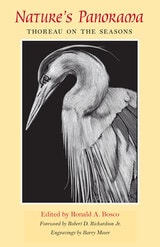
Nature's Panorama
Thoreau on the SeasonsRonald A. Bosco
University of Massachusetts Press, 2005
Sponsored by the Thoreau Society, the brief, handsomely presented books in this series offer the thoughts of a great writer on a variety of topics, some that we readily associate with him, some that may be surprising. Each volume includes selections from his familiar published works as well as from less well known lectures, letters, and journal entries. The books include original engravings by renowned illustrator and book artist Barry Moser.
New Chicana/Chicano Writing, Volume 2
Charles M. Tatum
University of Arizona Press, 1992
"A sampling of typically captivating contemporary Chicano literature by established and emerging writers." —El Puente. The Quarterly Newsletter of the Hispanic Culture Foundation
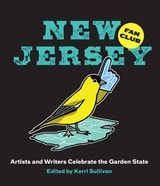
New Jersey Fan Club
Artists and Writers Celebrate the Garden StateKerri Sullivan
Rutgers University Press, 2022
Despite the many jokes and stereotypes about New Jersey and its residents, in reality the state is a wildly diverse place, home to a vast variety of landscapes, cultures, and people. There is no singular New Jersey experience, and the stories that its residents have to share about the state will surprise you.
New Jersey Fan Club: Artists and Writers Celebrate the Garden State is an eclectic anthology featuring personal essays, interviews, and comics from a broad group of established and emerging writers and artists who have something to say about New Jersey. It offers a multifaceted look at the state’s history and significance, told through narrative nonfiction, photographs, and illustrations.
New Jersey Fan Club is edited by Kerri Sullivan, founder of the popular Instagram account Jersey Collective (@jerseycollective), which features weekly takeovers by different New Jerseyans. This book functions the same way: it gives dozens of different contributors the chance to share what New Jersey looks like to them. The book is an exploration of how the same locale can shape people in different ways, and it will inspire readers to look at the Garden State with fresh eyes and appreciate its bounty of beautiful places and vibrant spaces.
New Letters to the Tatler and Spectator
Edited by Richmond P. Bond
University of Texas Press, 1959
Ninety-six letters to the Tatler and the Spectator, representing what is probably the largest extant body of unpublished material relating directly to the two journals, appeared for the first time in print in this book.
The original letters were not published in the Tatler or the Spectator, but they were preserved by the editors and eventually found their way into the Marlborough and the Tickell collections. They have been prepared for publication and edited, with notes and an introduction, by an authority in the field of early periodicals.
The letters will be of especial interest to students of early eighteenth-century England, for few literary forms more clearly reflect the times in which they are written than the letter, particularly the letter to the editor. A wide range of writers is represented—the inarticulate and the witty, the serving maid and the gentleman. Subject matter is equally diverse, including such topics as women's petticoats, free thinking, the state lottery, the nuisance of a smoking wife, cock-throwing, and Platonic love.
Why the letters were not published in the Tatler or the Spectator is a matter for conjecture. Some of them were apparently used by Addison or Steele as topics for essays. Occasionally a letter was received or rewritten by the editors and printed in an altered form. Whatever the reason for their survival, these letters will be of value to students of language and literary journalism, social conditions, and popular philosophy.
New Mexico Poetry Anthology 2023
Levi Romero
Museum of New Mexico Press, 2023
Best Poetry Books of 2023, Book Riot
“Poetry of Place: A selection of poems from the New Mexico Poetry Anthology 2023 defines the essence of the Land of Enchantment.” —New Mexico Magazine
“Many of the selections are published bilingually in Spanish-English translation and other languages including indigenous tongues and Yiddish are to be found in these pages. It’s all here: Farolitos. Sephardic Jewish rituals. Family traditions. Grief. Recovery. Resilience. Adobes. Santa Fe. Albuquerque. Taos. Los Lunas. Espanola. Mesilla. Cities, villages, ranches, farms. The homeless. Asylum-seekers. Outlaws. Dancers. Matanzas. Basketball. Mountains. Llanos. Guns. Syringes. Rattlesnakes. Scorpions. Roadrunners. Sandhill cranes. Coyotes. Cattle. Horses. Babies. Abuelitos. Ghosts. Elders. Gringas. Sunsets …. This grand book could come from nowhere else BUT New Mexico, and, arguably only from the present time, the third decade of this 21st century Southwestern/Norteño soul. It’s that special.”— Bill Nevins, Enchanted Circle
“The poems…can be enjoyed in brief, bite-sized readings or in longer sittings. Read them silently or aloud.”— David Steinberg, Albuquerque Journal
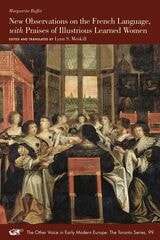
New Observations on the French Language, with Praises of Illustrious Learned Women
Marguerite Buffet
Iter Press, 2023
According to the few historical records that mention Marguerite Buffet, she lived her entire life in seventeenth-century Paris where she taught French to aristocratic women. Buffet’s vivid example of proper language use in New Observations on the French Language offers a rare glimpse into the life, habits, and culture of seventeenth-century France. She describes common errors in contemporary language use and gives examples of correct expressions for speaking and writing all the while encouraging women to aspire to higher levels of intellectual achievement.
In addition, her Praises of Illustrious Learned Women, a catalog of biographies of women who displayed exemplary intellect, wit, and conversation, includes a number of the author’s contemporaries such as Anna Maria van Schurman and Madeleine de Scudéry. Buffet’s collected praises of these women, many of whom were connected to the court of Louis XIV, show her unique position as both a participant in and historian of the intellectual and social world of the French salon.
This volume presents Buffet’s work in its near entirety for the first time in English, bringing to light Buffet’s unique contribution to the centuries-long debate concerning the status of women known as the querelle des femmes.
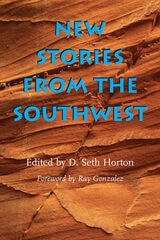
New Stories from the Southwest
D. Seth Horton
Ohio University Press, 2008
The beauty and barrenness of the southwestern landscape naturallylends itself to the art of storytellers. It is a land of heat and dryness, aland of spirits, a land that is misunderstood by those living along thecoasts.
New Stories from the Southwest presents nineteen short stories that appeared in North American periodicals between January and December 2006. Though many of these stories vary by aesthetics, tone, voice, and almost any other craft category one might wish to use, they are nevertheless bound together by at least one factor, which is that the landscape of the region plays a key role in their narratives. They each evoke and explore what it means to exist in thisunique corner of the country.
Selected by editor D. Seth Horton, the former fiction editor for the Sonora Review, from a wide cross-section of journals and magazines, and with a foreword by noted writer Ray Gonzalez, New Stories from the Southwest presents a generous sampling of the best of contemporary fiction situated in this often overlooked area of the country. Swallow Press is particularly pleased to publish this wide-ranging collection of stories from both new and established writers.
Contributors to New Stories from the Southwest are:
- Alan Cheuse
- Matt Clark
- Lorien Crow
- Kathleen De Azvedo
- Alan Elyshevitz
- Marcela Fuentes
- Dennis Fulgoni
- Ray Gonzalez
- Anna Green
- Donald Lucio Hurd
- Toni Jensen
- Charles Kemnitz
- Elmo Lum
- Tom McWhorter
- S. G. Miller
- Peter Rock
- Alicita Rodriguez
- John Tait
- Patrick Tobin
- Valery Varble
New Ways of Looking at Old Texts, VI
Papers of the Renaissance English Text Society 2011-2016Edited by Arthur F. Marotti
Arizona Center for Medieval and Renaissance Studies, 2019
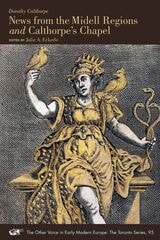
News from the Midell Regions and Calthorpe’s Chapel
Dorothy Calthorpe
Iter Press, 2022
This first print edition of two extant manuscripts by Dorothy Calthorpe (1648–1693) introduces a new seventeenth-century woman writer to the growing canon of early modern female authors. The edition provides transcriptions of the manuscripts and Calthorpe’s will, as well as a hefty apparatus that features a comprehensive introduction to Calthorpe, her family, and her work; a glossary of persons who figured in her writing and her life; and two genealogical charts. Calthorpe’s writings (including both prose and verse and ranging from Petrarchan love poems to roman à clef and devotional verse), and the thoughtfully constructed and illustrated volumes in which her texts appear, demonstrate the rich intellectual life of a previously unknown female writer and provide a compelling example of Restoration manuscript production.
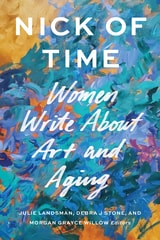
Nick of Time
Women Write about Art and AgingJulie Landsman
University of Minnesota Press, 2026
A bold, collective portrait of the sustaining force of art while aging
Nick of Time celebrates the artistic community of the Twin Cities and the wisdom that comes with age. Bringing together the voices of women creatives over the age of sixty-five, this collection is as varied as the artists’ vocations, spanning from narrative prose to poetry, essay, monologue, letters, historical reflection, and more. As the contributors examine their lived experiences, hopes and regrets, joy and grief while traversing their last decades of life, they serve as a guiding beacon for others navigating the intersection of creativity and aging—as well as a ballast against its inevitable challenges. They write with refreshing honesty about feeling invisible in older age, receiving late recognition, or being dismissed as hair turns gray and wrinkles appear. Their openness provides strength and support for us all.
A beautiful collection of pieces from established and emerging writers, painters, singers, photographers, musicians, playwrights, dancers, sculptors, and beyond, Nick of Time traces the contours of both the commonalities and the differences that can be found in the creative life of an aging artist. This generous book is a provocative meditation on finding power in age, demonstrating that creativity is an integral part of a full life as well as a lifelong pursuit.
Contributors: Shari Albers, Hend Al-Mansour, Hazel Belvo, Chris Cinque, Venus de Mars, Julia Dinsmore, Mary Moore Easter, Jan Elftmann, Georgia A. Greeley, Kathryn Haddad, Kim Hines, Carolyn Holbrook, Adar Kahin, Deborah Keenan, Amoke Kubat, Fiona McCrae, Teresa Ortiz, Rebecca Pavlenko, Marcie R. Rendon, Joyce Sutphen, Suzanne Thao, JoAnn Verburg, Diane Wilson, Mieko Yamazaki.
Retail e-book files for this title are screen-reader friendly.
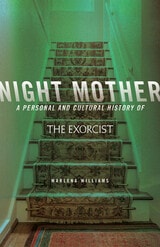
Night Mother
A Personal and Cultural History of The ExorcistMarlena Williams
The Ohio State University Press, 2023
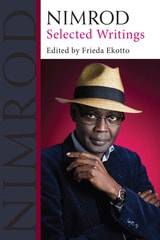
Nimrod
Selected WritingsFrieda Ekotto, editor
University of Michigan Press, 2018
The Chadian writer Nimrod—philosopher, poet, novelist, and essayist—is one of the most dynamic and vital voices in contemporary African literature and thought. Yet little of Nimrod’s writing has been translated into English until now. Introductory material by Frieda Ekotto provides context for Nimrod’s work and demonstrates the urgency of making it available beyond Francophone Africa to a broader global audience.
At the heart of this volume are Nimrod’s essays on Léopold Sédar Senghor, a key figure in the literary and aesthetic Négritude movement of the 1930s and president of Senegal from 1945 through 1980. Widely dismissed in recent decades as problematically essentialist, Senghorian Negritude articulated notions of “blackness” as a way of transcending deep divisions across a Black Diaspora under French colonial rule. Nimrod offers a nuanced reading of Senghor, drawing out the full complexities of Senghor’s philosophy and reevaluating how race and colonialism function in a French-speaking space.
Also included in this volume are Nimrod’s essays on literature from the 2008 collection, The New French Matter (La nouvelle chose française). Representing his prose fiction is his 2010 work, Rivers’ Gold (L’or des rivières). Also featured are some of Nimrod’s best-loved poems, in both English translation and the original French.
The works selected and translated for this volume showcase Nimrod’s versatility, his intellectual liveliness, and his exploration of questions of aesthetics in African literature, philosophy, and linguistics. Nimrod: Selected Writings marks a significant contribution toward engaging a broader audience with one of the vital voices of our time. This book will be essential reading for Anglophone students and scholars of African philosophy, literature, poetry, and critical theory, and will offer a welcome introduction to Nimrod for general readers of contemporary international writing.
No Good without Reward
Selected Writings: A Bilingual EditionLiubov Krichevskaya
Iter Press, 2011
—Helena Goscilo
Chair and Professor of Slavic, The Ohio State University
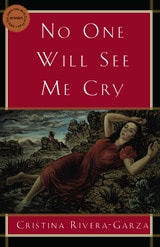
No One Will See Me Cry
Cristina Rivera-Garza
Northwestern University Press, 2003
Winner of the Mexico National Novel Prize, Sor Juana Inés de la Cruz Prize, and IMPACT Prize
Joaquín Buitrago, a photographer in the Castaneda Insane Asylum, believes a patient is a prostitute he knew years earlier. His obsession in confirming Matilde's identity leads him to explore the clinics records, and her tragic history. Joaquín and Matilda begin to tell each other fragmented stories about a past they almost shared, and a future in which they do not believe. Set in 1920s Mexico, this novel is at once an overview of one of the most turbulent times in Mexican history, a love story, and a meditation on the ways in which medical and popular language define insanity. No One Will See Me Cry is a lyrical and startling visitation with the so-called losers of an era as they try to plumb the meaning of their lives.
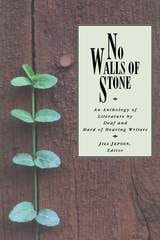
No Walls of Stone
An Anthology of Literature by Deaf and Hard of Hearing WritersJill Jepson
Gallaudet University Press, 1992

Nobody Comes of Age
Essays on the Victorian NovelCatherine Gallagher
University of Chicago Press, 2027
A collection of field-defining essays on the Victorian novel, taking up a fascinating paradox in literary history: why do we care so deeply about fictional characters who don’t really exist?
n Nobody Comes of Age, Catherine Gallagher explores the Victorian novel by examining its most fundamental building block: the fictional character. Gallagher argues that “Nobodies”—nonreferential, yet realistic, invented personae, usually of middling social status—were the very engine of the genre’s development. Having arrived on the fictional scene in the eighteenth century, Nobody came of age during the Victorian era. The novel achieved cultural hegemony, and Victorian novelists explored these characters’ fictionality in tandem with the great intellectual developments of their time. Readers, knowing well that novel personae were not portraits of actual individuals, nevertheless expected them to yield important insights into the social and cultural changes of the age.
Nobody Comes of Age gathers in revised form a selection of Catherine Gallagher’s classic and still influential essays on the Victorian novel. These essays take up topics such as the relationship between fiction and the decline of religious belief in the period, and how novelists worked the tension between characters who seemed typical and plots that were unpredictable. Gallagher expertly navigates across a range of canonical texts, from the ordinary outcomes of George Eliot’s Middlemarch to the archetypal sacrifices in Thomas Hardy’s Tess of the d'Urbervilles. For scholars and students of nineteenth-century British literature, Nobody Comes of Age is an essential companion.
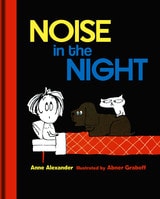
Noise in the Night
Anne Alexander
Bodleian Library Publishing, 2018
Featuring warm and quirky illustrations by Abner Graboff, this is a charming and reassuring tale for any child who is frightened by noises in the night . . . with a delightful twist at the end.
Nomadic Voices of Exile
Feminine Identity in the Francophone Literature of the MaghrebValérie K. Orlando
Ohio University Press, 1999
Contemporary French writing on the Maghreb—that part of Africa above the Sahara—is truly postmodern in scope, the rich product of multifaceted histories promoting the blending of two worlds, two identities, two cultures, and two languages.
Nomadic Voices of Exile demonstrates how that postmodern sentiment has altered perceptions concerning Maghrebian feminine identity since the end of the French-colonial era. The authors discussed here, both those who reside in the Maghreb and those who have had to seek asylum in France, find themselves at the intersection of French and North African viewpoints, exposing a complicated world that must be negotiated and redefined.
In looking at the authors whose writings extend beyond a gender-based dialogue to include such issues as race, politics, religion, and history, Valérie Orlando explores the rich and changing landscape of the literature and the culture, addresses the stereotypes that have defined the past, and navigates the space of the exiled, a space previously at the peripheries of Western discourse.
Nomadic Voices of Exile will be useful to a variety of classrooms—women’s studies, Middle East studies, Francophone literature, Third World women writers—and to anyone interested in postcolonial and postmodern theory and philosophy and the history of the Maghreb through literature.
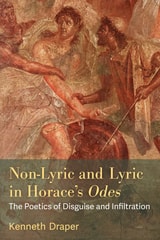
Non-Lyric and Lyric in Horace's Odes
The Poetics of Disguise and InfiltrationKenneth Draper
University of Michigan Press, 2026
Kenneth Draper’s new volume investigates genre, gender, and self-presentation in Horace’s first collection of Odes. It examines how Horace uses non-lyric genres—elegy, epic, invective, and philosophical discourse—to define his lyric project, responding to the rhetorical challenge of writing in the wake of civil war. It shows how Horace employs a “poetics of disguise and infiltration” in his engagement with these other genres. At times, he assimilates his lyric persona to an elegiac one, claiming to share elegy’s effeminacy and disinterest in politics. Similarly, he draws on philosophical discourse to present himself as too modest for heavy political themes. In both cases, he turns to clothing metaphors to identify the slight persona as a disguise that he may assume or discard as needed. Through this disingenuous self-presentation, he disavows interest in the masculine modes of epic and invective. Read as reflections on Horace’s own infiltration of epic territory, the examined scenes give clues about his motivations: focusing on the characters’ self-preservation amid dangers, he reminds readers of the risks and audacity of his project.
North of Patagonia
Johnny Payne
Northwestern University Press, 2001
Not Out of Hate
A Novel of BurmaMa Ma Lay
Ohio University Press, 1991

Notebooks of Elizabeth Cook-Lynn
Elizabeth Cook-Lynn
University of Arizona Press, 2007
Through each example, she challenges the status quo and piques the reader’s awareness of persistent abuses of indigenous communities. The voices that Cook-Lynn brings to the texts are as varied as the genres in which she writes. They are astute and lyrical, fierce and heartbreaking. Through these intonations, she maintains a balance between her roles as a scholar and a poet, a popular teacher and a woman who has experienced deep personal loss.
A unique blend of form and content that traverses time, space, and purpose, this collection is a thoroughly original contribution to modern American Indian literature. Moreover, it presents an alternative narrative of the nation’s history and opens an important window into the political challenges that Natives continue to face.
Notes on Life
Theodore Dreiser
University of Alabama Press, 1974
Exploring human nature, society, and destiny through the lens of American naturalism.
In Notes on Life, Theodore Dreiser—best known for his landmark novels Sister Carrie and An American Tragedy—reveals himself as an incisive thinker grappling with the forces that shape human existence. This compelling collection of essays brings together Dreiser’s reflections on society, ambition, morality, and the often-unseen pressures that guide individual lives. Written during a period of rapid cultural and industrial transformation in the United States, these essays offer a deeply engaged response to the uncertainties and contradictions of modern life.
At the heart of Notes on Life lies Dreiser’s enduring commitment to the principles of literary naturalism: the belief that human behavior is influenced—if not determined—by environment, heredity, and social conditions. Yet these essays go beyond literary theory. They present a searching, often personal inquiry into what it means to live meaningfully in a world shaped by inequality, chance, and desire. Dreiser examines the tension between individual aspiration and societal constraint, probing the psychological and moral dimensions of success, failure, and identity.
What distinguishes this collection is its accessibility and range. Dreiser writes with a directness that invites readers into complex philosophical questions without sacrificing intellectual depth. Whether considering the nature of happiness, the role of material success, or the ethical dilemmas of modern society, he offers insights that remain strikingly relevant. His voice—by turns analytical, reflective, and quietly provocative—bridges the gap between literature and philosophy, making these essays as engaging for general readers as they are valuable for students and scholars.
For those interested in American literature, Notes on Life provides essential context for understanding Dreiser’s fiction and the broader movement of realism and naturalism in the early twentieth century. For contemporary readers, it offers a timeless meditation on the forces that continue to shape human experience: ambition, circumstance, and the search for meaning in an ever-changing world.
Both a work of literary significance and a volume of enduring philosophical reflection, Notes on Life stands as a testament to Dreiser’s intellectual breadth and his unwavering commitment to exploring the complexities of human life.