Results by title
458 books match the query 'Literature' and 8 start with n
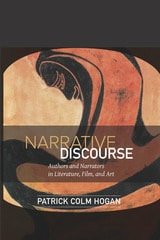
Narrative Discourse
Authors and Narrators in Literature, Film, and ArtPatrick Colm Hogan
The Ohio State University Press, 2013

Narratives of the American West
Literature and HistoryRichard W. Etulain
University of Nevada Press, 2027
Narratives of the American West: Literature and History brings together Richard W. Etulain’s most resonant work—along with newly written essays—to reveal how history and storytelling have continually shaped each other in the making of the West. Part historiographical memoir, part wide‑ranging critical survey, the collection moves from Etulain’s Basque upbringing in eastern Washington to his lifetime of teaching, editing, and writing, showing how personal experience and intellectual inquiry converge on the page.
In the tradition of Elliott West’s The Essential West, Etulain maps the field’s major interpretive turns, from Frederick Jackson Turner to Earl Pomeroy to West’s“Greater Reconstruction,” and demonstrates how literary craft and historical method inform each other. Along the way, he demythologizes the stories of iconic figures, such as Billy the Kid, Calamity Jane, Chief Joseph, and Sacagawea, tracing how cultural memory evolves across novels, films, and archives.
Featuring new essays on Wallace Stegner and Elliott West, alongside revised classics on western myths, genres, regions, and peoples, this accessible yet rigorous volume invites readers to embrace narratives that are complex and morally engaged. Essential for scholars, students, and curious general readers alike, Narratives of the American West is a compelling guide to how the West has been written and remembered—and why those stories still matter.
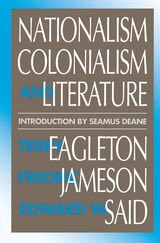
Nationalism, Colonialism, and Literature
Terry Eagleton
University of Minnesota Press, 1990
The three essays constituting this volume were originally published as individual pamphlets by the Field Day Theatre Company, in Derry, Northern Ireland. Each deals with the question of nationalism and the role of cultural production as a force in understanding and analyzing the aftermath of colonization. The authors’ diverse perspectives are demonstrated by the essays’ respective titles: Eagleton, Nationalism: Irony and Commitment; Jameson, Modernism and Imperialism; and Said, Yeats and Decolonization. The essays have implication beyond their immediate topics, bearing upon questions of feminism, decolonization, and modernism to illuminate problems that belong to other groups and regions.
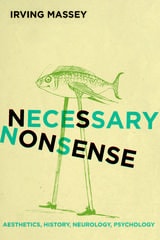
Necessary Nonsense
Aesthetics, History, Neurology, PsychologyIrving Massey
The Ohio State University Press, 2018
In Necessary Nonsense, Massey explores a range of literary and philosophical subjects, from Immanuel Kant to Lewis Carroll—parsing the ways in which nonsense permeates their writing and dialectics—including an exploration of the inability of those who suffer from Asperger's syndrome to distinguish between metaphor and nonsense, and an investigation of the neural signature of the nonsense words and phrases that occur during the transition from waking to sleep. Massey argues that while nonsense may be the “archenemy of reason,” it is also tied to the intrinsic nature of reason; the two, simply put, cannot exist without each other. Through a stunning array of exploratory topics, Massey concludes that we all live under a canopy of nonsense.

Negritude Women
T. Denean Sharpley-Whiting
University of Minnesota Press, 2002
Rediscovers the crucial role that women played in the influential Negritude movement.
The Negritude movement, which signaled the awakening of a pan-African consciousness among black French intellectuals, has been understood almost exclusively in terms of the contributions of its male founders: Aimé Césaire, Léopold Sédar Senghor, and Léon G. Damas. This masculine genealogy has completely overshadowed the central role played by French-speaking black women in its creation and evolution. In Negritude Women, T. Denean Sharpley-Whiting offers a long-overdue corrective, revealing the contributions made by the women who were not merely integral to the success of the movement, but often in its vanguard.
Through such disparate tactics as Lacascade’s use of Creole expressions in her French prose writings, the literary salon and journal founded by the Martinique-born Nardal sisters, and Roussy-Césaire’s revolutionary blend of surrealism and Negritude in the pages of Tropiques, the journal she founded with her husband, these four remarkable women made vital contributions. In exploring their influence on the development of themes central to Negritude-black humanism, the affirmation of black peoples and their cultures, and the rehabilitation of Africa-Sharpley-Whiting provides the movement’s first genuinely inclusive history.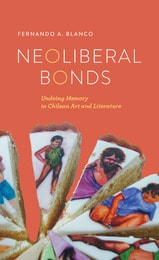
Neoliberal Bonds
Undoing Memory in Chilean Art and LiteratureFernando A. Blanco
The Ohio State University Press, 2015
Neoliberal Bonds vehemently criticizes how Chile’s transition governments, through a series of political and legal maneuvers, created the state’s official memory narratives. Blanco argues that the state, the media, academia, and the neoliberal market colluded to colonize and mediatize the “memory scene.” In contrast to these official narratives, Neoliberal Bonds analyzes alternative memory accounts within the visual arts and literature that push back against the state, its institutions, and its economic allies. These alternative memory narratives highlight the ontological fracture of the new neoliberal subjects; they also bring into sharp relief the urgent need for democratization that still poses a challenge to Chile a quarter century after its “transition to democracy” began.
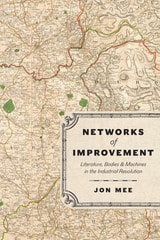
Networks of Improvement
Literature, Bodies, and Machines in the Industrial RevolutionJon Mee
University of Chicago Press, 2023
Working against the stubbornly persistent image of “dark satanic mills,” in many ways so characteristic of literary Romanticism, Jon Mee provides a fresh, revisionary account of the Industrial Revolution as a story of unintended consequences. In Networks of Improvement, Mee reads a wide range of texts—economic, medical, and more conventionally “literary”—with a focus on their circulation through networks and institutions. Mee shows how a project of enlightened liberal reform articulated in Britain’s emerging manufacturing towns led to unexpectedly coercive forms of machine productivity, a pattern that might be seen repeating in the digital technologies of our own time. Instead of treating the Industrial Revolution as Romanticism’s “other,” Mee shows how writing, practices, and institutions emanating from these industrial towns developed a new kind of knowledge economy, one where local literary and philosophical societies served as important transmission hubs for the circulation of knowledge.
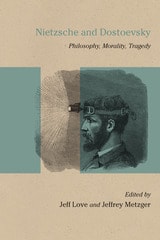
Nietzsche and Dostoevsky
Philosophy, Morality, TragedyEdited by Jeff Love and Jeffrey Metzger
Northwestern University Press, 2016