Results by title
175 books match the query 'Marriage' and 4 start with n
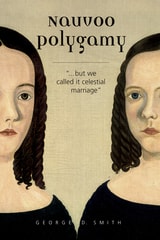
Nauvoo Polygamy
"…but we called it celestial marriage"George D. Smith
Signature Books, 2011
“Nauvoo Polygamy is s a thorough investigation of sexual politics in the City of the Saints, the 1840s Mormon headquarters in the U.S. State of Illinois. Written with precision, clarity, and ease, it is a major contribution to Mormon history, groundbreaking in identifying the other polygamists who followed the lead of their prophet, Joseph Smith, in taking multiple partners.” —Klaus J. Hansen, Professor Emeritus of History, Queen’s University, Ontario
“If for no other reason, the inclusion of chapter 6 makes this book worth its price. The chapter quotes liberally from those like Elizabeth Ann Whitney and Bathsheba Smith who accepted polygamy rather easily, those like Jane Richards who accepted it only reluctantly, and those like Patty Sessions who found plural marriage almost unbearable. A bonus is chapter 9 which provides a concise historical overview of polygamous societies in Reformation Europe, touches on similar societies in America, and offers an extended discussion of Orson Pratt’s 1852 defense of plural marriage.” —Thomas G. Alexander, Professor Emeritus of History, Brigham Young University
“George Smith shows how many of the prophet’s followers embraced plural marriage during a period when the LDS Church was emphatically denying the practice … [and he tells this in] a lucid writing style.” —Daniel Walker Howe, Pulitzer Prize winning author of What Hath God Wrought: The Transformation of America, 1815-1848.
“An extremely important contribution to the history of polygamy … that allows us to see how Joseph Smith’s marriages fit into the context of his daily life.” —Todd M. Compton, author of In Sacred loneliness: The Plural Wives of Joseph Smith

Navajo Kinship and Marriage
Gary Witherspoon
University of Chicago Press, 1996
"Witherspoon . . . clarifies problems pertaining to Navajo kinship and marriage through his skillful use of the concepts of cultural and social systems. He adds to the body of knowledge on the Navajo by his own fieldwork and unique life experiences." —R. S. Freed, Sociology
"Not only can Witherspoon's book on Navajo kinship help unravel the web for the Anglo willing to concentrate, it can also bring to Navajo readers an understanding of why Anglos don't understand Navajo family relationships." —Joanne Reuter, Navajo Times
"This is an important work on Navajo kinship and marriage." —David F. Aberle, American Anthropology

Not Yet Pregnant
Infertile Couples in Contemporary AmericaGreil, Arthur L
Rutgers University Press, 1991
Although voluntary childlessness has come to be accepted as permissible, the "normal" plans of most American couples include parenthood. Having a child is still seen as a rite of passage to adulthood. When a couple finds out that they are infertile and that life is not going to go according to plan, they ask, "why me?" Greil explores not only "why me?" and the difficulty of finding a satisfying answer, but other questions as well. Why do women and men respond differently to infertility? Do gender differences play a role in the experience of infertility? How has medical technology affected the experience of infertility? Why are infertile couples so committed to the goal of having biological children?
Greil argues that the complexity of infertility comes from its changing statusÐÐit is no longer considered a provate problem but a medical problem that can be solved. The human body is thought of as a finely-tuned machine and infertility is just a mechanical problem. In America, the author claims, those who suffer from medical problems become subject to cultural beliefs about the nature of illness and the role of the sick. This includes the belief that the sufferer should do everything in his or her power to get better; in the cae of infertility the infertile couple should do everything possible to have a baby. What results is often painful, humiliating, and never-ending treatment programs. But infertile couples are reluctant to stop treatment because new techniques are being developed, and there is always next month. Couples do not consider themselves infertile forever, they consider themselves "not yet pregnant."
Greil explores the effect that infertility has on men and women, and why men seem to accept infertility more easily than women. Women see infertility as failure, they see themselves as incomplete. Men, seeing infertility more frequently as something they cannot change, ask why worry about it? Greil also explores what effect these attitudes have on the couple's marriage, on relationships with their relatives, and with their fertile friends. Infertility is not just a medical problem, it is a personal and emotional problem that affects all other aspects of the couple's life. This is a thorough investigation of what fertility means to contemporary American couples.
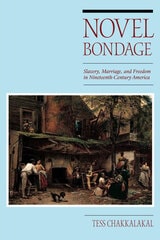
Novel Bondage
Slavery, Marriage, and Freedom in Nineteenth-Century AmericaTess Chakkalakal
University of Illinois Press, 2013