Results by title
941 books match the query 'Military' and 20 start with n
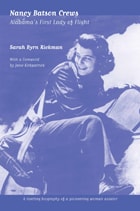
Nancy Batson Crews
Alabama's First Lady of FlightSarah Byrn Rickman
University of Alabama Press, 2009
This is the story of an uncommon woman--high school cheerleader, campus queen, airplane pilot, wife, mother, politician, business-woman--who epitomizes the struggles and freedoms of women in 20th-century America, as they first began to believe they could live full lives and demanded to do so. World War II offered women the opportunity to contribute to the work of the country, and Nancy Batson Crews was one woman who made the most of her privileged beginnings and youthful talents and opportunities.
In love with flying from the time she first saw Charles Lindbergh in Birmingham, (October 1927), Crews began her aviation career in 1939 as one of only five young women chosen for Civilian Pilot Training at the University of Alabama. Later, Crews became the 20th woman of 28 to qualify as an "Original" Women's Auxiliary Ferrying Squadron (WAFS) pilot, employed during World War II shuttling P-38, P-47, and P-51 high-performance aircrafts from factory to staging areas and to and from maintenance and training sites. Before the war was over, 1,102 American women would qualify to fly Army airplanes. Many of these female pilots were forced out of aviation after the war as males returning from combat theater assignments took over their roles. But Crews continued to fly, from gliders to turbojets to J-3 Cubs, in a postwar career that began in California and then resumed in Alabama.
The author was a freelance journalist looking to write about the WASP (Women Airforce Service Pilots) when she met an elderly, but still vital, Nancy Batson Crews. The former aviatrix held a reunion of the surviving nine WAFS for an interview with them and Crews, recording hours of her own testimony and remembrance before Crews's death from cancer in 2001. After helping lead the fight in the '70s for WASP to win veteran status, it was fitting that Nancy Batson Crews was buried with full military honors.
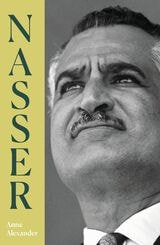
Nasser
Anne Alexander
Haus Publishing, 2025
More than fifty years after his death, Gamal Abd al-Nasser remains a towering figure in the Arab world. As one of the young officers who overthrew British-backed King Farouk in Egypt in 1952, Nasser rose to prominence as a charismatic visionary who challenged foreign dominance. At just thirty-six years old, he became the undisputed leader of Egypt in a presidency that would run from 1956 to 1970.
This insightful biography, in its second edition and featuring a new introduction from the author, delves into the life of Nasser, charting his rise to power, his nationalization of the Suez Canal, and his turbulent years as president. Many in the Arab World celebrate Nasser for his defiance of colonial rule and his dream of Arab unity. However, his legacy is not without its contradictions. Critics have alluded, for instance, to his autocratic rule and unfulfilled promises. In Nasser, Anne Alexander explores this tension between Nasser’s revolutionary ideas and the reality of his governance.
Nathan Boone and the American Frontier
R. Douglas Hurt
University of Missouri Press, 2000
Celebrated as one of America's frontier heroes, Daniel Boone left a legacy that made the Boone name almost synonymous with frontier settlement. Nathan Boone, the youngest of Daniel's sons, played a vital role in American pioneering, following in much the same steps as his famous father. In Nathan Boone and the American Frontier, R. Douglas Hurt presents for the first time the life of this important frontiersman.
Based on primary collections, newspaper articles, government documents, and secondary sources, this well-crafted biography begins with Nathan's childhood in present-day Kentucky and Virginia and then follows his family's move to Missouri. Hurt traces Boone's early activities as a hunter, trapper, and surveyor, as well as his leadership of a company of rangers during the War of 1812. After the war, Boone returned to survey work. In 1831, he organized another company of rangers for the Black Hawk War and returned to military life, making it his career. The remainder of the book recounts Boone's activities with the army in Iowa and the Indian Territory, where he was the first Boone to gain notice outside Missouri or Kentucky. Even today his work is recognized in the form of state parks, buildings, and place-names.
Although Nathan Boone was an important figure, he lived much of his life in the shadow of his father. R. Douglas Hurt, however, makes a strong case for Nathan's contribution to the larger context of life in the American backcountry, especially the execution of military and Indian policy and the settlement of the frontier.
By recognizing the significant role that Nathan Boone played, Nathan Boone and the American Frontier also provides the recognition due the many unheralded frontiersmen who helped settle the West. Anyone with an interest in the history of Missouri, the frontier, or the Boone name will find this book informative and compelling.
Naval Leadership in the Atlantic World
The Age of Reform and Revolution, 1700–1850Richard Harding and Agustín Guimerá
University of Westminster Press, 2017
The naval leader has taken centre stage in traditional naval histories. However, while the historical narrative has been fairly consistent the development of various navies has been accompanied by assumptions, challenges and competing visions of the social characteristics of naval leaders and of their function. Whilst leadership has been a constant theme in historical studies, it has not been scrutinised as a phenomenon in its own right. This book examines the critical period in Europe between 1700 -1850, when political, economic and cultural shifts were bringing about a new understanding of the individual and of society. Bringing together context with a focus on naval leadership as a phenomenon is at the heart of this book, a unique collaborative venture between British, French and Spanish scholars. As globalisation develops in the twenty-first century the significance of navies looks set to increase. This volume of essays aims to place naval leadership in its historical context.
An electronic version of this book is freely available, thanks to the support of libraries working with Knowledge Unlatched. KU is a collaborative initiative designed to make high quality books Open Access for the public good. The Open Access ISBN for this book is 978-1-911534-76-1. More information about the initiative and details about KU’s Open Access programme can be found at www.knowledgeunlatched.org
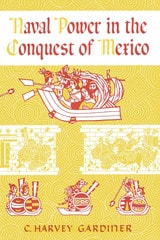
Naval Power in the Conquest of Mexico
By C. Harvey Gardiner
University of Texas Press, 1956
In this account of the naval aspect of Hernando Cortés's invasion of the Aztec Empire, C. Harvey Gardiner has added another dimension to the drama of Spanish conquest of the New World and to Cortés himself as a military strategist. The use of ships, in the climactic moment of the Spanish-Aztec clash, which brought about the fall of Tenochtitlán and consequently of all of Mexico, though discussed briefly in former English-language accounts of the struggle, had never before been detailed and brought into a perspective that reveals its true significance. Gardiner, on the basis of previously unexploited sixteenth-century source materials, has written a historical revision that is as colorful as it is authoritative.
Four centuries before the term was coined, Cortés, in the key years of 1520–1521, used the technique of "total war." He was able to do so victoriously primarily because of his courage in taking a gamble and his brilliance in tactical planning, but these qualities might well have signified nothing without the fortunate presence in his forces of a master shipwright, Martin López.
As the exciting story unrolls, Cortés, López, and the many other participants in the venture of creating and using a navy in the midst of the New World mountains and forests are seen as real personalities, not embalmed historical stereotypes, and the indigenous defenders are revealed as complex human beings facing huge odds. Much of the tale is told in the actual words of the protagonists; Gardiner has probed letters, court records, and other contemporary documents. He has also compared this naval feat of the Spaniards with other maritime events from ancient times to the present.
Naval Power in the Conquest of Mexico as a book was itself the result of an interesting combination of circumstances. C. Harvey Gardiner, as teacher, scholar, and writer, had long been interested in Latin American history generally and Mexican history in particular. During World War II, from 1942 to 1946, he served with the U.S. Navy. As he relates: "One day in early autumn 1945, while loafing on the bow of a naval vessel knifing its way southward in the Pacific a few degrees north of the Equator, my thoughts turned to the naval side of the just-ended conflict, and in time the question emerged, 'I wonder how the little ships and the little men will fare in the eventual record?' Then, because I was eager to return to my civilian life of pursuit of Latin American themes, the concomitant question came: 'I wonder what little fighting ships and minor men of early Latin America have been consigned to the oblivion of historical neglect?' As I began later to rummage my way from Columbus toward modem times, I seized upon the Mexican Conquest as the prime period with pay dirt for the researcher in quest of the answer to that latter question."
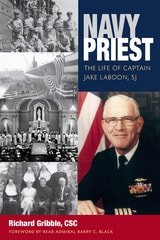
Navy Priest
Richard Gribble
Catholic University of America Press, 2015
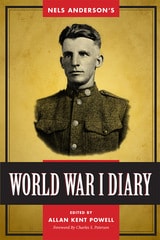
Nels Anderson’s World War I Diary
Allan Kent Powell
University of Utah Press, 2013
Nels Anderson’s World War I Diary provides a rare glimpse into the wartime experiences of one of the most well-respected sociologists of the twentieth century, the renowned author of The Hobo (1920) and Desert Saints: The Mormon Frontier in Utah (1942). Anderson, a keen observer of people, places, and events his entire life, joined the U.S. Army in 1918 at the age of 29 and was sent to Europe to fight as part of the Allied Expeditionary Force (AEF) under General Pershing. Because keeping a journal was strongly discouraged among American forces during WWI, particularly among the rank-and-file soldiers, Anderson’s diary stands as a rare gem. Furthermore, it is the only known account of war service during WWI by a member of the LDS Church. Anderson joined the Mormon faith after accepting the hospitality of an extended Mormon ranching family during his travels throughout the American West as a working hobo.
Anderson’s accounts of the St. Mihiel and Meuse-Argonne offensives are particularly remarkable given the challenges of keeping a detailed journal amidst the chaos and suffering of the war’s Western Front. His insights into the depravity and callousness of war are buttressed with intimate human portraits of those to whom he was closest. The war years provided many formative experiences that would prove to have a lasting influence on Anderson’s views regarding the working poor, authority, and human values; this would come to bear heavily on his later work as a pioneering sociologist at the University of Chicago, where he helped establish participant observation as a research method. The many introspective entries contained in this volume will be of reat interest to military historians and history buffs as well as to those in the social sciences looking to find the intellectual origins of Anderson’s later work in the burgeoning field of sociology.
Winner of the Army Historical Foundation Distinguished Writing Award for Journals, Memoirs, and Letters.
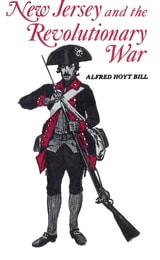
New Jersey and The Revolutionary War
Bill, Alfred
Rutgers University Press, 1970
Bill introduces us to the people who were responsible for winning the war and shaping the future of our country, people such as George Washington, General Hugh Mercer, Thomas Paine, Alexander Hamilton, James Monroe, and Thomas Marshall. He also portrays other colorful figures, such as Benedict Arnold, and British officers, including Howe, Cornwallis, and RaIl. Alfred Bill has produced that rare species of history book that reads like an exciting adventure story. He not only presents the facts, but clearly illuminates them with pertinent background information. Clearly written and highly readable, this book will be enjoyed by everyone from students 10 serious historians.
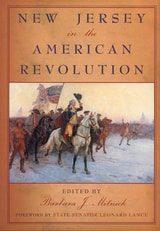
New Jersey in the American Revolution
Mitnick, Barbara J
Rutgers University Press, 2005
Barbara J. Mitnick has edited a remarkably comprehensive anthology, bringing new life to the rich and turbulent late eighteenth-century period in New Jersey. Originally conceived as a legacy of the state's 225th Anniversary of the Revolution Celebration Commission and sponsored by the Washington Association of New Jersey, the volume brings together contributions by twelve outstanding and recognized experts on New Jersey history.
Chapters explore topics including New Jersey as the "Crossroads of the Revolution," important military campaigns, the 1776 Constitution, and the significant contribution of blacks, Native Americans, and women. Reflecting the contemporary view that the war's impact extended beyond military engagements, original essays also discuss the fine and decorative arts, literature, architecture, archaeology, and social and economic conditions. The reader is presented with a picture of life in New Jersey both separate from as well as connected to the fight for American independence and the establishment of the nation.
Fresh and significant observations, including the fact that soldiers fought 238 battles on New Jersey soil (more than any other state) and that the social and political changes resulting from the war were more revolutionary than evolutionary make this accessibly written, beautifully illustrated volume appeal to the lay reader as well as scholars of New Jersey and Revolutionary War history.
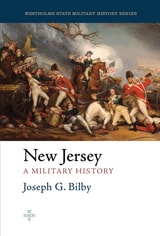
New Jersey
A Military HistoryJoseph G. Bilby
Westholme Publishing, 2017
New Jersey: A Military History by military historian Joseph G. Bilby tells the long, diverse, and sometimes complicated story of New Jersey’s citizens and their significant and continuing role in America’s defense. Over more than 350 years as a colony and state, hundreds of thousands of New Jersey residents have served in regular armed forces, militia, and National Guard units or in direct support of those organizations. New Jerseyans in the military include General “Scotch Willie” Maxwell of Sussex County, an unappreciated Revolutionary War master tactician; First Sergeant George Ashby of Allentown, of Company H, 45th United States Colored Infantry, the state’s last surviving Civil War veteran; Clara Maas of Newark, a nurse who sacrificed her life in the effort to eradicate Yellow Fever; Captain William J. Reddan, who led his company into hell during the Meuse-Argonne offensive in 1918; and Medal of Honor winner John Basilone, whose sense of duty and honor led him to return to combat and death in World War II.
Complete with maps, an annotated list of historical sites in the state, and further reading, New Jersey: A Military History is an important reference for those interested in the role of the Garden State in our nation’s wars.
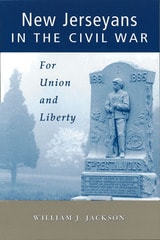
New Jerseyans in the Civil War
For Union and LibertyJackson, William J
Rutgers University Press, 2006
The Civil War divided New Jersey just as it did the nation. As a small state sandwiched between two large and powerful neighbors, New Jersey had always enthusiastically supported the creation of a strong central government. On the other hand, many New Jersey citizens did not share the anti-slavery sentiments of the North; they supported property rights of slave owners and believed in the natural inferiority of blacks. Subsequently, when southern states began to secede from the Union to form the Confederacy, New Jerseyans were left divided and confused.
William J. Jackson examines the ironies, paradoxes, and contradictions that characterized New Jersey's unique historical role in the war. This is the only book to incorporate social and political history with that of military history and strategy. Civil War aficionados and historians will also welcome Jackson's analysis of the participation of New Jersey African Americans on the home front and in the military.
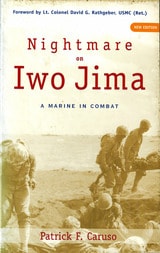
Nightmare on Iwo Jima
A Marine in CombatPatrick F. Caruso, with a foreword by David G. Rathgeber
University of Alabama Press, 2007
Nine Desperate Days
America's Rainbow Division in the Aisne-Marne OffensiveRobert Thompson
Westholme Publishing, 2022
American forces entered World War I combat in October 1917, but it was not until July 1918 that they went on the offensive for the first time. Among the units selected for this operation was the 42nd Division, or the “Rainbow Division” as it was known popularly. This division, which was composed of National Guard units from twenty-six states, including Joyce Kilmer’s 69th New York Infantry, would spend 164 days in combat, a number exceeded by only two other American divisions. However, it was the nine days from July 25 to August 2, 1918 that were the most terrible and heroic in the division’s history. General of the Army Douglas MacArthur, who served as the division’s chief of staff, later said of the Rainbow Division’s fighting during those pivotal days, “There was neither rest nor mercy.” During those nine days, the Rainbow Division would spearhead the Allied attack in the Aisne-Marne region, the final phase of the Second Battle of the Marne, which saw the last major German offensive on the Western Front defeated. Unfortunately, American leadership proved to be completely unprepared for a dynamic war of maneuver. Basing decisions on wildly inaccurate information about the Germans, senior commanders ordered the men of the Rainbow Division to make ill-advised assaults again and again with little support. Facing an enemy who was determined to hold itspositions, these National Guardsmen fought with courage and determination to gain what was often only yards of ground, and did so at a deadly cost.
In Nine Desperate Days: America’s Rainbow Division in the Aisne-Marne Offensive, historian Robert Thompson chronicles the hardships and tenacity of the men from the 42nd Division during this pivotal campaign. The Americans did not break despite heavy losses, and were able to drive the Germans back from territory they initially gained. The efforts of the Rainbow Division during Aisne-Marne were key to the ultimate Allied victory and are a symbol of American valor and sacrifice during the “war to end all wars.”
No Average Day
The 24 Hours of October 24, 1944Rona Simmons
University of Missouri Press, 2024
On Tuesday, October 24, 1944, nearly three years after the United States entered World War II, over 2,600 Americans perished—more than on any other single day of the conflict—yet the day remains overshadowed by more widely remembered dates in WWII history. Drawing from the accounts of men from diverse backgrounds who served in the U.S. Army, Navy, Marines, and Air Corps, Rona Simmons offers a gripping retelling of the fateful day, hour by hour and incident by incident. The book begins with Army Private First Class Paul Miller’s demise in a prisoner of war camp and ends with the death of Navy Seaman Second Class Wanza E. Matthews after the Japanese submarine I-56 attacked his ship off New Guinea. The sinking of the Japanese “hellship” Arisan Maru—a lesser-known tragedy of the war—looms large, deftly interwoven through each part of the narrative.
Perhaps the most compelling aspect of No Average Day is its attention to the human side of conflict, telling the stories of ordinary individuals—clerks, radio operators, cooks, sailors, machinist mates, riflemen, and pilots and their air crews—as they grapple with the horrors of the war. Despite its narrow focus, or perhaps because of it, No Average Day reveals the vastness of World War II through a consideration of the largely overlooked events that unfolded on what, for members of the US Armed Forces, was its deadliest day.
No Band of Brothers
Problems of the Rebel High CommandSteven E. Woodworth
University of Missouri Press, 1999
The Civil War was barely over before Southerners and other students of the war began to examine the Confederate high command in search of an explanation for the South's failure. Although years of research failed to show that the South's defeat was due to a single, overriding cause, the actions of the Southern leaders during the war were certainly among the reasons the South lost the war.
In No Band of Brothers, Steven Woodworth explores, through a series of essays, various facets of the way the Confederacy waged its unsuccessful war for secession. He examines Jefferson Davis and some of his more important generals, including Pierre G. T. Beauregard, Leonidas Polk, Joseph E. Johnston, Robert E. Lee, James Longstreet, and Thomas J. "Stonewall" Jackson; the Confederacy's strategic plans; and the South's success in making competent officers out of men with very little military preparation.
Woodworth particularly looks at the personalities and personal relationships that affected the course and outcome of the war. What made a good general? What could make an otherwise able man a failure as a general? What role did personal friendships or animosities play in the Confederacy's top command assignments and decisions? How successful was the Confederacy in making competent generals out of its civilian leaders? In what ways did Jefferson Davis succeed or fail in maximizing the chances for the success of his cause?
In analyzing the Confederate leadership, Woodworth reveals some weaknesses, many strengths, and much new information. No Band of Brothers will be an important addition to Civil War scholarship and will be welcomed by professional historians, amateur historians, students, and the general reader alike.
No Sacrifice Too Great
The 1st Infantry Division in World War IIGregory Fontenot
University of Missouri Press, 2027
The U.S. 1st Infantry Division (1st ID), familiarly known as the Big Red One, adapted to dynamic battlefield conditions throughout the course of its deployment during World War II by innovating and altering behavior, including tactics, techniques, and procedures. Both the Division’s leaders and soldiers accomplished this by thinking critically about their experiences in combat and wasting little time in putting lessons learned to good use. Simply put, they learned on the job—in battle and after battle—and did so quickly.
In telling the Division’s WWII story, which includes an extensive photographic essay featuring many previously unpublished images, Gregory Fontenot includes the stories of individual members of the Big Red One, from high-ranking officers to enlisted men fresh off the streets of Brooklyn, both during and after the conflict. Colonel Fontenot’s rare ability to combine expert analysis with compelling narrative history makes No Sacrifice Too Great an absorbing read for anyone interested in the military history of the United States.
Normandie
Arne Zuidhoek
Amsterdam University Press, 2024
Notes Illustrating the Military Geography of the United States, 1813–1880
By Raphael P. Thian with addenda edited by John M. Carroll; foreword by Robert M. Utley
University of Texas Press, 1979
When the Adjutant General's Office published Raphael Thian's "notes" on U.S. military geography in 1880, it produced an invaluable research tool for generations of military historians to come. In this single documented reference volume, Chief Clerk Thian traced the confusing mutations through which the divisions, departments, and districts of the Army's command had evolved since 1813.
The volume is divided into three parts, beginning with the names of the United States Army Continental Commands, the date and authority for their creation, location of the headquarters, geographical changes and discontinuances, and other details including the geographical boundaries embracing each division, department, and district. Part II is filled with background information on states and territories, and Part III lists the maps contained in The Military Atlas of the United States.
The Addenda to this edition expand and update Thian's work. Notes made by Francis B. Heitman to keep his personal copy current are included, as is the Memorandum published by the government in 1906. This addition lists all changes from 1898 through 1905.
Nuclear Minds
Cold War Psychological Science and the Bombings of Hiroshima and NagasakiRan Zwigenberg
University of Chicago Press, 2023
In 1945, researchers on a mission to Hiroshima with the United States Strategic Bombing Survey canvassed survivors of the nuclear attack. This marked the beginning of global efforts—by psychiatrists, psychologists, and other social scientists—to tackle the complex ways in which human minds were affected by the advent of the nuclear age. A trans-Pacific research network emerged that produced massive amounts of data about the dropping of the bomb and subsequent nuclear tests in and around the Pacific rim.
Ran Zwigenberg traces these efforts and the ways they were interpreted differently across communities of researchers and victims. He explores how the bomb’s psychological impact on survivors was understood before we had the concept of post-traumatic stress disorder. In fact, psychological and psychiatric research on Hiroshima and Nagasaki rarely referred to trauma or similar categories. Instead, institutional and political constraints—most notably the psychological sciences’ entanglement with Cold War science—led researchers to concentrate on short-term damage and somatic reactions or even, in some cases, on denial of victims’ suffering. As a result, very few doctors tried to ameliorate suffering.
But, Zwigenberg argues, it was not only that doctors “failed” to issue the right diagnosis; the victims’ experiences also did not necessarily conform to our contemporary expectations. As he shows, the category of trauma should not be used uncritically in a non-Western context. Consequently, this book sets out, first, to understand the historical, cultural, and scientific constraints in which researchers and victims were acting and, second, to explore how suffering was understood in different cultural contexts before PTSD was a category of analysis.
Nursing Civil Rights
Gender and Race in the Army Nurse CorpsCharissa J. Threat
University of Illinois Press, 2015
As Threat reveals, both groups viewed their circumstances with the Army Nurse Corps as a civil rights matter. Each conducted separate integration campaigns to end the discrimination they suffered. Yet their stories defy the narrative that civil rights struggles inevitably arced toward social justice. Threat tells how progressive elements in the campaigns did indeed break down barriers in both military and civilian nursing. At the same time, she follows conservative threads to portray how some of the women who succeeded as agents of change became defenders of exclusionary practices when men sought military nursing careers. The ironic result was a struggle that simultaneously confronted and reaffirmed the social hierarchies that nurtured discrimination.