Results by title
405 books match the query 'Natural history' and 19 start with n
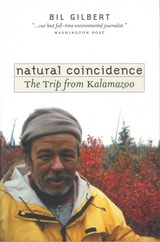
Natural Coincidence
The Trip from KalamazooBil Gilbert
University of Michigan Press, 2004
Natural Coincidence collects some of Bil Gilbert's finest writing, covering a diverse range of subjects that include investigations of the biology of Tasmanian devils, the lives and loves of snapping turtles, and an appreciation of the intelligence of crows. Perfectly suiting this eclectic choice of angles is Gilbert's unique writing style, a blend of unprepossessing erudition, wit, and honesty that has been compared to Aldo Leopold's Sand County Almanac.
The collection opens with a memoir of a childhood Christmas in western Michigan, before Gilbert's fascination with the natural world drew him to more exotic locales like Tasmania, Alaska, Nova Scotia, and Manhattan to write about such topics as the javelina, bigfoot, buffalo, and ringtails.
"More than 50 years ago," writes Gilbert, "without a clear notion about why or where I was going, I set off on a trip from Kalamazoo, Michigan. I am still traveling toward an unknown destination. But along the way, much more for reasons of good luck than thoughtful planning, I have met many wonderful beings and happenings. The essays appearing in Natural Coincidence represent an attempt to describe some of these wonders. I like to think, or at least pretend, that the inspiration for and theme of this book is gratitude."
Natural Environments of Arizona
From Desert to MountainsEdited by Peter F. Ffolliott and Owen K. Davis
University of Arizona Press, 2008
Natural Environments of Arizona bridges the gap between coffee-table volumes and scientific literature, offering a nontechnical, single-volume overview that introduces readers to a myriad of topics and provides pointers toward deeper reading. It’s all here: climate, geology, soil and water resources, an amazing variety of flora and fauna—and of course human impacts on the state’s fragile ecosystems.
These chapters show the extent to which Arizona’s natural environments have changed since Lowe first set the stage for their study. They consider changes in forests and grasslands, the effects of soil erosion, questions about water quality, and the evolving status of rivers and wildlife communities. And while the common thread of environments makes the book a complete introduction to the subject, each chapter stands alone as an authoritative synopsis of its particular topic.
Ranging widely over the impacts of drought, floods, and wildfires, this practical guide clearly shows that nature is more than picturesque landscapes, vegetation, and wildlife. For anyone with a dog-eared copy of Lowe, this book will serve as the new standard on the subject—a valuable tool for resource managers, students, and general readers alike.
Natural History of the Colorado Plateau
Kimball T. Harper
University Press of Colorado, 1998
Natural History of the Colorado Plateau and Great Basin provides an up-to-date summary of the region's geology, climates, and biology, including thorough treatments of the area's insects, fish, and reptiles. Also discussed are the ecology and distribution of prehistoric human cultures in the region; how modern humans have used (and abused) resources in the Intermountain West; and the impact of post-Pleistocene environmental changes on genetics of disjunct populations of conifer trees.
Written by a diverse group of acknowledged experts, Natural History of the Colorado Plateau and Great Basin offers invaluable background information for all students and resource managers who want to work in or visit the Intermountain West.
Natural Missouri
Working with the LandNapier Shelton
University of Missouri Press, 2005
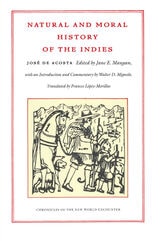
Natural and Moral History of the Indies
José de Acosta
Duke University Press, 2002
A significant contribution to Renaissance Europe's thinking about the New World, Acosta's Natural and Moral History of the Indies reveals an effort to incorporate new information into a Christian, Renaissance worldview. He attempted to confirm for his European readers that a "new" continent did indeed exist and that human beings could and did live in equatorial climates. A keen observer and prescient thinker, Acosta hypothesized that Latin America's indigenous peoples migrated to the region from Asia, an idea put forth more than a century before Europeans learned of the Bering Strait. Acosta's work established a hierarchical classification of Amerindian peoples and thus contributed to what today is understood as the colonial difference in Renaissance European thinking.
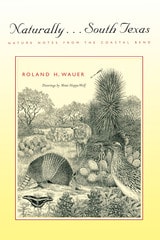
Naturally . . . South Texas
Nature Notes from the Coastal BendBy Roland H. Wauer
University of Texas Press, 2001
The Golden Crescent of South Texas, a fifteen-county region along and inland from the middle Gulf Coast, is often called "the Crossroads" because of its natural diversity. Located in the heart of the Gulf Coast Prairie and Marshes, the area also encompasses the trailing edges of the South Texas Plains, Post Oak Savannah, and Blackland Prairie. This confluence of ecological zones makes it a wonderful place for birding and for observing the changing face of nature, especially during seasonal transitions.
In this book, Ro Wauer describes a typical year in the natural life of South Texas. Using selected entries from his weekly column in the Victoria Advocate newspaper, he discusses numerous topics for each month, from the first appearance of butterflies in January, to alligators making a comeback in July, to the Christmas bird count in December. His observations are filled with intriguing natural history lore, from what sounds mockingbirds will imitate (almost any noise in their neighborhood) to how armadillos swim (by inflating themselves to increase their buoyancy).
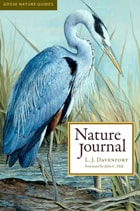
Nature Journal
L. J. Davenport, with a Foreword by John C. Hall
University of Alabama Press, 2010
Explore Nature. Record Wonder. Keep Your Own Journal.
Nature Journal is an innovative presentation of the best columns and photographs from L. J. Davenport’s popular column in Alabama Heritage magazine. Readers of the magazine have come to relish his artful and often witty descriptions of common species encountered in the Alabama outdoors. But Nature Journal is designed to be much more than a mere collection of entertaining essays; it is also an educational tool—a means of instructing and encouraging readers in the art of keeping a nature journal for themselves.
Each of the 25 chapters is a self-contained lesson in close observation of species morphology, behavior, and habitat; research in the literature; nondestructive capture of the subject by photography or drawing; and written description of the total observed natural phenomenon. At the end of each account, stimulating questions and gentle directives guide the reader into making his or her own observations and recordings.
This book is intended for broad nature-study use in Alabama and throughout the southeast by the general reader and nature enthusiast alike, as well as visitors to museums and outdoor centers, and students of nature and nature writing at the high school and college levels. Beautifully designed to look like a personal journal, it is a perfect gift and treasured keepsake for all lovers of the natural world.
Publication supported in part by Samford University
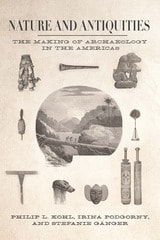
Nature and Antiquities
The Making of Archaeology in the AmericasEdited by Philip L. Kohl, Irina Podgorny, and Stefanie Gänger
University of Arizona Press, 2014
The volume breaks new ground by entreating archaeologists to acknowledge the importance of ways of knowing that resulted from the study of nature in the history of archaeology. Some of the contributions to this volume trace the part conventions, practices, and concepts from natural history and the natural sciences played in the history and making of the discipline. Others set out to uncover, reassemble, or adjust our vision of collections that research historians of archaeology have disregarded or misrepresented—because their nineteenth-century makers would refuse to comply with today’s disciplinary borders and study natural specimens and antiquities in conjunction, under the rubric of the territorial, the curious or the universal. Other contributions trace the sociopolitical implications of studying nature in conjunction with “indigenous peoples” in the Americas—inquiring into what it meant and entailed to comprehend the inhabitants of the American continent in and through a state of nature.
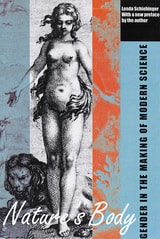
Nature's Body
Gender in the Making of Modern ScienceSchiebinger, Londa
Rutgers University Press, 2004
Eighteenth-century natural historians created a peculiar, and peculiarly durable, vision of nature—one that embodied the sexual and racial tensions of that era. When plants were found to reproduce sexually, eighteenth-century botanists ascribed to them passionate relations, polyandrous marriages, and suicidal incest, and accounts of steamy plant sex began to infiltrate the botanical literature of the day. Naturalists also turned their attention to the great apes just becoming known to eighteenth-century Europeans, clothing the females in silk vestments and training them to sip tea with the modest demeanor of English matrons, while imagining the males of the species fully capable of ravishing women.
Written with humor and meticulous detail, Nature’s Body draws on these and other examples to uncover the ways in which assumptions about gender, sex, and race have shaped scientific explanations of nature. Schiebinger offers a rich cultural history of science and a timely and passionate argument that science must be restructured in order to get it right.
Nature's Kindred Spirits
Aldo Leopold, Joseph Wood Krutch, Edward Abbey, Annie Dillard, and Gary SnyderJames I. McClintock
University of Wisconsin Press, 1994
In Nature's Kindred Spirits James McClintock shows how their mystical experiences with the wild led to dramatic conversions in their thinking and behavior. By embracing the ecstasy of nature, they reject modern alienation and spiritual confusion.
From Aldo Leopold, America’s most important conservationist and author of the classic A Sand County Almanac, to Pulitzer Prize winners Annie Dillard and Gary Snyder and defenders of the desert Joseph Wood Krutch and Edward Abbey, these writers share a common vision that harkens back to Henry David Thoreau and John Muir. To nineteenth-century Romantic ideals, they add the authority of modern ecological science. Collectively they have elevated nature’s importance in American culture, shaping the growth of the environmental movement and influencing American environmental policies.
Widely admired among educated readers but relatively neglected by the literary establishment, these writers unite the experiential with the metaphysical, the ordinary with the sacred, the personal with the public, and the natural with the social. Using ecology as a touchstone, McClintock further draws connections among science, politics, religion, and philosophy to create an enlightening overview of the work of these “kindred spirits.”
Nevada's Changing Wildlife Habitat
An Ecological HistoryGeorge E. Gruell
University of Nevada Press, 2013
For millennia the ecology of the Great Basin has evolved because of climate change and the impacts of human presence. Nevada’s Changing Wildlife Habitat is the first book to explain the transformations in the plants and animals of this region over time and how they came about. Using data gleaned from archaeological and anthropological studies, numerous historical documents, repeat photography, and several natural sciences, the authors examine changes in vegetation and their impact on wildlife species and the general health of the environment. They also outline the choices that current users and managers of rangelands face in being good stewards of this harsh but fragile environment and its wildlife.
New England Wildlife
Habitat, Natural History, and DistributionRichard M. DeGraaf and Mariko Yamasaki
University Press of New England, 2000
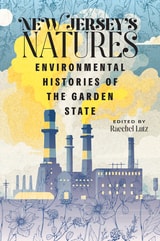
New Jersey's Natures
Environmental Histories of the Garden StateRaechel Lutz
Rutgers University Press, 2026
New Jersey’s Natures takes up the challenge of expanding academic and popular conceptions of New Jersey and its landscapes through the lens of environmental history. Scholars’ essays showcase the ways in which nature is integral to understandings of the state and its past as well as its future. These essays show that New Jersey should no longer solely be known as a place where pollution and suburbanization run amok but rather a place where history happens.
The contributors investigate how nature and history are intertwined within this small but mighty state, covering topics from the colonial period to the present across North, South, and Central Jersey. They investigate natural features like the Delaware River and Bay, the Pinelands, and the unforgettable Jersey Shore. In this book, you will find Indigenous Americans making meaning as settlers threaten their ways of life, Governor William Livingston considering Central Jersey’s features as he fights in the American Revolution, farmers building the state’s industrial agriculture, a foreign diplomat planting an arboretum, squatters in the swampy Meadowlands subverting social and economic norms, activists fighting for parks, forests, and beaches across two centuries, and much more.
New Wilderness Voices
Collected Essays from the Waterman Fund ContestEdited by Christine Woodside
University Press of New England, 2017
Night Life
Nature from Dusk to DawnDiana Kappel-Smith
University of Arizona Press, 0
North Writers II
Our Place in the WoodsJohn Henricksson
University of Minnesota Press, 1997
A new collection of writing by contemporary Minnesota writers.
This companion volume to the widely praised North Writers: A Strong Woods Collection features the work of a variety of authors-some new voices, some old friends-all of them writing about life in northern Minnesota.
The essays included in North Writers II explore the special relationship that exists between the people of northern Minnesota and the rugged yet beautiful landscape that surrounds them. These writers consider the things that make living in the far north unique—the red earth of the Iron Range, the spectacular and forbidding wildness of Lake Superior’s North Shore, the elemental nature of climate and wilderness that tests one’s mettle. There are also the farms and towns of northern Minnesota, with their heritage of self-reliance and the insight that comes with it. Taken together, these essays provide an exploration of the character, the essence, the spirit of this northern country, as well as the mystique it holds for those from more hospitable climes.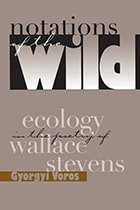
Notations Of The Wild
Ecology Poetry Wallace StevensGyorgyi Voros
University of Iowa Press, 1997
Gyorgyi Voros focuses on three governing metaphors in Stevens' poems—Nature as house, Nature as body, and Nature as self. She argues that Stevens' youthful wilderness experience yielded his primary subject—the relationship between human beings and nonhuman nature—and that it spurred his shift from a romantic to a phenomenological understanding of nature. Most important, it prompted him to reject his culture's narrow humanism in favor of a singular vision that in today's terms would he deemed ecological.

Notes from the North Country
O. B. Eustis
University of Michigan Press, 1983
Nuvuk, the Northernmost
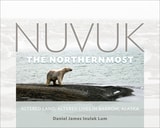
Altered Land, Altered Lives in Barrow, AlaskaDaniel James Inulak Lum
University of Alaska Press, 2013
As arguments over climate change rage in more temperate locales, Nuvuk, the Northernmost is a poignant snapshot of life in a town where these changes are impossible to overlook. Lum’s vivid photographs of wildlife, such as whales, polar bears, and birds, offer rare close-ups of animals few ever see. In addition, Lum provides vivid descriptions and pictures of daily life in and around Barrow, offering a compelling insider’s introduction to living on the tip of the world. With Lum as a capable guide, Nuvuk, the Northernmost is a chance to see a rare world before it changes forever.