Results by title
93 books match the query 'Paris' and 2 start with n
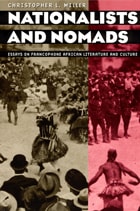
Nationalists and Nomads
Essays on Francophone African Literature and CultureChristopher L. Miller
University of Chicago Press, 1999
How does African literature written in French change the way we think about nationalism, colonialism, and postcolonialism? How does it imagine the encounter between Africans and French? And what does the study of African literature bring to the fields of literary and cultural studies? Christopher L. Miller explores these and other questions in Nationalists and Nomads.
Miller ranges from the beginnings of francophone African literature—which he traces not to the 1930s Negritude movement but to the largely unknown, virulently radical writings of Africans in Paris in the 1920s—to the evolving relations between African literature and nationalism in the 1980s and 1990s. Throughout he aims to offset the contemporary emphasis on the postcolonial at the expense of the colonial, arguing that both are equally complex, with powerful ambiguities. Arguing against blanket advocacy of any one model (such as nationalism or hybridity) to explain these ambiguities, Miller instead seeks a form of thought that can read and recognize the realities of both identity and difference.
Miller ranges from the beginnings of francophone African literature—which he traces not to the 1930s Negritude movement but to the largely unknown, virulently radical writings of Africans in Paris in the 1920s—to the evolving relations between African literature and nationalism in the 1980s and 1990s. Throughout he aims to offset the contemporary emphasis on the postcolonial at the expense of the colonial, arguing that both are equally complex, with powerful ambiguities. Arguing against blanket advocacy of any one model (such as nationalism or hybridity) to explain these ambiguities, Miller instead seeks a form of thought that can read and recognize the realities of both identity and difference.
[more]
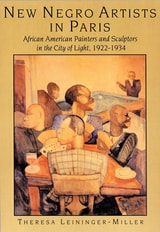
New Negro Artists in Paris
African American Painters and Sculptors in the City of Light, 1922-1934Leininger-Miller, Theresa
Rutgers University Press, 2001
The New Negro Artist in Paris analyzes the experiences and works of six African American artists who lived and worked in Paris during the Jazz Age sculptors Elizabeth Prophet and Augusta Savage, and painters Palmer Hayden, Hale Woodruff, Archibald J. Motley, Jr., and Albert Alexander Smith. More than 120 works of art are analyzed, many never before published.
These artists exhibited the works they created in Paris at prestigious salons in France and in the United States, winning fellowships, grants, and awards. Leininger-Miller argues that it was study abroad that won these artists critical acclaim, establishing their reputations as some of the most significant leaders of the New Negro movement in the visual arts. She begins her study with a history of the debut of African American artists in Paris, 1830–1914, then provides readers with rarely seen profiles of each of the six artists from their birth through the end of their time abroad. Finally, Leininger-Miller examines patterns and differences in these individuals’ backgrounds and development, their patronage in the United States and France, their shared experiences abroad, and the impact their study in Paris had on the rest of their careers.
These artists exhibited the works they created in Paris at prestigious salons in France and in the United States, winning fellowships, grants, and awards. Leininger-Miller argues that it was study abroad that won these artists critical acclaim, establishing their reputations as some of the most significant leaders of the New Negro movement in the visual arts. She begins her study with a history of the debut of African American artists in Paris, 1830–1914, then provides readers with rarely seen profiles of each of the six artists from their birth through the end of their time abroad. Finally, Leininger-Miller examines patterns and differences in these individuals’ backgrounds and development, their patronage in the United States and France, their shared experiences abroad, and the impact their study in Paris had on the rest of their careers.
[more]