Results by title
572 books match the query 'Photography' and 14 start with n
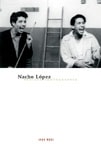
Nacho Lopez, Mexican Photographer
John Mraz
University of Minnesota Press, 2003
Reveals the career of an influential but under-appreciated photojournalist
Photographer Nacho López was Mexico’s Eugene Smith, fusing social commitment with searing imagery to dramatize the plight of the helpless, the poor, and the marginalized in the pages of glossy illustrated magazines. Even today, López’s photographs forcefully belie the picturesque exoticism that is invariably presented as the essence of Mexico.
In Nacho López, Mexican Photographer, John Mraz offers the first full-length study in English of this influential photojournalist and provides a close visual analysis of more than fifty of López’s most important photographs. Mraz first sets López’s work in the historical and cultural context of the authoritarian presidentialism that characterized Mexican politics in the 1950s, the cult of wealth and celebrity promoted by Mexico’s professional photographers, and the government’s attempts to modernize and industrialize Mexico at almost any cost. Mraz skillfully explores the implications of López's imagery in this setting: the extent to which his photographs might constitute further victimization of his downtrodden subjects, the relationship between them and the middle-class readers of the magazines for which López worked, and the success with which his photographs challenged Mexico's economic and political structures. Mraz contrasts the photos López took with those that were selected by his editors for publication. He also compares López’s images with his theories about documentary photography, and considers López’s photographs alongside the work of Robert Capa, Dorothea Lange, Henri Cartier-Bresson, and Sebastião Salgado. López’s imagery is further analyzed in relation to the Mexican Golden Age cinema inspired by Sergei Eisenstein, the pioneering digital imagery of Pedro Meyer, and the work of Manuel Álvarez Bravo, who Mraz provocatively argues was the first Mexican photographer to take an anti-picturesque stance. The definitive English-language assessment of Nacho López’s career, this volume also explores such broader topics as the nature of the photographic essay and the role of the media in effecting social change.
National Camera
Photography and Mexico’s Image EnvironmentRoberto Tejada
University of Minnesota Press, 2009
The “problem” of photography in Mexico, Tejada shows, reveals cross-cultural episodes that are rife with contradictions, especially in the complex terms of cultural and sexual difference. Analyzing such topics as territory, sexuality, and social and ethnic relations in image making, Tejada delves into the work of key figures including Manuel Alvarez Bravo, Edward Weston, Tina Modotti, Marius de Zayas, and Julien Levy, as well as the Agustín Víctor Casasola Archive, the Boystown photographs, and contemporary Mexican and Latina photo-based artists.
From the Mexican Revolution of 1910–1920 to the U.S.–Mexico borderlands of today, Tejada traces the connective thread that photography has provided between Mexican and U.S. American intellectual and cultural production and, in doing so, defines both nations.
Natural Missouri
Working with the LandNapier Shelton
University of Missouri Press, 2005
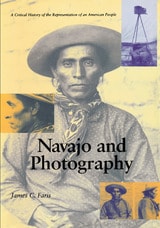
Navajo and Photography
James C Faris
University of Utah Press, 2003
"Our God Tscorenci was our Father and created the sun, which is like a mirror. He sees us from up on high and makes photographs of our reflection. When we die the photograph disappears. Many have been lost."
—Kenchori, an Asháninka from Peruvian Amazonia, when asked to tell a story concerning cameras (From W. Baker, Backward: An Essay on Indians, Time, and Photography).
Historically photographs say less about the Navajo than about photographers of Navajos. In Navajo and Photography James Faris calls attention to the inability of photographs of Navajo by non-Navajo to communicate either the lived experiences of native people or their history. Beginning with the earliest photographs of Navajos in captivity at Bosque Redondo and including the most recent glossy picture books and calendars, Faris’s survey points out assumptions that have always governed photographic representation of the Navajo people. Full of the work of photographers such as Edward S. Curtis and Laura Gilpin, as well as photographs by many less-well known figures, readers will find Navajo and Photography an enlightening juxtaposition of cultures.
Negative Exposures
Knowing What Not to Know in Contemporary ChinaMargaret Hillenbrand
Duke University Press, 2020
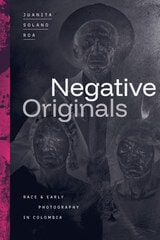
Negative Originals
Race and Early Photography in ColombiaJuanita Solano Roa
Duke University Press, 2025
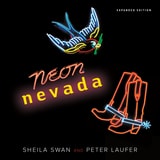
Neon Nevada
Expanded EditionSheila Swan
University of Nevada Press, 2023
Sheila Swan and Peter Laufer take readers on a journey, not only along the Las Vegas Strip, but down quiet, two-lane rural roads punctuated occasionally by a neon sign—those glistening beacons that represent civilization in our vast Great Basin. The photographers’ stunning work captures the argon violets, krypton purples, helium golds, and xenon blues that glow amidst the nighttime desert sky.
The book makes clear that neon is not just a medium for casino advertising. The colorful images of cowboys and cowgirls, animals, desert landscapes, and countless other creative designs all illuminate an aspect of Americana—the neon sign—that helps define Nevada and its businesses, from bars and casinos to hardware stores, restaurants, motels, and theaters that line the streets of the Silver State’s cities and towns, and those rural areas that are barely a blip on the map. With a compelling blend of striking full-color photographs and fascinating historical commentary, the book celebrates an artform that wholly embraces the state’s unique personality.
First published in 1994, this newly updated and expanded edition of Neon Nevada explores the resurgence of this artform during the last decade, which has resulted in an appreciation of Nevada neon that is not likely to fade. Swan and Laufer’s project, this survey of neon, casts the new edition as a defining source for neon scholars and attracts neon aficionados to what can only be defined as a medium as distinctive and interesting as Nevada itself.
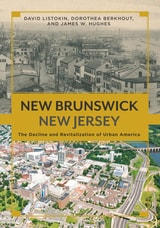
New Brunswick, New Jersey
The Decline and Revitalization of Urban AmericaListokin, David
Rutgers University Press, 2016
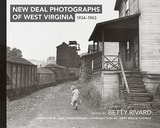
New Deal Photographs of West Virginia, 1934-1943
Betty Rivard
West Virginia University Press, 2012
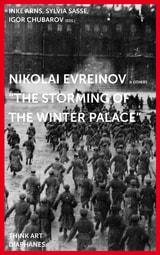
Nikolai Evreinov & Others
»The Storming of the Winter Palace«Edited by Inke Arns, Sylvia Sasse, and Igor Chubarov
Diaphanes, 2017
Nikolaj Evreinov: “The Storming of the Winter Palace” tells the fascinating story of this production. Taking readers through the relevant history, the authors describe the role of The Storming of the Winter Palace in commemorating Soviet power. With a wealth of illustrations, they also show how photographs of Evreinov’s theatrical storming eventually became historical documents of the October Revolution themselves.
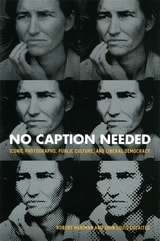
No Caption Needed
Iconic Photographs, Public Culture, and Liberal DemocracyRobert Hariman and John Louis Lucaites
University of Chicago Press, 2007
In No Caption Needed, Robert Hariman and John Louis Lucaites provide the definitive study of the iconic photograph as a dynamic form of public art. Their critical analyses of nine individual icons explore the photographs themselves and their subsequent circulation through an astonishing array of media, including stamps, posters, billboards, editorial cartoons, TV shows, Web pages, tattoos, and more. Iconic images are revealed as models of visual eloquence, signposts for collective memory, means of persuasion across the political spectrum, and a crucial resource for critical reflection.
Arguing against the conventional belief that visual images short-circuit rational deliberation and radical critique, Hariman and Lucaites make a bold case for the value of visual imagery in a liberal-democratic society. No Caption Needed is a compelling demonstration of photojournalism’s vital contribution to public life.
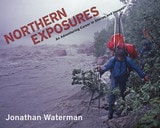
Northern Exposures
An Adventuring Career in Stories and ImagesJonathan Waterman
University of Alaska Press, 2013
North of the sixtieth parallel, the sun shines for less than six hours in the winter, and towering mountains are the only skyscrapers. Pristine waters serve caribou, moose, and bears in an unbroken landscape. At any given moment in this spectacular scenery, there’s a chance that Jonathan Waterman is present, trekking across the land. A masterful adventurer, Waterman has spent decades exploring the farthest reaches of our beautiful spaces. The essays and photographs collected in Northern Exposures are a product of this passion for exploration and offer an unparalleled view into adventuring in the north and beyond.
Picking up after In the Shadow of Denali, his first book of essays, Northern Exposures collects twenty-three stories from Waterman’s thirty-year career that show the evolution of the adventurer’s career and work, from ducking avalanches near the Gulf of Alaska, to searching for the most pristine tundra on the continent, and from writing haiku on Denali in the depth of winter to decrying oil development in the Arctic National Wildlife Refuge. Ninety-six spectacular photographs taken by Waterman during his expeditions lend a broader context and allow readers to fully understand his heartfelt argument for protecting these places. Whether active, aspiring, or just armchair adventurers, readers will be inspired by Waterman’s daring spirit.
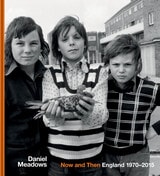
Now and Then
England 1970-2015Daniel Meadows
Bodleian Library Publishing, 2019
This book includes important work from Meadows’s groundbreaking projects, drawing on the archives now held at the Bodleian Library. It follows the maverick documentarian as he ran a free portrait studio in Manchester’s Moss Side in 1972 and then traveled 10,000 miles to make a national portrait from his converted double-decker, the Free Photographic Omnibus, a project he revisited a quarter-of-a-century later. The book goes on to show how, at the turn of the millennium, Meadows adopted new “kitchen table” technologies to make digital stories, which he dubbed “multimedia sonnets from the people.” Through the unique voices of his subjects, Meadows has made and continues to make moving and insightful commentaries on life in Britain.
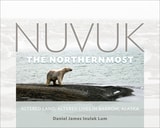
Nuvuk, the Northernmost
Altered Land, Altered Lives in Barrow, AlaskaDaniel James Inulak Lum
University of Alaska Press, 2013
As arguments over climate change rage in more temperate locales, Nuvuk, the Northernmost is a poignant snapshot of life in a town where these changes are impossible to overlook. Lum’s vivid photographs of wildlife, such as whales, polar bears, and birds, offer rare close-ups of animals few ever see. In addition, Lum provides vivid descriptions and pictures of daily life in and around Barrow, offering a compelling insider’s introduction to living on the tip of the world. With Lum as a capable guide, Nuvuk, the Northernmost is a chance to see a rare world before it changes forever.