Results by title
60 books match the query 'Physical' and 4 start with n
Navigating the Cultures of Health Care and Health Insurance
Highly Skilled Migrants in the U.S.Nina Zeldes
University College London, 2023
What are the barriers preventing migrants from accessing and successfully using health care in their new home country? Do these barriers vary based on the migrants’ country of origin? And are they a problem for highly skilled migrants, who often have well-paid jobs and health insurance provided by their employers? Based on field research conducted in the Washington DC area, Navigating the Cultures of Health Care and Health Insurance brings together mixed methods, qualitative, and quantitative approaches to the study of foreign patients’ utilization and assessment of health care in the United States. Through interviews with both health care providers and patients, attitudes toward health insurance and medical treatment are compared for migrants from three countries with very different cultural backgrounds and health insurance systems: Germany, India, and Japan.
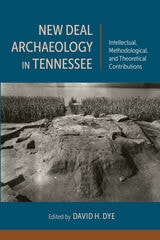
New Deal Archaeology in Tennessee
Intellectual, Methodological, and Theoretical ContributionsEdited by David H. Dye
University of Alabama Press, 2016
Exploring how New Deal innovation transformed archaeology in the American South.
New Deal Archaeology in Tennessee tells the engrossing story of Southeastern archaeology in the 1930s. The Tennessee Valley Authority Act of May 1933 initiated an ambitious program of flood control and power generation by way of a chain of hydroelectric dams on the Tennessee River. The construction of these dams flooded hundreds of thousands of square miles of river bottoms, campsites, villages, and towns that had been homes to Native Americans for centuries. This triggered an urgent need to undertake extensive archaeological fieldwork throughout the region. Those studies continue to influence contemporary archaeology.
The state of Tennessee and the Tennessee Valley were especially well suited research targets thanks to their mild climate and long field seasons. A third benefit in the 1930s was the abundance of labor supplied by Tennesseans unemployed during the Great Depression. Within months of the passage of the Tennessee Valley Authority Act, teams of archaeologists fanned out across the state and region under the farsighted direction of Smithsonian Institution curators Neil M. Judd, Frank H. H. Roberts, and Frank M. Setzler. The early months of 1934 would become the busiest period of archaeological fieldwork in US history.
The twelve insightful essays in New Deal Archaeology in Tennessee document and explore this unique peak in archaeological study. Chapters highlight then-new techniques such as mound “peeling” and stratigraphic excavation adapted from the University of Chicago; the four specific New Deal sites of Watts Bar Reservoir, Mound Bottom, Pack, and Chickamauga Basin; bioarchaeology in the New Deal; and the enduring impact of the New Deal on contemporary fieldwork.
The challenges of the 1930s in recruiting skilled labor, training unskilled ancillary labor, developing and improvising new field methods, and many aspects of archaeological policies, procedures, and best-practices laid much of the foundation of contemporary archaeological practice. New Deal Archaeology in Tennessee offers an invaluable record of that pivotal time for professional, student, and amateur archaeologists.
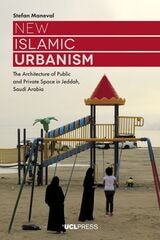
New Islamic Urbanism
The Architecture of Public and Private Space in Jeddah, Saudi ArabiaStefan Maneval
University College London, 2019
Combining Michael Warner’s concepts of publics and counterpublics with theories of space and sociological approaches to architecture, Stefan Maneval explores the concept of New Islamic Urbanism in Saudi Arabia, arguing that this architectural trend, which is characterized by an emphasis on privacy protection through high enclosures, gates, blinds, and tinted windows, constitutes for some an important element of piety. At the same time, it enables different conceptions of privacy, banned social practices, as well as the formation of publics and counterpublics.
Based on rich ethnographic data collected by the author, New Islamic Urbanism challenges normative assumptions on gender segregation in Muslim societies and provides a nuanced account of the meaning of publicness and privacy in Muslim contexts in general. It will be of particular interest to an academic readership in Middle East and Islamic studies, as well as in architecture, urban planning and anthropology.
Newer Dimensions of Patient Care
The Use of the Physical and Social Environment for Therapeutic PurposesEsther Lucille Brown
Russell Sage Foundation, 1961