Results by title
557 books match the query 'Poems' and 13 start with n
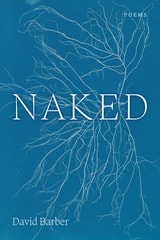
NAKED
PoemsDavid Barber
Northwestern University Press, 2027
A moving and sonically stunning exploration into the body and soul
David Barber’s masterful new book, NAKED, is powered by prolific feats of verbal prowess. With formal dexterity, nerve, and ingenious wordplay, these poems grapple with the serious business of soulmaking. In a spacious collection that enacts changes on the touch-and-go of innocence and experience, these poems are rife with inklings and reckonings in the name of muscle memory and mortal longing. Here, Hollywood meets Babylon in the Garden of Earthly Delights; Odysseus opts for a username; the naked eye goes toe-to-toe with the naked truth; American sonnets & ampersands run wild. NAKED is an all-out lovers’ quarrel over the give-and-take of the spirit and flesh—and Barber is all in.
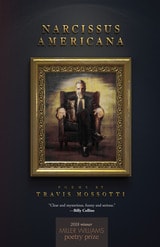
Narcissus Americana
PoemsTravis Mossotti
University of Arkansas Press, 2018
Winner, 2018 Miller Williams Poetry Prize
Narcissus Americana sings and scraps and wrestles its way across various landscapes—abandoned quarries, art museums, lavish homes, and tar pits—in a quest to attain a more complex vision of what it means to be upwardly mobile.
These poems question the usefulness of wealth and ownership as markers of success. Taking wine fridges and fake flowers as emblems of capitalism’s failure to assuage human loneliness, the speakers in these poems find joy in shared meals and glasses of wine, and use moments of mutual attention to challenge notions of class in America. Intimacy is on display in “Cruising Altitude,” where the speaker finds a sublime communion between two disparate worldviews during an in-flight conversation with his father:
I ask if his certainty about humanity’s course gives
his life some kind of purpose. He doesn’t sleep well.
I know this. I quote Yeats. He quotes scripture.
Light balances on the wing and casts its yellow spell. . . .
Sharply written, and with an eye for form, these poems engage with heavy inquiry but also know better than to take themselves too seriously, making it possible for, say, dungeons to share space with donuts, as in the poem “Rancho La Brea.”
Mossotti’s timely book invites the reader to traverse America, and see the nation anew, on a journey marked simultaneously by critical scrutiny and deep affection.
News from Where I Live
PoemsMartin Lammon
University of Arkansas Press, 1998
Winner of the eighth annual Arkansas Poetry Award, Martin Lammon writes poems that deal fearlessly and directly with their subjects. Tenderness, complexity, compassion, reverence, and condemnation are all within his range.
Writing of love, he can speak broadly and universally of the heart, yet in the same poem, he can intricately describe a woman’s hand, a fire on a beach, or the hollows around a lover’s eye. Even when he works in the voice of a suicide, his precision can be devastating, as in these lines: “When you lie beside me under stars, each needlepoint / of light pricks my bare arms.”
With equal ease, Lammon travels across miles, cultures, and time, writing of kilns and potters in Japan, long-dead Eskimos in Alaska, or Blue Hole Cave in Pennsylvania.
Full of grace and candor, these poems pursue the stories that shimmer behind the day’s headlines, seeking the spirit at stake in the “lives beside [our] own whose secrets are worth loving.”
Night Vision
PoemsKendel Hippolyte
Northwestern University Press, 2006
it is difficult to see through it. And yet we must
or we become it, become nothing else but history.
It is this challenge, laid down in the powerful title poem of this collection, which Kendel Hippolyte takes up in Night Vision. And the history that Hippolyte penetrates is a history of the change overtaking the island of St. Lucia. As town becomes city and city spreads like a cancer, the poet's searching verse finds among the waste of humanity, nature, and culture a microcosm of the transforming Caribbean-from tradition, community, rooted identity, to social fragmentation, isolation, uncertainty. And yet, in the personal, away from the daytime public glare, Night Vision also finds the possibility of renewal. Engaging society and self, the poet's dialogue is conducted in a range of poetic voices and styles-the traditional forms of sonnet, villanelle, triolet, echo poem, as well as dramatic monologues in Caribbean English idioms and rhythms of speech; poems written to the metrics of blues and rap alongside free verse poems that expand in long-breath incantatory lines and contract in miniaturist forms as concise as graffiti. The joyful linguistic energy of the poems is perhaps what makes them, and us, look beyond the glaring reality they contemplate to a more hopeful, if nighttime, vision.
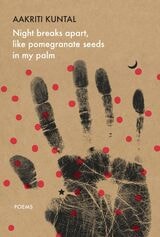
Night breaks apart, like pomegranate seeds in my palm
PoemsAakriti Kuntal
Seagull Books, 2025
What does it mean to exist within language—to shape it, and in turn, to be shaped by it? In Night breaks apart, like pomegranate seeds in my palm, Aakriti Kuntal crafts poems that unravel at the edges of self and myth, where language is neither home nor escape, but a threshold to something more elemental. Her verses move like water rolling and sifting through sediment, shifting between dream and flesh. Through intimate confessions and stark observations, she confronts the absurdity of suffering, the weight of the body, and the vast, unknowable machinery of the universe. Each poem resists easy meaning, instead offering raw honesty: language as both wound and salve.
For readers drawn to the introspective and the experimental, Kuntal’s poetry echoes the emotional depth of Ocean Vuong and the intellectual play of Anne Carson. This collection is for those who seek poetry not as answers, but as an experience—visceral, and unafraid to press against the limits of being.

Nine Skies
POEMSA. V. Christie
University of Illinois Press, 1997
for the 1996 National Poetry Series
The late poet James V. Dickey
was judge of the Yale Prize poetry competition when he wrote to A. V.
Christie, one of the finalists, "I have become very fond of your
poems, especially the elegiac ones. . . . Your work is heartfelt; one
believes every word of it. . . . You have given me much in-depth pleasure;
have moved me strongly."
The work in Nine Skies
is as Dickey described it--heartfelt, moving. Here is what others
say about it:
"Beautifully crafted
and sustained, with six or seven poems as fine as anything being written
today. This remarkable book is a rite of passage for the poet and speaks
of even better things to come." -- Elizabeth Spires
"Only the best poetry
is written this well, with this much craft and conviction. Of course the
poems are meditative and elegiac, brilliant and finely detailed, but they
are also thought through and wholly felt, so that even in their small
moments they celebrate."
-- Stanley Plumly
"A. V. Christie writes
with a Romantic's eye and a Realist's heart, so there is no sentimentality,
that sickness afflicting our age. The voice on these pages is hard-bitten,
luxuriant, and true." -- Henri Cole
"Nine Skies is
a graceful realization in each detail of elegy or celebration." --
Sandra McPherson
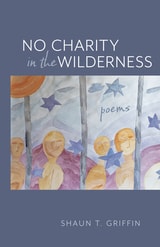
No Charity in the Wilderness
PoemsShaun T. Griffin
University of Nevada Press, 2024
Griffin has spent many decades in the high desert trying to find the way forward—when what he knows has been challenged and still there is breath on the horizon. One day an ancient Chinese poet comes to visit: "Snow deepens/ to quiet what I once believed, and Wang Wei stoops from the spine:/ this is how you become silence." Even if you doubt the old poet's counsel, like Griffin, you want to journey with him into the wilderness.
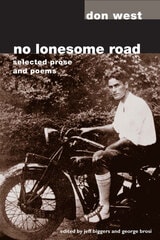
No Lonesome Road
SELECTED PROSE AND POEMSDon West
University of Illinois Press, 2004
No Lonesome Road allows Don West to speak for himself. It provides the most comprehensive collection of his poetry ever published, spanning five decades of his literary career. It also includes the first comprehensive and annotated collection of West's nonfiction essays, articles, letters, speeches, and stories, covering his role at the forefront of Southern and Appalachian history, and as a pioneer researcher and writer on the South's little-known legacy of radical activism.
Drawing from both primary and secondary sources, including previously unknown documents, correspondence, interviews, FBI files, and newspaper clippings, the introduction by Jeff Biggers stands as the most thorough, insightful biographical sketch of Don West yet published in any form.
The afterword by George Brosi is a stirring personal tribute to the contributions of West and also serves as a thoughtful reflection on the interactions between the radicals of the 1930s and the 1960s.
The best possible introduction to his extraordinary life and work, this annotated selection of Don West's writings will be inspirational reading for anyone interested in Southern history, poetry, religion, or activism.
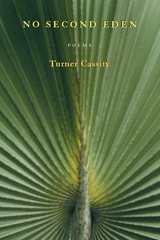
No Second Eden
PoemsTurner Cassity
Ohio University Press, 2002
If you think that Turner Cassity has mellowed or slowed down since the 1998 release of his selected poems, The Destructive Element, think again. In No Second Eden Cassity is back more Swiftian than ever. Among the targets reduced to ruin are countertenors, parole boards, the French Symbolists, calendar reformers, the Yale Divinity School, and the cult of Elvis. Without turning a blind eye, he even extends a toast to Wernher von Braun.
Surprisingly, there is a poem about the Mississippi in which Cassity grew up. Unsurprisingly, it is a vision quite unlike others of that state. Its chilly and amusing precision is about as far from Southern Gothic as you can get, although elsewhere there are faint hints of a failed Good Ole Boy. Indeed, the final poems in the collection are a bit more personal than one expects of this writer.
As rigorous in form as they are in feeling, the poems of No Second Eden are not for those with preconceived ideas of poetry or its purpose. Early in Cassity’s career, James Merrill described Cassity’s work as “an opera house in the jungle.” True so far as it goes, but he might also have called it the jungle in the opera house: a glimpse at the savagery behind every façade.
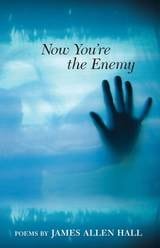
Now You're the Enemy
PoemsJames Allen Hall
University of Arkansas Press, 2007
A family in the aftermath of violence These raw and powerful poems have at their heart the charged, archetypal figure of the mother. Conflicted by the twin desires of self-destruction and self-preservation, this mother is both terrible and beautiful. This compassionate, nervy collection of poems shows a family in the aftermath of violence. James Allen Hall explores themes of loss, the intersection of grief and desire, and the ways in which history, art, and politics shape the self. We meet the speaker's mother in many guises-she is the rogue Republic of Texas, the titular character of Rosemary's Baby, a nineteenth century artist's model, a fake entry in an encyclopedia, the lost queen of King Lear. With clarity, wit, and compassion, the speaker discovers the facets of his mother-her own abuse, her years of adultery, her struggle to remain independent-so that he may come to terms with his own sexuality. By seeing his mother in these guises, the speaker understands identity as it develops along and is reclaimed from the most repressive of social margins. Hall's poems twine the autobiographical impulse with a deeper emotional, somewhat surreal, temperament. This is a book as much about the way we tell our stories as it is about the stories we tell. Now You're the Enemy negotiates narrative in order to refashion the self-as a way to survive, to learn the redemptive power of love.
Nowhere to Arrive
PoemsJenny Xie, foreword by Chris Abani
Northwestern University Press, 2017
At the chapbook's center are two long poems, titled "Phnom Penh Diptych: Wet Season" and "Phnom Penh Diptych: Dry Season," that examine the escapist narratives that draw tourists and expatriates to Cambodia, and the speaker’s own privileged positioning.
On a formal level, the poems in Nowhere to Arrive make room for the unsaid and that which cannot be articulated. Here, we have a vocabulary of silence alongside stark imagistic juxtapositions, poems that celebrate compression and the force of paratactic constructions. Attentiveness and concentration emerge as virtues, as the speaker surveys the vast territory of the present with a wakeful gaze.
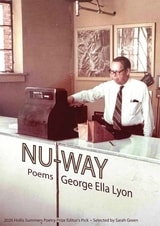
Nu-Way
PoemsGeorge Ella Lyon
Ohio University Press, 2027
Nu-Way traces the evolution of a writer from a three-year-old sitting on the counter of her daddy’s dry cleaner's to a fully developed poet. George Ella Lyon journeys from her role as the keeper of family stories to the teller of her own. This is a book of becoming, of claiming a self.
Growing up in the mountains of eastern Kentucky, near all four of her grandparents, Lyon was schooled in secrets and learned, of necessity, to keep her own. In Nu-Way, her sixth collection, she takes up both sides of the family tapestry: the scenes intentionally stitched and the tangle on the other side. This is not a process of power, but of inner transformation, of coming to terms with herself as well as the people who made her. It holds the tension of opposites—the individual and the collective—without sacrificing either. Highly sharable, Nu-Way will appeal to readers who often feel shut out of poetry.
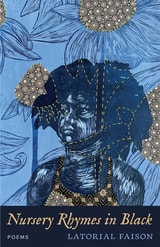
Nursery Rhymes in Black
PoemsLatorial Faison
University of Alaska Press, 2025
The collection highlights family, overcoming adversity, and endurance from the Black female perspective and celebrates the individuals and experiences that shape life and have catapulted the author into a unique existence. Narrative poems give voice to the Black Southern girlhood experience of being saved, nurtured, inspired, and even challenged by plight and circumstance. Strengthened by her experiences, Faison provides power, courage, and wisdom that resonate deeply. These poems walk in naked truth on a lyrical, musical tightrope as each brings wisdom and honesty in the intimacy of arranged words. Faison takes readers along the development of her own identity, considering stories of unsung heroes, the hands that feed us, the ancestors and traditions that form us, and the challenging ways that race, history, education, and culture intersect. With this spiritually moving collection, Faison joins all poets and writers who have come to prolifically amplify Black voices, to tell Black stories, to continue the Black literary tradition we have been gifted.
In these poems, Faison calls readers into poetic fellowship with the memories, the legacies, the truths of Black women in the South. There is reverence, history, and glory on these pages celebrating the hands, hearts, work, trouble, and ways of Black women and all the ways they teach, become, fascinate, struggle, survive, and exist in the world. Nursery Rhymes in Black lulls us—but not to sleep—rather, to wake up, to speak out, to take a stand, to advocate as we pause to remember, understand, and celebrate.