Results by title
1148 books match the query 'Political Ideologies' and 41 start with n

Narcissist Nation
Reflections of a Blue-State ConservativeGeorge J. Marlin
St. Augustine's Press, 2011
Narratives Unbound
Historical studies in post-communist Eastern EuropePéter Apor
Central European University Press, 2007
Narratives of Exile and Identity
Soviet Deportation Memoirs from the Baltic StatesTomas Balkelis
Central European University Press, 2018
Nation, Language, Islam
Tatarstan's Sovereignty MovementHelen M. Faller
Central European University Press, 2011
National Cultures at Grass-root Level
Antonina Kloskowska
Central European University Press, 2001
The major dilemma this volume addresses is the function of national identity in a modern society, for despite the trend towards globalization, the world continues to be riddled with national conflict.
Kłoskowska begins by looking at the controversy between two competing concepts of the origin of the nation – political and ethnic. She examines the central issues of the argument, and in particular, the characteristics and effects of ethnic differences on personal identity and the appropriation of national culture. Her theories are based upon autobiographies by individuals belonging to various national minorities in Poland and other areas where ethnic borders are blurred. The group studied included mostly young intellectuals: Ukrainians, Belarussians and Silesian-Germans. She examines the national attitudes of the various countries the ethnic minorities have been forced to live with. In her conclusion, Kłoskowska takes the view that national cultures are either ‘open’ or ‘closed’ and stresses the importance of participating in more than one cultural medium.
National Cultures at the Grass-Root Level is rich in information on contemporary theories of the nation, on its origin, character and future, and offers a deep insight into the complex and often ambiguous reality of national attitudes.

National Holidays in Czechoslovakia Between the World Wars
Celebrate the RepublicDagmar Hájková
Central European University Press, 2027

National Identity
Anthony D. Smith
University of Nevada Press, 1993

National Identity of Romanians in Transylvania
Sorin Mitu
Central European University Press, 2001
This meticulously researched and elegantly written book is the most authoritative study of the emergence of modern Romanian identity in Transylvania during the eighteenth and nineteenth centuries. Based upon a plethora of contemporary published sources, Mitu approaches national identity from a variety of perspectives - from within the Romanian community itself and their reaction to the image others had of them.
The author sheds new light on the problems of self-evaluation using a method he describes as "functional analysis" to examine a complex set of ideologies and propaganda. This approach helps the reader to understand the intricate web of contemporary Romanian nationalism.
National Identity of Romanians in Transylvania appeals to scholars of modern Romanian history, those focusing on the Habsburg Monarchy and the study of modern nationalism. The book is an important contribution to the expanding debate on nationalism and national identity from an East European perspective.
National Romanticism
The Formation of National MovementsMiroslav Hroch
Central European University Press, 2007
Nationalism and Beyond
Introducing Moral Debate about ValuesNenad Mišcevic
Central European University Press, 2001
A very readable introduction to the concepts and principles shaping the philosophical debate around nationalism. The book provides portraits of two kinds of nationalists: the tougher type, more common in everyday life, and the ultra-moderate "liberal nationalist" encountered in academia. The author introduces a debate with a "thoughtful nationalist," one who defends the view that states should be organized around national culture and that individuals have basic obligations to their nation. The author attempts to answer his opponent's standard arguments and presents a fully documented critique of his views.
A passion born from Miscevic's encounter with nationalism in the former Yugoslavia glows from every line of the argument. Questions raised and discussed include: Why is radicalism typical of nationalism? How successful is the nation-state? Does nationalism support liberal-democratic values? Is membership in a nation necessary for human fulfillment and for understanding values? Why might nationalism be immoral?
The book is unique not only because it explains a contemporary moral debate, in terms clear to the non-philosopher reader, but also because it has been written from the perspective of Central and Eastern Europe based on the author's personal experience.
Nationalism and Sexuality
Middle-Class Morality and Sexual Norms in Modern EuropeGeorge L. Mosse, With a critical introduction by Mary Louise Roberts
University of Wisconsin Press, 2020

Nationalism and Terror
Ante Pavelic and Ustasha Terrorism from Fascism to the Cold WarGiorgio Cingolani
Central European University Press, 2018

Nationalism and the Economy
Explorations into a Neglected RelationshipStefan Berger
Central European University Press, 2019
Nationalism and the Politics of Culture in Quebec
Richard Handler
University of Wisconsin Press, 1988
Bringing together methodologies of history, sociology, political science, and philosophy, as well as anthropology, Handler centers on the period 1976–1984, during which the independantiste Parti Québéois was in control of the provincial government and nationalistic sentiment was especially strong. Handler draws on historical and archival research, and on interviews with Quebec and Canadian government officials, as he addresses the central question: Given the similarities between the epistemologies of both anthropology and nationalist ideology, how can one write an ethnography of nationalism that does not simply reproduce—and thereby endorse—nationalistic beliefs? Handler analyzes various responses to the nationalist vision of a threatened existence. He examines cultural tourism, ideology of the Quebec government, legislations concerning historical preservation, language legislation and policies towards immigrants and “cultural minorities.” He concludes with a thoughtful meditation on the futility of nationalisms.
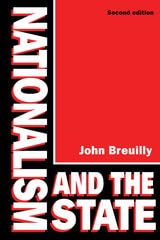
Nationalism and the State
John Breuilly
University of Chicago Press, 1993
Breuilly challenges the conventional view that nationalism emerges from a sense of cultural identity. Rather, he shows how elites, social groups, and foreign governments use nationalist appeals to mobilize popular support against the state. Nationalism, then, is a means of creating a sense of identity. This provocative argument is supported with a wide-ranging analysis of pertinent examples—national opposition in early modern Europe; the unification movement in Germany, Italy, and Poland; separatism under the Hapsburg and Ottoman empires; fascism in Germany, Italy, and Romania; post-war anti-colonialism and the nationalist resurgence following the breakdown of Soviet power.
Still the most comprehensive and systematic historical comparison of nationalist politics, Nationalism and the State is an indispensable book for anyone seeking to understand modern politics.
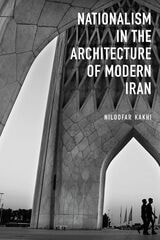
Nationalism in Architecture of Modern Iran
Niloofar Kakhi
Gingko, 2023
Nationalism in Architecture of Modern Iran is the first comprehensive book on modern architecture in Iran to be published in English. It addresses the relationship between nationalism and architecture in Iran and discusses the role Western architects played in the development of modern architecture in the country while introducing some of the most significant and recent projects in Iran. It investigates what it means to design a building that bears an Iranian or Islamic-Iranian identity and how to construct a conceptual platform for critically assessing representations of national identity in contemporary architecture. This book will directly help practicing architects and policymakers of the built environment, especially in Iran, as well as give a comprehensive understanding of the modern history of architecture in Iran to art historians and a broader audience. It introduces some of the most significant and recent projects in Iran for the first time.

Nationalism in India
Past and PresentIrfan Habib
Seagull Books, 2023
What makes a people living in a mere “geographical expression” a nation? From the French Revolution onwards, the word “nation” came to denote a people who wish to be collectively free. But free from what—colonial rule and inequality? Or religious and cultural diversity?
In this timely and succinct essay, Irfan Habib charts India’s struggle to consolidate a nationalist identity, to identify what it sought to be free from. Even as the colonial regime denied the very possibility of nationalism in the subcontinent, opposition to British rule fomented just such a sentiment. But resistance against colonial exploitation alone could not unify the Indian people. Internal inequalities—caste, poverty, religious bigotry—remained (and still remain) to be tackled.

Nationalismes, antisémitismes et débats autour de l’art juif
De quelques critiques d’art au temps de l’École de Paris (1925–1933)Alessandro Gallicchio
Diaphanes, 2023

Nationalizing Empires
Stefan Berger
Central European University Press, 2015

Nations and Nationalism
A ReaderSpencer, Philip
Rutgers University Press, 2005
Nationalism has become a topic of wide-ranging significance and heated debate over recent years, with a huge expansion in the amount of literature available. Bringing together the best and most representative of these writings, Nations and Nationalism is an essential reader for students of political theory and related fields.
Assembled by two influential scholars, the volume includes the core, basic texts required for any course on nationalism, along with a selection of less well-known contributions that illuminates the debates. Articles and chapters cover the origins, different types, and concepts of nationalism; its relationship with race, gender, and ethnicity; the impact of globalization, post-communism, and migration; and debates about citizenship and self-determination. Classic writers such as Ernest Gellner, Anthony Smith, Benedict Anderson, and John Breuilly are represented along with younger scholars who have played a critical role in reshaping contemporary attitudes toward the topic.
Selected writings by historians, sociologists, and anthropologists supplement contributions from political scientists so that students will be able to compare theories and debates across a range of disciplines and time periods. Taken together, the chapters provide a balanced and vivid overview of how nationalism has exploded as a topic of inquiry over the last two decades and how it has interacted with other political and social forces.

Necro Citizenship
Death, Eroticism, and the Public Sphere in the Nineteenth-Century United StatesRuss Castronovo
Duke University Press, 2001
Moving from medical engravings, séances, and clairvoyant communication to Supreme Court decisions, popular literature, and physiological tracts, Necro Citizenship explores how rituals of inclusion and belonging have generated alienation and dispossession. Castronovo contends that citizenship does violence to bodies, especially those of blacks, women, and workers. “Necro ideology,” he argues, supplied citizens with the means to think about slavery, economic powerlessness, or social injustice as eternal questions, beyond the scope of politics or critique. By obsessing on sleepwalkers, drowned women, and other corpses, necro ideology fostered a collective demand for an abstract even antidemocratic sense of freedom. Examining issues involving the occult, white sexuality, ghosts, and suicide in conjunction with readings of Harriet Jacobs, Ralph Waldo Emerson, Frederick Douglass, Nathaniel Hawthorne, and Frances Harper, Necro Citizenship successfully demonstrates why Patrick Henry's “give me liberty or give me death” has resonated so strongly in the American imagination.

Negotiating Identity and Collective Memory in Czech Silesia
Johana Wyss
Central European University Press, 2026

Neither Liberal nor Conservative
Ideological Innocence in the American PublicDonald R. Kinder and Nathan P. Kalmoe
University of Chicago Press, 2017
Well, American elites disagree fiercely. But average Americans do not. This, at least, was the position staked out by Philip Converse in his famous essay on belief systems, which drew on surveys carried out during the Eisenhower Era to conclude that most Americans were innocent of ideology. In Neither Liberal nor Conservative, Donald Kinder and
Nathan Kalmoe argue that ideological innocence applies nearly as well to the current state of American public opinion. Real liberals and real conservatives are found in impressive numbers only among those who are deeply engaged in political life. The ideological battles between American political elites show up as scattered skirmishes in the general public, if they show up at all.
If ideology is out of reach for all but a few who are deeply and seriously engaged in political life, how do Americans decide whom to elect president; whether affirmative action is good or bad? Kinder and Kalmoe offer a persuasive group-centered answer. Political preferences arise less from ideological differences than from the attachments and antagonisms of group life.

Neoliberalism and Unlawful Governance
The Crisis of Democratic RightsGuillermina Seri
University of Michigan Press, 2026
In looking at the ways in which people resist, the book honors the perspective of the excluded and the voices of those most immediately affected by neoliberal austerity—from activists defending land and rights to communities subjected to various forms of exploitation, extractivism, and displacement. Bringing in these voices and theoretical perspectives, including from beyond the English-speaking world, this book highlights alternative ways of thinking about democracy and rights, drawing from the tradition of the commons. Through its deep analysis of history, theory, and world events, Neoliberalism and Unlawful Governance offers fresh insights into how various forms of emergency measures, policing, and security are used to privilege markets over people and the planet, while also emphasizing the crucial role of popular movements in defending and expanding democratic rights and to rebuilding commons.

Neoliberalism in Vietnam, Volume 20
Ann M. Leshkowich and Christina Schwenkel
Duke University Press, 0
Contributors draw their conclusions from ethnographic fieldwork in contemporary urban spaces. They link neoliberalism in Vietnam to a set of globally diverse technical practices, institutions, modes of power, and governing strategies; for example, in its shifting currency regimes and its anticorruption campaigns. Contributors also explore the growing emphasis on self-improvement and modernization through studies of architecture, changing beauty standards, and the impact of in vitro fertilization. Biopolitical logics and the self-regulation of moral personhood are also addressed in essays on HIV/AIDS and transnational adoption. The issue highlights the ways in which the socialist past is integral to the present in Vietnam, even as it is remade and newly configured.
Contributors: Erik Harms, Nina Hien, Ann Marie Leshkowich, Li Zhang, Ken MacLean, Alfred John Montoya, Melissa J. Pashigian, Christina Schwenkel, Allison Truitt
Guest editors: Christina Schwenkel (Associate Professor, Department of Anthropology, University of California at Riverside) and Ann Marie Leshkowich (Associate Professor and Chair, Department of Sociology and Anthropology, College of the Holy Cross).
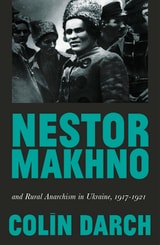
Nestor Makhno and Rural Anarchism in Ukraine, 1917-1921
Colin Darch
Pluto Press, 2020
Between 1917 and 1921, the Makhnovists fought German and Austrian invaders, reactionary monarchist forces, Ukrainian nationalists and sometimes the Bolsheviks themselves. Drawing upon anarchist ideology, the Makhnovists gathered widespread support amongst the Ukrainian peasantry, taking up arms when under attack and playing a significant role - in temporary alliance with the Red Army - in the defeats of the White Generals Denikin and Wrangel. Often dismissed as a kulak revolt, or a manifestation of Ukrainian nationalism, Colin Darch analyses the successes and failures of the Makhnovist movement, emphasising its revolutionary character.
Over 100 years after the revolutions, this book reveals a lesser known side of 1917, contributing both to histories of the period and broadening the narrative of 1917, whilst enriching the lineage of anarchist history.

Nestor Makhno and Rural Anarchism in Ukraine, 1917-1921
Colin Darch
Pluto Press, 2020
Between 1917 and 1921, the Makhnovists fought German and Austrian invaders, reactionary monarchist forces, Ukrainian nationalists and sometimes the Bolsheviks themselves. Drawing upon anarchist ideology, the Makhnovists gathered widespread support amongst the Ukrainian peasantry, taking up arms when under attack and playing a significant role - in temporary alliance with the Red Army - in the defeats of the White Generals Denikin and Wrangel. Often dismissed as a kulak revolt, or a manifestation of Ukrainian nationalism, Colin Darch analyzes the successes and failures of the Makhnovist movement, emphasizing its revolutionary character.
Over 100 years after the revolutions, this book reveals a lesser known side of 1917, contributing both to histories of the period and broadening the narrative of 1917, whilst enriching the lineage of anarchist history.

Never Again? Never Gone!
Old and New Anti-SemitismMichael Wolffsohn
St. Augustine's Press, 2026
Michael Wolffsohn charges head-on the varying reactions to the Hamas "murder orgy" of 7 October 2023. Political leaders proclaim that anti-Semitism has no place in Germany, but Wolffsohn identifies a dangerous resurgence in the wake of these atrocities. On the 85th Anniversary of the November pogrom of 1938, Wolffsohn delivered a passionate speech before the Berlin House of Representatives. Two versions of this speech exist--one written prior the Hamas attacks and another written after the event. The variances highlight the depth of rupture that the responses to the attacks provoked. Both speeches are contained in this book, and they give evidence to the reality that antisemitism was never eradicated, it is simply "old or new." Interwoven with deeply personal reflections, Wolffsohn offers a scathing critique of attempts to cover antisemitism in Europe and questions the authenticity of the vow to eliminate it. This German bestselling account of the cyclical reoccurrence of anti-Semitic campaigns reveals repeated and worsening political and social consequences globally, but especially in Germany where the presumption is that historical memory condemns such thinking.

New Asian Marxisms
Tani E. Barlow, ed.
Duke University Press, 2002
While some of these essays take up key thinkers in Marxist history or draw attention to outstanding problematics, others focus on national literature and discourse in North and South Korea, the "Mao Zedong Fever" of the 1990s, the implications of Li Dazhao's poetry, and the Indian Naxalite movement. Illustrating the importance of central analytical categories like exploitation, alienation, and violence to studies on the politics of knowledge, contributors confront prevailing global consumerist fantasies
with accounts of political struggle, cultural displacement, and theoretical strategies.
Contributors. Tani E. Barlow, Dai Jinhua, Michael Dutton, D. R. Howland, Marshall Johnson, Liu Kang, You-me Park, William Pietz, Claudia Pozzana, Alessandro Russo, Sanjay Seth, Gi-Wook Shin, Sugiyama Mitsunobu, Jing Wang

New Public Administration
H. George Frederickson
University of Alabama Press, 1980
A foundational exploration of social equity, public service, and the transformation of modern government.
In New Public Administration, H. George Frederickson presents a landmark examination of one of the most influential movements in modern public administration. Challenging traditional bureaucratic models, Frederickson explores how public institutions can become more responsive, equitable, and accountable to the citizens they serve. Emphasizing social equity, ethical governance, and the relationship between public organizations and society, this classic work continues to shape contemporary discussions of public service, government reform, and administrative leadership. This book will appeal to students and scholars of public administration, political science, public policy, government management, and practitioners seeking a deeper understanding of effective and equitable public service.
New Threats to Freedom
Adam Bellow
Templeton Press, 2011
New Threats to Freedom
In the twentieth century, free people faced a number of mortal threats,ranging from despotism, fascism,
and communism to the looming menace of global terrorism. While the struggle against some of these overt dangers continues, some insidious new threats seem to have slipped past our intellectual defenses. These often unchallenged threats are quietly eroding our hard-won freedoms and, in some cases, are widely accepted as beneficial.
In New Threats to Freedom, editor and author Adam Bellow has assembled an all-star lineup of innovative thinkers to challenge these insidious new threats. Some leap into already raging debates on issues such as Sharia law in the West, the rise of transnationalism, and the regulatory state. Others turn their attention to less obvious threats, such as the dogma of fairness, the failed promises of the blogosphere, and the triumph of behavioral psychology.
These threats are very real and very urgent, yet this collection avoids projecting an air of doom and gloom. Rather, it provides a blueprint for intellectual resistance so that modern defenders of liberty may better understand their enemies, more effectively fight to preserve the meaning of freedom, and more surely carry its light to a new generation.
What are the new threats to freedom?
when has authority not claimed, when imposing trammels and curbs on liberty, that it does so for a wider good and a greater happiness?” —Christopher Hitchens
“The regulatory state amounts to a regressive tax that penalizes small independent producers and protects
the status quo.” —Max Borders
“Europe tends to favor stability over democracy, America democracy over stability.” —Daniel Hannan
“The value of free expression is perceived to be at odds with goals that were considered ‘more important,’ like inclusiveness, diversity, nondiscrimination, and tolerance.” —Greg Lukianoff
“The masses cannot ultimately be free: only the individual can be.” —Robert D. Kaplan
“That old bugbear of postwar sociology—the mob-self—is now a reality. In a participatory/popularity culture, the freedom to think and act for ourselves becomes harder and harder to achieve.” —Lee Siegel
“As traditional marriage declines, the ranks of single women are growing, and increasingly these women are substituting the security of a husband with the security of the state.” —Jessica Gavora
“Ending the freedom to fail is a mean-spirited attack on the freedom to succeed.” —Michael Goodwin
“The only solution to the new threats to American press freedom lies in organized resistance.” —Katherine Mangu-Ward
“The new behaviorism isn’t interested in protecting people’s freedom to choose; on the contrary, its core principle is the idea that only by allowing an expert elite to limit choice can individuals learn to break their bad habits.” —Christine Rosen
“There’s a world of Travis Bickles out there, and they’re not driving cabs. They’re reading blogs.” —Ron Rosenbaum
“The first amendment ensures not that speech will be fair, but that it will be free. It cannot be both.” —David Mamet
Join the conversation about these issues at www.newthreatstofreedom.com

Newcomers, Outsiders, and Insiders
Immigrants and American Racial Politics in the Early Twenty-first CenturyRonald Schmidt Sr., Yvette M. Alex-Assensoh, Andrew L. Aoki, and Rodney E. Hero
University of Michigan Press, 2009
Nietzsche's Corps/e
Aesthetics, Politics, Prophecy, or, the Spectacular Technoculture of Everyday LifeGeoff Waite
Duke University Press, 1996
Waite advances his argument by bringing Marxist—especially Gramscian and Althusserian—theories to bear on the concept of Nietzsche/anism. But he also goes beyond ideological convictions to explore the vast Nietzschean influence that proliferates throughout the marketplace of contemporary philosophy, political and literary theory, and cultural and technocultural criticism. In light of a philological reconstruction of Nietzsche’s published and unpublished texts, Nietzsche’s Corps/e shuttles between philosophy and everyday popular culture and shows them to be equally significant in their having been influenced by Nietzsche—in however distorted a form and in a way that compromises all of our best interests.
Controversial in its “decelebration” of Nietzsche, this remarkable study asks whether the postcontemporary age already upon us will continue to be dominated and oriented by the haunting spectre of Nietzsche’s corps/e. Philosophers, intellectual historians, literary theorists, and those interested in western Marxism, popular culture, Friedrich Nietzsche, and the intersection of French and German thought will find this book both appealing and challenging.
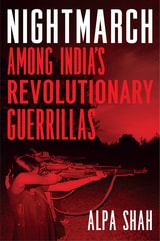
Nightmarch
Among India’s Revolutionary GuerrillasAlpa Shah
University of Chicago Press, 2019
Winner of the 2020 Association for Political and Legal Anthropology Book Prize
Shortlisted for the Orwell Prize
Shortlisted for the New India Foundation Book Prize
Anthropologist Alpa Shah found herself in an active platoon of Naxalites—one of the longest-running guerrilla insurgencies in the world. The only woman, and the only person without a weapon, she walked alongside the militants for seven nights across 150 miles of dense, hilly forests in eastern India. Nightmarch is the riveting story of Shah's journey, grounded in her years of living with India’s tribal people, an eye-opening exploration of the movement’s history and future and a powerful contemplation of how disadvantaged people fight back against unjust systems in today’s world.
The Naxalites have fought for a communist society for the past fifty years, caught in a conflict that has so far claimed at least forty thousand lives. Yet surprisingly little is known about these fighters in the West. Framed by the Indian state as a deadly terrorist group, the movement is actually made up of Marxist ideologues and lower-caste and tribal combatants, all of whom seek to overthrow a system that has abused them for decades. In Nightmarch, Shah shares some of their gritty untold stories: here we meet a high-caste leader who spent almost thirty years underground, a young Adivasi foot soldier, and an Adivasi youth who defected. Speaking with them and living for years with villagers in guerrilla strongholds, Shah has sought to understand why some of India’s poor have shunned the world’s largest democracy and taken up arms to fight for a fairer society—and asks whether they might be undermining their own aims.
By shining a light on this largely ignored corner of the world, Shah raises important questions about the uncaring advance of capitalism and offers a compelling reflection on dispossession and conflict at the heart of contemporary India.

No Longer Subjects of the British King
The Political Transformation of Royal Subjects to Republican Citizens, 1774–1776Shawn David McGhee
Westholme Publishing, 2024
Historian Shawn McGhee offers a fresh perspective on the origins of American political identity. No Longer Subjects of the British King: The Political Transformation of Royal Subjects to Republican Citizens, 1774-1776reveals the crucial process by which the Continental Association organized American towns and counties into a protonational community of suffering to protect political identities they felt under threat. This work further demonstrates how those sacrificing for the common cause severed their bonds of allegiance to the British king and separated from the broader imperial nation. In this crucible of austerity, they formed an American political community, completing the political transformation from subject to citizen.
No Peer Rivals
American Grand Strategy in the Era of Great Power CompetitionIonut Popescu
University of Michigan Press, 2025
No Peer Rivals takes a major staple of International Relations scholarship—the offensive realist paradigm—and develops a comprehensive and practical grand strategy for the United States in this new era of Great Power Competition. The No Peer Rival framework is grounded in a realistic assessment of the most likely courses of action adopted by China, Russia, and other important regional powers. It prioritizes great power rivalry over other strategic goals, and identifies China as the biggest threat to America’s unique position in the international system. This grand strategic approach carefully aligns the domestic sources of national power (economic strength, energy security, and technological prowess) to America’s foreign policy and national security objectives. In addition to recommending necessary changes to America’s military and diplomatic strategies, No Peer Rivals also demonstrates that a realistic approach to industrial policy, international trade, energy production, and technological superiority offers the best chance for developing the sinews of power needed to outcompete Beijing in the long run.

Non-Design
Architecture, Liberalism, and the MarketAnthony Fontenot
University of Chicago Press, 2021

Not Going Back
Public Opinion on Abortion in Post-Dobbs AmericaLaurel Elder, Steven Greene, and Mary-Kate Lizotte
Temple University Press, 2026
Despite intense political debate, attitudes on abortion were remarkably stable for decades. However, after the 2022 Dobbs decision, Americans’ opinions began to change. Not Going Back explores the shifts in public opinion on this hot-button issue from the landmark passing of Roe v. Wade in 1973 through the 2024 election and into 2025.
The authors ask, “What role do Americans want their government to play in protecting, regulating, or restricting abortion access?” and, “How will changing attitudes on abortion reshape American politics?” They offer cohesive, theoretically grounded explanations for both the continuity and the change in Americans’ attitudes on this contentious topic. Using national data, they take a deep dive into the personal experiences and social forces behind these changes.
Not Going Back ends with an examination of the consequences of these changes for election outcomes. While there has been a striking reversal in the prioritization of abortion as an issue among Democrats and Republicans, the full impact of this shift in thinking will be influenced by future policies, court decisions, and party reactions.

Not Yet a Placeless Land
Tracking an Evolving American GeographyWilbur Zelinsky
University of Massachusetts Press, 2011
In this book, cultural geographer Wilbur Zelinsky challenges that nearly universal view and reaches a paradoxical conclusion: that American land and society are becoming more uniform and more diverse at the same time. After recounting the many ways in which modern technologies, an advanced capitalist market system, and a potent central political establishment have standardized the built landscape of the country's vast territory and its burgeoning population over the past two hundred and fifty years, he also considers the vigor of countervailing forces. In a carefully balanced assessment, he documents steady increases in the role of the unpredictable, in the number and variety of arbitrarily located places and activities, and the persistence of basic cultural diversities. Contrary to popular perceptions, place-to-place differences in spoken language, religion, and political behavior have not diminished or disappeared. In fact, Zelinsky shows, novel cultural regions and specialized cities have been emerging even as a latter-day version of regionalism and examples of neo-localism are taking root in many parts of the United States.
Notions of Nationalism
Sukumar Periwal
Central European University Press, 1996
In this highly topical volume, a group of distinguished scholars explore various aspects of nationalism theory and shed light on the current thinking in this area of great contemporary importance. Such topics as primordialism, institutional plurality in multi-ethnic states, historical problems of nationalism, and the importance of local-level understanding in dealing with such problems, are examined with clarity and vision.
Together the essays provide a valuable insight into an intricate debate which is of crucial relevance to the understanding of contemporary politics not only in Central Europe but in the world at large.

Nourishing Victory
Food Shortages and Post-Imperial Transition in the Bohemian Lands and SloveniaRok Stergar
Central European University Press, 2026