Results by title
8812 books match the query 'Political Science' and 211 start with n

NAFTA and Labor in North America
Norman Caulfield
University of Illinois Press, 2010

NATIONALIST FERMENT
ORIGINS OF U.S. FOREIGN POLICY, 1789-1812MARIE-JEANNE ROSSIGNOL
The Ohio State University Press, 2003
This book was published in June 1994 by a French publisher and became the winner of the Organization of American Historians foreign language book prize.
The Nationalist Ferment contributes significantly to the renewal of early U.S. diplomatic history. Since the 1980s, a number of diplomatic historians have turned aside from traditional diplomatic issues and sources. They have instead focused on gender, ethnic relationships, culture, and the connections between foreign and domestic policy.
Rossignol argues that in the years 1789–1812 the new nation needed to assert its independence and autonomous character in the face of an unconvinced world. After overcoming initial divisions caused by foreign policy, Americans met this challenge by defining common foreign policy objectives and attitudes, which both legitimized the United States abroad and reinforced national unity at home. This book establishes the constant connections between domestic and international issues during the early national period.
NBER Macroeconomics Annual, 2025
Volume 40Edited by John Leahy and Valerie Ramey
University of Chicago Press Journals, 2026
Provides a forum for leading economists to participate in important debates in macroeconomics and to report on major developments in macroeconomic analysis and policy.
This fortieth volume of the NBER Macroeconomics Annual includes four new papers on contemporary macroeconomic challenges and methodologies. Christopher Clayton, Matteo Maggiori, and Jesse Schreger examine how hegemonic powers use economic policies as tools of influence on target countries and show how the effectiveness of these policies depends on the target’s available alternatives and whether it can take advantage of those alternatives. José Luis Montiel Olea, Mikkel Plagborg-Møller, Eric Qian, and Christian Wolf provide essential guidance for practitioners choosing between vector autoregressions and local projections for estimating impulse response functions. Kristin Forbes, Jongrim Ha, and M. Ayhan Kose analyze inflation-output tradeoffs across rate cycles from the 1970s to the post-pandemic period using a new cross-country database that reveals how delayed but aggressive monetary responses can generate low-cost disinflation. Satyajit Chatterjee, Dean Corbae, Kyle Dempsey, and José-Victor Ríos-Rull explore the bidirectional relationship between credit scores and inequality over the life cycle, demonstrating through a dynamic general equilibrium model how full information credit scoring systems can improve welfare outcomes. In a keynote address commemorating the conference anniversary, Olivier Blanchard assesses the evolution of macroeconomic research over four decades, and finds substantial methodological convergence.

NGOs and Transnational Networks
Wild Cards in World PoliticsWilliam E. DeMars
Pluto Press, 2005
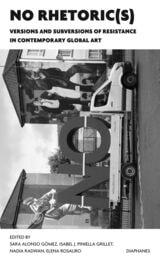
NO Rhetoric(s)
Versions and Subversions of Resistance in Contemporary Global ArtEdited by Sara Alonso Gómez, Isabel J. Piniella Grillet, Nadia Radwan, and Elena Rosauro
Diaphanes, 2021
NO Rhetoric(s) examines a subject intensely debated during the last three decades but rarely a topic of its own: art as an agent of resistance, whether as a rhetorical stance or critical strategy. In the face of today’s discourse on revolt and insurrection, it is necessary to ask whether the gesture of “negation” still has an emancipatory potential. NO Rhetoric(s) contributes a deeper understanding of the different logics of resistance at play between art and politics. Showcasing a diverse array of voices, this volume presents contributions on topics as varied as sexual dissidence, ecology, and geopolitics in the digital age. Through this interdisciplinary show of force, the collected authors, artists, and scholars shed light on how art approaches the most urgent issues facing today’s society.
Naija Marxisms
Revolutionary Thought in NigeriaAdam Mayer
Pluto Press, 2016

Naked Agency
Genital Cursing and Biopolitics in AfricaNaminata Diabate
Duke University Press, 2020

Naked in the Woods
My Unexpected Years in a Hippie CommuneMargaret Grundstein
Oregon State University Press, 2015
Naked in the Woods chronicles Grundstein’s shift from reluctant hippie to committed utopian—sacrificing phones, electricity, and running water to live on 160 acres of remote forest with nothing but a drafty cabin and each other. Grundstein, (whose husband left, seduced by “freer love”) faced tough choices. Could she make it as a single woman in man’s country? Did she still want to? How committed was she to her new life? Although she reveled in the shared transcendence of communal life deep in the natural world, disillusionment slowly eroded the dream. Brotherhood frayed when food became scarce. Rifts formed over land ownership. Dogma and reality clashed.
Many people, baby boomers and millennials alike, have romantic notions about the 1960s and 70s. Grundstein’s vivid account offers an unflinching, authentic portrait of this iconic and often misreported time in American history. Accompanied by a collection of distinctive photographs she took at the time, Naked in the Woods draws readers into a period of convulsive social change and raises timeless questions: how far must we venture to find the meaning we seek, and is it ever far out enough to escape our ingrained human nature?

Namibia Under South African Rule
Mobility and Containment, 1915–46Patricia Hayes
Ohio University Press, 1998
The peoples of Namibia have been on the move throughout history. The South Africans in 1915 took over from the Germans in trying to fit Namibia into a colonial landscape. This book is about the clashes and stresses which resulted from the first three decades of South African colonial rule.
Namibia under South African Rule is a major contribution to Namibian historiography, exploring, in particular, many new themes in twentieth-century Namibian history. Here is exciting new work from a host of scholars and writers on a heretofore under-researched subject.
Namibia’s Liberation Struggle
The Two-Edged SwordColin Leys
Ohio University Press, 1994
It took twenty-three years of armed struggle before Namibia could gain its independence from South Africa in March 1990. Swapo’s victory was remarkable in the face of an overwhelmingly superior enemy. How this came about, and at what cost, is the subject of this outstanding study that is based on unpublished documents and extensive interviews with a large range of the key activists in the struggle.
The story that emerges is one of endurance and heroism in face of atrocious brutality on the part of the colonialists. But it reveals that it was also one of painful compromises imposed by the conditions of the struggle and the subordination of internal democracy within the liberation movement to the single goal of military and diplomatic victory.
The study will be of keen interest to everyone concerned with southern Africa. Students of armed liberation struggle generally will find much to challenge received wisdom. The sheer human interest of the interviews makes the book attractive to a wide readership.

Naming Evil, Judging Evil
Edited by Ruth W. Grant
University of Chicago Press, 2006
Is it more dangerous to call something evil or not to? This fundamental question deeply divides those who fear that the term oversimplifies grave problems and those who worry that, to effectively address such issues as terrorism and genocide, we must first acknowledge them as evil. Recognizing that the way we approach this dilemma can significantly affect both the harm we suffer and the suffering we inflict, a distinguished group of contributors engages in the debate with this series of timely and original essays.
Drawing on Western conceptions of evil from the Middle Ages to the present, these pieces demonstrate that, while it may not be possible to definitively settle moral questions, we are still able—and in fact are obligated—to make moral arguments and judgments. Using a wide variety of approaches, the authors raise tough questions: Why is so much evil perpetrated in the name of good? Could evil ever be eradicated? How can liberal democratic politics help us strike a balance between the need to pass judgment and the need to remain tolerant? Their insightful answers exemplify how the sometimes rarefied worlds of political theory, philosophy, theology, and history can illuminate pressing contemporary concerns.

Naming Racism, Confronting Anti-Blackness
Mexican American Transnational Racialization and Coalition BuildingBianca Sofia Rubalcava
Rutgers University Press, 2026
What happens when we move beyond a Black-and-white understanding of racism? This provocative book challenges conventional narratives by exploring how Mexican Americans navigate the US racial hierarchy—not simply as victims of white supremacy but as complex participants in systems of racial oppression. Tracing the construction of race from colonial regimes to the present, author Bianca Sofia Rubalcava argues that non-Black people of color, particularly Mexican Americans, often negotiate their racial position by distancing themselves from Blackness. Through legal history, social movement archives, and survey data, this work reveals how anti-Blackness has persisted across borders and generations, from the pursuit of legal whiteness to enduring family biases around interracial relationships. Ultimately, the book offers a powerful critique of how anti-Black ideologies hinder cross-racial solidarity and perpetuate marginalization. A bold and necessary intervention, this study pushes the Latinx community—and all readers—to confront complicity and reimagine racial justice in more inclusive and transformative ways.

Narcissist Nation
Reflections of a Blue-State ConservativeGeorge J. Marlin
St. Augustine's Press, 2011
Narratives Unbound
Historical studies in post-communist Eastern EuropePéter Apor
Central European University Press, 2007

Narratives of Exile and Identity
Soviet Deportation Memoirs from the Baltic StatesTomas Balkelis
Central European University Press, 2018
Narratives of Justice
Legislators' Beliefs about Distributive FairnessGrant Reeher
University of Michigan Press, 1996
Narratives of Justice offers a provocative, contemporary look at the timeless questions of justice and fairness. Using face-to-face interviews, Grant Reeher plumbs the minds of legislators for their beliefs about distributive justice and attempts to discover the ways in which those beliefs influence their behavior. The book calls into question many notions of American political ideology and, in particular, the idea of an "American exceptionalism" regarding views from the political left, and the dominance in the United States of a "liberal tradition."
Political philosophers have amassed a large body of work on justice and fairness from a theoretical perspective, but there is comparatively little empirical work on the subject. The work that does exist concentrates on the beliefs of the public. We know very little concerning the beliefs about justice held by political elites. This work offers a window into the beliefs of legislators, a group for which such an inquiry is rarely undertaken.
The book is based on a set of extended, in-depth interviews with the members of the Connecticut State Senate as well as a year of close observation of the Senate in action. The interviews averaged four hours in length and covered a variety of topics related to fairness. Through this material, Reeher employs a narrative-based framework to understand the patterns in the senators' interview responses, and develops a typology of the senator's narratives. These narratives vary in both content and form, and as a whole present a surprising range of views.
Narratives of Justice will be of interest to those concerned with justice, political ideologies, and political beliefs, as well as state and local politics and, more generally, American politics. Its wide research and thorough documentation make it a useful guide to the literature within and beyond political science concerning beliefs, ideologies, legislative behavior, and qualitative research methods.
Grant Reeher is Assistant Professor, Maxwell School of Citizenship and Public Affairs, Department of Political Science, Syracuse University, and currently a Robert Wood Johnson Foundation Scholar in Health Policy Research, University of Michigan.
Narrowing the Channel
The Politics of Regulatory Protection in International TradeRobert Gulotty
University of Chicago Press, 2020
Narrowing the Channel demonstrates that globalization and globalized firms can paradoxically hinder rather than foster economic cooperation as larger firms seek to protect their markets through often unnecessarily strict product regulations. To illustrate the problem of regulatory protectionism, Robert Gulotty offers an in-depth analysis of contemporary rulemaking in the United States and the European Union in the areas of health, safety, and environmental standards. He shows how large firms seek regulatory schemes that disproportionately disadvantage small firms. When multinationals are embedded in the local economy, governments too have an incentive to use these regulations to shift profits back home. Today, the key challenge to governing global trade is not how much trade occurs but who is allowed to participate, and this book shows that new rules will be needed to allow governments to widen the benefits of global commerce and avoid further inequality and market concentration.
Nashville Metro
The Politics of City-County ConsolidationBrett W. Hawkins
Vanderbilt University Press, 2024
This is a valuable artifact in itself, but the new foreword by Judge David Briley—former Nashville mayor and grandson of the first metro Nashville mayor, Beverly Briley—offers a firsthand account of the realities of metropolitan government sixty years on.
Nashville's New Americans
Tracing the Journeys of Our Immigrant NeighborsSheri Lea Sellmeyer
Vanderbilt University Press, 2026
Whether it’s building skyscrapers, running successful restaurants, researching diseases, performing music, cleaning hotel rooms, or holding public office, immigrants are changing Nashville from a mid‑sized city known for its country music industry to an increasingly diverse, multicultural destination. In Metro Nashville schools today, students speak more than 120 languages. The city is bigger, more congested, and more expensive than it’s ever been, drawing criticism from both longtime residents and newcomers. But growth has also brought top‑notch scientists and educators, a world‑class symphony, major league sports teams, investment from major corporations—and a wide range of immigrants whose talent and hard work have helped make all of that happen.
Through its profiles of thirty-nine immigrants from thirty-eight countries in Asia, the Middle East, Africa, Europe, Latin America, and Australia, Nashville’s New Americans provides a case study from one of the fastest-growing cities in the country on the contributions immigrants are making to its culture and economy.

Nation Making
Emergent Identities in Postcolonial MelanesiaRobert J. Foster, Editor
University of Michigan Press, 1997
In this theoretically sophisticated volume, contributors examine the process of nation making in Fiji, Papua New Guinea, the Solomon Islands, and Vanuatu- states that attained formal political independence between 1970 and 1980. The remarkable cultural diversity within these states demands close ethnographic study of different groups and their contesting definitions of nationhood and leads to highly original approaches.
The essays explore the political conditions and cultural assumptions that inform how Melanesians variously imagine a national community. The authors interpret a wide range of materials, from political speeches and official ceremonies of state to newspaper advertisements and life crisis rites. They demonstrate both how the legacies of divisive colonial rule, the weakness of the postcolonial state, and the exigencies of capitalist markets undermine the processes of nation making in contemporary Melanesia and how new forms of popular and consumer culture potentially shape an emergent national consciousness.
Comparative and historical in its orientation, this book will appeal to readers not only in anthropology but in political science, social history, and cultural studies. It will be of special value to those interested in comparative politics and history, Pacific studies, ethnicity and nationalism, and colonial and postcolonial studies.
Robert J. Foster is Assistant Professor of Anthropology, University of Rochester.
Nation Work
Asian Elites and National IdentitiesTimothy Brook and Andre Schmid, Editors
University of Michigan Press, 2000
Nation of Outlaws, State of Violence
Nationalism, Grassfields Tradition, and State Building in CameroonMeredith Terretta
Ohio University Press, 2014
Nation of Outlaws, State of Violence is the first extensive history of Cameroonian nationalism to consider the global and local influences that shaped the movement within the French and British Cameroons and beyond. Drawing on the archives of the United Nations, France, Great Britain, Ghana, and Cameroon, as well as oral sources, Nation of Outlaws, State of Violence chronicles the spread of the Union des populations du Cameroun (UPC) nationalist movement from the late 1940s into the first postcolonial decade. It shows how, in the French and British Cameroon territories administered as UN Trusteeships after the Second World War, notions of international human rights, the promise of Third World independence, Pan-African federation, and national citizenship blended with local political and spiritual practices that resurfaced as the period of European rule came to a close. After French and British administrators banned the party in the mid-1950s, UPC nationalists adopted violence as a revolutionary strategy. In the 1960s, the nationalist vision disintegrated. The postcolonial regime labeled UPC nationalists “outlaws” and rounded them up for imprisonment or execution as the state shifted to single-party rule in 1966.
Nation of Outlaws, State of Violence traces the connection between local and transregional politics in the age of Africa’s decolonization and the early decades of the Cold War. Rather than stop at official independence as most conventional histories of African nationalist movements do, this book considers postindependence events as crucial to the history of Cameroonian nationalism and to an understanding of the postcolonial government that came to power on 1 January 1960. While the history of the UPC is a story that ends with the party’s failure to gain access to political power with independence, it is also a story of the postcolonial state’s failure to become a nation.

Nation on Board
Becoming Nigerian at SeaLynn Schler
Ohio University Press, 2016
In the 1940s, British shipping companies began the large-scale recruitment of African seamen in Lagos. On colonial ships, Nigerian sailors performed menial tasks for low wages and endured discrimination as cheap labor, while countering hardships by nurturing social connections across the black diaspora. Poor employment conditions stirred these seamen to identify with the nationalist sentiment burgeoning in postwar Nigeria, while their travels broadened and invigorated their cultural identities.
Working for the Nigerian National Shipping Line, they encountered new forms of injustice and exploitation. When mismanagement, a lack of technical expertise, and pillaging by elites led to the NNSL’s collapse in the early 1990s, seamen found themselves without prospects. Their disillusionment became a broader critique of corruption in postcolonial Nigeria.
In Nation on Board: Becoming Nigerian at Sea, Lynn Schler traces the fate of these seamen in the transition from colonialism to independence. In so doing, she renews the case for labor history as a lens for understanding decolonization, and brings a vital transnational perspective to her subject. By placing the working-class experience at the fore, she complicates the dominant view of the decolonization process in Nigeria and elsewhere.
Nation, Language, Islam
Tatarstan's Sovereignty MovementHelen M. Faller
Central European University Press, 2011
Nation-Building
A Key Concept For Peaceful Conflict Transformation?Jochen Hippler
Pluto Press, 2005
Currently the international debate on nation-building is heavily dominated by US actors and authors, especially by writers connected to the Bush administration or its policies. This book presents academic and political alternatives, presenting a critical view from 'Old Europe'.
The book combines academic research and analysis with policy orientation, with contributors from both fields. It clarifies the terminology distinguishing developmental, peace-related, imperial and analytical approaches to nation-building. Highlighting its connections to globalisation, democracy, ethnic and religious minorities, the contributors consider case studies such as Somalia, the Balkans, Afghanistan, Iraq, and Nigeria.
Dr. Jochen Hippler, Political Scientist at the University of Duisburg-Essen and its Institute for Development and Peace (INEF), specialises in regional conflicts and interventionism in the Third World, political identities, and the Middle East. He is the former Director of the Transnational Institute in Amsterdam and the author of numerous books and articles including Pax Americana (Pluto Press 1994), The Democratisation of Disempowerment (Pluto Press 1995) and The Next Threat (Pluto Press 1995).
National Consciousness and Literary Cosmopolitics
Postcolonial Literature in a Global MomentWeihsin Gui
The Ohio State University Press, 2013
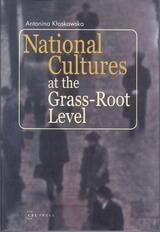
National Cultures at Grass-root Level
Antonina Kloskowska
Central European University Press, 2001
The major dilemma this volume addresses is the function of national identity in a modern society, for despite the trend towards globalization, the world continues to be riddled with national conflict.
Kłoskowska begins by looking at the controversy between two competing concepts of the origin of the nation – political and ethnic. She examines the central issues of the argument, and in particular, the characteristics and effects of ethnic differences on personal identity and the appropriation of national culture. Her theories are based upon autobiographies by individuals belonging to various national minorities in Poland and other areas where ethnic borders are blurred. The group studied included mostly young intellectuals: Ukrainians, Belarussians and Silesian-Germans. She examines the national attitudes of the various countries the ethnic minorities have been forced to live with. In her conclusion, Kłoskowska takes the view that national cultures are either ‘open’ or ‘closed’ and stresses the importance of participating in more than one cultural medium.
National Cultures at the Grass-Root Level is rich in information on contemporary theories of the nation, on its origin, character and future, and offers a deep insight into the complex and often ambiguous reality of national attitudes.

National Deconstruction
Violence, Identity, and Justice in BosniaDavid Campbell
University of Minnesota Press, 1998
What our response to the Bosnian crisis can tell us about multiculturalism in the United States and beyond.
How did Bosnia, once a polity of intersecting and overlapping identities, come to be understood as an intractable ethnic problem? David Campbell pursues this question-and its implications for the politics of community, democracy, justice, and multiculturalism-through readings of media and academic representations of the conflict in Bosnia. National Deconstruction is a rethinking of the meaning of “ethnic/nationalist” violence and a critique of the impoverished discourse of identity politics that crippled the international response to the Bosnian crisis.
Rather than assuming the preexistence of an entity called Bosnia, Campbell considers the complex array of historical, statistical, cartographic, and other practices through which the definitions of Bosnia have come to be. These practices traverse a continuum of political spaces, from the bodies of individuals and the corporate body of the former Yugoslavia to the international bodies of the world community. Among the book’s many original disclosures, arrived at through a critical reading of international diplomacy, is the shared identity politics of the peacemakers and paramilitaries. Equally significant is Campbell’s conclusion that the international response to the Bosnian war was hamstrung by the poverty of Western thought on the politics of heterogeneous communities. Indeed, he contends that Europe and the United States intervened in Bosnia not to save the ideal of multiculturalism abroad but rather to shore up the nationalist imaginary so as to contain the ideal of multiculturalism at home.By bringing to the fore the concern with ethics, politics, and responsibility contained in more traditional accounts of the Bosnian war, this book is a major statement on the inherently ethical and political assumptions of deconstructive thought-and the reworkings of the politics of community it enables.Awarded “Book of the Year 1999” by the International Forum Bosnia (Sarajevo) and the Human Rights Review (USA).ISBN 0-8166-2936-6 Cloth $62.95xxISBN 0-8166-2937-4 Paper $24.95x382 pages 5 7/8 x 9 SeptemberTranslation inquiries: University of Minnesota Press
National Holidays in Czechoslovakia Between the World Wars
Celebrate the RepublicDagmar Hájková
Central European University Press, 2027

National Identity
Anthony D. Smith
University of Nevada Press, 1993

National Identity of Romanians in Transylvania
Sorin Mitu
Central European University Press, 2001
This meticulously researched and elegantly written book is the most authoritative study of the emergence of modern Romanian identity in Transylvania during the eighteenth and nineteenth centuries. Based upon a plethora of contemporary published sources, Mitu approaches national identity from a variety of perspectives - from within the Romanian community itself and their reaction to the image others had of them.
The author sheds new light on the problems of self-evaluation using a method he describes as "functional analysis" to examine a complex set of ideologies and propaganda. This approach helps the reader to understand the intricate web of contemporary Romanian nationalism.
National Identity of Romanians in Transylvania appeals to scholars of modern Romanian history, those focusing on the Habsburg Monarchy and the study of modern nationalism. The book is an important contribution to the expanding debate on nationalism and national identity from an East European perspective.

National Insecurity
U.S. Intelligence After the Cold Waredited by Craig Eisendrath, foreword by Tom Harkin
Temple University Press, 2000
In National Insecurity ten prominent experts describe, from an insider perspective, what went wrong with U.S. intelligence and what will be necessary to fix it. Drawing on their experience in government administration, research, and the foreign service, they propose a radical rethinking of the United States' intelligence needs in the post-Cold War world. In addition, they offer a coherent and unified plan for reform that can simultaneously protect U. S. security and uphold the values of our democratic system.
As we now know, even during the Cold War, when intelligence was seen as a matter of life and death, our system served us badly. It provided unreliable information, which led to a grossly inflated military budget, as it wreaked havoc around the world, supporting corrupt regimes, promoting the drug trade, and repeatedly violating foreign and domestic laws. Protected by a shroud of secrecy, it paid no price for its mistakes. Instead it grew larger and more insulated every year.
Taking into consideration our strategic interests abroad as well as the price of covert operations in dollars, in reliability, and in good will, every American taxpayer can be informed by and will want to read this book. National Insecurity is essential for readers interested in contemporary political issues, international relations, U.S. history, public policy issues, foreign policy, intelligence reform, and political science.
National Myths in the Middle East
Representations, Revisions, and Critiques, Volume 2003Adina Back , Magnus T. Bernhardsson, Mansour Bonakdarian, and Sally Charnow, eds.
Duke University Press, 0

National Parks and the Supreme Court
Groundbreaking Legal BattlesCarla Chung Mattix
University of Nevada Press, 2026
This book examines five landmark Supreme Court cases involving national parks—Gettysburg, Yellowstone, Grand Canyon, Death Valley, and the National Mall. Each chapter blends legal analysis with historical context, tracing the origins of the parks and the disputes that brought them before the nation’s highest court. Spanning nearly a century, these cases reveal how the Court has shaped park policy, land use, Native American rights, water law, and free speech.
Through these pivotal decisions, National Parks and the Supreme Court offers a new lens on the contested terrain of the national parks, where legal, environmental, and cultural values collide. By exploring the courts’ influence on public lands, it deepens our understanding of the complexities of managing America’s most cherished landscapes.

National Performances
The Politics of Class, Race, and Space in Puerto Rican ChicagoAna Y. Ramos-Zayas
University of Chicago Press, 2003
Drawing on extensive ethnographic research, Ramos-Zayas shows how the performance of Puerto Rican nationalism in Chicago serves as a critique of social inequality, colonialism, and imperialism, allowing barrio residents and others to challenge the notion that upward social mobility is equally available to all Americans—or all Puerto Ricans. Paradoxically, however, these activists' efforts also promote upward social mobility, overturning previous notions that resentment and marginalization are the main results of nationalist strategies.
Ramos-Zayas's groundbreaking work allows her here to offer one of the most original and complex analyses of contemporary nationalism and Latino identity in the United States.

National Romanticism
The Formation of National MovementsMiroslav Hroch
Central European University Press, 2007
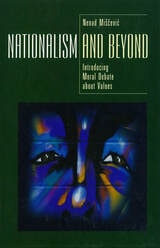
Nationalism and Beyond
Introducing Moral Debate about ValuesNenad Mišcevic
Central European University Press, 2001
A very readable introduction to the concepts and principles shaping the philosophical debate around nationalism. The book provides portraits of two kinds of nationalists: the tougher type, more common in everyday life, and the ultra-moderate "liberal nationalist" encountered in academia. The author introduces a debate with a "thoughtful nationalist," one who defends the view that states should be organized around national culture and that individuals have basic obligations to their nation. The author attempts to answer his opponent's standard arguments and presents a fully documented critique of his views.
A passion born from Miscevic's encounter with nationalism in the former Yugoslavia glows from every line of the argument. Questions raised and discussed include: Why is radicalism typical of nationalism? How successful is the nation-state? Does nationalism support liberal-democratic values? Is membership in a nation necessary for human fulfillment and for understanding values? Why might nationalism be immoral?
The book is unique not only because it explains a contemporary moral debate, in terms clear to the non-philosopher reader, but also because it has been written from the perspective of Central and Eastern Europe based on the author's personal experience.
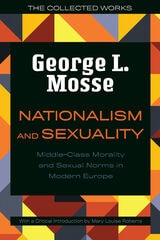
Nationalism and Sexuality
Middle-Class Morality and Sexual Norms in Modern EuropeGeorge L. Mosse, With a critical introduction by Mary Louise Roberts
University of Wisconsin Press, 2020

Nationalism and Terror
Ante Pavelic and Ustasha Terrorism from Fascism to the Cold WarGiorgio Cingolani
Central European University Press, 2018

Nationalism and the Economy
Explorations into a Neglected RelationshipStefan Berger
Central European University Press, 2019
Nationalism and the Imagination
Gayatri Chakravorty Spivak
Seagull Books, 2010
Gayatri Chakravorty Spivak has distinguished herself as one of the foremost scholars of contemporary literary and postcolonial theory and feminist thought. Known for her translation of Derrida’s On Grammatology and her groundbreaking essay, “Can the Subaltern Speak?,” Spivak has often focused on subaltern, marginalized women and the role of essentialism in feminist thought to unite women from divergent cultural backgrounds. In Nationalism and the Imagination, Spivak expands upon her previous postcolonial scholarship, employing a cultural lens to examine the rhetorical underpinnings of the idea of the nation-state.
In this gripping and intellectually rigorous work, Spivak specifically analyzes the creation of Indian sovereignty in 1947 and the tone of Indian nationalism, bound up with class and religion, that arose in its wake. Spivak was five years old when independence was declared, and she vividly writes: “These are my earliest memories: Famine and blood on the streets.” As well, she recollects the songs and folklore stories that were prevalent at the time in order to examine the role of the mother tongue and the relationship between language and feelings of national identity. She concludes that nationalism colludes with the private sphere of the imagination in order to command the public sphere.
Originally given as an address at the University of Sofia in Bulgaria, Nationalism and the Imagination provides powerful insight into the historical narrative of India as well as compelling ideas that speak to nationalist concerns around the world. Also included in this book is the discussion with Spivak that followed the speech, making this an essential and informative work for scholars of post-colonialism.

Nationalism and the Moral Psychology of Community
Bernard Yack
University of Chicago Press, 2012
Nationalism is one of modern history’s great surprises. How is it that the nation, a relatively old form of community, has risen to such prominence in an era so strongly identified with the individual? Bernard Yack argues that it is the inadequacy of our understanding of community—and especially the moral psychology that animates it—that has made this question so difficult to answer.
Yack develops a broader and more flexible theory of community and shows how to use it in the study of nations and nationalism. What makes nationalism such a powerful and morally problematic force in our lives is the interplay of old feelings of communal loyalty and relatively new beliefs about popular sovereignty. By uncovering this fraught relationship, Yack moves our understanding of nationalism beyond the oft-rehearsed debate between primordialists and modernists, those who exaggerate our loss of individuality and those who underestimate the depth of communal attachments.
A brilliant and compelling book, Nationalism and the Moral Psychology of Community sets out a revisionist conception of nationalism that cannot be ignored.
Nationalism and the Politics of Culture in Quebec
Richard Handler
University of Wisconsin Press, 1988
Bringing together methodologies of history, sociology, political science, and philosophy, as well as anthropology, Handler centers on the period 1976–1984, during which the independantiste Parti Québéois was in control of the provincial government and nationalistic sentiment was especially strong. Handler draws on historical and archival research, and on interviews with Quebec and Canadian government officials, as he addresses the central question: Given the similarities between the epistemologies of both anthropology and nationalist ideology, how can one write an ethnography of nationalism that does not simply reproduce—and thereby endorse—nationalistic beliefs? Handler analyzes various responses to the nationalist vision of a threatened existence. He examines cultural tourism, ideology of the Quebec government, legislations concerning historical preservation, language legislation and policies towards immigrants and “cultural minorities.” He concludes with a thoughtful meditation on the futility of nationalisms.
Nationalism and the State
John Breuilly
University of Chicago Press, 1993
Breuilly challenges the conventional view that nationalism emerges from a sense of cultural identity. Rather, he shows how elites, social groups, and foreign governments use nationalist appeals to mobilize popular support against the state. Nationalism, then, is a means of creating a sense of identity. This provocative argument is supported with a wide-ranging analysis of pertinent examples—national opposition in early modern Europe; the unification movement in Germany, Italy, and Poland; separatism under the Hapsburg and Ottoman empires; fascism in Germany, Italy, and Romania; post-war anti-colonialism and the nationalist resurgence following the breakdown of Soviet power.
Still the most comprehensive and systematic historical comparison of nationalist politics, Nationalism and the State is an indispensable book for anyone seeking to understand modern politics.
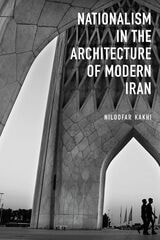
Nationalism in Architecture of Modern Iran
Niloofar Kakhi
Gingko, 2023
Nationalism in Architecture of Modern Iran is the first comprehensive book on modern architecture in Iran to be published in English. It addresses the relationship between nationalism and architecture in Iran and discusses the role Western architects played in the development of modern architecture in the country while introducing some of the most significant and recent projects in Iran. It investigates what it means to design a building that bears an Iranian or Islamic-Iranian identity and how to construct a conceptual platform for critically assessing representations of national identity in contemporary architecture. This book will directly help practicing architects and policymakers of the built environment, especially in Iran, as well as give a comprehensive understanding of the modern history of architecture in Iran to art historians and a broader audience. It introduces some of the most significant and recent projects in Iran for the first time.

Nationalism in India
Past and PresentIrfan Habib
Seagull Books, 2023
What makes a people living in a mere “geographical expression” a nation? From the French Revolution onwards, the word “nation” came to denote a people who wish to be collectively free. But free from what—colonial rule and inequality? Or religious and cultural diversity?
In this timely and succinct essay, Irfan Habib charts India’s struggle to consolidate a nationalist identity, to identify what it sought to be free from. Even as the colonial regime denied the very possibility of nationalism in the subcontinent, opposition to British rule fomented just such a sentiment. But resistance against colonial exploitation alone could not unify the Indian people. Internal inequalities—caste, poverty, religious bigotry—remained (and still remain) to be tackled.
Nationalism, Devolution and the Challenge to the United Kingdom State
Arthur Aughey
Pluto Press, 2001

Nationalismes, antisémitismes et débats autour de l’art juif
De quelques critiques d’art au temps de l’École de Paris (1925–1933)Alessandro Gallicchio
Diaphanes, 2023
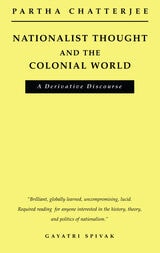
Nationalist Thought and the Colonial World
A Derivative DiscoursePartha Chatterjee
University of Minnesota Press, 1993
In this book a leading Indian political philosopher criticizes Western theories of Third World nationalism—both liberal and Marxist. He demonstrates how Western theorists, with their emphasis on the power of reason, the primacy of the hard sciences, and the dominance of the empirical method, have assumed that their presuppositions are universally valid, and, through the impact of Western education, have imposed concepts of nationalism on non-Western peoples to the detriment, if not destruction, of their own world-views. The author explores the central contradiction that nationalism in Africa and Asia has consequently experienced: setting out to assert its freedom from European domination, it yet remained a prisoner of European post-Enlightenment rationalist discourse.
Using the case of India, Professor Chatterjee goes on to show how Indian nationalism did effect significant displacements in the framework of modernist thinking imbibed from the West. Yet, despite constituting itself as a different discourse, it remained dominated by the very structure of power it sought to repudiate. And so the historical outcome generally has been the transformation of Third World nationalism by ruling classes into a state ideology legitimizing their own rule, appropriating the life of the nation, and propelling it along the path of ‘universal modernization’. But the spurious ideological unity proclaimed by these classes, and their failure to subsume completely the life of the nation in the life of their new states, raises the historical prospect that a critique of state nationalism will emerge.
This profound exercise in political philosophy questions the legitimacy of the currently predominant formulations of nationalist ideology in the Third World. It anticipates a new generation of popular struggles that will redefine the content of Afro-Asian nationalism and the kinds of society people wish to build.
For scholars, it will make uncomfortable reading because of its radical attack on the fundamentals of Western bourgeois thought, an attack always couched, however, in the rational tones of Western scholarship.

Nationalizing Empires
Stefan Berger
Central European University Press, 2015