Results by title
1427 books match the query 'Politics' and 31 start with n
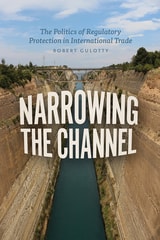
Narrowing the Channel
The Politics of Regulatory Protection in International TradeRobert Gulotty
University of Chicago Press, 2020
Narrowing the Channel demonstrates that globalization and globalized firms can paradoxically hinder rather than foster economic cooperation as larger firms seek to protect their markets through often unnecessarily strict product regulations. To illustrate the problem of regulatory protectionism, Robert Gulotty offers an in-depth analysis of contemporary rulemaking in the United States and the European Union in the areas of health, safety, and environmental standards. He shows how large firms seek regulatory schemes that disproportionately disadvantage small firms. When multinationals are embedded in the local economy, governments too have an incentive to use these regulations to shift profits back home. Today, the key challenge to governing global trade is not how much trade occurs but who is allowed to participate, and this book shows that new rules will be needed to allow governments to widen the benefits of global commerce and avoid further inequality and market concentration.
Nashville Metro
The Politics of City-County ConsolidationBrett W. Hawkins
Vanderbilt University Press, 2024
This is a valuable artifact in itself, but the new foreword by Judge David Briley—former Nashville mayor and grandson of the first metro Nashville mayor, Beverly Briley—offers a firsthand account of the realities of metropolitan government sixty years on.
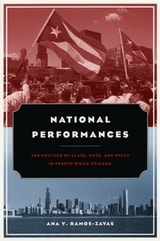
National Performances
The Politics of Class, Race, and Space in Puerto Rican ChicagoAna Y. Ramos-Zayas
University of Chicago Press, 2003
Drawing on extensive ethnographic research, Ramos-Zayas shows how the performance of Puerto Rican nationalism in Chicago serves as a critique of social inequality, colonialism, and imperialism, allowing barrio residents and others to challenge the notion that upward social mobility is equally available to all Americans—or all Puerto Ricans. Paradoxically, however, these activists' efforts also promote upward social mobility, overturning previous notions that resentment and marginalization are the main results of nationalist strategies.
Ramos-Zayas's groundbreaking work allows her here to offer one of the most original and complex analyses of contemporary nationalism and Latino identity in the United States.

National Policy Issues
Politics, Perceptions, and Performance, Volume 28Mark Schlesinger, ed.
Duke University Press, 0
Nationalism and the Politics of Culture in Quebec
Richard Handler
University of Wisconsin Press, 1988
Bringing together methodologies of history, sociology, political science, and philosophy, as well as anthropology, Handler centers on the period 1976–1984, during which the independantiste Parti Québéois was in control of the provincial government and nationalistic sentiment was especially strong. Handler draws on historical and archival research, and on interviews with Quebec and Canadian government officials, as he addresses the central question: Given the similarities between the epistemologies of both anthropology and nationalist ideology, how can one write an ethnography of nationalism that does not simply reproduce—and thereby endorse—nationalistic beliefs? Handler analyzes various responses to the nationalist vision of a threatened existence. He examines cultural tourism, ideology of the Quebec government, legislations concerning historical preservation, language legislation and policies towards immigrants and “cultural minorities.” He concludes with a thoughtful meditation on the futility of nationalisms.
Native Intelligence
Aesthetics, Politics, and Postcolonial LiteratureDeepika Bahri
University of Minnesota Press, 2003
A compelling reclamation of the place of aesthetics in postcolonial literature
Literature though it may be, postcolonial literature is studied and understood largely—and often solely—in social and political terms. In neglecting its aesthetic dimension, as this book forcefully demonstrates, we are overlooking not only an essential aspect of this literature but even a critical perspective on its sociopolitical function and value. In Native Intelligence, Deepika Bahri focuses on postcolonial literature’s formal and aesthetic negotiations with sociopolitical concerns.
How, Bahri asks, do aesthetic considerations contest the social function of postcolonial literature? In answering, her book takes on two tasks: First, it identifies the burden of representation borne by postcolonial literature through its progressive politicization. Second, it draws on Frankfurt School critical theory to reclaim a place for aesthetics in literary representation by closely engaging works of Rohinton Mistry, Salman Rushdie, and Arundhati Roy. Throughout, Bahri shows how attention to the aesthetic innovations and utopian impulses of postcolonial works uncovers their complex and uneven relationship to ideology, reanimating their potential to make novel contributions to the larger project of social liberation.
Nature's Experts
Science, Politics, and the EnvironmentBocking, Stephen
Rutgers University Press, 2004
"This book by Stephen Bocking is as much about deliberative democracy as it is about science and the environment. Stephen Bocking’s treatment is deep, perceptive, and profoundly wise. He has caught the heart of present and future environmental science, politics, and democratic governance."—C. S. Holling, The Resilience Alliance and emeritus professor, Arthur R. Marshall Jr. Chair in Ecological Sciences at the University of Florida
"If knowledge is power, how should expert advice be deployed by a would-be democratic society? This perennial question is newly illuminated by this timely and wide-ranging review of the role played by science in the making of environmental policy."—William C. Clark, Harvey Brooks Professor of International Science, Public Policy, and Human Development, Harvard University, John F. Kennedy School of Government
It seems self-evident that science plays a central role in environmental affairs. Regulatory agencies, businesses, and public interest groups all draw on scientific research to support their claims. Some critics, however, describe science not as the solution to environmental problems, but as their source. Moreover, the science itself is often controversial, as debates over global warming and environmental health risks have shown.
Nature’s Experts explores the contributions and challenges presented when scientific authority enters the realm of environmental affairs. Stephen Bocking focuses on four major areas of environmental politics: the formation of environmental values and attitudes, management of natural resources such as forests and fish, efforts to address international environmental issues such as climate change, and decisions relating to environmental and health risks. In each area, practical examples and case studies illustrate that science must fulfill two functions if it is to contribute to resolving environmental controversies. First, science must be relevant and credible, and second, it must be democratic, where everyone has access to the information they need to present and defend their views.
Negotiating Difference
Race, Gender, and the Politics of PositionalityMichael Awkward
University of Chicago Press, 1995
From Spike Lee's She's Gotta Have It to Michael Jackson's physical transmutations, from Toni Morrison's Song of Solomon to August Wilson's Fences, from male scholars' investments in feminism to white scholars' in black texts—Awkward explores cultural moments that challenge the exclusive critical authority of race and gender. In each instance he confronts the question: What do artists, scholars, and others concerned with representations of Afro-American life make of the view that gender, race, and sexuality circumscribe their own and others' lives and narratives? Throughout he demonstrates the perils and merits of the sort of "boundary crossing" this book ultimately makes: a black male feminism.
In pursuing a black male feminist criticism, Awkward's study acknowledges the complexities of interpretation in an age when a variety of powerful discourses have proliferated on the subject of racial, gendered, and sexual difference; at the same time, it identifies this proliferation as an opportunity to negotiate seemingly fixed cultural and critical positions.
Negotiating Marian Apparitions
The Politics of Religion in Transcarpathian UkraineAgnieszka Halemba
Central European University Press, 2015
Negras in Brazil
Re-envisioning Black Women, Citizenship, and the Politics of IdentityCaldwell, Kia Lilly
Rutgers University Press, 2006
In Negras in Brazil, Kia Lilly Caldwell examines the life experiences of Afro-Brazilian women whose stories have until now been largely untold. This pathbreaking study analyzes the links between race and gender and broader processes of social, economic, and political exclusion. Drawing on ethnographic research with social movement organizations and thirty-five life history interviews, Caldwell explores the everyday struggles Afro-Brazilian women face in their efforts to achieve equal rights and full citizenship. She also shows how the black women's movement, which has emerged in recent decades, has sought to challenge racial and gender discrimination in Brazil. While proposing a broader view of citizenship that includes domains such as popular culture and the body, Negras in Brazil highlights the continuing relevance of identity politics for members of racially marginalized communities. Providing new insights into black women's social activism and a gendered perspective on Brazilian racial dynamics, this book will be of interest to students and scholars of Latin American Studies, African diaspora studies, women's studies, politics, and cultural anthropology.
Networked
Business and Politics in Decentralizing Indonesia, 1998-2004Wahyu Prasetyawan
National University of Singapore Press, 2018
Networked Business and Politics in Decentralizing Indonesia evaluates three cases of deep-seated political conflict and intrigue including central government, local governments, and multinational companies. It looks at how the structure of the national political economy has changed as the result of local politicians becoming involved in disputes with the national government over control of natural resources. It also analyzes how these changes will affect the distribution of wealth in the country as well as Indonesia’s evolving democratic politics and modes of governance.

New Blood
Third-Wave Feminism and the Politics of MenstruationChris Bobel
Rutgers University Press, 2010
Through her critical ethnographic lens, Bobel focuses on debates central to feminist thought (including the utility of the category "gender") and challenges to building an inclusive feminist movement. Filled with personal narratives, playful visuals, and original humor, New Blood reveals middle-aged progressives communing in Red Tents, urban punks and artists "culture jamming" commercial menstrual products in their zines and sketch comedy, queer anarchists practicing DIY health care, African American health educators espousing "holistic womb health," and hopeful mothers refusing to pass on the shame to their pubescent daughters. With verve and conviction, Bobel illuminates today's feminism-on-the-ground--indisputably vibrant, contentious, and ever-dynamic.

New Materialisms
Ontology, Agency, and PoliticsDiana Coole and Samantha Frost, eds.
Duke University Press, 2010
Coole and Frost argue that contemporary economic, environmental, geopolitical, and technological developments demand new accounts of nature, agency, and social and political relationships; modes of inquiry that privilege consciousness and subjectivity are not adequate to the task. New materialist philosophies are needed to do justice to the complexities of twenty-first-century biopolitics and political economy, because they raise fundamental questions about the place of embodied humans in a material world and the ways that we produce, reproduce, and consume our material environment.
Contributors
Sara Ahmed
Jane Bennett
Rosi Braidotti
Pheng Cheah
Rey Chow
William E. Connolly
Diana Coole
Jason Edwards
Samantha Frost
Elizabeth Grosz
Sonia Kruks
Melissa A. Orlie
New Television
The Aesthetics and Politics of a GenreMartin Shuster
University of Chicago Press, 2017
Philosopher Martin Shuster argues that television is the modern art form, full of promise and urgency, and in New Television, he offers a strong philosophical justification for its importance. Through careful analysis of shows including The Wire, Justified, and Weeds, among others; and European and Anglophone philosophers, such as Stanley Cavell, Hannah Arendt, Martin Heidegger, and John Rawls; Shuster reveals how various contemporary television series engage deeply with aesthetic and philosophical issues in modernism and modernity. What unifies the aesthetic and philosophical ambitions of new television is a commitment to portraying and exploring the family as the last site of political possibility in a world otherwise bereft of any other sources of traditional authority; consequently, at the heart of new television are profound political stakes.

New World Maker
Radical Poetics, Black Internationalism, and the Translations of Langston HughesRyan James Kernan, foreword by Robin D. G. Kelley
Northwestern University Press, 2022
Through original research and close readings alert to the foreign prosody underlying Hughes’s work, New World Maker recuperates his political writing, which had been widely maligned by Cold War detractors and adherents of New Criticism, and affirms his place as a progenitor of African diasporic literature and within the pantheon of US modernists. Demonstrating the integral part translation played in Hughes’s creative process, this book challenges a number of common assumptions about this canonical thinker and offers important insights for scholars of African diasporic literature, comparative literature, and American, Caribbean, and translation studies.
New York and Los Angeles
Politics, Society, and Culture--A Comparative ViewEdited by David Halle
University of Chicago Press, 2003
This volume presents advanced studies that consider this fundamental difference between New York and Los Angeles while comparing and contrasting politics and culture in each region. An esteemed group of contributors from a wide variety of disciplines considers issues that include immigration, the effects of race and class on residence, the efficacy of public schools, the value of welfare reform, the meaning of mayoral politics, the function of charter reform, and the respective roles of the cinema and art scenes in each city.
Capturing much of what is new and vibrant in urban studies today, New York and Los Angeles will prove to be must reading for scholars in that field, as well as in sociology, political science, and government.
Contributors:
Andrew Beveridge, Mehdi Bozorgmehr, Geoffrey DeVerteuil, Susan S. Fainstein, Robert Gedeon, Saverio Giovacchini, David L. Gladstone, David Halle, Jack Katz, Karen M. Kaufmann, Rebecca Kim, Mark Levitan, Kevin Rafter, Georges Sabagh, David O. Sears, Heidi Sommer, Raphael J. Sonenshein, András Szántó, Lois Takahashi, Susan Weber, Jennifer Wolch, Julia Wrigley, Min Zhou

News
The Politics of Illusion, Ninth EditionW. Lance Bennett
University of Chicago Press, 2011

News
The Politics of Illusion, Tenth EditionW. Lance Bennett
University of Chicago Press, 2016
Nicaragua and the Politics of Utopia
Development and Culture in the Modern StateDaniel Chavez
Vanderbilt University Press, 2015
For each era, Chavez reveals the ways Nicaraguan popular culture adapted and interpreted the new political order, shaping, critiquing, or amplifying the regime's message of stability and prosperity for the people. These tactics of interpretation, otherwise known as meaning-making, became all-important for the Nicaraguan people, as they opposed the autocracy of Somocismo, or complemented the Sandinistas, or struggled to find their place in the Neoliberal era. In every case, Chavez shows the reflective nature of cultural production and its pursuit of utopian idealism.

Nietzsche's Earth
Great Events, Great PoliticsGary Shapiro
University of Chicago Press, 2016
Shapiro explores Nietzsche’s rejection of historical inevitability and its idea of the end of history. He highlights Nietzsche’s prescient vision of today’s massive human mobility and his criticism of the nation state’s desperate efforts to sustain its exclusive rule by declaring emergencies and states of exception. Shapiro then explores Nietzsche’s vision of a transformed garden earth and the ways it sketches an aesthetic of the Anthropocene. He concludes with an explanation of the deep political structure of Nietzsche’s “philosophy of the Antichrist,” by relating it to traditional political theology. By triangulating Nietzsche between his time and ours, between Bismarck’s Germany and post-9/11 America, Nietzsche’s Earth invites readers to rethink not just the philosopher himself but the very direction of human history.
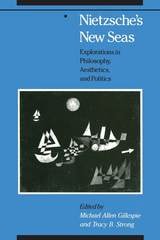
Nietzsche's New Seas
Explorations in Philosophy, Aesthetics, and PoliticsEdited by Michael Allen Gillespie and Tracy B. Strong
University of Chicago Press, 1988
Nightmare Remains
The Politics of Mourning and Epistemologies of DisappearanceEge Selin Islekel
Northwestern University Press, 2024
Offering a political epistemology of collective mourning
Focusing on forms of improper burial in Turkey and Latin America, Ege Selin Islekel argues that a political technology of mourning is fundamental to contemporary politics. This technology of necrosovereignty shapes not only individuals’ and populations’ lives but also their epistemic and political afterlives. Local practices of mourning, however, contain resistant capacities, opening alternative ways of knowing, remembering, and assembling. “Nightmare knowledges,” Islekel posits, are resistant modes of knowing tied up with grief that challenge the contemporary politics of death and those politics’ archival boundaries. Seen in mothers’ movements across the globe, from the Mothers of the Plaza de Mayo of Argentina to the Saturday Mothers of Turkey, nightmare knowledges produce counterarchives that mobilize traditionally ignored epistemic categories.
Nightmare Remains forges a new dialogue between post-Foucauldian political theory and decolonial thought and brings a fresh critical perspective to the theoretical discourse of enforced disappearances.
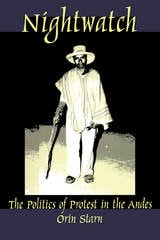
Nightwatch
The Politics of Protest in the AndesOrin Starn
Duke University Press, 1999
Drawing on fieldwork conducted over the course of a decade, Orin Starn chronicles the historical conditions that led to the formation of the rondas, the social and geographical expansion of the movement, and its gradual decline in the 1990s. Throughout this anecdotal yet deeply analytical account, the author relies on interviews with ronda participants, villagers, and Peru’s regional and national leaders to explore the role of women, the involvement of nongovernmental organizations, and struggles for leadership within the rondas. Starn moves easily from global to local contexts and from the fifteenth to the twentieth century, presenting this movement in a straightforward manner that makes it accessible to both specialists and nonspecialists.
An engagingly written story of village mobilization, Nightwatch is also a meditation on the nature of fieldwork, the representation of subaltern people, the relationship between resistance and power, and what it means to be politically active at the end of the century. It will appeal widely to scholars and students of anthropology, Latin American studies, cultural studies, history, subaltern studies, and those interested in the politics of social movements.

Nihil Obstat
Religion, Politics, and Social Change in East-Central Europe and RussiaSabrina P. Ramet
Duke University Press, 1998
Based on interview research in Germany, Austria, Slovenia, Croatia, Bosnia, Serbia, and Macedonia, and on materials published in German, Italian, Serbo-Croatian, Polish, Czech, Slovak, Russian, and English, Ramet paints a clear picture of the political and religious fragility of former communist states, which are experiencing some aspects of freedom and choice for the first time. With its comprehensive discussion of the largest religious institutions in the area, especially the Catholic and Orthodox Churches, and its extensive survey of nontraditional religious associations that have become active in the region since 1989, this study makes a distinct contribution to growing discussions about the rise of fundamentalism and the inner dilemmas of modernity. With its depth of information and thoughtful exploration of cultural traditions, Nihil Obstat uniquely presents the ramifications and complexities of European religion in a postcommunist world.

Nkrumah & the Chiefs
The Politics of Chieftaincy in Ghana, 1951–1960Richard Rathbone
Ohio University Press, 1999
Kwame Nkrumah, who won independence for Ghana in 1957, was the first African statesman to achieve world recognition. Nkrumah and his movement also brought about the end of independent chieftaincy—one of the most fundamental changes in the history of Ghana.
Kwame Nkrumah’s Convention Peoples’ Party was committed not only to the rapid termination of British colonial rule but also to the elimination of chiefly power. This book is an account of Kwame Nkrumah and his government’s long struggle to wrest administrative control of the Ghanaian countryside from the chiefs. Based largely upon previously unstudied documentation in Ghana, this study charts the government’s frustrated attempts to democratize local government and the long and bitter campaigns mounted by many southern chiefs to resist their political marginalization.
Between 1951 and the creation of the First Republic in 1960, Ghanaian governments sought to discard the chiefly principle in local government, then to weaken chieftaincy by attrition and eventually, by altering the legal basis of chieftaincy, to incorporate and control a considerably altered chieftaincy. The book demonstrates that chieftaincy was consciously and systematically reconstructed in the decade of the 1950s with implications which can still be felt in modern Ghana.

No Place for Home
Terror and Race in Literature After 9/11Jay Shelat
University of Minnesota Press, 2027
Exploring contemporary literature to expose how post-9/11 counterterror strategies are used to unhome families of color
More than a quarter of a century after 9/11, the global war on terror continues to rage in the name of homeland security. Through literature and archival research, Jay Shelat shows how war, Islamophobia, police brutality, and other state-sponsored legal and social maneuvers are used to revoke and control Brown and Black families and their belonging, and why the empire always starts at home.
By exploring insurgent narratives in fiction and poetry by writers of color such as Kamila Shamsie, N. K. Jemisin, and Dur e Aziz Amna, No Place for Home traces the long history of white supremacy infiltrating family life. Shelat expands this picture to include records, laws, brochures, executive orders, and other forms of documentation to illuminate how domesticity is posited as conditional—dependent on racial permission—in the United States. Woven through this nuanced exploration of radicalized violence in the US since the attacks are discussions of stubborn identity, queer kinship, and community organizing.
No Place for Home analyzes post-9/11 literature as a crucial informant for our understanding of how the war on terror has evolved into its current state. In doing so, Shelat charts a radical, healing way forward.
Retail e-book files for this title are screen-reader friendly with images accompanied by short alt text and/or extended descriptions.

No Winners Here Tonight
Race, Politics, and Geography in One of the Country’s Busiest Death Penalty StatesAndrew Welsh-Huggins
Ohio University Press, 2009
Few subjects are as intensely debated in the United States as the death penalty. Some form of capital punishment has existed in America for hundreds of years, yet the justification for carrying out the ultimate sentence is a continuing source of controversy. No Winners Here Tonight explores the history of the death penalty and the question of its fairness through the experience of a single state, Ohio, which, despite its moderate midwestern values, has long had one of the country’s most active death chambers.
In 1958, just four states accounted for half of the forty-eight executions carried out nationwide, each with six: California, Georgia, Ohio, and Texas. By the first decade of the new century, Ohio was second only to Texas in the number of people put to death each year. No Winners Here Tonight looks at this trend and determines that capital punishment has been carried out in an uneven fashion from its earliest days, with outcomes based not on blind justice but on the color of a person’s skin, the whim of a local prosecutor, or the biases of the jury pool in the county in which a crime was committed.
Andrew Welsh-Huggins’s work is the only comprehensive study of the history of the death penalty in Ohio. His analysis concludes that the current law, crafted by lawmakers to punish the worst of the state’s killers, doesn’t come close to its intended purpose and instead varies widely in its implementation. Welsh-Huggins takes on this controversial topic evenhandedly and with respect for the humanity of the accused and the victim alike. This exploration of the law of capital punishment and its application will appeal to students of criminal justice as well as those with an interest in law and public policy.
Nonaligned Imagination
Yugoslavia, the Global South, and Literary Solidarities Beyond the Cold War BlocsNataša Kovacevic
Northwestern University Press, 2026
Recovering the literary and intellectual history of anticolonial collaborations
Preoccupied with developing a multiethnic, postcolonial culture and seeking an alternative to Cold War–bloc politics, socialist Yugoslavia turned to the decolonizing countries of the Global South. It forged political, economic, and cultural links with postcolonial states and anticolonial liberation movements through the Non-Aligned Movement, of which it was a founding member in 1961. NAM spanned political and economic systems, uniting members in opposition to superpower politics and around policies of nuclear disarmament, active peaceful coexistence, anticolonialism, and respect for national sovereignty.
Nataša Kovačević reconstructs the forgotten literary and cultural history of this movement, tracing the development of new networks of intellectual engagement and cultural exchange between writers, journalists, and scholars who connected postwar Yugoslavia with 1950s India, 1960s Algeria and Guinea, 1970s Vietnam, and beyond. Nonaligned narratives attempted to reconfigure the understanding of the globe outside Eurocentric tropes and hegemonic political stratifications and to articulate Yugoslavs’ own internationalist sensibility. With Cold War–era rhetoric intensifying again in the twenty-first century, Nonaligned Imagination assumes the urgent task of unearthing a history of engaged writing and cultural diplomacy that imagined alternatives to superpower conflicts and a bipolar vision of the world.

Not Tonight
Migraine and the Politics of Gender and HealthJoanna Kempner
University of Chicago Press, 2014
In Not Tonight, Joanna Kempner argues that this general dismissal of migraine can be traced back to the gendered social values embedded in the way we talk about, understand, and make policies for people in pain. Because the symptoms that accompany headache disorders—like head pain, visual auras, and sensitivity to sound—lack an objective marker of distress that can confirm their existence, doctors rely on the perceived moral character of their patients to gauge how serious their complaints are. Kempner shows how this problem plays out in the history of migraine, from nineteenth-century formulations of migraine as a disorder of upper-class intellectual men and hysterical women to the influential concept of “migraine personality” in the 1940s, in which women with migraine were described as uptight neurotics who withheld sex, to contemporary depictions of people with highly sensitive “migraine brains.” Not Tonight casts new light on how cultural beliefs about gender, pain, and the distinction between mind and body influence not only whose suffering we legitimate, but which remedies are marketed, how medicine is practiced, and how knowledge about disease is produced.

Notorious Facts
Publicity in Romantic England, 1780–1830James Mulvihill
University of Delaware Press, 2012
Notorious Facts examines the sensationalistic confounding of persons and principles in the public life of Romantic England (1780–1830). Its purview is limited to five decades straddling the late eighteenth and early nineteenth centuries, but its trajectory, moving from a politics rendered in personal terms to a politics of personality, describes a shift still in process today. The study’s chapters draw on a motley body of literature (pamphlets, secret histories, and the like) that at first glance seems uncharacteristic of what literary historians call the English Romantic period. Viewed in the context of something called late Georgian England, these texts seem more indigenous, but if the canonical revisionism of the last few decades should teach us anything, it is that a Romanticism encompassing all romanticisms ideally excludes nothing.
In its heroic Enlightenment sense, publicity is concerned with exposing the workings of power for all to see. A good deal may be inferred about publicity in Romantic England from primary texts in which this salutary function is at once espoused and subverted. These texts—the mostly nameless or pseudonymous authors of the age’s pamphlet literature are the heroes and villains of the piece—almost invariably claim to speak from a disinterested conception of publicity while putting its methods of critical exposure to wholly self-interested purposes. This study examines well-known authors of the period like Jeremy Bentham, Samuel Taylor Coleridge, and William Hazlitt, as well as pamphleteers like John Horne Tooke, Philip Withers, and Nathaniel Jefferys. Other figures include authors of secret history like Thomas Ashe, Mary Anne Clarke, Lewis Goldsmith, and Joseph Haslewood in addition to notorious figures in their own right such as the Prince and Princess of Wales, Mrs. Fitzherbert, and the Reverend Edward Irving. Among the topics treated are treasonous libel, royal scandal, secret history, and celebrity.
Published by University of Delaware Press. Distributed worldwide by Rutgers University Press.
Náyari History, Politics, and Violence
From Flowers to AshPhilip E. Coyle
University of Arizona Press, 2001
By studying the history of religious practices that legitimate such authority, Philip Coyle shows that a contradiction exists between ceremonially based forms of political authority and the bureaucratic and military modes of power that have been deployed by outside governments in their attempts to administer the region. He then shows how the legitimacy of traditional authority is renewed or undermined through the performance of ceremonies.
Coyle explores linkages between long-term political and economic processes and changes in Náyari ceremonial life from Spanish contact to the present day. As a participant-observer of Náyari ceremonies over a ten-year period, he gained an understanding of the history of their ceremonialism and its connections to practically every other aspect of Náyari life. His descriptions of the Holy Week Festival, mitote ceremonies, and other public performances show how struggles over political legitimacy are intimately tied to the meanings of the ceremonies. With its rich ethnographic descriptions, provocative analyses, and clear links between data and theory, Coyle's study marks a major contribution to the ethnography of the Indians of western Mexico and Latin America more generally. It also provides unusual insight into the violence raging across the Mexican countryside and helps us understand the significance of indigenous people in a globalizing world.