Results by title
597 books match the query 'Psychological aspects' and 17 start with n

Naked in the Woods
My Unexpected Years in a Hippie CommuneMargaret Grundstein
Oregon State University Press, 2015
Naked in the Woods chronicles Grundstein’s shift from reluctant hippie to committed utopian—sacrificing phones, electricity, and running water to live on 160 acres of remote forest with nothing but a drafty cabin and each other. Grundstein, (whose husband left, seduced by “freer love”) faced tough choices. Could she make it as a single woman in man’s country? Did she still want to? How committed was she to her new life? Although she reveled in the shared transcendence of communal life deep in the natural world, disillusionment slowly eroded the dream. Brotherhood frayed when food became scarce. Rifts formed over land ownership. Dogma and reality clashed.
Many people, baby boomers and millennials alike, have romantic notions about the 1960s and 70s. Grundstein’s vivid account offers an unflinching, authentic portrait of this iconic and often misreported time in American history. Accompanied by a collection of distinctive photographs she took at the time, Naked in the Woods draws readers into a period of convulsive social change and raises timeless questions: how far must we venture to find the meaning we seek, and is it ever far out enough to escape our ingrained human nature?

National Abjection
The Asian American Body OnstageKaren Shimakawa
Duke University Press, 2002
Shimakawa looks at the origins of Asian American theater, particularly through the memories of some of its pioneers. Her examination of the emergence of Asian American theater companies illuminates their strategies for countering the stereotypes of Asian Americans and the lack of visibility of Asian American performers within the theater world. She shows how some plays—Wakako Yamauchi’s 12-1-A, Frank Chin’s Chickencoop Chinaman, and The Year of the Dragon—have both directly and indirectly addressed the displacement of Asian Americans. She analyzes works attempting to negate the process of abjection—such as the 1988 Broadway production of M. Butterfly as well as Miss Saigon, a mainstream production that enacted the process of cultural displacement both onstage and off. Finally, Shimakawa considers Asian Americanness in the context of globalization by meditating on the work of Ping Chong, particularly his East-West Quartet.

National Deconstruction
Violence, Identity, and Justice in BosniaDavid Campbell
University of Minnesota Press, 1998
What our response to the Bosnian crisis can tell us about multiculturalism in the United States and beyond.
How did Bosnia, once a polity of intersecting and overlapping identities, come to be understood as an intractable ethnic problem? David Campbell pursues this question-and its implications for the politics of community, democracy, justice, and multiculturalism-through readings of media and academic representations of the conflict in Bosnia. National Deconstruction is a rethinking of the meaning of “ethnic/nationalist” violence and a critique of the impoverished discourse of identity politics that crippled the international response to the Bosnian crisis.
Rather than assuming the preexistence of an entity called Bosnia, Campbell considers the complex array of historical, statistical, cartographic, and other practices through which the definitions of Bosnia have come to be. These practices traverse a continuum of political spaces, from the bodies of individuals and the corporate body of the former Yugoslavia to the international bodies of the world community. Among the book’s many original disclosures, arrived at through a critical reading of international diplomacy, is the shared identity politics of the peacemakers and paramilitaries. Equally significant is Campbell’s conclusion that the international response to the Bosnian war was hamstrung by the poverty of Western thought on the politics of heterogeneous communities. Indeed, he contends that Europe and the United States intervened in Bosnia not to save the ideal of multiculturalism abroad but rather to shore up the nationalist imaginary so as to contain the ideal of multiculturalism at home.By bringing to the fore the concern with ethics, politics, and responsibility contained in more traditional accounts of the Bosnian war, this book is a major statement on the inherently ethical and political assumptions of deconstructive thought-and the reworkings of the politics of community it enables.Awarded “Book of the Year 1999” by the International Forum Bosnia (Sarajevo) and the Human Rights Review (USA).ISBN 0-8166-2936-6 Cloth $62.95xxISBN 0-8166-2937-4 Paper $24.95x382 pages 5 7/8 x 9 SeptemberTranslation inquiries: University of Minnesota Press
Neatness Counts
Essays on the Writer’s DeskKevin Kopelson Kopelson
University of Minnesota Press, 2006

News That Matters
Television and American OpinionShanto Iyengar and Donald R. Kinder
University of Chicago Press, 1987
"Because of its methodological integrity and richness, News That Matters is likely to be regarded as an impressive, possibliy grounbreaking work."—Neil Postman, New York Times Book Review
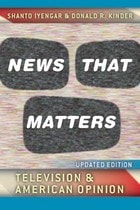
News That Matters
Television and American Opinion, Updated EditionShanto Iyengar and Donald R. Kinder
University of Chicago Press, 2010
Almost twenty-five years ago, Shanto Iyengar and Donald R. Kinder first documented a series of sophisticated and innovative experiments that unobtrusively altered the order and emphasis of news stories in selected television broadcasts. Their resulting book News That Matters, now hailed as a classic by scholars of political science and public opinion alike, is here updated for the twenty-first century, with a new preface and epilogue by the authors. Backed by careful analysis of public opinion surveys, the authors show how, despite changing American politics, those issues that receive extended coverage in the national news become more important to viewers, while those that are ignored lose credibility. Moreover, those issues that are prominent in the news stream continue to loom more heavily as criteria for evaluating the president and for choosing between political candidates.
“News That Matters does matter, because it demonstrates conclusively that television newscasts powerfully affect opinion. . . . All that follows, whether it supports, modifies, or challenges their conclusions, will have to begin here.”—The Public Interest
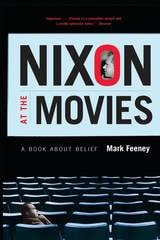
Nixon at the Movies
A Book about BeliefMark Feeney
University of Chicago Press, 2004
Nixon at the Movies takes a new and often revelatory approach to looking at Nixon's career—and Hollywood's. From the obvious (All the President's Men) to the less so (Elvis Presley movies and Nixon's relationship to '60s youth culture) to several onscreen "alternate" Nixons (Fred MacMurray in Double Indemnity, Tony Curtis in The Sweet Smell of Success, Gene Hackman in The Conversation), Feeney sees aspects of Nixon's character, and the nation's, refracted and reimagined in film. Conversely, Feeney argues that Nixon can help us see the movies in a new light, making a strong case for Nixon as the movies' tutelary deity during the early '70s, playing a role in Hollywood's Silver Age comparable to FDR's during its Golden Age.
Stylishly written and bracingly eclectic, Nixon at the Movies draws on biography, politics, cultural history, and film criticism to show just how deeply in the twentieth-century American grain lies the pair of seemingly incongruous nouns in its title. As Nixon once remarked to Garry Wills: "Isn't that a hell of a thing, that the fate of a great country can depend on camera angles?"

Noise
Living and Trading in Electronic FinanceAlex Preda
University of Chicago Press, 2017
In Noise, Alex Preda explores the world of the people who trade even when by all measures they would be better off not trading. Based on firsthand observations, interviews with traders and brokers, and on international direct trading experience, Preda’s fascinating ethnography investigates how ordinary people take up financial trading, how they form communities of their own behind their computer screens, and how electronic finance encourages them to trade more and more frequently. Along the way, Preda finds the answer to the paradox of amateur trading—the traders aren’t so much seeking monetary rewards in the financial markets, rather the trading itself helps them to fulfill their own personal goals and aspirations.
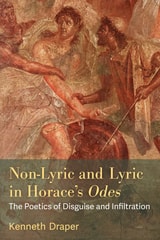
Non-Lyric and Lyric in Horace's Odes
The Poetics of Disguise and InfiltrationKenneth Draper
University of Michigan Press, 2026
Kenneth Draper’s new volume investigates genre, gender, and self-presentation in Horace’s first collection of Odes. It examines how Horace uses non-lyric genres—elegy, epic, invective, and philosophical discourse—to define his lyric project, responding to the rhetorical challenge of writing in the wake of civil war. It shows how Horace employs a “poetics of disguise and infiltration” in his engagement with these other genres. At times, he assimilates his lyric persona to an elegiac one, claiming to share elegy’s effeminacy and disinterest in politics. Similarly, he draws on philosophical discourse to present himself as too modest for heavy political themes. In both cases, he turns to clothing metaphors to identify the slight persona as a disguise that he may assume or discard as needed. Through this disingenuous self-presentation, he disavows interest in the masculine modes of epic and invective. Read as reflections on Horace’s own infiltration of epic territory, the examined scenes give clues about his motivations: focusing on the characters’ self-preservation amid dangers, he reminds readers of the risks and audacity of his project.
Normal Aging III
Reports from the Duke Longitudinal Studies, 1975–1984Erdman Palmore, Ewald Busse, George Maddox, John Nowlin, and Ilene Siegler, eds.
Duke University Press, 1985

Not Yet Pregnant
Infertile Couples in Contemporary AmericaGreil, Arthur L
Rutgers University Press, 1991
Although voluntary childlessness has come to be accepted as permissible, the "normal" plans of most American couples include parenthood. Having a child is still seen as a rite of passage to adulthood. When a couple finds out that they are infertile and that life is not going to go according to plan, they ask, "why me?" Greil explores not only "why me?" and the difficulty of finding a satisfying answer, but other questions as well. Why do women and men respond differently to infertility? Do gender differences play a role in the experience of infertility? How has medical technology affected the experience of infertility? Why are infertile couples so committed to the goal of having biological children?
Greil argues that the complexity of infertility comes from its changing statusÐÐit is no longer considered a provate problem but a medical problem that can be solved. The human body is thought of as a finely-tuned machine and infertility is just a mechanical problem. In America, the author claims, those who suffer from medical problems become subject to cultural beliefs about the nature of illness and the role of the sick. This includes the belief that the sufferer should do everything in his or her power to get better; in the cae of infertility the infertile couple should do everything possible to have a baby. What results is often painful, humiliating, and never-ending treatment programs. But infertile couples are reluctant to stop treatment because new techniques are being developed, and there is always next month. Couples do not consider themselves infertile forever, they consider themselves "not yet pregnant."
Greil explores the effect that infertility has on men and women, and why men seem to accept infertility more easily than women. Women see infertility as failure, they see themselves as incomplete. Men, seeing infertility more frequently as something they cannot change, ask why worry about it? Greil also explores what effect these attitudes have on the couple's marriage, on relationships with their relatives, and with their fertile friends. Infertility is not just a medical problem, it is a personal and emotional problem that affects all other aspects of the couple's life. This is a thorough investigation of what fertility means to contemporary American couples.
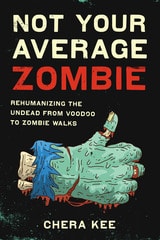
Not Your Average Zombie
Rehumanizing the Undead from Voodoo to Zombie WalksBy Chera Kee
University of Texas Press, 2017
The zombie apocalypse hasn’t happened—yet—but zombies are all over popular culture. From movies and TV shows to video games and zombie walks, the undead stalk through our collective fantasies. What is it about zombies that exerts such a powerful fascination? In Not Your Average Zombie, Chera Kee offers an innovative answer by looking at zombies that don’t conform to the stereotypes of mindless slaves or flesh-eating cannibals. Zombies who think, who speak, and who feel love can be sympathetic and even politically powerful, she asserts.
Kee analyzes zombies in popular culture from 1930s depictions of zombies in voodoo rituals to contemporary film and television, comic books, video games, and fan practices such as zombie walks. She discusses how the zombie has embodied our fears of losing the self through slavery and cannibalism and shows how “extra-ordinary” zombies defy that loss of free will by refusing to be dehumanized. By challenging their masters, falling in love, and leading rebellions, “extra-ordinary” zombies become figures of liberation and resistance. Kee also thoroughly investigates how representations of racial and gendered identities in zombie texts offer opportunities for living people to gain agency over their lives. Not Your Average Zombie thus deepens and broadens our understanding of how media producers and consumers take up and use these undead figures to make political interventions in the world of the living.
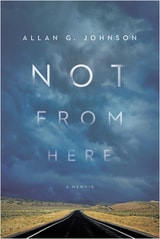
Not from Here
A MemoirAllan Johnson
Temple University Press, 2015
As a white man with Norwegian and English lineage, Johnson explores both America and the question of belonging to a place whose history holds the continuing legacy of the displacement, dispossession, and genocide of Native peoples.
More than a personal narrative, Not from Here illuminates the national silence around unresolved questions of accountability, race, and identity politics, and the dilemma of how to take responsibility for “a past we did not create.” Johnson’s story—about the past living in the present; of redemption, fate, family, tribe, and nation; of love and grief—raises profound questions about belonging, identity, and place.
Notes on the Heart
Affective Issues in the Writing ClassroomSusan H. McLeod
Southern Illinois University Press, 1997
It has long been recognized that affect (that is, the noncognitive aspect of mental activity) plays a large role in writing and in learning to write. According to Susan H. McLeod, however, the model that has been most used for empirical research on the writing process is based on cognitive psychology and does not take into account affective phenomena. Nor does the social constructionist view of the writing process acknowledge the affective realm except in a very general way. To understand the complete picture, McLeod insists, we need to explore how cognitive, affective, and social elements interact as people write.
In this book, McLeod follows a group of students through a semester of writing assignments, tracking the students’ progress and examining the affective elements relevant to their writing. To facilitate future discussion of these phenomena, McLeod also provides suggested definitions for terms in the affective domain.
In a very real sense, this book is the result of a collaboration of three Susans: Susan McLeod, who researched and wrote the book; Sue Hallett, an instructor in Washington State University’s composition program whose classes McLeod observed and who helped provide much of the data; and Susan Parker, a graduate student who observed Hallett’s class and who ran a tutorial connected to that class. To provide a narrative structure, McLeod and her two collaborators have constructed a simulated semester, conflating the year and a half of the study into one semester and creating a class that is a composite drawn from seven classrooms over three semesters.
Although philosophers have had much to say about the affective domain, Notes on the Heart is based for the most part on research from the social sciences. Discussions of pedagogy, while meant to have practical value, are suggestive rather than prescriptive. The goal is to help teachers see their practice in new way.
Teachers will be particularly interested in McLeod’s discussion of teacher affect/effect. This section examines both the issue of the "Pygmalion effect" (students becoming better because the teacher believes they are) and perhaps the more common opposite, the "golem effect" (students becoming less capable because their teachers view them that way).
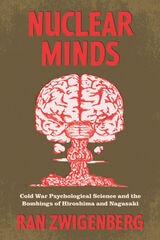
Nuclear Minds
Cold War Psychological Science and the Bombings of Hiroshima and NagasakiRan Zwigenberg
University of Chicago Press, 2023
In 1945, researchers on a mission to Hiroshima with the United States Strategic Bombing Survey canvassed survivors of the nuclear attack. This marked the beginning of global efforts—by psychiatrists, psychologists, and other social scientists—to tackle the complex ways in which human minds were affected by the advent of the nuclear age. A trans-Pacific research network emerged that produced massive amounts of data about the dropping of the bomb and subsequent nuclear tests in and around the Pacific rim.
Ran Zwigenberg traces these efforts and the ways they were interpreted differently across communities of researchers and victims. He explores how the bomb’s psychological impact on survivors was understood before we had the concept of post-traumatic stress disorder. In fact, psychological and psychiatric research on Hiroshima and Nagasaki rarely referred to trauma or similar categories. Instead, institutional and political constraints—most notably the psychological sciences’ entanglement with Cold War science—led researchers to concentrate on short-term damage and somatic reactions or even, in some cases, on denial of victims’ suffering. As a result, very few doctors tried to ameliorate suffering.
But, Zwigenberg argues, it was not only that doctors “failed” to issue the right diagnosis; the victims’ experiences also did not necessarily conform to our contemporary expectations. As he shows, the category of trauma should not be used uncritically in a non-Western context. Consequently, this book sets out, first, to understand the historical, cultural, and scientific constraints in which researchers and victims were acting and, second, to explore how suffering was understood in different cultural contexts before PTSD was a category of analysis.
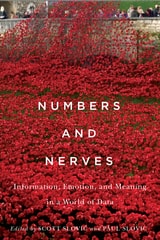
Numbers and Nerves
Information, Emotion, and Meaning in a World of DataScott Slovic
Oregon State University Press, 2015
The essays and interviews in Numbers and Nerves explore the quandary of our cognitive responses to quantitative information, while also offering compelling strategies for overcoming insensitivity to the meaning of such information. With contributions by journalists, literary critics, psychologists, naturalists, activists, and others, this book represents a unique convergence of psychological research, discourse analysis, and visual and narrative communication.
At a time of unprecedented access to information, our society is frequently stymied in its efforts to react to the world’s massive problems. Many of these problems are systemic, deeply rooted in seemingly intransigent cultural patterns and lifestyles. In order to sense the significance of these issues and begin to confront them, we must first understand the psychological tendencies that enable and restrict our processing of numerical information.
Numbers and Nerves explores a wide range of psychological phenomena and communication strategies—fast and slow thinking, psychic numbing, pseudoinefficacy, the prominence effect, the asymmetry of trust, contextualized anecdotes, multifaceted mosaics of prose, and experimental digital compositions, among others—and places these in real-world contexts. In the past two decades, cognitive science has increasingly come to understand that we, as a species, think best when we allow numbers and nerves, abstract information and experiential discourse, to work together. This book provides a roadmap to guide that collaboration. It will be invaluable to scholars, educators, professional communicators, and anyone who struggles to grasp the meaning behind the numbers.
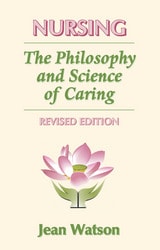
Nursing
The Philosophy and Science of Caring, Revised EditionJean Watson
University Press of Colorado, 2008
A core concept for nurses and the professional and non-professional people they interact with, "care" is one of the field's least understood terms, enshrouded in conflicting expectations and meanings. Although its usages vary among cultures, caring is universal and timeless at the human level, transcending societies, religions, belief systems, and geographic boundaries, moving from Self to Other to community and beyond, affecting all of life.
This second edition reflects on the universal effects of caring and connects caring with love as the primordial moral basis both for the philosophy and science of caring practices and for healing itself. It introduces Caritas Processes, offers centering and mediation exercises on an included audio CD, and provides other energetic and reflective models to assist students and practitioners in cultivating a new level of Caritas Nursing in their work and world.