Results by title
391 books match the query 'Public opinion' and 12 start with n

Nation and Migration
How Citizens in Europe Are Coping with XenophobiaGyörgy Csepeli
Central European University Press, 2021
Nation and Migration provides a way to understand recent migration events in Europe that have attracted the world's attention. The emergence of the nations in the West promised homogenization, but instead the imagined national communities have everywhere become places of heterogeneity, and modern nation states have been haunted by the specter of minorities. This study analyses experiences relating to migration in 23 European countries. It is based on data from the International Social Survey Programme, a global cross-national collaborative exercise, with surveys made in 1995, 2003, and 2013. In the authors' view, a critical test for Europe will be its ability to find adequate responses to the challenges of globalization.
The book provides a detailed overview of how citizens in Europe are coping with a xenophobia fueled by their own sense of insecurity. The authors reconstruct the competing sociological reactions to migration in the forms of integration, assimilation and segregation. Hungary receives special attention: the data show that people living there are far less closed and xenophobic than they might seem through the prism of a media-instigated moral panic.

Natural Born Celebrities
Serial Killers in American CultureDavid Schmid
University of Chicago Press, 2005
David Schmid provides a historical account of how serial killers became famous and how that fame has been used in popular media and the corridors of the FBI alike. Ranging from H. H. Holmes, whose killing spree during the 1893 Chicago World's Fair inspired The Devil in the White City, right up to Aileen Wuornos, the lesbian prostitute whose vicious murder of seven men would serve as the basis for the hit film Monster, Schmid unveils a new understanding of serial killers by emphasizing both the social dimensions of their crimes and their susceptibility to multiple interpretations and uses. He also explores why serial killers have become endemic in popular culture, from their depiction in The Silence of the Lambs and The X-Files to their becoming the stuff of trading cards and even Web sites where you can buy their hair and nail clippings.
Bringing his fascinating history right up to the present, Schmid ultimately argues that America needs the perversely familiar figure of the serial killer now more than ever to manage the fear posed by Osama bin Laden since September 11.
Navigating Interracial Borders
Black-White Couples and Their Social WorldsChilds, Erica Chito
Rutgers University Press, 2005
Is love color-blind, or at least becoming increasingly so? Today’s popular rhetoric and evidence of more interracial couples than ever might suggest that it is. But is it the idea of racially mixed relationships that we are growing to accept or is it the reality? What is the actual experience of individuals in these partnerships as they navigate their way through public spheres and intermingle in small, close-knit communities?
In Navigating Interracial Borders, Erica Chito Childs explores the social worlds of black-white interracial couples and examines the ways that collective attitudes shape private relationships. Drawing on personal accounts, in-depth interviews, focus group responses, and cultural analysis of media sources, she provides compelling evidence that sizable opposition still exists toward black-white unions. Disapproval is merely being expressed in more subtle, color-blind terms.
Childs reveals that frequently the same individuals who attest in surveys that they approve of interracial dating will also list various reasons why they and their families wouldn’t, shouldn’t, and couldn’t marry someone of another race. Even college students, who are heralded as racially tolerant and open-minded, do not view interracial couples as acceptable when those partnerships move beyond the point of casual dating. Popular films, Internet images, and pornography also continue to reinforce the idea that sexual relations between blacks and whites are deviant.
Well-researched, candidly written, and enriched with personal narratives, Navigating Interracial Borders offers important new insights into the still fraught racial hierarchies of contemporary society in the United States.
Negative Liberty
Public Opinion and the Terrorist Attacks on AmericaDarren W. Davis
Russell Sage Foundation, 2007
New Indians, Old Wars
Elizabeth Cook-Lynn
University of Illinois Press, 2006
Addressing Native American Studies' past, present, and future, the essays in New Indians, Old Wars tackle the discipline head-on, presenting a radical revision of the popular view of the American West in the process. Instead of luxuriating in its past glories or accepting the widespread historians' view of the West as a shared place, Elizabeth Cook-Lynn argues that it should be fundamentally understood as stolen.
Firmly grounded in the reality of a painful past, Cook-Lynn understands the story of the American West as teaching the political language of land theft and tyranny. She argues that to remedy this situation, Native American studies must be considered and pursued as its own discipline, rather than as a subset of history or anthropology. She makes an impassioned claim that such a shift, not merely an institutional or theoretical change, could allow Native American studies to play an important role in defending the sovereignty of indigenous nations today.

News That Matters
Television and American OpinionShanto Iyengar and Donald R. Kinder
University of Chicago Press, 1987
"Because of its methodological integrity and richness, News That Matters is likely to be regarded as an impressive, possibliy grounbreaking work."—Neil Postman, New York Times Book Review
News That Matters
Television and American Opinion, Updated EditionShanto Iyengar and Donald R. Kinder
University of Chicago Press, 2010
Almost twenty-five years ago, Shanto Iyengar and Donald R. Kinder first documented a series of sophisticated and innovative experiments that unobtrusively altered the order and emphasis of news stories in selected television broadcasts. Their resulting book News That Matters, now hailed as a classic by scholars of political science and public opinion alike, is here updated for the twenty-first century, with a new preface and epilogue by the authors. Backed by careful analysis of public opinion surveys, the authors show how, despite changing American politics, those issues that receive extended coverage in the national news become more important to viewers, while those that are ignored lose credibility. Moreover, those issues that are prominent in the news stream continue to loom more heavily as criteria for evaluating the president and for choosing between political candidates.
“News That Matters does matter, because it demonstrates conclusively that television newscasts powerfully affect opinion. . . . All that follows, whether it supports, modifies, or challenges their conclusions, will have to begin here.”—The Public Interest
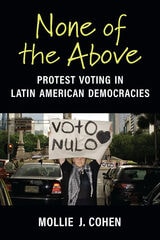
None of the Above
Protest Voting in Latin American DemocraciesMollie J. Cohen
University of Michigan Press, 2024
Winner of the 2025 International Society of Political Psychology David O. Sears Best Book on Mass Politics Award
Around the world each year, millions of citizens turn out to vote but leave their ballots empty or spoil them. Increasingly, campaigns have emerged that promote “invalid” votes like these. Why do citizens choose to cast blank and spoiled votes? And how do campaigns mobilizing the invalid vote influence this decision? None of the Above answers these questions using evidence from presidential and gubernatorial elections in eighteen Latin American democracies. Author Mollie J. Cohen draws on a broad range of methods and sources, incorporating data from electoral management bodies, nationally representative surveys, survey experiments, focus groups, semi-structured interviews, and news sources.
Contrary to received wisdom, this book shows that most citizens cast blank or spoiled votes in presidential elections on purpose. By participating in invalid vote campaigns, citizens can voice their concerns about low-quality candidates while also expressing a preference for high-quality democracy. Campaigns promoting blank and spoiled votes come about more often, and succeed at higher rates, when incumbent politicians undermine the quality of elections. Surprisingly, invalid vote campaigns can shore up the quality of democracy in the short term. None of the Above shows that swings in blank and spoiled vote rates can serve as a warning about the trajectory of a country’s democracy.
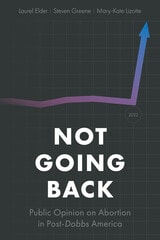
Not Going Back
Public Opinion on Abortion in Post-Dobbs AmericaLaurel Elder, Steven Greene, and Mary-Kate Lizotte
Temple University Press, 2026
Despite intense political debate, attitudes on abortion were remarkably stable for decades. However, after the 2022 Dobbs decision, Americans’ opinions began to change. Not Going Back explores the shifts in public opinion on this hot-button issue from the landmark passing of Roe v. Wade in 1973 through the 2024 election and into 2025.
The authors ask, “What role do Americans want their government to play in protecting, regulating, or restricting abortion access?” and, “How will changing attitudes on abortion reshape American politics?” They offer cohesive, theoretically grounded explanations for both the continuity and the change in Americans’ attitudes on this contentious topic. Using national data, they take a deep dive into the personal experiences and social forces behind these changes.
Not Going Back ends with an examination of the consequences of these changes for election outcomes. While there has been a striking reversal in the prioritization of abortion as an issue among Democrats and Republicans, the full impact of this shift in thinking will be influenced by future policies, court decisions, and party reactions.
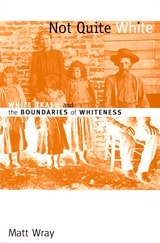
Not Quite White
White Trash and the Boundaries of WhitenessMatt Wray
Duke University Press, 2006
Of crucial importance are the ideas about poor whites that circulated through early-twentieth-century public health campaigns, such as hookworm eradication and eugenic reforms. In these crusades, impoverished whites, particularly but not exclusively in the American South, were targeted for interventions by sanitarians who viewed them as “filthy, lazy crackers” in need of racial uplift and by eugenicists who viewed them as a “feebleminded menace” to the white race, threats that needed to be confined and involuntarily sterilized.
Part historical inquiry and part sociological investigation, Not Quite White demonstrates the power of social categories and boundaries to shape social relationships and institutions, to invent groups where none exist, and to influence policies and legislation that end up harming the very people they aim to help. It illuminates not only the cultural significance and consequences of poor white stereotypes but also how dominant whites exploited and expanded these stereotypes to bolster and defend their own fragile claims to whiteness.
Not in Our Lifetimes
The Future of Black PoliticsMichael C. Dawson
University of Chicago Press, 2011
For all the talk about a new postracial America, the fundamental realities of American racism—and the problems facing black political movements—have not changed. Michael C. Dawson lays out a nuanced analysis of the persistence of racial inequality and structural disadvantages, and the ways that whites and blacks continue to see the same problems—the disastrous response to Katrina being a prime example—through completely different, race-inflected lenses. In fact, argues Dawson, the new era heralded by Barack Obama’s election is more racially complicated, as the widening class gap among African Americans and the hot-button issue of immigration have the potential to create new fissures for conservative and race-based exploitation. Through a thoughtful analysis of the rise of the Tea Party and the largely successful “blackening” of President Obama, Dawson ultimately argues that black politics remains weak—and that achieving the dream of racial and economic equality will require the sort of coalition-building and reaching across racial divides that have always marked successful political movements.
Polemical but astute, passionate but pragmatic, Not in Our Lifetimes forces us to rethink easy assumptions about racial progress—and begin the hard work of creating real, lasting change.
Numbered Voices
How Opinion Polling Has Shaped American PoliticsSusan Herbst
University of Chicago Press, 1993
Exploring the history of public opinion in the United States from the mid-nineteenth century to the present day, Herbst shows how numbers served both instrumental and symbolic functions, not only conveying neutral information but creating a basis authority. Addressing how the quantification of public opinion has affected contemporary politics and the democratic process, Herbst asks difficult but fundamental questions about the workings of American politics.
"An original and thought-provoking analysis of why we have polls, what they accomplish, and how they affect the current political scene. Herbst's scholarship is impeccable, her writing is clear and crisp, and her findings are original. . . . Every reader will benefit by carefully weighing the issues she raises and the conclusions she draws."—Doris A. Graber, Political Science Quarterly
"An intelligent, theoretically rich, and historically broad account of public opinion over several millennia. . . . The historical accounts are interesting and her interpretations are thought-provoking."—Paul Brace, Journal of American History