Results by title
201 books match the query 'Regional Studies' and 11 start with n
National Romanticism
The Formation of National MovementsMiroslav Hroch
Central European University Press, 2007
Negotiating a Perilous Empowerment
Appalachian Women’s LiteraciesErica Abrams Locklear
Ohio University Press, 2011
In many parts of Appalachia, family ties run deep, constituting an important part of an individual’s sense of self. In some cases, when Appalachian learners seek new forms of knowledge, those family ties can be challenged by the accusation that they have gotten above their raisings, a charge that can have a lasting impact on family and community acceptance. Those who advocate literacy sometimes ignore an important fact — although empowering, newly acquired literacies can create identity conflicts for learners, especially Appalachian women. In Negotiating a Perilous Empowerment, Erica Abrams Locklear explores these literacy-initiated conflicts, analyzing how authors from the region portray them in their fiction and creative nonfiction.
Abrams Locklear blends literacy studies with literary criticism to analyze the central female characters in the works of Harriette Simpson Arnow, Linda Scott DeRosier, Denise Giardina, and Lee Smith. She shows how these authors deftly overturn stereotypes of an illiterate Appalachia by creating highly literate characters, women who not only cherish the power of words but also push the boundaries of what literacy means.
Negotiating a Perilous Empowerment includes in-depth interviews with Linda Scott DeRosier and Lee Smith, making this an insightful study of an important literary genre.
Neighborhood Recovery
Reinvestment Policy for the New HometownKromer, John
Rutgers University Press, 1999
How can we help distressed neighborhoods recover from a generation of economic loss and reposition themselves for success in today's economy? While many have proposed solutions to the problems of neighborhoods suffering from economic disinvestment, John Kromer has actually put them to work successfully as Philadelphia’s housing director. Part war story, part how-to manual, and part advocacy for more effective public policy, Neighborhood Recovery describes how a blending of public-sector leadership and community initiative can bring success to urban communities. Kromer’s framework for neighborhood recovery addresses issues such as
· neighborhood strategic planning
· home ownership and financing
· the role of community-based organizations
· public housing
· work-readiness and job training for neighborhood residents
· housing for homeless people and others with specialized needs
· the importance of advocacy in influencing and advancing
neighborhood reinvestment policy.
Neighborhood Recovery presents a policy approach that cities can use to improve the physical condition of their neighborhoods and help urban residents compete for good jobs in the metropolitan economy. Kromer’s experience in Philadelphia reveals challenges and opportunities that can decisively influence the future of neighborhoods in many other American cities.
New Jersey's Postsuburban Economy
James W. Hughes and Joseph J. Seneca
Rutgers University Press, 2015
From the rural agricultural and natural resource based economy and lifestyle of the seventeenth century to today’s postindustrial, suburban-dominated, automobile-dependent economy, the economic drivers which were considered to be an asset are now viewed by many to be the state’s greatest disadvantage. On the brink of yet another transformation, this one driven by a new technology and an internet based global economy, New Jersey will have to adapt itself yet again—this time to a postsuburban digital economy.
Hughes and Seneca describe the forces that are now propelling the state into yet another economic era. They do this in the context of historical economic transformations of New Jersey, setting out the technological, demographic, and transportation shifts that defined and drove them.
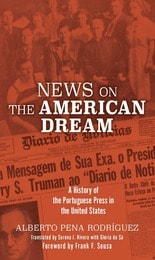
News on the American Dream
A History of the Portuguese Press in the United StatesAlberto Pena Rodríguez, Translated by Serena J. Rivera
Tagus Press, 2020
News on the American Dream traces the development of the Portuguese-American press from its beginnings in the late nineteenth century to the present, taking readers from the East Coast to Hawaii, with strategic stops in places with large Portuguese communities, including New Bedford, Massachusetts; Oakland, California; and Newark, New Jersey. Alberto Pena Rodríguez's nuanced analysis of the political, economic, social, and cultural roles played by these publications proves how important they were for the Portuguese-American community and the history of the ethnic press in the United States. Fascinating narratives about the founders, editors, and owners of these publications—and their challenges, squabbles, and successes—round out this engaging study.
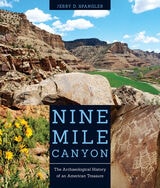
Nine Mile Canyon
The Archaeological History of an American TreasureJerry D. Spangler
University of Utah Press, 2013
The early visitors in the 1890s were determined to recover collections for museums but never much cared to understand the people who left the artifacts. Then came a cadre of young scientists—the first to be trained specifically in archaeology—who found Nine Mile Canyon to be an intriguing laboratory that yielded more questions than answers. Scholars such as Noel Morss, Donald Scott, Julian Steward, John Gillin, and John Otis Brew all left their boot prints there.
Today, archaeological research is experiencing another renaissance—a new generation of university-trained archaeologists is determined to unravel the mystery of Nine Mile Canyon using scientific tools and techniques that were unavailable to past generations. Through the words and thoughts of the archaeologists, as well as the more than 150 photos, readers will come to see Nine Mile Canyon as an American treasure unlike any other. As the first book that is devoted exclusively to the archaeology of this unique place, Nine Mile Canyon will evoke fascination among scholars and the general public alike.
Winner of a Choice Outstanding Academic Title award.
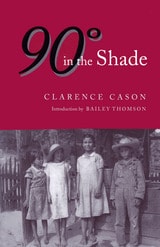
Ninety Degrees in the Shade
Clarence E. Cason
University of Alabama Press, 2001
A candid, courageous portrait of the South as told by a writer unafraid to confront its heat, its history, and its humanity.
Clarence Cason belonged to that restless generation of southern intellectuals who, between the world wars, questioned the South's stubborn traditionalism, even as they tried to explain and defend its distinctiveness. From his professorial perch at The University of Alabama, Cason wrote polished essays for leading national publications while contributing weekly editorials for newspaper readers. As a journalist in academia, he cultivated a broad audience for his eloquent though tentative observations about the "character" of a region that seemed to be a separate province of the nation.
In 1935, Cason collected his thoughts in a small book of essays titled 90° in the Shade. In it, he declared that climate and the relaxation afforded by field and stream had given southerners excellent reasons for their notoriously slow pace of life. Still, he wrote, "there is much work that ought to be done below the Potomac." Cason captured the pathos of race relations and other persistent problems and declared that the abominable practice of lynching would end when the best people of the South risked their personal and commercial standing to denounce it. Just days before the book's publication, however, Cason shot himself in his campus office. He left no explanation, but apparently he feared angry reaction from fellow citizens to his mild criticisms and gentle suggestions for change.
The University of Alabama Press brought the book back into print in 1983. This new edition of Cason's classic features an introduction by journalist and UA professor H. Bailey Thomson, allowing yet another generation the enjoyment of Cason's perceptive writing, not so much for any remedy he proposed but rather for the open-minded and loving way in which he addressed the region's tragic experience.
This second reprint edition of a classic work on southern culture will allow a new generation of readers to enjoy Cason's observant, graceful writing.

Nomads of a Desert City
Personal Stories from Citizens of the StreetBarbara Seyda
University of Arizona Press, 2001
You see them as faceless shapes on the median or in city parks. You recognize them by their cardboard signs, their bags of aluminum cans, or their weathered skin. But you do not know them.
In Nomads of a Desert City Barbara Seyda meets the gazes of our homeless neighbors and, with an open heart and the eye of an accomplished photographer, uncovers their compelling stories of life on the edge.
Byrdy is a teenager from Alaska who left a violent husband and misses the young daughter her mother now cares for. Her eyes show a wisdom that belies her youth. Samuel is 95 and collects cans for cash. His face shows a lifetime of living outside while his eyes hint at the countless stories he could tell. Lamanda worked as an accountant before an act of desperation landed her in prison. Now she struggles to raise the seven children of a woman she met there. Dorothy—whose earliest memories are of physical and sexual abuse—lives in a shelter, paycheck to paycheck, reciting affirmations so she may continue “to grace the world with my presence.”
They live on the streets or in shelters. They are women and men, young and old, Native or Anglo or Black or Hispanic. Their faces reflect the forces that have shaped their lives: alcoholism, poverty, racism, mental illness, and abuse. But like desert survivors, they draw strength from some hidden reservoir.
Few recent studies on homelessness offer such a revealing collection of oral history narratives and compelling portraits. Thirteen homeless women and men open a rare window to enrich our understanding of the complex personal struggles and triumphs of their lives. Nomads of a Desert City sheds a glaring light on the shadow side of the American Dream—and takes us to the crossroads of despair and hope where the human spirit survives.
Northwest Voices
Language and Culture in the Pacific NorthwestKristin Denham
Oregon State University Press, 2019
Although not often considered a bastion of diversity, linguistic or otherwise, in fact the Pacific Northwest has had a surprising number of influences on the English language, and a great number of other languages have left their mark on the region in a variety of ways. Individual essays examine the region's linguistic diversity, explore the origins and use of place names, and detail efforts to revive indigenous languages.
Written for both general readers and language scholars, Northwest Voices brings together research and perspectives from linguistics, history, and cultural studies to help readers understand how and why the language of our region is of utmost importance to our pasts, presents, and futures.
CONTRIBUTORS
Edwin Battistella
Kara Becker
Kathy Cole
Kristin Denham
Betsy Evans
Russell Hugo
Danica Sterud Miller
David Pippin
Allan Richardson
Jordan B. Sandoval
Alicia Beckford Wassink
Henry Zenk
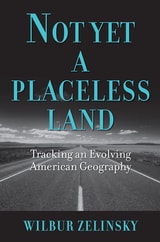
Not Yet a Placeless Land
Tracking an Evolving American GeographyWilbur Zelinsky
University of Massachusetts Press, 2011
In this book, cultural geographer Wilbur Zelinsky challenges that nearly universal view and reaches a paradoxical conclusion: that American land and society are becoming more uniform and more diverse at the same time. After recounting the many ways in which modern technologies, an advanced capitalist market system, and a potent central political establishment have standardized the built landscape of the country's vast territory and its burgeoning population over the past two hundred and fifty years, he also considers the vigor of countervailing forces. In a carefully balanced assessment, he documents steady increases in the role of the unpredictable, in the number and variety of arbitrarily located places and activities, and the persistence of basic cultural diversities. Contrary to popular perceptions, place-to-place differences in spoken language, religion, and political behavior have not diminished or disappeared. In fact, Zelinsky shows, novel cultural regions and specialized cities have been emerging even as a latter-day version of regionalism and examples of neo-localism are taking root in many parts of the United States.
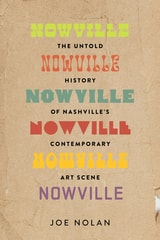
Nowville
The Untold History of Nashville's Contemporary Art SceneJoe Nolan
Vanderbilt University Press, 2024
This is the origin story of Nashville’s surging contemporary art scene told by the ones who were there before anyone else. Not a story about commercial spaces or official institutions—this is the story of moldy warehouse studios and improvised galleries, happy-kegger after-parties and front lawn art sales, exhibitions in apartment living rooms and secret art displays hidden in plain sight.
Nowville is an oral history of the Nashville art scene beginning in the 1990s. Author Joe Nolan tracks down the city’s art punks, art monks, radical art students, and visionary pioneers to share what made their moments in Nashville so special. He also offers insights into how this homespun movement powered by DIY innovating came to be a thriving creative community and a cornerstone of the city’s contemporary allure.
This book is the recipient of the 2025 Norman L. and Roselea J. Goldberg Prize from Vanderbilt University Press for the best book in the area of art or medicine.