Results by title
71 books match the query 'Revised Edition' and 4 start with n
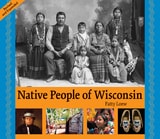
Native People of Wisconsin, Revised Edition
Patty Loew
Wisconsin Historical Society Press, 2015
"So many of the children in this classroom are Ho-Chunk, and it brings history alive to them and makes it clear to the rest of us too that this isn't just...Natives riding on horseback. There are still Natives in our society today, and we're working together and living side by side. So we need to learn about their ways as well." --Amy Laundrie, former Lake Delton Elementary School fourth grade teacher
An essential title for the upper elementary classroom, "Native People of Wisconsin" fills the need for accurate and authentic teaching materials about Wisconsin's Indian Nations. Based on her research for her award-winning title for adults, "Indian Nations of Wisconsin: Histories of Endurance and Survival," author Patty Loew has tailored this book specifically for young readers.
"Native People of Wisconsin" tells the stories of the twelve Native Nations in Wisconsin, including the Native people's incredible resilience despite rapid change and the impact of European arrivals on Native culture. Young readers will become familiar with the unique cultural traditions, tribal history, and life today for each nation.
Complete with maps, illustrations, and a detailed glossary of terms, this highly anticipated new edition includes two new chapters on the Brothertown Indian Nation and urban Indians, as well as updates on each tribe's current history and new profiles of outstanding young people from every nation.
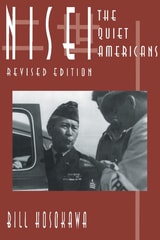
Nisei
The Quiet Americans, Revised EditionBill Hosokawa
University Press of Colorado, 2002
As Hosokawa additionally demonstrates, since World War II, Japanese Americans have achieved exceptional social, economic, and political progress. Their efforts led to apologies by four U.S. presidents for wartime injustices and redress through the landmark Civil Liberties Act of 1988. Brought up-to-date in this newly revised edition, Nisei details the transformation of these "quiet Americans" from despised security risks to respected citizens.
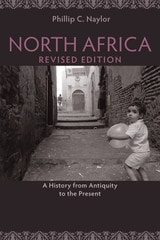
North Africa, Revised Edition
A History from Antiquity to the PresentBy Phillip C. Naylor
University of Texas Press, 2014
North Africa has been a vital crossroads throughout history, serving as a connection between Africa, Asia, and Europe. Paradoxically, however, the region's historical significance has been chronically underestimated. In a book that may lead scholars to reimagine the concept of Western civilization, incorporating the role North African peoples played in shaping "the West," Phillip Naylor describes a locale whose transcultural heritage serves as a crucial hinge, politically, economically, and socially.
Ideal for novices and specialists alike, North Africa begins with an acknowledgment that defining this area has presented challenges throughout history. Naylor's survey encompasses the Paleolithic period and early Egyptian cultures, leading readers through the pharonic dynasties, the conflicts with Rome and Carthage, the rise of Islam, the growth of the Ottoman Empire, European incursions, and the postcolonial prospects for Egypt, Libya, Tunisia, Algeria, Morocco, and Western Sahara.
Emphasizing the importance of encounters and interactions among civilizations, North Africa maps a prominent future for scholarship about this pivotal region.
Now with a new afterword that surveys the “North African Spring” uprisings that roiled the region from 2011 to 2013, this is the most comprehensive history of North Africa to date, with accessible, in-depth chapters covering the pre-Islamic period through colonization and independence.
Nursing
The Philosophy and Science of Caring, Revised EditionJean Watson
University Press of Colorado, 2008
A core concept for nurses and the professional and non-professional people they interact with, "care" is one of the field's least understood terms, enshrouded in conflicting expectations and meanings. Although its usages vary among cultures, caring is universal and timeless at the human level, transcending societies, religions, belief systems, and geographic boundaries, moving from Self to Other to community and beyond, affecting all of life.
This second edition reflects on the universal effects of caring and connects caring with love as the primordial moral basis both for the philosophy and science of caring practices and for healing itself. It introduces Caritas Processes, offers centering and mediation exercises on an included audio CD, and provides other energetic and reflective models to assist students and practitioners in cultivating a new level of Caritas Nursing in their work and world.