Results by title
397 books match the query 'Rome' and 3 start with n
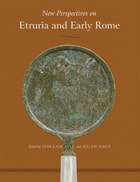
New Perspectives on Etruria and Early Rome
Sinclair Bell
University of Wisconsin Press, 2009
Paying tribute to Richard Daniel De Puma, a scholar who has made significant and influential contributions to Etruscan and Roman studies, the contributors to this collection echo the ambition and creativity of his work while offering an up-to-date survey of contemporary Etruscan scholarship. In surveying new developments in both fields, the work collected here represent the diverse, interdisciplinary interests of De Puma as well as areas of recent groundbreaking research.
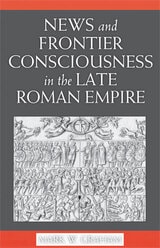
News and Frontier Consciousness in the Late Roman Empire
Mark W. Graham
University of Michigan Press, 2006
Approaching Roman frontiers with the aid of media studies as well as anthropological and sociological methodologies, Mark W. Graham chronicles and documents this significant transition in ancient thought, which coincided with, but was not necessarily dependent on, the Christianization of the Roman world.
Mark W. Graham is Assistant Professor of History at Grove City College.
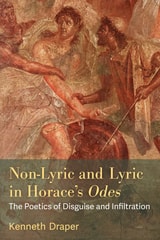
Non-Lyric and Lyric in Horace's Odes
The Poetics of Disguise and InfiltrationKenneth Draper
University of Michigan Press, 2026
Kenneth Draper’s new volume investigates genre, gender, and self-presentation in Horace’s first collection of Odes. It examines how Horace uses non-lyric genres—elegy, epic, invective, and philosophical discourse—to define his lyric project, responding to the rhetorical challenge of writing in the wake of civil war. It shows how Horace employs a “poetics of disguise and infiltration” in his engagement with these other genres. At times, he assimilates his lyric persona to an elegiac one, claiming to share elegy’s effeminacy and disinterest in politics. Similarly, he draws on philosophical discourse to present himself as too modest for heavy political themes. In both cases, he turns to clothing metaphors to identify the slight persona as a disguise that he may assume or discard as needed. Through this disingenuous self-presentation, he disavows interest in the masculine modes of epic and invective. Read as reflections on Horace’s own infiltration of epic territory, the examined scenes give clues about his motivations: focusing on the characters’ self-preservation amid dangers, he reminds readers of the risks and audacity of his project.