Results by title
238 books match the query 'Social Classes & Economic Disparity' and 5 start with n

Narrating Love and Violence
Women Contesting Caste, Tribe, and State in Lahaul, IndiaBhattacharya, Himika
Rutgers University Press, 2017
The women in this book tell their stories through love, articulated as rejection, redefinition and reproduction of notions of violence and solidarity. Himika Bhattacharya centers the women’s narratives as a site of knowledge—beyond love and beyond violence. This book shows how women on the margins of tribe and caste know both, love and violence, as agents wishing to re-shape discourses of caste, tribe and community.

New Jersey Dreaming
Capital, Culture, and the Class of '58Sherry B. Ortner
Duke University Press, 2005
Ortner tracked down nearly all 304 of her classmates. She interviewedabout 100 in person and spoke with most of the rest by phone, recording her classmates’ vivid memories of time, place, and identity. Ortner shows how social class affected people’s livesin many hidden and unexamined ways. She also demonstrates that the Class of ‘58’s extreme upward mobility must be understood in relation to the major identity movements of the twentieth century—the campaign against anti-Semitism, the Civil Rights movement, and feminism.
A multisited study combining field research with an interdisciplinary analytical framework, New Jersey Dreaming is a masterly integration of developments at the vanguard of contemporary anthropology. Engaging excerpts from Ortner's field notes are interspersed throughout the book. Whether recording the difficulties and pleasures of studying one's own peer group, the cultures of driving in different parts of the country, or the contrasting experiences of appointment-making in Los Angeles and New York, they provide a rare glimpse into the actual doing of ethnographic research.

New Orleans Sports
Playing Hard in the Big EasyThomas Aiello
University of Arkansas Press, 2019
Tracing that history from the early nineteenth century to the present, while also surveying the state of the city’s sports historiography, New Orleans Sports places sport in the context of race relations, politics, and civic and business development to expand that historiography—currently dominated by a text that stops at 1900—into the twentieth century, offering a modern examination of sports in the city.
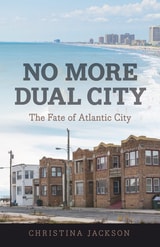
No More Dual City
The Fate of Atlantic CityChristina Jackson
Rutgers University Press, 2027
No More Dual City: The Fate of Atlantic City examines Atlantic City as a vivid case study of how Black communities endure and resist the forces of economic redevelopment, racialized planning, and environmental vulnerability. Drawing on five years of ethnographic research, Jackson reveals how the city’s famed tourism and casino economy depends upon, yet marginalizes, the historically Black Northside neighborhood. Through the concept of dualness, Jackson explores how racial capitalism produces both material and emotional divides, between growth and decay, visibility and exclusion, and belonging and dispossession. Combining first-person narrative, theory, and community storytelling, the book illuminates the “slow violence” of urban inequality and the creativity of residents who build rooted futures amid instability. No More Dual City reframes Atlantic City not as an anomaly but as a microcosm of racialized urban America, offering a compelling new way to think about sustainability, justice, and the right to stay in place.
Normalizing Inequality
How Californians Make Sense of the Growing DivideG. Cristina Mora
Russell Sage Foundation, 2026
California has long been mythologized as the quintessential land of opportunity and reinvention—a place where anyone, regardless of origin, can forge a new life and realize their aspirations. Yet beneath this gilded narrative lies a starker reality: California ranks among the most unequal states in one of the world's most unequal countries, where the middle class finds itself increasingly squeezed. Economic inequality is not an anomaly but part of a broader global phenomenon, as disparities deepen across the world. While we know a lot about its contours, its evolution over time and its intersections with race and immigration, we understand far less about how ordinary people interpret and internalize it. In Normalizing Inequality, sociologists G. Cristina Mora and Tianna S. Paschel illuminate how middle-class Californians perceive and come to accept the inequalities that surround them.
Drawing on extensive interviews and surveys, Mora and Paschel uncover a profound paradox at the heart of middle-class consciousness. They find that Californians are keenly aware of the systemic causes of inequality—they recognize policies engineered to benefit the wealthy, they acknowledge how structural racism makes it hard for some groups to get ahead—yet they consistently minimize these forces. Instead, they gravitate toward explanations rooted in individualism, moral character, and the idea that things are worse in other places. Racism and racial inequality in California become palatable when framed as "not as bad as the South." Immigrant exploitation, however severe, transforms into evidence of the American Dream fulfilled simply upon arrival. Economic pressures that displace others become surmountable through personal industriousness and forbearance.
These beliefs about inequality grow more troubling still. Middle-class Californians sometimes blame disempowered people for their circumstances—acknowledging structural barriers facing homeless and undocumented populations while simultaneously faulting them for insufficient drive or criminal behavior that compounds their difficulties. When contemplating California's future, interviewees envision economic prosperity propelled by technological innovation, yet remain curiously unconcerned with how present inequalities might shape that tomorrow. Their imagined future is one where White and Asian American populations thrive, while Black, Latino, and economically marginalized Californians either vanish through displacement or fade into irrelevance. As respondents use these interpretive frameworks to make sense of inequality, they lean heavily on California's foundational narratives of opportunity, sanctuary and multiracial promise.
Normalizing Inequality offers an incisive examination of how ordinary citizens make sense of inequality and, through that very process of sense-making, how they tolerate and passively reproduce the conditions they often claim to deplore.