Results by title
454 books match the query 'Study and teaching (Higher)' and 20 start with n
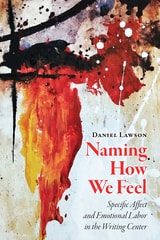
Naming How We Feel
Specific Affect and Emotional Labor In the Writing CenterDaniel Lawson
Utah State University Press, 2026
Writing centers are the locus for a wide range of emotional labor on campus, often serving students beyond the typical educational purpose. Naming How We Feel grapples with the question of how writing center administrators account for, train for, and theorize emotion and affect in the writing center to facilitate better and more ethical practices and considers how writing center administrators might ameliorate the costs of such emotional labor to faculty, tutors, and students.
Beginning with a discussion of how writing center scholars might identify and understand emotional labor, the book then expands to examine richly varied case studies and anecdotes to showcase how tutors tend to experience such labor and consider its relationship and association with emotional intelligence and burnout. Lawson considers how the field might better prepare and train tutors for affect and emotional labor, ultimately advocating for more equitable conditions for emotional labor within writing centers.
Naming How We Feel examines the critical role feelings play in writing and writing center work, offering advice on training tutors for emotional labor and literacy and suggestions for how administrators might engage institutional stakeholders to create and support more equitable conditions for emotional labor within their writing centers.
Naming What We Know, Classroom Edition
Threshold Concepts of Writing StudiesLinda Adler-Kassner
Utah State University Press, 2016
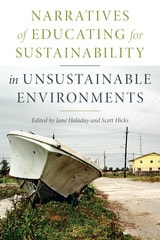
Narratives of Educating for Sustainability in Unsustainable Environments
Jane Haladay
Michigan State University Press, 2017
Narratives of Joy and Failure in Antiracist Assessment
Exploring Collaborative Writing AssessmentsAsao B. Inoue
University Press of Colorado, 2024
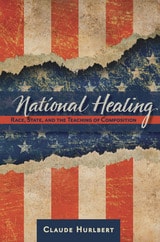
National Healing
Race, State, and the Teaching of CompositionClaude Hurlbert
Utah State University Press, 2013
In National Healing, author Claude Hurlbert persuasively relates nationalism to institutional racism and contends that these are both symptoms of a national ill health afflicting American higher education and found even in the field of writing studies. Teachers and scholars, even in progressive fields like composition, are unwittingly at odds with their own most liberatory purposes, he says, and he advocates consciously broadening our understanding of rhetoric and writing instruction to include rhetorical traditions of non-Western cultures.
Threading a personal narrative of his own experiences as a student, professor, and citizen through a wide ranging discussion of theory, pedagogy, and philosophy in the writing classroom, Hurlbert weaves a vision that moves beyond simple polemic and simplistic multiculturalism. National Healing offers a compelling new aesthetic, epistemological, and rhetorical configuration.

Navigating The Future With Sce Nario Planning
A Guidebook FoJoan Giesecke
Assoc of College & Research Libraries, 2015
Negotiating the Intersections of Writing and Writing Instruction
Proceedings from the 2019 Conference of the European Association for the Teaching of Academic Writingedited by Magnus Gustafsson and Andreas Eriksson
University Press of Colorado, 2022
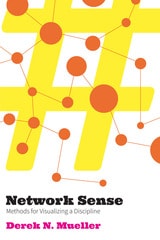
Network Sense
Methods for Visualizing a DisciplineDerek N. Mueller
University Press of Colorado, 2018
New Technologies and Renaissance Studies
Edited by William R. Bowen and Raymond G. Siemens
Iter Press, 2008
The first volume of the series, New Technologies and Renaissance Studies, presents a collection of contributions to one ongoing forum for the dialogue which lies at the heart of the book series, the annual "conference within a conference" of the same name which takes place during the Renaissance Society of America gathering, dedicated specifically to the intersection of computational methods and Renaissance studies. Papers in this volume exemplify those fruitful and productive exchanges, from their inception at the 2001 meeting in Chicago to the 2005 meeting in Cambridge.
New Technologies and Renaissance Studies II
Edited by Tassie Gniady, Kris McAbee, Jessica Murphy
Iter Press, 2014
In the fourth volume of the New Technologies in Medieval and Renaissance Studies series, volume editors Tassie Gniady, Kris McAbee, and Jessica Murphy bring together some of the best work from the New Technologies in Medieval and Renaissance Studies panels at the Renaissance Society of America (RSA) annual meetings for the years 2004–2010. These essays demonstrate a dedication to grounding the use of “newest” practices in the theories of the early modern period. At the same time, the essays are interested in the moment—the needs of scholars then, the theories of media that informed current understanding, and the tools used to conduct studies.
New Technologies and Renaissance Studies III
Edited by Matthew Evan Davis and Colin Wilder
Iter Press, 2022

New Technologies and Renaissance Studies IV
The Changing Shape of Digital Early Modern StudiesEdited by Randa El Khatib and Caroline Winter
Iter Press, 2025
A collection of essays engaging with digital scholarship and new technologies.
Contributors to this volume engage with digital scholarship in several ways: by creating digital projects, often in multidisciplinary, collaborative environments; by applying digital methodologies and tools to explore research questions; and by speculating about the potential directions that digital scholarship can take to tackle existing research areas that could benefit from new perspectives. Together, the chapters demonstrate how various digital approaches—from network analysis to web mapping, VR and AR technologies, digital editions, databases, and archives—are all contributing in creative and effective ways to expand our knowledge of the past, to help ask and answer questions at a scale that was unimaginable before the digital turn, and to reshape early modern studies in the twenty-first century.
New Work of Writing Across the Curriculum
Diversity and Inclusion, Collaborative Partnerships, and Faculty DevelopmentStaci M. Perryman-Clark
Utah State University Press, 2023
Many of these initiatives are created in isolation, reinforcing institutional silos that are not used strategically to gain the attention of senior administrators, particularly those working at state-supported public institutions who must manage shrinking institutional budgets. Yet teaching and learning centers and WAC programs gain tremendously from one another by building explicit partnerships on campus-wide diversity initiatives that emphasize cultural competence. In addition, both cultural competence and written proficiency enhance the transferable skills necessary for completing undergraduate education requirements, and this work can be leveraged to draw the attention of senior administrative leadership.
Faculty development and WAC need to make diversity and inclusion initiatives a priority for professional development. The New Work of Writing Across the Curriculum reviews initiatives that point to increased understanding of diversity and inclusion that will be of significance to administrators, WAC specialists, faculty developers, and diversity officers across the spectrum of institutions of higher learning.
New Writing Classroom
Listening, Motivation, and Habits of MindPatrick Sullivan
Utah State University Press, 2014
In A New Writing Classroom, Patrick Sullivan provides a new generation of teachers a means and a rationale to reconceive their approach to teaching writing, calling into question the discipline's dependence on argument.
Including secondary writing teachers within his purview, Sullivan advocates a more diverse, exploratory, and flexible approach to writing activities in grades six through thirteen. A New Writing Classroom encourages teachers to pay more attention to research in learning theory, transfer of learning, international models for nurturing excellence in the classroom, and recent work in listening to teach students the sort of dialogic stance that leads to higher-order thinking and more sophisticated communication.
The conventional argumentative essay is often a simplistic form of argument, widely believed to be the most appropriate type of writing in English classes, but other kinds of writing may be more valuable to students and offer more important kinds of cognitive challenges. Focusing on listening and dispositions or "habits of mind” as central elements of this new composition pedagogy, A New Writing Classroom draws not just on composition studies but also on cognitive psychology, philosophy, learning theory, literature, and history, making an exciting and significant contribution to the field.
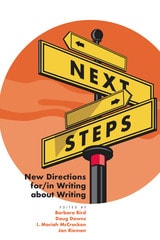
Next Steps
New Directions for/in Writing about WritingBarbara Bird
Utah State University Press, 2019
For more than ten years, WAW approaches have been emerging in all these sites and scenes of college writing instruction, and Next Steps offers an original look at the breadth of ways WAW pedagogy has been taken up by writing instructors and into an array of writing courses. Organized by some of the key foci of WAW instruction—writerly identity, process, and engagement—the book takes readers into thick classroom descriptions as well as vignettes offering shorter takes on particular strategies. The classroom descriptions are fleshed out in more personal ways by student vignettes, reflections on encountering writing about writing in college writing classes. As its theoretical basis, Next Steps includes chapters on threshold concepts, transfer of writing-related learning, and the history of WAW pedagogies.
As the first extensive look into WAW pedagogies across courses and institutions, Next Steps is ideal for writing instructors looking for new approaches to college composition instruction or curious about what “writing about writing” pedagogy actually is, for graduate students in composition pedagogy and their faculty, and for those researching composition pedagogy, threshold concepts, and learning transfer.
Contributors:
Linda Adler-Kassner, Olga Aksakalova, Joy Arbor, Matthew Bryan, Shawn Casey, Gabriel Cutrufello, Jennifer deWinter, Kristen di Gennaro, Emma Gaier, Christina Grant, Gwen Hart, Kimberly Hoover, Rebecca Jackson, Frances Johnson, Elizabeth Kleinfeld, Katie Jo LaRiviere, Andrew Lucchesi, Cat Mahaffey, Michael Michaud, Rebecca S. Nowacek, Andrew Ogilvie, Sarah Read, Rebecca Robinson, Kevin Roozen, Mysti Rudd, Christian Smith, Nichole Stack, Samuel Stinson, Hiroki Sugimoto, Lisa Tremain, Valerie Vera, Megan Wallace, Elizabeth Wardle, Christy I. Wenger, Nancy Wilson, Dominique Zino
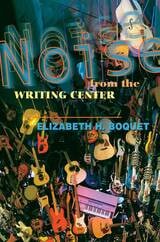
Noise From The Writing Center
Elizabeth H. Boquet
Utah State University Press, 2002
In Noise from the Writing Center, Boquet develops a theory of "noise" and excess as an important element of difference between the pedagogy of writing centers and the academy in general. Addressing administrative issues, Boquet strains against the bean-counting anxiety that seems to drive so much of writing center administration. Pedagogically, she urges a more courageous practice, developed via metaphors of music and improvisation, and argues for "noise," excess, and performance as uniquely appropriate to the education of writers and tutors in the center.
Personal, even irreverent in style, Boquet is also theoretically sophisticated, and she draws from an eclectic range of work in academic and popular culture-from Foucault to Attali to Jimi Hendrix. She includes, as well, the voices of writing center tutors with whom she conducted research, and she finds some of her most inspiring moments in the words and work of those tutors.
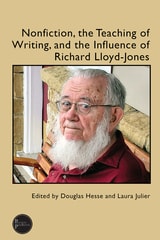
Nonfiction, the Teaching of Writing, and the Influence of Richard Lloyd-Jones
Doug Hesse
University Press of Colorado, 2023
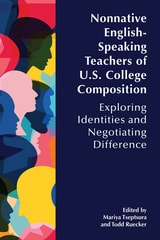
Nonnative English-Speaking Teachers of U.S. College Composition
Exploring Identities and Negotiating DifferenceMariya Tseptsura
University Press of Colorado, 2024

Not Just Where To Click
Teaching Students (Pil #68)Heather Jagman
American Library Association, 2015
Not Just Where to Click
Teaching Students How to Think About InformationTroy A. Swanson
Assoc of College & Research Libraries, 2015