Results by title
301 books match the query 'West (U.S.)' and 12 start with n
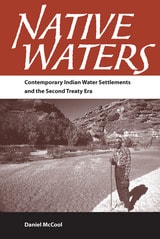
Native Waters
Contemporary Indian Water Settlements and the Second Treaty EraDaniel McCool
University of Arizona Press, 2002
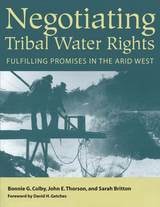
Negotiating Tribal Water Rights
Fulfilling Promises in the Arid WestBonnie G. Colby, John E. Thorson, and Sarah Britton; Foreword by David H. Getches
University of Arizona Press, 2005
Much has been written about Indian water rights; for the many tribal and non-Indian stakeholders who rely upon western water, this book now offers practical guidance on how to negotiate them. By providing a comprehensive synthesis of western water issues, tribal water disputes, and alternative approaches to dispute resolution, it offers a valuable sourcebook for all—tribal councils, legislators, water professionals, attorneys—who need a basic understanding of the complexities of the situation.
The book reviews the history, current status, and case law related to western water while revealing strategies for addressing water conflicts among tribes, cities, farms, environmentalists, and public agencies. Drawing insights from the process, structure, and implementation of water rights settlements currently under negotiation or already agreed to, it presents a detailed analysis of how these cases evolve over time. It also provides a wide range of contextual materials, from the nuts and bolts of a Freedom of Information Act request to the hydrology of irrigation. It also includes contributed essays by expert authors on special topics, as well as interviews with key individuals active in water management and tribal water cases.
As stakeholders continue to battle over rights to water, this book clearly addresses the place of Native rights in the conflict. Negotiating Tribal Water Rights offers an unsurpassed introduction to the ongoing challenges these claims present to western water management while demonstrating the innovative approaches that states, tribes, and the federal government have taken to fulfill them while mitigating harm to both non-Indians and the environment.
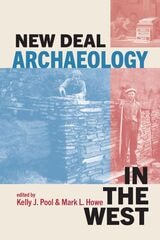
New Deal Archaeology in the West
Edited by Kelly J. Pool and Mark L. Howe
University of Utah Press, 2023
Descriptions of New Deal projects and their contributions to our understanding of the past, as well as the stories of those involved—archaeologists, avocationalists, and others—are woven together across the chapters. Also documented are lost or scattered artifacts, records, and ancestors’ remains; incomplete analyses; unpublished reports; inconsistent application of scientific methodology; and the loss of Native sacred sites and traditional lands and lifeways. Authors highlight characteristics that distinguished the American West from the East during the Depression and affected the nature of New Deal projects, including the extent of federal land available in the West, the reliance of sparsely populated areas upon tourism, the presence of large resident Native populations with deep histories, and the wide-ranging degree of existing archaeology infrastructure in each state. This volume demonstrates that despite regional differences, New Deal-funded archaeological and cultural heritage projects created a legacy of knowledge and practice across the nation.
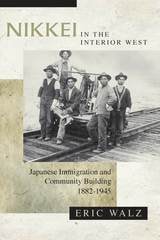
Nikkei in the Interior West
Japanese Immigration and Community Building, 1882–1945Eric Walz
University of Arizona Press, 2012
Eric Walz's Nikkei in the Interior West tells the story of more than twelve thousand Japanese immigrants who settled in the interior West--Arizona, Colorado, Idaho, Nebraska, and Utah. They came inland not as fugitives forced to relocate after Pearl Harbor but arrived decades before World War II as workers searching for a job or as picture brides looking to join husbands they had never met.
Despite being isolated from their native country and the support of larger settlements on the West Coast, these immigrants formed ethnic associations, language schools, and religious institutions. They also experienced persecution and discrimination during World War II in dramatically different ways than the often-studied immigrants living along the Pacific Coast. Even though they struggled with discrimination, these interior communities grew both in size and in permanence to become an integral part of the American West.
Using oral histories, journal entries, newspaper accounts, organization records, and local histories, Nikkei in the Interior West explores the conditions in Japan that led to emigration, the immigration process, the factors that drew immigrants to the interior, the cultural negotiation that led to ethnic development, and the effects of World War II. Examining not only the formation and impact of these Japanese communities but also their interaction with others in the region, Walz demonstrates how these communities connect with the broader Japanese diaspora.
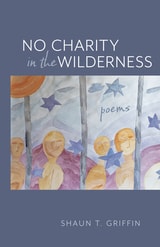
No Charity in the Wilderness
PoemsShaun T. Griffin
University of Nevada Press, 2024
Griffin has spent many decades in the high desert trying to find the way forward—when what he knows has been challenged and still there is breath on the horizon. One day an ancient Chinese poet comes to visit: "Snow deepens/ to quiet what I once believed, and Wang Wei stoops from the spine:/ this is how you become silence." Even if you doubt the old poet's counsel, like Griffin, you want to journey with him into the wilderness.
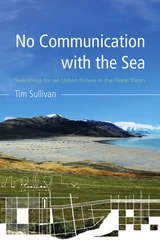
No Communication with the Sea
Searching for an Urban Future in the Great BasinTim Sullivan
University of Arizona Press, 2010
No Communication with the Sea is a journey through this urbanizing Great Basin landscape. Here, the land fosters illusions of limitless space and resources, but its space and resources are severely limited; its people live clustered in cities but are often reluctant to embrace urbanity. These tensions led journalist and urban planner Tim Sullivan to explore the developing centers and edges of the Great Basin cities and the ways some are trying to build livable and sustainable urban environments.
In this highly readable book of creative nonfiction, Sullivan employs a variety of methods—including interviews, research, travelogues, and narrative—to survey the harsh landscape for clues to the ways cities can adapt to their geography, topography, ecology, hydrography, history, and culture. No Communication with the Sea embarks on a quest for a livable future for the heart of the interior West. In the process, it both unearths the past and ponders the present and future Great Basin cities.
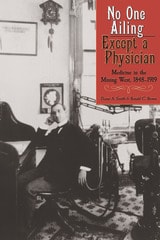
No One Ailing Except a Physician
Medicine in the Mining West, 1848-1919Duane A. Smith
University Press of Colorado, 2001
From burying scurvy victims up to their necks in the earth to drinking kerosene mixed with sugar to treat influenza, mid-nineteenth century medicine in the mining communities of the West usually consisted of home remedies that were often remarkable for their inventiveness but tragically random in their effectiveness. Only as a desperate last resort would people turn to the medical community, which had developed a deplorable reputation for quackery and charlatanism because of its lack of licensing regulations and uniform educational standards. No One Ailing Except a Physician takes readers back to those free-wheeling days in the mining towns and the dark recesses of the mines themselves, a time when illness or injury was usually survived more due to sheer luck than the interventions of medicine.
In this important new contribution to both mining and medical history, historians Duane A. Smith and Ronald C. Brown present a detailed analysis of the ailments that confronted the miners and the methods with which they and their doctors attempted to "cure" them. The occupational hazards of mining, with its strenuous labor and exposure to the elements, contributed to the miners' vulnerability to disease and injury, which was further worsened by the typical miner's refusal to heed prevailing medical wisdom and common sense, often leading to easily preventable diseases such as scurvy. And because medical science of the era had not progressed much beyond that of the ancient Greeks, such debilitating diseases such as cholera, influenza, dysentery, and malaria proved to be virtual death sentences, to say nothing of occupational accidents with fires and explosions, mine collapses, and safety cage mishaps.
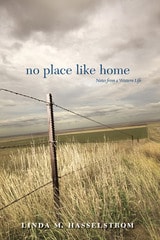
No Place Like Home
Notes from a Western LifeLinda M. Hasselstrom
University of Nevada Press, 2010
In No Place Like Home, Linda Hasselstrom ponders the changing nature of community in the modern West, where old family ranches are being turned into subdivisions and historic towns are evolving into mean, congested cities. Her scrutiny, like her life, moves back and forth between her ranch on the South Dakota prairie and her house in an old neighborhood at the edge of downtown Cheyenne, Wyoming. The vignettes that form the foundation of her consideration are drawn from the communities she has known during her life in the West, reflecting on how they have grown, thrived, failed, and changed, and highlighting the people and decisions that shaped them. Hasselstrom’s ruminations are both intensely personal and universal. She laments the disappearance of the old prairie ranches and the rural sense of community and mutual responsibility that sustained them, but she also discovers that a spirit of community can be found in unlikely places and among unlikely people. The book defines her idea of how a true community should work, and the kind of place she wants to live in. Her voice is unique and honest, both compassionate and cranky, full of love for the harsh, hauntingly beautiful short-grass prairie that is her home, and rich in understanding of the intricacies of the natural world around her and the infinite potentials of human commitment, hope, and greed. For anyone curious about the state of the contemporary West, Hasselstrom offers a report from the front, where nature and human aspirations are often at odds, and where the concepts of community and mutual responsibility are being redefined.

No Place To Call Home
The 1807-1857 Life Writings of Caroline Barnes Crosby, Chronicler of Outlying Mormon CommunitiesEdward Leo Lyman, Susan Ward Payne, and S. George Ellsworth
Utah State University Press, 2020
Caroline Crosby's life took a wandering course between her 1834 marriage to Jonathan Crosby and conversion to the infant Mormon Church and her departure for her final home, Utah, on New Year's Day, 1858. In the intervening years, she lived in many places but never long enough to set firm roots. Her adherence to a frontier religion on the move kept her moving, even after the church began to settle down in Utah. Despite the impermanence of her situation—perhaps even because of it—Caroline Crosby left a remarkably rich record of her life and travels, thereby telling us not only much about herself and her family but also about times and places of which her documentary record provides a virtually unparalleled view. A notable aspect of her memoirs and journals is what they convey of the character of their author, who, despite the many challenges of transience and poverty she faced, appears to have remained curious, dedicated, observant, and optimistic.
From Caroline's home in Canada, she and Jonathan Crosby first went to the headquarters of Joseph Smith's new church in Kirtland, Ohio. She recounts, in a memoir, the early struggles of his followers there. As the church moved west, the Crosbys did as well, but, as became characteristic, they did not move immediately with the main body to the center of the religion. For a while they settled in Indiana, finally reaching the new Mormon center of Nauvoo in 1842. Fleeing Nauvoo with the last of the Mormons in 1846, they spent two years in Iowa and set out for Utah in 1848, the account of which is the first of Caroline Crosby's vivid trail journals. The Crosbys were able to rest in Salt Lake City for less than two years before Brigham Young sent them on a church mission to the Society and Austral Islands in the South Pacific. She recorded, in detail, their overland travel to San Francisco and then by sea to French Polynesia and their service on the islands. In late 1852 the Crosbys returned to California, beginning what is probably the most historically significant time recorded in her writings, her diaries of life. First, in immediately post-Gold-Rush San Francisco and, second, in the new Mormon village of San Bernardino in southern California. There is no comparable record by a woman of 1850s life in these growing communities. The Crosbys responded in 1857 to Brigham Young's call for church members to gather in Utah and again abandoned a new home—the nicest one they had built and one of the finest houses in San Bernardino—again displaying their unquestioning loyalty to the Mormon church.
Notes on Blood Meridian
Revised and Expanded EditionBy John Sepich
University of Texas Press, 2008
Now Go Home
Wilderness, Belonging, and the Crosscut SawAna Maria Spagna
Oregon State University Press, 2004
Nuclear Decolonization
Indigenous Resistance to High-Level Nuclear Waste SitingDanielle Endres
The Ohio State University Press, 2023
Honorable Mention, 2024 NCA Public Address Division’s Marie Hochmuth Nichols Award
Honorable Mention, 2025 Association for the Rhetoric of Science, Technology, and Medicine Book Award
While research demonstrates how Indigenous populations have been disproportionately affected by the global nuclear production complex, less attention has been given to tactics that have successfully resisted such projects. Danielle Endres’s Nuclear Decolonization shifts the conversation around nuclear colonialism in important ways, offering an account of how the Western Shoshone, Southern Paiute, and Skull Valley Goshute peoples and nations prevented two high-level nuclear waste sites from being built on their lands.
Using a decolonial approach, Endres highlights two sets of rhetorical tactics—Indigenous Lands rhetorics and national interest rhetorics—used to fight nuclear colonialism. The book reframes nuclear decolonization as fundamentally a struggle for the return of Indigenous lands while also revealing how Native activists selectively move between Indigenous nationhood and US citizenship in order to resist settler decision-making. Working at the intersection of Indigenous antinuclear advocacy, Indigenized environmental justice, and decolonization, Nuclear Decolonization centers Native activism and voices while amplifying the power and resilience of Indigenous peoples and nations.