Results by title
212 books match the query 'Peru' and 19 start with a
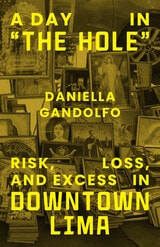
A Day in "The Hole"
Risk, Loss, and Excess in Downtown LimaDaniella Gandolfo
University of Chicago Press, 2025
A single day in a semilegal market in Lima, Peru, reveals a social world that defies conventional economic logic.
In the heart of Lima’s historic center, the markets of El Hueco (“The Hole”) and sprawling Mesa Redonda pulse with life, with thousands of vendors selling everything from knockoff electronics to religious icons. In A Day in “The Hole,” anthropologist Daniella Gandolfo immerses readers in a single, tumultuous day—the thirty-fourth anniversary of a vendors’ cooperative—while examining the dynamics that sustain these marketplaces.
Through a blend of cinematic storytelling and incisive anthropological insight, Gandolfo reveals a world with its own unique codes. She inspects how vendors embrace expenditure over profit and instability over order, and moving through the sights and sounds of El Hueco and Mesa Redonda, she finds a dissident economy that is as much about survival as it is about spectacle. Gandolfo redefines how we think about urban economies and the unexpected ways these defiant communities thrive in this textured portrait of Lima’s markets and the people who animate them.
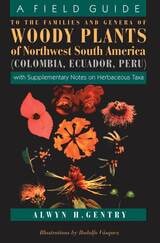
A Field Guide to the Families and Genera of Woody Plants of Northwest South America
With Supplementary Notes on Herbaceous TaxaAlwyn H. Gentry llustrated by Rodolfo Vasquez
University of Chicago Press, 1993
As a consummate field researcher, Gentry designed this guide to be not just comprehensive, but also easy to use in rigorous field conditions. Unlike many field guides, which rely for their identifications on flowers and fruits that are only present during certain seasons, Gentry's book focuses on characters such as bark, leaves, and odor that are present year-round. His guide is filled with clear illustrations, step-by-step keys to identification, and a wealth of previously unpublished data.
All biologists, wildlife managers, conservationists, and government officials concerned with the tropical rain forests will need and use this field guide.
Alwyn Gentry was one of the world's foremost experts on the biology of tropical plants. He was senior curator at the Missouri Botanical Garden, and was a member of Conservation International's interdisciplinary Rapid Assessment Program (RAP) team, which inventories the biodiversity of the most threatened tropical areas. From 1967 to 1993 he collected more than 80,000 plant specimens, many of them new to science.
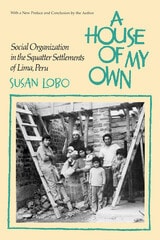
A House of My Own
Social Organization in the Squatter Settlements of Lima, PeruSusan Lobo
University of Arizona Press, 1982
"Whether or not one accepts Susan Lobo's optimistic analysis, her ability to translate the apparent chaos of shanty-town lives into such neat patterns and to help outsiders view life as the inhabitants do are important contributions." —Inter-American Review of Bibliography
"An extremely competent ethnography, simple and straightforward." —Anthropos
"A pleasure to read, a mine of information which will be useful in teaching students to formulate their own hypotheses." —International Journal of Urban & Regional Research
"Very well written and provides a great wealth of the liveliest sort of ethnographic detail." —Latin American Research Review
"Lobo's study of two squatter settlements in Lima provides a solid, well-written, detailed, traditional ethnography of poor families in a Third World urban setting." —Hispanic American Historical Review
"This well-written account . . . has a lot of heart and feeling for the human face of the urban poor." —International Migration Review
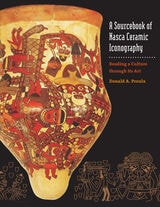
A Sourcebook of Nasca Ceramic Iconography
Reading a Culture through Its ArtProulx, Donald A.
University of Iowa Press, 2006
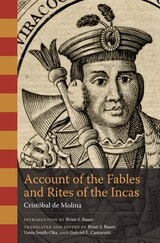
Account of the Fables and Rites of the Incas
By Cristóbal de Molina
University of Texas Press, 2011
Only a few decades after the Spanish conquest of Peru, the third Bishop of Cuzco, Sebastián de Lartaún, called for a report on the religious practices of the Incas. The report was prepared by Cristóbal de Molina, a priest of the Hospital for the Natives of Our Lady of Succor in Cuzco and Preacher General of the city. Molina was an outstanding Quechua speaker, and his advanced language skills allowed him to interview the older indigenous men of Cuzco who were among the last surviving eyewitnesses of the rituals conducted at the height of Inca rule. Thus, Molina's account preserves a crucial first-hand record of Inca religious beliefs and practices.
This volume is the first English translation of Molina's Relación de las fábulas y ritos de los incas since 1873 and includes the first authoritative scholarly commentary and notes. The work opens with several Inca creation myths and descriptions of the major gods and shrines (huacas). Molina then discusses the most important rituals that occurred in Cuzco during each month of the year, as well as rituals that were not tied to the ceremonial calendar, such as birth rituals, female initiation rites, and marriages. Molina also describes the Capacocha ritual, in which all the shrines of the empire were offered sacrifices, as well as the Taqui Ongoy, a millennial movement that spread across the Andes during the late 1560s in response to growing Spanish domination and accelerated violence against the so-called idolatrous religions of the Andean peoples.
Adoptive Migration
Raising Latinos in SpainJessaca B. Leinaweaver
Duke University Press, 2013
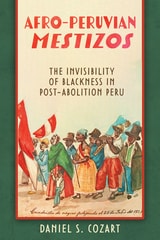
Afro-Peruvian Mestizos
The Invisibility of Blackness in Post-Abolition PeruDaniel S. Cozart
University of Alabama Press, 2025
A transformative study by Daniel S. Cozart, Afro-Peruvian Mestizos redefines the narrative of mestizaje in post-abolition Peru, uncovering the hidden histories and enduring strength of Afro-Peruvian communities.
Afro-Peruvian Mestizos: The Invisibility of Blackness in Post-Abolition Peru by Daniel S. Cozart investigates the ideologies of mestizaje, or racial mixing, that Latin American elites used to construct modern national identities during the nineteenth and twentieth centuries. Through close reading of archival records, legal documents, and literary works, Cozart uncovers the systematic exclusion of Afro-Peruvians from the nation's narrative of progress, revealing how their presence was deliberately omitted from official histories and censuses. The abolition of slavery in 1855 marked the beginning of a process where Afro-Peruvians were marginalized, their identities overshadowed by a national narrative that prioritized Indigenous heritage and whiteness.
Drawing on Michel-Rolph Trouillot's framework of historical production, the book traces the contradictions inherent in liberal and positivist ideologies that sought to forge a "raceless" society, all while silencing Afro-Peruvian voices and erasing their history. The conclusion reflects on the significance of erasure for Afro-Peruvians in the twentieth and twenty-first centuries, as they now demand to be seen. This book is a powerful examination of historical silences and the ongoing struggle for recognition in the face of systemic racism.
Alluvium and Empire
The Archaeology of Colonial Resettlement and Indigenous Persistence on Peru’s North CoastParker VanValkenburgh
University of Arizona Press, 2021
The volume draws on nearly ten years of field and archival research to craft a nuanced account of the Reducción General and its aftermath. Written at the intersections of history and archaeology, Alluvium and Empire at once bears witness to the violence of Spanish colonization and highlights Indigenous resilience in the aftermath of resettlement. In the process, VanValkenburgh critiques previous approaches to the study of empire and models a genealogical approach that attends to the open-ended—and often unpredictable—ways in which empires take shape.
An Inca Account of the Conquest of Peru
Titu Cusi Yupanqui
University Press of Colorado, 2005
Titu Cusi tells of his father's maltreatment at the hands of the conquerors; his father's ensuing military campaigns, withdrawal, and murder; and his own succession as ruler. Although he continued to resist Spanish attempts at "pacification," Titu Cusi entertained Spanish missionaries, converted to Christianity, and then, most importantly, narrated his story of the conquest to enlighten Emperor Phillip II about the behavior of the emperor's subjects in Peru. This vivid narrative illuminates the Incan view of the Spanish invaders and offers an important account of indigenous resistance, accommodation, change, and survival in the face of the European conquest.
Informed by literary, historical, and anthropological scholarship, Bauer's introduction points out the hybrid elements of Titu Cusi's account, revealing how it merges native Andean and Spanish rhetorical and cultural practices. Supported in part by the Colorado Endowment for the Humanities.
Ancient Burial Patterns of the Moche Valley, Peru
By Christopher B. Donnan and Carol J. Mackey
University of Texas Press, 1978
Archaeologists working in the Moche Valley of Peru have uncovered a number of tombs representing various cultures that flourished there prior to European contact. This book provides a full description of 103 such burials, spanning a period of more than 3,500 years. Each burial is documented with an accurate illustration of every artifact found, as well as details on the location, matrix, and construction of the graves, the individuals in the graves, and the placement of all the associated goods. This information constitutes an important resource for solving problems of ceramic chronology and style change. Age and sex data given for the burials will also enable scholars to establish status differences that existed in the pre-Columbian past. Finally, the authors have compared their sample with all the north coast burials previously reported, showing how their findings may be used to ascertain similarities and differences throughout the highland Andean region.
Ancient Burial Patterns of the Moche Valley, Peru is the first diachronic study of burial practices for any Andean region. It not only demonstrates changes in funerary practices in the area but also provides insight into the nature of local cultural development. It will be useful to specialists in Andean and New World archaeology as well as to collectors of pre-Columbian art.
Ancient Cuzco
Heartland of the IncaBy Brian S. Bauer
University of Texas Press, 2004
The Cuzco Valley of Peru was both the sacred and the political center of the largest state in the prehistoric Americas—the Inca Empire. From the city of Cuzco, the Incas ruled at least eight million people in a realm that stretched from modern-day Colombia to Chile. Yet, despite its great importance in the cultural development of the Americas, the Cuzco Valley has only recently received the same kind of systematic archaeological survey long since conducted at other New World centers of civilization.
Drawing on the results of the Cuzco Valley Archaeological Project that Brian Bauer directed from 1994 to 2000, this landmark book undertakes the first general overview of the prehistory of the Cuzco region from the arrival of the first hunter-gatherers (ca. 7000 B.C.) to the fall of the Inca Empire in A.D. 1532. Combining archaeological survey and excavation data with historical records, the book addresses both the specific patterns of settlement in the Cuzco Valley and the larger processes of cultural development. With its wealth of new information, this book will become the baseline for research on the Inca and the Cuzco Valley for years to come.
Ancient Households on the North Coast of Peru
Ilana Johnson
University Press of Colorado, 2020
Many volumes on this region are limited to one time period or civilization, often the Moche. While Ancient Households on the North Coast of Peru does examine the Moche, it offers a wider thematic approach to a broader swath of prehistory. Chapters on various time periods use a comparable scale of analysis to examine long-term continuity and change and draw on a large corpus of prior research on states, rulership, and cosmology to offer new insight into the intersection of household, community, and state. Contributors address social reproduction, construction and reinforcement of gender identities and social hierarchy, household permanence and resilience, and expression of identity through cuisine.
This volume challenges common concepts of the “household” in archaeology by demonstrating the complexity and heterogeneity of household-level dynamics as they intersect with institutions at broader social scales and takes a comparative perspective on daily life within one region of the Andes. It will be of interest to both students and scholars of South American archaeology and household archaeology.
Contributors: Brian R. Billman, David Chicoine, Guy S. Duke, Hugo Ikehara, Giles Spence-Morrow, Jessica Ortiz, Edward Swenson, Kari A. Zobler
Ancient Nasca Settlement
Helaine Silverman
University of Iowa Press, 2002
Nasca society arose on the south coast of Peru two thousand years ago and evolved over the course of the next seven hundred years. Helaine Silverman's long-term, multistage work on the south coast of Peru has established her as one of the world's preeminent authorities on this brilliant and enigmatic civilization. Ancient Nasca Settlement and Society is the first extended treatment of the range of sites occupied by the people responsible for some of the most exquisite art, largest ground drawings, most intense hunting of human heads as trophies, and most ingenious hydraulic engineering of the pre-Columbian world.
Ancient Nasca Settlement and Society is based on Silverman's comprehensive survey of the Ingenio Valley, a water-rich tributary of the Río Grande de Nazca drainage; it also includes a critical synthesis of the settlement pattern data from the other river valleys of the system maps and tables, Silverman allows comparisons among the various phases of change in Nasca society. A companion CD-ROM provides a great deal of graphic material and allows users to manipulate the data in alternative scenarios.
Silverman situates the various classes of Nasca material culture within the spatial, social, economic, political, and ideological realities that can be adduced from the archaeological record. A work of archaeo-logical ethnography focused on a once-living society, this convincing and highly original book illuminates the ancient Nasca people's social construction of space and cultural meaning through their manipulation of their natural setting and their creation of particular kinds of built environments.
Andean Cosmopolitans
Seeking Justice and Reward at the Spanish Royal CourtBy José Carlos de la Puente Luna
University of Texas Press, 2018
Winner, Premio Flora Tristán Al Mejor Libro, Peru Section, Latin American Studies Association, 2019
After the Spanish victories over the Inca claimed Tawantinsuyu for Charles V in the 1530s, native Andeans undertook a series of perilous trips from Peru to the royal court in Spain. Ranging from an indigenous commoner entrusted with delivering birds of prey for courtly entertainment to an Inca prince who spent his days amid titles, pensions, and other royal favors, these sojourners were both exceptional and paradigmatic. Together, they shared a conviction that the sovereign’s absolute authority would guarantee that justice would be done and service would receive its due reward. As they negotiated their claims with imperial officials, Amerindian peoples helped forge the connections that sustained the expanding Habsburg realm’s imaginary and gave the modern global age its defining character.
Andean Cosmopolitans recovers these travelers’ dramatic experiences, while simultaneously highlighting their profound influences on the making and remaking of the colonial world. While Spain’s American possessions became Spanish in many ways, the Andean travelers (in their cosmopolitan lives and journeys) also helped to shape Spain in the image and likeness of Peru. De la Puente brings remarkable insights to a narrative showing how previously unknown peoples and ideas created new power structures and institutions, as well as novel ways of being urban, Indian, elite, and subject. As indigenous people articulated and defended their own views regarding the legal and political character of the “Republic of the Indians,” they became state-builders of a special kind, cocreating the colonial order.
Andean Expressions
Art and Archaeology of the Recuay CultureGeorge F. Lau
University of Iowa Press, 2011
Andean Lives
Gregorio Condori Mamani and Asunta Quispe HuamánRicardo Valderrama Fernández and Carmen Escalante Gutiérrez, Original Editors
University of Texas Press, 1996
Gregorio Condori Mamani and Asunta Quispe Huamán were runakuna, a Quechua word that means "people" and refers to the millions of indigenous inhabitants neglected, reviled, and silenced by the dominant society in Peru and other Andean countries. For Gregorio and Asunta, however, that silence was broken when Peruvian anthropologists Ricardo Valderrama Fernández and Carmen Escalante Gutiérrez recorded their life stories. The resulting Spanish-Quechua narrative, published in the mid-1970s and since translated into many languages, has become a classic introduction to the lives and struggles of the "people" of the Andes.
Andean Lives is the first English translation of this important book. Working directly from the Quechua, Paul H. Gelles and Gabriela Martínez Escobar have produced an English version that will be easily accessible to general readers and students, while retaining the poetic intensity of the original Quechua. It brings to vivid life the words of Gregorio and Asunta, giving readers fascinating and sometimes troubling glimpses of life among Cuzco's urban poor, with reflections on rural village life, factory work, haciendas, indigenous religion, and marriage and family relationships.
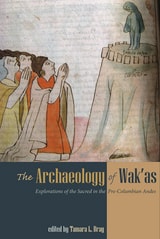
Archaeology of Wak'as
Explorations of the Sacred in the Pre-Columbian AndesTamara L. Bray
University Press of Colorado, 2014
Wak'as were understood as agentive, nonhuman persons within many Andean communities and were fundamental to conceptions of place, alimentation, fertility, identity, and memory and the political construction of ecology and life cycles. The ethnohistoric record indicates that wak'as were thought to speak, hear, and communicate, both among themselves and with humans. In their capacity as nonhuman persons, they shared familial relations with members of the community, for instance, young women were wed to local wak'as made of stone and wak'as had sons and daughters who were identified as the mummified remains of the community's revered ancestors.
Integrating linguistic, ethnohistoric, ethnographic, and archaeological data, The Archaeology of Wak'as advances our understanding of the nature and culture of wak'as and contributes to the larger theoretical discussions on the meaning and role of–"the sacred” in ancient contexts.
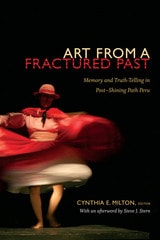
Art from a Fractured Past
Memory and Truth-Telling in Post-Shining Path PeruCynthia E. Milton, ed.
Duke University Press, 2014
Contributors. Ricardo Caro Cárdenas, Jesús Cossio, Ponciano del Pino, Cynthia M. Garza, Edilberto Jímenez Quispe, Cynthia E. Milton, Jonathan Ritter, Luis Rossell, Steve J. Stern, María Eugenia Ulfe, Víctor Vich, Alfredo Villar
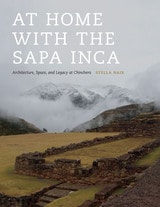
At Home with the Sapa Inca
Architecture, Space, and Legacy at ChincheroBy Stella Nair
University of Texas Press, 2015
By examining the stunning stone buildings and dynamic spaces of the royal estate of Chinchero, Nair brings to light the rich complexity of Inca architecture. This investigation ranges from the paradigms of Inca scholarship and a summary of Inca cultural practices to the key events of Topa Inca’s reign and the many individual elements of Chinchero’s extraordinary built environment.
What emerges are the subtle, often sophisticated ways in which the Inca manipulated space and architecture in order to impose their authority, identity, and agenda. The remains of grand buildings, as well as a series of deft architectural gestures in the landscape, reveal the unique places that were created within the royal estate and how one space deeply informed the other. These dynamic settings created private places for an aging ruler to spend time with a preferred wife and son, while also providing impressive spaces for imperial theatrics that reiterated the power of Topa Inca, the choice of his preferred heir, and the ruler’s close relationship with sacred forces.
This careful study of architectural details also exposes several false paradigms that have profoundly misguided how we understand Inca architecture, including the belief that it ended with the arrival of Spaniards in the Andes. Instead, Nair reveals how, amidst the entanglement and violence of the European encounter, an indigenous town emerged that was rooted in Inca ways of understanding space, place, and architecture and that paid homage to a landscape that defined home for Topa Inca.