Results by title
28164 books match the query 'History' and 647 start with n
Notebooks, English Virtuosi, and Early Modern Science
Richard Yeo
University of Chicago Press, 2014
Notes Illustrating the Military Geography of the United States, 1813–1880
By Raphael P. Thian with addenda edited by John M. Carroll; foreword by Robert M. Utley
University of Texas Press, 1979
When the Adjutant General's Office published Raphael Thian's "notes" on U.S. military geography in 1880, it produced an invaluable research tool for generations of military historians to come. In this single documented reference volume, Chief Clerk Thian traced the confusing mutations through which the divisions, departments, and districts of the Army's command had evolved since 1813.
The volume is divided into three parts, beginning with the names of the United States Army Continental Commands, the date and authority for their creation, location of the headquarters, geographical changes and discontinuances, and other details including the geographical boundaries embracing each division, department, and district. Part II is filled with background information on states and territories, and Part III lists the maps contained in The Military Atlas of the United States.
The Addenda to this edition expand and update Thian's work. Notes made by Francis B. Heitman to keep his personal copy current are included, as is the Memorandum published by the government in 1906. This addition lists all changes from 1898 through 1905.

Notes from a Sealed Room
An Israeli View of the Gulf WarRobert Werman. Introduction by Gerald M. Phillips
Southern Illinois University Press, 1992
In this compelling and often startling account, Robert Werman chronicles his experiences as an Israeli citizen living in Jerusalem during the Gulf War. On January 19, 1991, he began writing daily reports on his computer, sending them to friends and a few computer networks that dealt with Jewish culture and the politics of the Middle East. To Werman’s surprise, he received numerous electronic responses to his entries, sometimes as many as one hundred a day. As a result, his "war diary" was born, a diary that he continued until February 22, 1991, when, near the end of the war, he was hospitalized for a heart condition.
In the early entries, Werman notes each Iraqi Scud attack, describing in detail the sealed room in which he and his family sought shelter during the expected chemical attacks. "Sitting in the antigas room, members of the family try to put on a brave face, make jokes. . . . Only the dog, a rather stately collie, sits quietly and does not appear at all excited. We pity the dog, for he is the only one without a mask. But then we remember that—without a mask—he is our canary in the coal mine." Futilely, Werman seeks patterns to the attacks, attempting to predict when they might occur. He writes of the nation’s response to war: joggers running with their gas masks in hand, schools temporarily disbanded while children meet in small groups to continue their education, city streets emptied by six o'clock each evening as people wait in their homes for the sound of the sirens that herald an assault. He discusses the varying opinions concerning retaliation against Iraq, the fluctuating morale of the country, the damage produced by Iraqi missiles, and the widespread speculation of Israeli citizens concerning their country’s survival. Yet Werman’s daily reports, digressions, and explanations not only include his observations and impressions; they also poignantly reveal his own personal story and political, religious, and philosophical views.
Werman’s journal gives a singular view of a country under siege, recounting in detail the pressures, conflicts, and dangers existing during a war. It is a distinctive book, a fascinating personal and political account of a man, his family, their nation, and a war.
Notes of Debates in the Federal Convention of 1787
James Madison
Ohio University Press, 1987
James Madison’s record of the Constitutional Convention traces day by day the debates held from May to September 1787 and presents the only complete picture we have of the strategy, interests, and ideas of the Founders at the convention itself.
In this indispensable primary document, Madison not only provides detailed insights into one of the great events of US history, but clearly sets forth his own position on such issues as the balance of powers, the separation of functions, and the general role of the federal government. More than in Federalist, which shows the carefully formalized conclusions of his political thought, we see in Debates his philosophy in action, evolving in daily tension with the viewpoints of the other delegates. It is for this reason that Debates is invaluable for placing in perspective the incomplete records of such well-known figures as Rufus King and Alexander Hamilton, and the constitutional plans of such men as Edmund Randolph and Charles Pinckney.
Madison’s contemporaries regarded him as the chief statesmen at the Philadelphia convention; in addition to this, his record outranks in importance all the other writings of the founders of the American republic. He is thus identified, as no other man is, with the making of the Constitution and the correct interpretation of the intentions of its drafters.
New to this edition of Debates is a thorough, scholarly index of some two thousand entries.
Notes of Travel Through the Territory of Arizona
J. H. Marion; Edited by Donald M. Powell
University of Arizona Press, 1965
“A valuable and well written document, now made available to the general public and enhanced by the addition of an introduction and notes by Mr. Powell. . . . the publication will be of value to serious students of Arizona history.”—Journal of Arizona History
Notes on Nowhere
Feminism, Utopian Logic, and Social TransformationJennifer Burwell
University of Minnesota Press, 1997
Notes on Nowhere was first published in 1997. Minnesota Archive Editions uses digital technology to make long-unavailable books once again accessible, and are published unaltered from the original University of Minnesota Press editions.
The term utopia implies both "good place" and "nowhere." Since Sir Thomas More wrote Utopia in 1516, debates about utopian models of society have sought to understand the implications of these somewhat contradictory definitions. In Notes on Nowhere, author Jennifer Burwell uses a cross section of contemporary feminist science fiction to examine the political and literary meaning of utopian writing and utopian thought.
Burwell provides close readings of the science fiction novels of five feminist writers-Marge Piercy, Sally Gearhart, Joanna Russ, Octavia Butler, and Monique Wittig-and poses questions central to utopian writing: Do these texts promote a tradition in which narratives of the ideal society have been used to hide rather than reveal violence, oppression, and social divisions? Can a feminist critical utopia offer a departure from this tradition by using utopian narratives to expose contradiction and struggle as central aspects of the utopian impulse? What implications do these questions have for those who wish to retain the utopian impulse for emancipatory political uses?
As one way of answering these questions, Burwell compares two "figures" that inform utopian writing and social theory. The first is the traditional abstract "revolutionary" subject who contradicts existing conditions and who points us to the ideal body politic. The second, "resistant," subject is partial, concrete, and produced by conditions rather than operating outside of them. In analyzing contemporary changes in the subject's relationship to social space, Burwell draws from and revises "standpoint approaches" that tie visions of social transformation to a group's position within existing conditions.
By exploring the dilemmas, antagonisms, and resolutions within the critical literary feminist utopia, Burwell creates connections to a similar set of problems and resolutions characterizing "nonliterary" discourses of social transformation such as feminism, gay and lesbian studies, and Marxism. Notes on Nowhere makes an original, significant, and persuasive contribution to our understanding of the political and literary dimensions of the utopian impulse in literature and social theory.
Jennifer Burwell teaches in the Department of English at Wesleyan University in Connecticut.
Notes to Make the Sound Come Right
Four Innovators of Jazz PoetryT.J. Anderson III
University of Arkansas Press, 2004
Nothing Happened
Charlotte Salomon and an Archive of SuicideDarcy C. Buerkle
University of Michigan Press, 2013
Charlotte Salomon's (1917-43) fantastical autobiography, Life? or Theater?, consists of 769 sequenced gouache paintings, through which the artist imagined the circumstances of the eight suicides in her family, all but one of them women. But Salomon's focus on suicide was not merely a familial idiosyncrasy. Nothing Happened argues that the social history of early-twentieth-century Germany has elided an important cultural and social phenomenon by not including the story of German Jewish women and suicide. This absence in social history mirrors an even larger gap in the intellectual history of deeply gendered suicide studies that have reproduced the notion of women's suicide as a rarity in history. Nothing Happened is a historiographic intervention that operates in conversation and in tension with contemporary theory about trauma and the reconstruction of emotion in history.

Nothing Happens
Chantal Akerman’s Hyperrealist EverydayIvone Margulies
Duke University Press, 1996
Margulies grounds her critical analysis in detailed discussions of Akerman’s work—from Saute ma ville, a 13-minute black-and-white film made in 1968, through Jeanne Dielman and Je tu il elle to the present. Focusing on the real-time representation of a woman’s everyday experience in Jeanne Dielman, Margulies brings the history of social and progressive realism and the filmmaker’s work into perspective. Pursuing two different but related lines of inquiry, she investigates an interest in the everyday that stretches from postwar neorealist cinema to the feminist rewriting of women’s history in the seventies. She then shows how Akerman’s “corporeal cinema” is informed by both American experiments with performance and duration and the layerings present in works by European modernists Bresson, Rohmer, and Dreyer. This analysis revises the tired opposition between realism and modernism in the cinema, defines Akerman’s minimal-hyperrealist aesthetics in contrast to Godard’s anti-illusionism, and reveals the inadequacies of popular characterizations of Akerman’s films as either simply modernist or feminist.
An essential book for students of Chantal Akerman’s work, Nothing Happens will also interest international film critics and scholars, filmmakers, art historians, and all readers concerned with feminist film theory.
Nothing Is Impossible
America's Reconciliation with VietnamTed Osius
Rutgers University Press, 2022
Ted Osius, former ambassador during the Obama administration, offers a vivid account, starting in the 1990s, of the various forms of diplomacy that made this reconciliation possible. He considers the leaders who put aside past traumas to work on creating a brighter future, including senators John McCain and John Kerry, two Vietnam veterans and ideological opponents who set aside their differences for a greater cause, and Pete Peterson—the former POW who became the first U.S. ambassador to a new Vietnam. Osius also draws upon his own experiences working first-hand with various Vietnamese leaders and traveling the country on bicycle to spotlight the ordinary Vietnamese people who have helped bring about their nation’s extraordinary renaissance.
With a foreword by former Secretary of State John Kerry, Nothing Is Impossible tells an inspiring story of how international diplomacy can create a better world.
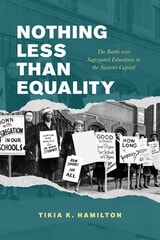
Nothing Less Than Equality
The Battle over Segregated Education in the Nation’s CapitalTikia K. Hamilton
University of Chicago Press, 2026
The landmark Brown v. Board of Education case, which barred racial segregation in American public schools, wasn’t the only path for Black parents, teachers, and activists who sought equality of educational opportunity. Some believed that the solution to inequality lay in pressing the federal government to live up to the Jim Crow doctrine of “separate but equal” by providing more resources to Black schools. And for a time, this seemed true in Washington, DC, where Black activists leveraged their status as residents of the nation’s capital to advocate on behalf of Black education. However, disappointments with the “separate but equal” strategy and a sea change in activism led to an embrace of integration.
In Nothing Less Than Equality, Tikia K. Hamilton reveals the rich and complex history of educational activism in Washington prior to Brown v. Board of Education, illuminating complex dynamics that provide a counterpoint and backdrop to the landmark Supreme Court case. Hamilton thoroughly examines the multipronged strategies employed by parents, teachers, attorneys, and activists to democratize education, demonstrating that there was no linear path to Brown.
Nothing Like Sunshine
A Story in the Aftermath of the MLK AssassinationBen Kamin
Michigan State University Press, 2010
Rabbi Ben Kamin has written a definitive personal expression about race, coming of age in the 1960s, a forbidden friendship, and his personal love for Dr. Martin Luther King Jr. This is a story that spans a four-decade search for a lost high school chum, a deep misunderstanding, and a coming to terms with an America painfully evolving from the blood of MLK to the promise of Barack Obama.
The book is a remembrance of Kamin's life at Cincinnati's notorious Woodward High School, a microcosm of the 1960s and of America itself, as well as detailing Kamin's search-for Clifton, for America, for the key to understanding what race relations really are in the United States. Simultaneously, it is the story of the emerging rabbi's search for the legacy of his spiritual mentor, Dr. Martin Luther King Jr., taking Kamin from Cincinnati to Cleveland to Memphis to New Orleans and other points, and constantly bringing him home to his friend Clifton and "the heaving hallways" of that high school.

Nothing Permanent
Modern Architecture in CaliforniaTodd Cronan
University of Minnesota Press, 2023
A critical look at the competing motivations behind one of modern architecture’s most widely known and misunderstood movements
Although “mid-century modern” has evolved into a highly popular and ubiquitous architectural style, this term obscures the varied perspectives and approaches of its original practitioners. In Nothing Permanent, Todd Cronan displaces generalizations with a nuanced intellectual history of architectural innovation in California between 1920 and 1970, uncovering the conflicting intentions that would go on to reshape the future of American domestic life.
Focusing on four primary figures—R. M. Schindler, Richard Neutra, and Charles and Ray Eames—Nothing Permanent demonstrates how this prolific era of modern architecture in California, rather than constituting a homogenous movement, was propelled by disparate approaches and aims. Exemplified by the twin pillars of Schindler and Neutra and their respective ideological factions, these two groups of architects represent opposing poles of architectural intentionality, embodying divergent views about the dynamic between interior and exterior, the idea of permanence, and the extent to which architects could exercise control over the inhabitants of their structures.
Looking past California modernism’s surface-level idealization in present-day style guides, home decor publications, films, and television shows, Nothing Permanent details the intellectual, aesthetic, and practical debates that lie at the roots of this complex architectural moment. Extracting this period from its diffusion into visual culture, Cronan argues that mid-century architecture in California raised questions about the meaning of architecture and design that remain urgent today.
Nothing, Nobody
The Voices of the Mexico City EarthquakeElena Poniatowska, translated by Aurora Camacho de Schmidt, foreword by Arthur Schmidt
Temple University Press, 1995
September 19, 1985: A powerful earthquake hits Mexico City in the early morning hours. As the city collapses, the government fails to respond. Long a voice of social conscience, prominent Mexican journalist Elena Poniatowska chronicles the disintegration of the city's physical and social structure, the widespread grassroots organizing against government corruption and incompetence, and the reliency of the human spirit. As a transformative moment in the life of mexican society, the earthquake is as much a component of the country's current crisis as the 1982 debt crisis, the problematic economic of the last ten years, and the recent elections.
In masterfully weaving together a multiplicity of voices, Poniatowska has reasserted the inherent value and latent power of people working together. Punctuated by Poniatowska's own experiences and observations, these post disaster testimonies speak of the disruption of families and neighborhoods, of the destruction of homes and hospitals, of mutilation and death—the collective loss of a city. Drawing the reader dramatically into the scene of national horror through dozens of personal stories, Poniatowska demonstrates the importance of courage and self-reliance in redeeming life from chaos.
Notorious Facts
Publicity in Romantic England, 1780–1830James Mulvihill
University of Delaware Press, 2012
Notorious Facts examines the sensationalistic confounding of persons and principles in the public life of Romantic England (1780–1830). Its purview is limited to five decades straddling the late eighteenth and early nineteenth centuries, but its trajectory, moving from a politics rendered in personal terms to a politics of personality, describes a shift still in process today. The study’s chapters draw on a motley body of literature (pamphlets, secret histories, and the like) that at first glance seems uncharacteristic of what literary historians call the English Romantic period. Viewed in the context of something called late Georgian England, these texts seem more indigenous, but if the canonical revisionism of the last few decades should teach us anything, it is that a Romanticism encompassing all romanticisms ideally excludes nothing.
In its heroic Enlightenment sense, publicity is concerned with exposing the workings of power for all to see. A good deal may be inferred about publicity in Romantic England from primary texts in which this salutary function is at once espoused and subverted. These texts—the mostly nameless or pseudonymous authors of the age’s pamphlet literature are the heroes and villains of the piece—almost invariably claim to speak from a disinterested conception of publicity while putting its methods of critical exposure to wholly self-interested purposes. This study examines well-known authors of the period like Jeremy Bentham, Samuel Taylor Coleridge, and William Hazlitt, as well as pamphleteers like John Horne Tooke, Philip Withers, and Nathaniel Jefferys. Other figures include authors of secret history like Thomas Ashe, Mary Anne Clarke, Lewis Goldsmith, and Joseph Haslewood in addition to notorious figures in their own right such as the Prince and Princess of Wales, Mrs. Fitzherbert, and the Reverend Edward Irving. Among the topics treated are treasonous libel, royal scandal, secret history, and celebrity.
Published by University of Delaware Press. Distributed worldwide by Rutgers University Press.
Notorious New Jersey
100 True Tales of Murders and Mobsters, Scandals and ScoundrelsJon Blackwell
Rutgers University Press, 2007
Notorious New Jersey is the definitive guide to murder, mayhem, the mob, and corruption in the Garden State. With tabloid punch, Jon Blackwell tells riveting accounts of Alexander Hamilton falling mortally wounded on the dueling grounds of Weehawken; Dutch Schultz getting pumped full of lead in the men’s room of the Palace Chop House in Newark; and a gang of Islamic terrorists in Jersey City mixing the witch’s brew of explosives that became the first bomb to rock the World Trade Center. Along with these dramatic stories are tales of lesser-known oddities, such as the nineteenth-century murderer whose skin was turned into leather souvenirs, and the state senator from Jersey City who faked his death in a scuba accident in the 1970s in an effort to avoid prison.
Blackwell also sheds light on some historical whodunits—was Bruno Hauptmann really guilty of kidnapping the Lindbergh baby? Who was behind the anthrax attacks of 2001? Not forgotten either are notorious characters who may actually be innocent, including Rubin “Hurricane” Carter, and those who have never been convicted of wrongdoing although they left office in scandal, including Robert Torricelli and James McGreevey.
Through 100 historic true-crime tales that span over 300 years of history, Blackwell shows readers a side of New Jersey that would make even the Sopranos shudder.
Nourish the People
The State Civilian Granary System in China, 1650–1850Pierre-Etienne Will and R. Bin Wong; With James Lee; Contributions by Jean Oi and Peter Perdue
University of Michigan Press, 1991
Nourishing Victory
Food Shortages and Post-Imperial Transition in the Bohemian Lands and SloveniaRok Stergar
Central European University Press, 2026
Novel Bondage
Slavery, Marriage, and Freedom in Nineteenth-Century AmericaTess Chakkalakal
University of Illinois Press, 2013
Novel Competition
American Fiction and the Cultural Economy, 1965-1999Evan Brier
University of Iowa Press, 2024
Novel Science
Fiction and the Invention of Nineteenth-Century GeologyAdelene Buckland
University of Chicago Press, 2013
Novel with Cocaine
M. Ageyev
Northwestern University Press, 1991
Novelty
A History of the NewMichael North
University of Chicago Press, 2013
In Novelty, Michael North takes us on a dazzling tour of more than two millennia of thinking about the problem of the new, from the puzzles of the pre-Socratics all the way up to the art world of the 1960s and ’70s. The terms of the debate, North shows, were established before Plato, and have changed very little since: novelty, philosophers argued, could only arise from either recurrence or recombination. The former, found in nature’s cycles of renewal, and the latter, seen most clearly in the workings of language, between them have accounted for nearly all the ways in which novelty has been conceived in Western history, taking in reformation, renaissance, invention, revolution, and even evolution. As he pursues this idea through centuries and across disciplines, North exhibits astonishing range, drawing on figures as diverse as Charles Darwin and Robert Smithson, Thomas Kuhn and Ezra Pound, Norbert Wiener and Andy Warhol, all of whom offer different ways of grappling with the idea of originality.
Novelty, North demonstrates, remains a central problem of contemporary science and literature—an ever-receding target that, in its complexity and evasiveness, continues to inspire and propel the modern. A heady, ambitious intellectual feast, Novelty is rich with insight, a masterpiece of perceptive synthesis.
November's Fury
The Deadly Great Lakes Hurricane of 1913Michael Schumacher
University of Minnesota Press, 2014
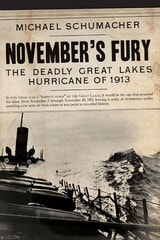
On Thursday, November 6, the Detroit News forecasted “moderate to brisk” winds for the Great Lakes. On Friday, the Port Huron Times-Herald predicted a “moderately severe” storm. Hourly the warnings became more and more dire. Weather forecasting was in its infancy, however, and radio communication was not much better; by the time it became clear that a freshwater hurricane of epic proportions was developing, the storm was well on its way to becoming the deadliest in Great Lakes maritime history.
The ultimate story of man versus nature, November’s Fury recounts the dramatic events that unfolded over those four days in 1913, as captains eager—or at times forced—to finish the season tried to outrun the massive storm that sank, stranded, or demolished dozens of boats and claimed the lives of more than 250 sailors. This is an account of incredible seamanship under impossible conditions, of inexplicable blunders, heroic rescue efforts, and the sad aftermath of recovering bodies washed ashore and paying tribute to those lost at sea. It is a tragedy made all the more real by the voices of men—now long deceased—who sailed through and survived the storm, and by a remarkable array of photographs documenting the phenomenal damage this not-so-perfect storm wreaked.
The consummate storyteller of Great Lakes lore, Michael Schumacher at long last brings this violent storm to terrifying life, from its first stirrings through its slow-mounting destructive fury to its profound aftereffects, many still felt to this day.
Now Go Home
Wilderness, Belonging, and the Crosscut SawAna Maria Spagna
Oregon State University Press, 2004
Now Is the Time to Collect
Daniel Giraud Elliot, Carl Akeley, and the Field Museum African Expedition of 1896Paul D. Brinkman
University of Alabama Press, 2024
The rediscovery of a curator’s lost journal illuminates the astonishing African journey that formed the basis of the Chicago Field Museum’s famed collections
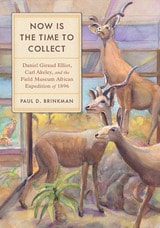
“Now” Is the Time to Collect tells the fascinating story of the Chicago Field Museum of Natural History’s zoological expedition to Africa in 1896, the source of many of the museum’s foundational collections and an astounding episode in nineteenth-century science. After the well-publicized extinction of the dodo and Carolina parakeet and the collapse of the American bison population, late nineteenth-century naturalists expected many more vulnerable species to die out with spread of Western-style industrialization. This triggered a race to collect rare species of animals expected soon to be lost forever.
Established in 1893, Chicago’s ambitious Field Museum aimed to become a global center of study. Zoologist Daniel Giraud Elliot persuaded museum patrons to fund an immediate expedition to British Somaliland (contemporary Somalia). There, his team hunted and killed hundreds of animals for the growing collection. On the trip was groundbreaking taxonomist Carl Akeley. Back in Chicago, Akeley created captivating lifelike dioramas of rare animal groups that enhanced the museum’s fame and remain popular to this day.
Enriched with illuminated passages from Elliot’s journal, only recently rediscovered, “Now” Is the Time to Collect is the first book of its kind by an American museum and a case study in what author Paul D. Brinkman calls “salvage zoology”—the practice of aggressively collecting rare animal specimens for preservation just prior to the birth of the modern conservation movement. It is a riveting account of the expedition, the travelers’ experiences in Somalia during its colonial period, and the astonishing origins of one of Chicago’s classic museum experiences.
Now Is the Time!
Detroit Black Politics and Grassroots ActivismTodd C. Shaw
Duke University Press, 2009
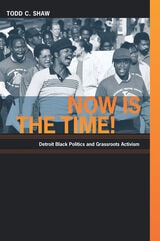
Shaw uses the tools of social movement analysis, including the quantitative analysis of budgets, electoral data, and housing statistics, as well as historical research and personal interviews, to better understand the dilemmas, innovations, and dynamics of grassroots activism. He begins with a history of discriminatory housing practices and racial divisions that deeply affected Detroit following the Second World War and set the stage for the election of the city’s first black mayor, Coleman Young. By emphasizing downtown redevelopment, Mayor Young’s administration often collided with low-income housing advocates. Only through grassroots activism were those advocates able to delay or derail governmental efforts to demolish low-income housing in order to make way for more upscale development. Shaw then looks at present-day public housing activism, assessing the mixed success of the nationally sponsored HOPE VI project aimed at fostering home ownership in low-income areas. Descriptive and prescriptive, Now Is the Time! traces the complicated legacy of community activism to illuminate what is required for grassroots activists to be effective in demanding public accountability to poor and marginalized citizens.
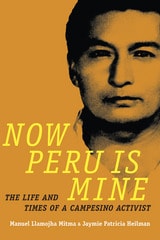
Now Peru Is Mine
The Life and Times of a Campesino ActivistManuel Llamojha Mitma and Jaymie Patricia Heilman
Duke University Press, 2016
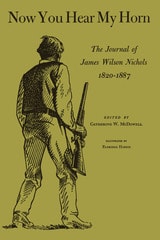
Now You Hear My Horn
The Journal of James Wilson Nichols, 1820–1887Edited by Catherine W. McDowell
University of Texas Press, 1967
Jim Nichols was a lively, vigorous frontiersman who came to Texas about the time of its Revolution. As with many men of that day, Nichols' formal education was lacking, but he was a born writer with a vivid way of saying things. He had an abundance of exciting events to write about: fighting against Mexicans and Indians, Ranger activities, an attack by wolves, a buffalo stampede, and many other colorful episodes. Nichols' account is fast-moving, fascinating frontier history by a man who was really there.

Now through a Glass Darkly
Specular Images of Being and Knowing from Virgil to ChaucerEdward Peter Nolan
University of Michigan Press, 1991
Now through a Glass Darkly brings both traditional medievalist and postmodernist approaches to bear in its attempt to understand both the powers and the limits of verbal art. Nolan explores the ways medieval writers and their Roman predecessors used formal and thematic mirrors to examine the implications of alterity in the face of similarity, arguing that these preoccupations were as central to the medieval sensibility as they are to our own. Now through a Glass Darkly frames several of the key issues in the current debate over the continued viability (or not) of the inherited canon of Western culture, such as the question whether there is any meaning at all to be rescued from such notions as “coherence” or “tradition” in Western literature.
Now through a Glass Darkly will appeal to the educated generalist interested in the relationships between literature and its surrounding intellectual and cultural contexts as well as to those more specifically interested in medieval poetry and poetics. For medievalists and those who work at the intersection of critical theory and medieval literature, Now through a Glass Darkly will be of critical importance.
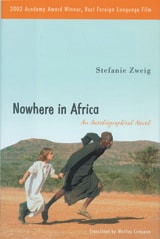
Nowhere in Africa
An Autobiographical NovelStefanie Zweig, Translated by Marlies Comjean
University of Wisconsin Press, 2007
Visit the Web site for the film at www.nowhereinafrica.com
Nowville
The Untold History of Nashville's Contemporary Art SceneJoe Nolan
Vanderbilt University Press, 2024
This is the origin story of Nashville’s surging contemporary art scene told by the ones who were there before anyone else. Not a story about commercial spaces or official institutions—this is the story of moldy warehouse studios and improvised galleries, happy-kegger after-parties and front lawn art sales, exhibitions in apartment living rooms and secret art displays hidden in plain sight.
Nowville is an oral history of the Nashville art scene beginning in the 1990s. Author Joe Nolan tracks down the city’s art punks, art monks, radical art students, and visionary pioneers to share what made their moments in Nashville so special. He also offers insights into how this homespun movement powered by DIY innovating came to be a thriving creative community and a cornerstone of the city’s contemporary allure.
This book is the recipient of the 2025 Norman L. and Roselea J. Goldberg Prize from Vanderbilt University Press for the best book in the area of art or medicine.
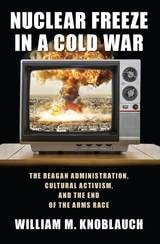
Nuclear Freeze in a Cold War
The Reagan Administration, Cultural Activism, and the End of the Arms RaceWilliam M. Knoblauch
University of Massachusetts Press, 2017
Alarmed, the Reagan administration worked to co-opt the rhetoric of the nuclear freeze and contain antinuclear activism. Recently declassified White House memoranda reveal a concerted campaign to defeat activists' efforts. In this book, William M. Knoblauch examines these new sources, as well as the influence of notable personalities like Carl Sagan and popular culture such as the film The Day After, to demonstrate how cultural activism ultimately influenced the administration's shift in rhetoric and, in time, its stance on the arms race.
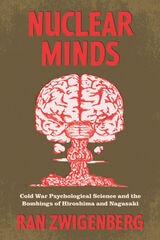
Nuclear Minds
Cold War Psychological Science and the Bombings of Hiroshima and NagasakiRan Zwigenberg
University of Chicago Press, 2023
In 1945, researchers on a mission to Hiroshima with the United States Strategic Bombing Survey canvassed survivors of the nuclear attack. This marked the beginning of global efforts—by psychiatrists, psychologists, and other social scientists—to tackle the complex ways in which human minds were affected by the advent of the nuclear age. A trans-Pacific research network emerged that produced massive amounts of data about the dropping of the bomb and subsequent nuclear tests in and around the Pacific rim.
Ran Zwigenberg traces these efforts and the ways they were interpreted differently across communities of researchers and victims. He explores how the bomb’s psychological impact on survivors was understood before we had the concept of post-traumatic stress disorder. In fact, psychological and psychiatric research on Hiroshima and Nagasaki rarely referred to trauma or similar categories. Instead, institutional and political constraints—most notably the psychological sciences’ entanglement with Cold War science—led researchers to concentrate on short-term damage and somatic reactions or even, in some cases, on denial of victims’ suffering. As a result, very few doctors tried to ameliorate suffering.
But, Zwigenberg argues, it was not only that doctors “failed” to issue the right diagnosis; the victims’ experiences also did not necessarily conform to our contemporary expectations. As he shows, the category of trauma should not be used uncritically in a non-Western context. Consequently, this book sets out, first, to understand the historical, cultural, and scientific constraints in which researchers and victims were acting and, second, to explore how suffering was understood in different cultural contexts before PTSD was a category of analysis.
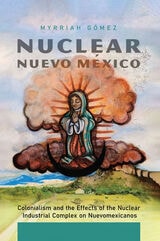
Nuclear Nuevo México
Colonialism and the Effects of the Nuclear Industrial Complex on NuevomexicanosMyrriah Gómez
University of Arizona Press, 2022
Contrary to previous works that suppress Nuevomexicana/o presence throughout U.S. nuclear history, Nuclear Nuevo México focuses on recovering the voices and stories that have been lost or ignored in the telling of this history. By recuperating these narratives, Myrriah Gómez tells a new story of New Mexico, one in which the nuclear history is not separate from the collective colonial history of Nuevo México but instead demonstrates how earlier eras of settler colonialism laid the foundation for nuclear colonialism in New Mexico.
Gómez examines the experiences of Nuevomexicanas/os who have been impacted by the nuclear industrial complex, both the weapons industry and the commercial industry. Gómez argues that Los Alamos was created as a racist project that targeted poor and working-class Nuevomexicana/o farming families, along with their Pueblo neighbors, to create a nuclear empire. The resulting imperialism has left a legacy of disease and distress throughout New Mexico that continues today.
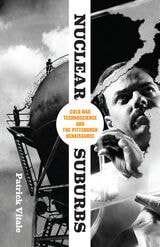
Nuclear Suburbs
Cold War Technoscience and the Pittsburgh RenaissancePatrick Vitale
University of Minnesota Press, 2021
From submarines to the suburbs—the remaking of Pittsburgh during the Cold War
During the early Cold War, research facilities became ubiquitous features of suburbs across the United States. Pittsburgh’s eastern and southern suburbs hosted a constellation of such facilities that became the world’s leading center for the development of nuclear reactors for naval vessels and power plants. The segregated communities that surrounded these laboratories housed one of the largest concentrations of nuclear engineers and scientists on earth. In Nuclear Suburbs, Patrick Vitale uncovers how the suburbs shaped the everyday lives of these technology workers.
Using oral histories, Vitale follows nuclear engineers and scientists throughout and beyond the Pittsburgh region to understand how the politics of technoscience and the Cold War were embedded in daily life. At the same time that research facilities moved to Pittsburgh’s suburbs, a coalition of business and political elites began an aggressive effort, called the Pittsburgh Renaissance, to renew the region. For Pittsburgh’s elite, laboratories and researchers became important symbols of the new Pittsburgh and its postindustrial economy. Nuclear Suburbs exposes how this coalition enrolled technology workers as allies in their remaking of the city.
Offering lessons for the present day, Nuclear Suburbs shows how race, class, gender, and the production of urban and suburban space are fundamental to technoscientific networks, and explains how the “renewal” of industrial regions into centers of the tech economy is rooted in violence and injustice.
Nucleus and Nation
Scientists, International Networks, and Power in IndiaRobert S. Anderson
University of Chicago Press, 2010
In 1974 India joined the elite roster of nuclear world powers when it exploded its first nuclear bomb. But the technological progress that facilitated that feat was set in motion many decades before, as India sought both independence from the British and respect from the larger world. Over the course of the twentieth century, India metamorphosed from a marginal place to a serious hub of technological and scientific innovation. It is this tale of transformation that Robert S. Anderson recounts in Nucleus and Nation.
Tracing the long institutional and individual preparations for India’s first nuclear test and its consequences, Anderson begins with the careers of India’s renowned scientists—Meghnad Saha, Shanti Bhatnagar, Homi Bhabha, and their patron Jawaharlal Nehru—in the first half of the twentieth century before focusing on the evolution of the large and complex scientific community—especially Vikram Sarabhi—in the later part of the era. By contextualizing Indian debates over nuclear power within the larger conversation about modernization and industrialization, Anderson hones in on the thorny issue of the integration of science into the framework and self-reliant ideals of Indian nationalism. In this way, Nucleus and Nation is more than a history of nuclear science and engineering and the Indian Atomic Energy Commission; it is a unique perspective on the history of Indian nationhood and the politics of its scientific community.
Nuer Conquest
The Structure and Development of an Expansionist SystemRaymond C. Kelly
University of Michigan Press, 1985
Nuevo South
Latinas/os, Asians, and the Remaking of PlaceBy Perla M. Guerrero
University of Texas Press, 2017
Latinas/os and Asians are rewriting the meaning and history of race in the American South by complicating the black/white binary that has frequently defined the region since before the Civil War. Arriving in southern communities as migrants or refugees, Latinas/os and Asians have experienced both begrudging acceptance and prejudice as their presence confronts and troubles local understandings of race and difference—understandings that have deep roots in each community’s particular racial history, as well as in national fears and anxieties about race.
Nuevo South offers the first comparative study showing how Latinas/os and Asians are transforming race and place in the contemporary South. Integrating political, economic, and social analysis, Perla M. Guerrero examines the reception of Vietnamese, Cubans, and Mexicans in northwestern Arkansas communities that were almost completely white until the mid-1970s. She shows how reactions to these refugees and immigrants ranged from reluctant acceptance of Vietnamese as former US allies to rejection of Cubans as communists, criminals, and homosexuals and Mexicans as “illegal aliens” who were perceived as invaders when they began to establish roots and became more visible in public spaces. Guerrero’s research clarifies how social relations are constituted in the labor sphere, particularly the poultry industry, and reveals the legacies of regional history, especially anti-Black violence and racial cleansing. Nuevo South thus helps us to better understand what constitutes the so-called Nuevo South and how historical legacies shape the reception of new people in the region.
Numbered Voices
How Opinion Polling Has Shaped American PoliticsSusan Herbst
University of Chicago Press, 1993
Exploring the history of public opinion in the United States from the mid-nineteenth century to the present day, Herbst shows how numbers served both instrumental and symbolic functions, not only conveying neutral information but creating a basis authority. Addressing how the quantification of public opinion has affected contemporary politics and the democratic process, Herbst asks difficult but fundamental questions about the workings of American politics.
"An original and thought-provoking analysis of why we have polls, what they accomplish, and how they affect the current political scene. Herbst's scholarship is impeccable, her writing is clear and crisp, and her findings are original. . . . Every reader will benefit by carefully weighing the issues she raises and the conclusions she draws."—Doris A. Graber, Political Science Quarterly
"An intelligent, theoretically rich, and historically broad account of public opinion over several millennia. . . . The historical accounts are interesting and her interpretations are thought-provoking."—Paul Brace, Journal of American History
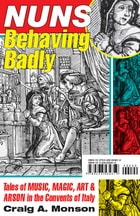
Nuns Behaving Badly
Tales of Music, Magic, Art, and Arson in the Convents of ItalyCraig A. Monson
University of Chicago Press, 2010
Witchcraft. Arson. Going AWOL. Some nuns in sixteenth- and seventeenth-century Italy strayed far from the paradigms of monastic life. Cloistered in convents, subjected to stifling hierarchy, repressed, and occasionally persecuted by their male superiors, these women circumvented authority in sometimes extraordinary ways. But tales of their transgressions have long been buried in the Vatican Secret Archive. That is, until now.
In Nuns Behaving Badly, Craig A. Monson resurrects forgotten tales and restores to life the long-silent voices of these cloistered heroines. Here we meet nuns who dared speak out about physical assault and sexual impropriety (some real, some imagined). Others were only guilty of misjudgment or defacing valuable artwork that offended their sensibilities. But what unites the women and their stories is the challenges they faced: these were women trying to find their way within the Catholicism of their day and through the strict limits it imposed on them. Monson introduces us to women who were occasionally desperate to flee cloistered life, as when an entire community conspired to torch their convent and be set free. But more often, he shows us nuns just trying to live their lives. When they were crossed—by powerful priests who claimed to know what was best for them—bad behavior could escalate from mere troublemaking to open confrontation.
In resurrecting these long-forgotten tales and trials, Monson also draws attention to the predicament of modern religious women, whose “misbehavior”—seeking ordination as priests or refusing to give up their endowments to pay for priestly wrongdoing in their own archdioceses—continues even today. The nuns of early modern Italy, Monson shows, set the standard for religious transgression in their own age—and beyond.
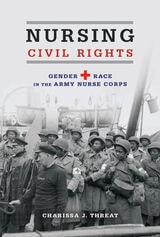
Nursing Civil Rights
Gender and Race in the Army Nurse CorpsCharissa J. Threat
University of Illinois Press, 2015
As Threat reveals, both groups viewed their circumstances with the Army Nurse Corps as a civil rights matter. Each conducted separate integration campaigns to end the discrimination they suffered. Yet their stories defy the narrative that civil rights struggles inevitably arced toward social justice. Threat tells how progressive elements in the campaigns did indeed break down barriers in both military and civilian nursing. At the same time, she follows conservative threads to portray how some of the women who succeeded as agents of change became defenders of exclusionary practices when men sought military nursing careers. The ironic result was a struggle that simultaneously confronted and reaffirmed the social hierarchies that nurtured discrimination.
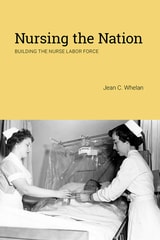
Nursing the Nation
Building the Nurse Labor ForceJean C. Whelan
Rutgers University Press, 2021
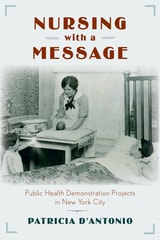
Nursing with a Message
Public Health Demonstration Projects in New York CityD'Antonio, Patricia
Rutgers University Press, 2017
This book is also freely available online as an open access digital edition.
Download the open access ebook here.
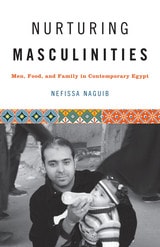
Nurturing Masculinities
Men, Food, and Family in Contemporary EgyptBy Nefissa Naguib
University of Texas Press, 2015
Two structuring concepts have predominated in discussions concerning how Middle Eastern men enact their identity culturally: domination and patriarchy. Nurturing Masculinities dispels the illusion that Arab men can be adequately represented when we speak of them only in these terms. By bringing male perspectives into food studies, which typically focus on the roles of women in the production and distribution of food, Nefissa Naguib demonstrates how men interact with food, in both political and domestic spheres, and how these interactions reflect important notions of masculinity in modern Egypt.
In this classic ethnography, narratives about men from a broad range of educational backgrounds, age groups, and social classes capture a holistic representation of masculine identity and food in modern Egypt on familial, local, and national levels. These narratives encompass a broad range of issues and experiences, including explorations of traditions surrounding food culture; displays of caregiving and love when men recollect the taste, feel, and fragrance of food as they discuss their desires to feed their families well and often; and the role that men, working to ensure the equitable distribution of food, played during the Islamist movement of the Muslim Brotherhood in 2011. At the core of Nurturing Masculinities is the idea that food is a powerful marker of manhood, fatherhood, and family structure in contemporary Egypt, and by better understanding these foodways, we can better understand contemporary Egyptian society as a whole.

Nut Country
Right-Wing Dallas and the Birth of the Southern StrategyEdward H. Miller
University of Chicago Press, 2015
In Nut Country, Edward H. Miller tells the story of that transformation, showing how a group of influential far-right businessmen, religious leaders, and political operatives developed a potent mix of hardline anticommunism, biblical literalism, and racism to generate a violent populism—and widespread power. Though those figures were seen as extreme in Texas and elsewhere, mainstream Republicans nonetheless found themselves forced to make alliances, or tack to the right on topics like segregation. As racial resentment came to fuel the national Republican party’s divisive but effective “Southern Strategy,” the power of the extreme conservatives rooted in Texas only grew.
Drawing direct lines from Dallas to DC, Miller's captivating history offers a fresh understanding of the rise of the new Republican Party and the apocalyptic language, conspiracy theories, and ideological rigidity that remain potent features of our politics today.
Náyari History, Politics, and Violence
From Flowers to AshPhilip E. Coyle
University of Arizona Press, 2001
By studying the history of religious practices that legitimate such authority, Philip Coyle shows that a contradiction exists between ceremonially based forms of political authority and the bureaucratic and military modes of power that have been deployed by outside governments in their attempts to administer the region. He then shows how the legitimacy of traditional authority is renewed or undermined through the performance of ceremonies.
Coyle explores linkages between long-term political and economic processes and changes in Náyari ceremonial life from Spanish contact to the present day. As a participant-observer of Náyari ceremonies over a ten-year period, he gained an understanding of the history of their ceremonialism and its connections to practically every other aspect of Náyari life. His descriptions of the Holy Week Festival, mitote ceremonies, and other public performances show how struggles over political legitimacy are intimately tied to the meanings of the ceremonies. With its rich ethnographic descriptions, provocative analyses, and clear links between data and theory, Coyle's study marks a major contribution to the ethnography of the Indians of western Mexico and Latin America more generally. It also provides unusual insight into the violence raging across the Mexican countryside and helps us understand the significance of indigenous people in a globalizing world.