3390 books match the query 'Fiction' and 73 start with n
cover of Nocturne and Five Tales of Love and Death

Nocturne and Five Tales of Love and Death

Gabrielle D'Aunnunzio

Northwestern University Press, 1988
Nocturne and Five Tales of Love and Death is a book of prose by Gabrielle D’Annunzio translated from Italian to English by Raymond Rosenthal.
[more]
cover of Nonprofit

Nonprofit

Matt Burriesci

New Issues Poetry and Prose, 2015
Thrust into the bizarre labyrinth of DC society, John MacManus struggles to rescue a bankrupt nonprofit while starting a family. Wackiness ensues.
[more]
cover of Norte: A Novel

Norte

A Novel

Edmundo Paz Soldán

University of Chicago Press, 2016

Three unconnected people travel north, each passing in isolation over one of the most troubled and controversial dividing lines in the world: the Mexico‒US border. But in a melee of language and blood, their stories and the stories of those they meet—of a young serial killer, a waitress and graphic novelist and her lover (and former professor), and an outsider artist in a mental institution—gradually begin to coalesce. Daring in both its protagonists and its structure, Edmundo Paz Soldán’s Norte is a fast-paced, vivid, and operatic blending of distinct voices. Together, they lay bare the darkness of the line over which these souls—like so many others—have passed.

A prominent member of a new generation of Latin American writers, Paz Soldán stands in defiant opposition to the magical realism of the past century, instead grounding his work in political, economic, and historical realities. Norte is no exception; it is a tale of displacement and the very human costs of immigration. Shocking with its violence even as it thrills with its language, confounding rather than cowering under the cliché of the murderous, drug-dealing immigrant, Norte is a disquieting, imperative work—an undeniable reflection of our fragmented modern world.
[more]
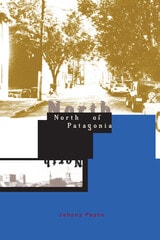
cover of North of Patagonia

North of Patagonia

Johnny Payne

Northwestern University Press, 2001

This darkly humorous fourth novel by Johnny Payne takes us from the blues clubs and boxing rings of Chicago to the world of Kentucky harness racing and the hedonism of South Beach. Its characters--among them the black elites of Chicago and the white working stiffs of Hooftown--live by their wits, able to outfox everyone but themselves, and all the time borne up by big hopes and big hearts.
[more]
cover of Northern Lights

Northern Lights

Drago Jancar

Northwestern University Press, 2001
Josef Erdman arrives in Maribor, Slovenia, on the eve of World War II. Though he claims to be a salesman, it soon becomes apparent that Josef has no purpose in the town--and that a newcomer can expect nothing but distrust from the townspeople. Against this backdrop he witnesses the fiery shimmer of the aurora borealis and imagines the town set aflame--an omen of the coming war.
[more]
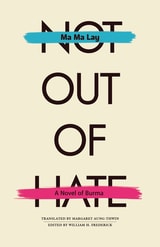
cover of Not Out of Hate: A Novel of Burma

Not Out of Hate

A Novel of Burma

Ma Ma Lay

Ohio University Press, 1991

Not Out of Hate—published in Burmese in 1955 and set in 1939–42—was Ma Ma Lay’s fifth novel and one that further cemented her status as one of twentieth-century Burma’s foremost writers and voices for change. A journalist by trade, Lay applied her straightforward observational style with compassion and purpose to the story of Way Way, a teenage village girl whose quiet life assisting her father in his rice-brokerage business is disrupted by the arrival of U Saw Han, the cosmopolitan Burmese rice trader twenty years her senior. When she first encounters him, Way Way is entranced by his Western furnishings, servants, and mannerisms. The two marry, but before long, it becomes clear that U Saw Han’s love is a stifling one that seeks to obliterate her traditional ways. Not Out of Hate was enormously popular in Burma and went through several editions in the 1950s and 1960s. When Ohio University Press published its English translation, in 1991, it became the first significant fictional account of prewar Burma available in English since George Orwell’s Burmese Days, and provided a Burmese counterpoint to Orwell’s novel. Translated into English here for the first time, the novel is an engaging drama, finely observed work of social realism, and stirring rejection of Western cultural dominance.
[more]
cover of Not a Thing to Comfort You

Not a Thing to Comfort You

Emily Wortman-Wunder

University of Iowa Press, 2019
From a lightning death on an isolated peak to the intrigues of a small town orchestra, the glimmering stories in this debut collection explore how nature—damaged, fierce, and unpredictable—worms its way into our lives. Here moths steal babies, a creek seduces a lonely suburban mother, and the priorities of a passionate conservationist are thrown into confusion after the death of her son. Over and over, the natural world reveals itself to be unknowable, especially to the people who study it most. These tales of scientists, nurses, and firefighters catalog the loneliness within families, betrayals between friends, and the recurring song of regret and grief.
[more]
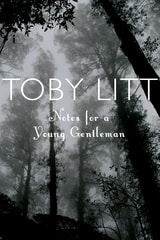
cover of Notes for a Young Gentleman

Notes for a Young Gentleman

Toby Litt

Seagull Books, 2017

Toby Litt is one of that rare breed of fiction writers who never writes the same book twice: every time out, he takes an unexpected new tack—and his readers happily follow.

​Told in the form of the pithy, even lyrical advice a young soldier leaves behind after a mission gone wrong, Notes for a Young Gentleman is no exception. Its brilliantly creative form, and the epigrammatic genius Litt displays in its creation, nonetheless can’t hide the powerful, emotional story at its heart: of a young soldier parachuting toward a beautiful, moonlit country house on a mission . . . of betrayal. The house? Marlborough. The target? Winston Churchill, an old friend of his father. A brilliant, at times dizzying but always heartfelt exploration of love, revenge, and the essence of a gentleman, Notes for a Young Gentleman is classic Toby Litt: wholly new and wholly unforgettable.
[more]
cover of Nothing But the Night

Nothing But the Night

John Edward Williams

University of Arkansas Press, 1990

First published in 1948, Nothing but the Night marked the auspicious beginning of John Williams' career as a novelist—a career that would go on to include the classics Stoner and the National Book Award winning Augustus. In the person of Arthur Maxley, Williams investigates the terror and the waywardness of a man who has suffered an early traumatic experience. As a child, Maxley witnessed a scene of such violence and of such a nature tat the evocation of Greek tragedy is inescapable. now, years later, we move through a single significant day in the grown Arthur Maxley's life, the day when he is to meet his father, who has been absent for many years. With rare economy and clarity, the story moves at an ever-increasing pace to its unforgettable end.
[more]
cover of Nothing Can Make Me Do This

Nothing Can Make Me Do This

David Huddle

Tupelo Press, 2011
Can we ever truly know another person, however well-loved? Brainy, decent, funny, and likeable, the members of Horace Houseman’s family and his closest friend possess quirky and compelling interior lives that they reveal to no one else. Nothing Can Make Me Do This, David Huddle’s tenth work of fiction, enters the minds of Horace, Eve, Hannah, Clara, Bill, and others over fifty years, leaping in chronology an intersecting the vantage points, in a kaleidoscopic vision of a contemporary clan (and their secrets).
[more]
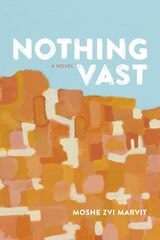
cover of Nothing Vast: A Novel

Nothing Vast

A Novel

Moshe Zvi Marvit

Acre Books, 2024

A sweeping multigenerational tale complicates traditional narratives as it follows two families—one Moroccan, one Polish—filled with Zionists, anti-Zionists, socialists, and reactionaries.

Spanning from 1932 to 1973, Nothing Vast delves deeply into the circumstances and concerns of Jews in cities across the globe—in Poland, France, Morocco, and the United States—as well as in Israel. Giving voice to characters male and female, young and old, Moshe Zvi Marvit braids together stories of migration and struggle, of custom and superstition, of long-held secrets and lies. This beautifully crafted novel follows a survivor of sexual assault, a member of the French resistance, a dream interpreter, a petty criminal, and a venerated rabbi.

Based on the experiences and traditions of the author’s own half-Arab Jewish family, the book is rife with historical and cultural detail and with the intricacies of faith and identity, both personal and national. At the center of the novel is Israel itself—a place existing first in the collective imagination, then in reality as Marvit slips into nonfiction to document the establishment of the country and the reactions to its birth. The characters’ experiences upon arrival in their new nation are vastly different: one family is given a large orange grove upon which to establish a Yeshiva, while the other, not accorded the same privileges, lives beneath notice. The story takes yet another twist when, years later, a grandchild of one of the founding rabbis, seeking answers, discovers the origin of his family’s land.

Visceral, intellectual, and searching, Nothing Vast is nothing short of a virtuosic debut.
 
[more]
cover of Nothing in Sight

Nothing in Sight

Jens Rehn

University of Chicago Press, 2005

It is 1943. A German submarine commander and an American pilot are stranded on a rubber life raft, floating alone in the middle of the ocean, with nothing between them but a bottle of whiskey, some cigarettes, a few chocolate bars, and a pack of chewing gum. Both sit, hoping to be rescued, but there is no hope in sight. The stage is thus set for this hypnotic existentialist parable, a rediscovered classic in the literature of World War II.

In a terse, almost clinically exact style, Nothing in Sight distills the brutal essence of what it is to die alone. Much more than a story of war, this short novel presents the memories, dreams, and hallucinations of two soldiers as they drift toward death. With nothing in sight on the horizon, Jens Rehn directs our view inward, into the minds of both men as they question the meaning of life, the existence of God, and the possibility of enduring human relationships. As the drama unfolds, each man recalls fragments of his past through the delirium of thirst and pain. The American soldier, his arm severed, dies first of gangrene. The German dies in agony a week later. Their life raft sinks into the vastness of the ocean.

Reissued two years ago in Germany, Nothing in Sight was hailed by critics there as a singular achievement. The work is presented here in a crystalline English translation for the first time, given new life for generations of readers to come.

[more]
cover of Novel Competition: American Fiction and the Cultural Economy, 1965-1999

Novel Competition

American Fiction and the Cultural Economy, 1965-1999

Evan Brier

University of Iowa Press, 2024
Novel Competition describes the literary and institutional struggle to make American novels matter between 1965 and 1999. As corporations took over the book business, Hollywood movies, popular music, and other forms of mass-produced culture competed with novels as never before for a form of prestige that had mostly been attached to novels in previous decades. In the context of this competition, developments like the emergence of Rolling Stone magazine, regional publishers, Black studies programs, and “New Hollywood” became key events in the life of the American novel. Novels by Truman Capote, Ann Beattie, Toni Cade Bambara, Cynthia Ozick, and Larry McMurtry—among many others—are recast as prescient reports on, and formal responses to, a world suddenly less hospitable to old claims about the novel’s value. This book brings to light the story of the novel’s perceived decline and the surprising ways American fiction transformed in its wake.
 
[more]
cover of Novel Gazing: Queer Readings in Fiction

Novel Gazing

Queer Readings in Fiction

Eve Kosofsky Sedgwick, ed.

Duke University Press, 1997

Novel Gazing is the first collection of queer criticism on the history of the novel. The contributors to this volume navigate new territory in literary theory with essays that implicitly challenge the "hermeneutic of suspicion" widespread in current critical theory. In a stunning introductory essay, Eve Kosofsky Sedgwick delineates the possibilities for a criticism that would be "reparative" rather than cynical or paranoid. The startlingly imaginative essays in the volume explore new critical practices that can weave the pleasures and disorientations of reading into the fabric of queer analyses.

Through discussions of a diverse array of British, French, and American novels—including major canonical novels, best-sellers, children’s fiction, and science fiction—these essays explore queer worlds of taste, texture, joy, and ennui, focusing on such subjects as flogging, wizardry, exorcism, dance, Zionist desire, and Internet sexuality. Interpreting the works of authors as diverse as Benjamin Constant, Toni Morrison, T. H. White, and William Gibson, along with canonical queer modernists such as James, Proust, Woolf, and Cather, contributors reveal the wealth of ways in which selves and communities succeed in extracting sustenance from the objects of a culture whose avowed desire has often been not to sustain them. The dramatic reframing that these essays perform will make the significance of Novel Gazing extend beyond the scope of queer studies to literary criticism in general.

Contributors. Stephen Barber, Renu Bora, Anne Chandler, James Creech, Tyler Curtain, Jonathan Goldberg, Joseph Litvak, Michael Lucey, Jeff Nunokawa, Cindy Patton, Jacob Press, Robert F. Reid-Pharr, Eve Kosofsky Sedgwick, Melissa Solomon, Kathryn Bond Stockton, John Vincent, Maurice Wallace, Barry Weller
[more]
cover of Novel Science: Fiction and the Invention of Nineteenth-Century Geology

Novel Science

Fiction and the Invention of Nineteenth-Century Geology

Adelene Buckland

University of Chicago Press, 2013
Novel Science is the first in-depth study of the shocking, groundbreaking, and sometimes beautiful writings of the gentlemen of the “heroic age” of geology and of the contribution these men made to the literary culture of their day. For these men, literature was an essential part of the practice of science itself, as important to their efforts as mapmaking, fieldwork, and observation. The reading and writing of imaginative literatures helped them to discover, imagine, debate, and give shape and meaning to millions of years of previously undiscovered earth history.
           
Borrowing from the historical fictions of Walter Scott and the poetry of Lord Byron, they invented geology as a science, discovered many of the creatures we now call the dinosaurs, and were the first to unravel and map the sequence and structure of stratified rock. As Adelene Buckland shows, they did this by rejecting the grand narratives of older theories of the earth or of biblical cosmogony: theirs would be a humble science, faithfully recording minute details and leaving the big picture for future generations to paint. Buckland also reveals how these scientists—just as they had drawn inspiration from their literary predecessors—gave Victorian realist novelists such as George Eliot, Charles Kingsley, and Charles Dickens a powerful language with which to create dark and disturbing ruptures in the too-seductive sweep of story.
[more]
cover of Novel Subjects: Authorship as Radical Self-Care in Multiethnic American Narratives

Novel Subjects

Authorship as Radical Self-Care in Multiethnic American Narratives

Leah A. Milne

University of Iowa Press, 2021

How does contemporary literature contend with the power and responsibility of authorship, particularly when considering marginalized groups? How have the works of multiethnic authors challenged the notion that writing and authorship are neutral or universal?

In Novel Subjects, Leah Milne offers a new way to look at multicultural literature by focusing on scenes of writing in contemporary works by authors with marginalized identities. These scenes, she argues, establish authorship as a form of radical self-care—a term we owe to Audre Lorde, who defines self-care as self-preservation and “an act of political warfare.”

In engaging in this battle, the works discussed in this study confront limitations on ethnicity and nationality wrought by the institutionalization of multiculturalism. They also focus on identities whose mere presence on the cultural landscape is often perceived as vindictive or willful. Analyzing recent texts by Carmen Maria Machado, Louise Erdrich, Ruth Ozeki, Toni Morrison, and more, Milne connects works across cultures and nationalities in search of reasons for this recent trend of depicting writers as characters in multicultural texts. Her exploration uncovers fiction that embrace unacceptable or marginalized modes of storytelling—such as plagiarism, historical revisions, jokes, and lies—as well as inauthentic, invisible, and unexceptional subjects. These works ultimately reveal a shared goal of expanding the borders of belonging in ethnic and cultural groups, and thus add to the ever-evolving conversations surrounding both multicultural literature and self-care.
[more]
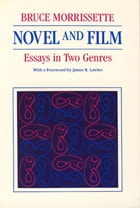
cover of Novel and Film: Essays in Two Genres

Novel and Film

Essays in Two Genres

Bruce Morrissette

University of Chicago Press, 1985

"Since the late 1950s," writes James R. Lawler in his Foreword to this volume, "Morrissette has stood as one of the most incisive explicators of the nouveau roman, of its past and present affiliations, of its interaction with the cinema."

The influential essays collected in Novel and Film display a wide range of critical and analytic approaches to the narrative aspects of the two genres. For all the variety of their subjects, from constructional forms such as interior duplication and game play to intertextual parallels with mathematics and topology, these essays together define a unified critical perspective, one that has brought fresh precision to the analysis of narrative techniques and that continues to raise questions of prime importance to contemporary fiction. Included is a complete bibliography of Morrissette's scholarly works.
[more]
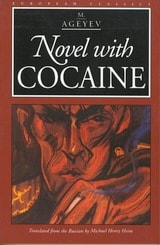
cover of Novel with Cocaine

Novel with Cocaine

M. Ageyev

Northwestern University Press, 1991

A Dostoevskian psychological novel of ideas, Novel with Cocaine explores the interaction between psychology, philosophy, and ideology in its frank portrayal of an adolescent's cocaine addiction. The story relates the formative experiences of Vadim at school and with women before he turns to drug abuse and the philosophical reflections to which it gives rise. Although Ageyev makes little explicit reference to the Revolution, the novel's obsession with addictive forms of thinking finds resonance in the historical background, in which "our inborn feelings of humanity and justice" provoke "the cruelties and satanic transgressions committed in its name.
[more]
cover of Novels and Arguments: Inventing Rhetorical Criticism

Novels and Arguments

Inventing Rhetorical Criticism

Zahava K. McKeon

University of Chicago Press, 1982

In this absorbing study—the first comprehensive exploration of the rhetoric of the novel—Zahava Karl McKeon investigates the complex interrelations of critical poetics, grammars, dialectics, and rhetorics to devise a systematic means of dealing with the structure of prose works as communicative objects. Using the vocabulary and conceptual resources of Aristotle and Cicero, she pursues this exploration to discover the kinds of arguments that characterize novels, to find a way of distinguishing novels from other discursive wholes, and to discriminate different genres of the novel. McKeon's arguments are supplemented by readings of a variety of texts, including the novels and stories of Gunter Grass, John Fowles, Robert Coover, and Flannery O'Connor.
[more]
cover of Novels by Aliens: Weird Tales and the Twenty-First Century

Novels by Aliens

Weird Tales and the Twenty-First Century

Kate Marshall

University of Chicago Press, 2023

A wide-ranging account of the twenty-first century’s fascination with the weird.
 
Twenty-first-century fiction and theory have taken a decidedly weird turn. They both show a marked interest in the nonhuman and in the preternatural moods that the nonhuman often evokes. Writers of fiction and criticism are avidly experimenting with strange, even alien perspectives and protagonists. Kate Marshall’s Novels by Aliens explores this development broadly while focusing on problems of genre fiction. She identifies three key generic hybrids that harness a longing for the nonhuman: the old weird, an alternative tradition within naturalism and modernism for the twenty-first century’s cowboys and aliens; cosmic realism, the reach for words legible only from space in otherwise terrestrial narratives; and pseudoscience fiction, which imagines speculative futures beyond human life on earth. Offering sharp and surprising insights about a breathtaking range of authors, from Edgar Rice Burroughs to Kazuo Ishiguro, Willa Cather to Maggie Nelson, Novels by Aliens tells the story of how genre became mood in the twenty-first century.
[more]
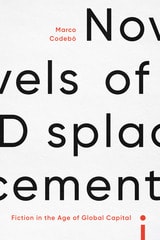
cover of Novels of Displacement: Fiction in the Age of Global Capital

Novels of Displacement

Fiction in the Age of Global Capital

Marco Codebò

The Ohio State University Press, 2020

In Novels of Displacement: Fiction in the Age of Global Capital, Marco Codebò assesses the state of fiction in our time, an age defined by the combined hegemony of global capital and software. Codebò argues that present-day displacement originates in the dualism of power that pervades our polarized society and in the sweeping deterritorialization that is affecting people, objects, and signs. As the ties between subjectivity and territory break, being in the world means being displaced. Rather than narrating how subjectivity can mark a place, novels of displacement convey the crisis of subjectivity’s connection to place.

Using four works as case studies—Bernardo Carvalho’s Nove noites, Daniel Sada’s Porque parece mentira la verdad nunca se sabe, Zadie Smith’s White Teeth, and Mathias Énard’s Zone—Codebò investigates how globalization, displacement, and technology inform our understanding of subjectivity and one’s place in the world. Coming from different literary traditions––Brazilian-Portuguese, Spanish, English, and French–– Novels of Displacement traces the development of displacement caused by organized crime, migration, and war. Ultimately what emerges from this study is evidence of how cultures of untruth damage but do not destroy human agency.
[more]
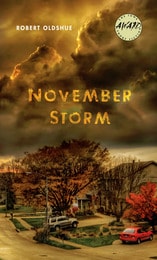
cover of November Storm

November Storm

Robert Oldshue

University of Iowa Press, 2016

In each of the stories in Robert Oldshue’s debut collection, the characters want to be decent but find that hard to define.

In the first story, an elderly couple is told that delivery of their Thanksgiving dinner has been canceled due to an impending blizzard. Unwilling to have guests but nothing to serve them, they make a run to the grocery, hoping to get there and back before the snow, but crash their car into the last of their neighbors. In “The Receiving Line,” a male prostitute tricks a closeted suburban schoolteacher only to learn that the trick is on him. In “The Woman On The Road,” a twelve-year-old girl negotiates the competing demands of her faith and her family as she is bat mitzvahed in the feminist ferment of the 1980s. The lessons she learns are the lessons learned by a ten-year-old boy in “Fergus B. Fergus,” after which, in “Summer Friend,” two women and one man renegotiate their sixty-year intimacy when sadly, but inevitably, one of them gets ill. “The Home Of The Holy Assumption” offers a benediction. A quadriplegic goes missing at a nursing home. Was she assumed? In the process of finding out, all are reminded that caring for others, however imperfectly—even laughably—is the only shot at assumption we have.

In upstate New York, a November storm is one that comes early in the season. If it catches people off-guard, it can change them in the ways Oldshue’s characters are changed by different but equally surprising storms.
 
[more]
[more]