Results by title
28164 books match the query 'History' and 647 start with n
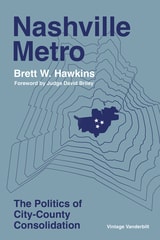
Nashville Metro
The Politics of City-County ConsolidationBrett W. Hawkins
Vanderbilt University Press, 2024
This is a valuable artifact in itself, but the new foreword by Judge David Briley—former Nashville mayor and grandson of the first metro Nashville mayor, Beverly Briley—offers a firsthand account of the realities of metropolitan government sixty years on.
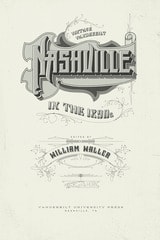
Nashville in the 1890s
William Waller
Vanderbilt University Press, 1970
It is, however, not a complete insight into Nashville in the 1890s. Readers should take note that the book focuses almost exclusively on the experiences and worldviews of white Nashvillians. These stories have incredible value for local historians and anyone interested in Nashville history, but the book’s failure to deal with race—as evidenced by Waller’s belief that “the social order was thought to be providential,” which was clearly not true for Nashville’s Black residents who struggled against the unjust systems designed to oppress them—is a grave shortcoming.
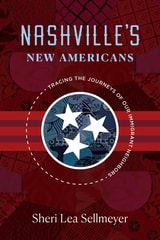
Nashville's New Americans
Tracing the Journeys of Our Immigrant NeighborsSheri Lea Sellmeyer
Vanderbilt University Press, 2026
Whether it’s building skyscrapers, running successful restaurants, researching diseases, performing music, cleaning hotel rooms, or holding public office, immigrants are changing Nashville from a mid‑sized city known for its country music industry to an increasingly diverse, multicultural destination. In Metro Nashville schools today, students speak more than 120 languages. The city is bigger, more congested, and more expensive than it’s ever been, drawing criticism from both longtime residents and newcomers. But growth has also brought top‑notch scientists and educators, a world‑class symphony, major league sports teams, investment from major corporations—and a wide range of immigrants whose talent and hard work have helped make all of that happen.
Through its profiles of thirty-nine immigrants from thirty-eight countries in Asia, the Middle East, Africa, Europe, Latin America, and Australia, Nashville’s New Americans provides a case study from one of the fastest-growing cities in the country on the contributions immigrants are making to its culture and economy.

Nashville, 1900 to 1910
William Waller
Vanderbilt University Press, 1972
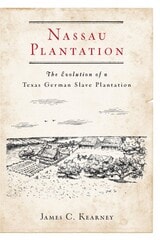
Nassau Plantation
The Evolution of a Texas-German Slave PlantationJames C. Kearney
University of North Texas Press, 2010

Nasser
Anne Alexander
Haus Publishing, 2025
More than fifty years after his death, Gamal Abd al-Nasser remains a towering figure in the Arab world. As one of the young officers who overthrew British-backed King Farouk in Egypt in 1952, Nasser rose to prominence as a charismatic visionary who challenged foreign dominance. At just thirty-six years old, he became the undisputed leader of Egypt in a presidency that would run from 1956 to 1970.
This insightful biography, in its second edition and featuring a new introduction from the author, delves into the life of Nasser, charting his rise to power, his nationalization of the Suez Canal, and his turbulent years as president. Many in the Arab World celebrate Nasser for his defiance of colonial rule and his dream of Arab unity. However, his legacy is not without its contradictions. Critics have alluded, for instance, to his autocratic rule and unfulfilled promises. In Nasser, Anne Alexander explores this tension between Nasser’s revolutionary ideas and the reality of his governance.
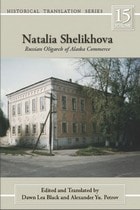
Natalia Shelikhova
Russian Oligarch of Alaska CommerceEdited by Dawn Lea Black and Alexander Petrov
University of Alaska Press, 2010
This volume makes available for the first time in English a variety of primary source materials relating to the life and work of Natalia Shelikov, a pioneering nineteenth-century Russian-American businesswoman. As a principal of the Russian-American Company, Shelikov worked in Alaska, and her business acumen and wide-ranging connections—including the empress of Russia and a swathe of northern leaders—were crucial to the growth of Alaska’s economy, as well as to the welfare of the Native people, in whose life and culture she took a strong interest. The letters, petitions, and personal documents presented here will be indispensable for students of Alaska and nineteenth-century women’s history.
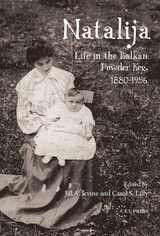
Natalija
Life in the Balkan Powder Keg, 1880-1956Natalija Matic-Zrnic
Central European University Press, 2009

Nathan B. Young and the Struggle over Black Higher Education
Antonio F. Holland
University of Missouri Press, 2006
Born in slavery in Alabama, Young followed a love of learning to degrees from Talladega and Oberlin Colleges and a career in higher education. Employed by Booker T. Washington in 1892, he served at Tuskegee Institute until conflict with Washington’s vocational orientation led him to move on. During a brief tenure at Georgia State Industrial College under Richard R. Wright, Sr., he became disillusioned by efforts of whites to limit black education to agriculture and the trades. Hired as president of Florida A&M in 1901, he fought for twenty years to balance agricultural/vocational education with the liberal arts, only to meet with opposition from state officials that led to his ouster.
This principled educator finally found his place as president of Lincoln University in Missouri in 1923. Here Young made a determined effort to establish the school as a standard institution of higher learning. Holland describes how he campaigned successfully to raise academic standards and gain accreditation for Lincoln’s programs—successes made possible by the political and economic support of farsighted members of Missouri’s black community.
Holland shows that the great debate over black higher education was carried on not only in the rhetoric of Washington and Du Bois but also on the campuses, as Young and others sought to prepare African American students to become thinkers and creators. In tracing Young’s career, Holland presents a wealth of information on the nature of the education provided for former slaves and their descendents in four states—shedding new light on the educational environment at Oberlin and Tuskegee—and on the actions of racist white government officials to limit the curriculum of public education for blacks.
Although Young’s efforts to improve the schools he served were often thwarted, Holland shows that he kept his vision alive in the black community. Holland’s meticulous reconstruction of an eventful career provides an important look at the forces that shaped and confounded the development of black higher education during traumatic times.

Nathan Boone and the American Frontier
R. Douglas Hurt
University of Missouri Press, 2000
Celebrated as one of America's frontier heroes, Daniel Boone left a legacy that made the Boone name almost synonymous with frontier settlement. Nathan Boone, the youngest of Daniel's sons, played a vital role in American pioneering, following in much the same steps as his famous father. In Nathan Boone and the American Frontier, R. Douglas Hurt presents for the first time the life of this important frontiersman.
Based on primary collections, newspaper articles, government documents, and secondary sources, this well-crafted biography begins with Nathan's childhood in present-day Kentucky and Virginia and then follows his family's move to Missouri. Hurt traces Boone's early activities as a hunter, trapper, and surveyor, as well as his leadership of a company of rangers during the War of 1812. After the war, Boone returned to survey work. In 1831, he organized another company of rangers for the Black Hawk War and returned to military life, making it his career. The remainder of the book recounts Boone's activities with the army in Iowa and the Indian Territory, where he was the first Boone to gain notice outside Missouri or Kentucky. Even today his work is recognized in the form of state parks, buildings, and place-names.
Although Nathan Boone was an important figure, he lived much of his life in the shadow of his father. R. Douglas Hurt, however, makes a strong case for Nathan's contribution to the larger context of life in the American backcountry, especially the execution of military and Indian policy and the settlement of the frontier.
By recognizing the significant role that Nathan Boone played, Nathan Boone and the American Frontier also provides the recognition due the many unheralded frontiersmen who helped settle the West. Anyone with an interest in the history of Missouri, the frontier, or the Boone name will find this book informative and compelling.

Nathan Hale
The Life and Death of America's First SpyM. William Phelps
University Press of New England, 2015

Nathan Straus
From Macy's Magnate to International HumanitarianAndrew Fisher
Rutgers University Press, 2026
Nathan Straus (1848–1931) encompassed worlds. He rose from his Jewish German immigrant family’s ruin in Civil War Georgia to become co-owner of Macy’s and Abraham & Straus department stores. He helped build American Zionism and cofounded the American Jewish Congress movement. His public service led to a nomination for New York City mayor.
This, the first comprehensive biography of Straus, details each of these lives but argues that his most historic achievements lay elsewhere—in philanthropy. Inspired by both his Jewish values and no-nonsense pragmatism, Straus designed, funded, and oversaw four Progressive philanthropic initiatives. The greatest—his demonstration and advocacy campaigns for milk pasteurization—saved the lives of countless thousands of infants in New York City and, ultimately, across much of America and western Europe. Straus also founded America’s first TB preventorium for at-risk children: a model for the forty-five more that followed. Partnering with Hadassah, he brought American public health innovations to Mandate Palestine. He provided vast relief for New York City’s jobless in the severe 1890s depression. In all, Straus’s humanitarianism won the acclaim of American presidents and world leaders and the gratitude of millions. We can learn from him today.

Nathaniel Southgate Shaler and the Culture of American Science
David N. Livingstone
University of Alabama Press, 1987
An influential American scientist and educator.
Nathaniel Southgate Shaler and the Culture of American Science is the first book-length study of the man who served a Harvard’s Professor of Geology and Paleontology during the Darwinian era. Shaler was a student of Louis Agassiz and went on to a successful, multifaceted career as a geologist, geographer, educator, humanist, and poet. Livingstone employs a thematic approach to chart Shaler’s career against the broader intellectual currents of America’s Gilded Age. After tracing Shaler’s life story from his boyhood in Kentucky through his student years at Harvard, his service with the Geological Survey, and eventually his years as Dean of Harvard’s Lawrence Scientific School, the author examines Shaler’s evolutionary vision and portrays his strategic efforts to reconcile the nineteenth century’s scientific and religious world views.
Livingstone assesses Shaler’s prolific writings, including those on race, which demonstrate a typical concern to provide a “scientific” perspective on the political questions of immigration restriction and eugenic control. IN addition, the book explores his efforts to interweave geography and history, particularly in relation to the American frontier; and his contributions to geology and geomorphology. The portrait of Shaler is completed with a review of his educational thinking and his role in establishing the American Summer School and in furthering scientific and technological education.
Nathaniel Southgate Shaler emerges from Livingstone’s work as a distinctive figure in the development of the new scientific culture, a figure who provides a focal point for assessing the impact of evolutionary naturalism on late-nineteenth-century American thought.
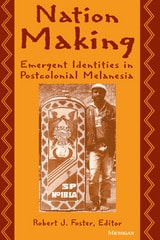
Nation Making
Emergent Identities in Postcolonial MelanesiaRobert J. Foster, Editor
University of Michigan Press, 1997
In this theoretically sophisticated volume, contributors examine the process of nation making in Fiji, Papua New Guinea, the Solomon Islands, and Vanuatu- states that attained formal political independence between 1970 and 1980. The remarkable cultural diversity within these states demands close ethnographic study of different groups and their contesting definitions of nationhood and leads to highly original approaches.
The essays explore the political conditions and cultural assumptions that inform how Melanesians variously imagine a national community. The authors interpret a wide range of materials, from political speeches and official ceremonies of state to newspaper advertisements and life crisis rites. They demonstrate both how the legacies of divisive colonial rule, the weakness of the postcolonial state, and the exigencies of capitalist markets undermine the processes of nation making in contemporary Melanesia and how new forms of popular and consumer culture potentially shape an emergent national consciousness.
Comparative and historical in its orientation, this book will appeal to readers not only in anthropology but in political science, social history, and cultural studies. It will be of special value to those interested in comparative politics and history, Pacific studies, ethnicity and nationalism, and colonial and postcolonial studies.
Robert J. Foster is Assistant Professor of Anthropology, University of Rochester.
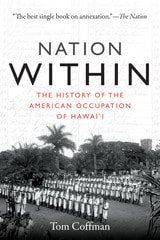
Nation Within
The History of the American Occupation of Hawai'iTom Coffman
Duke University Press, 2009
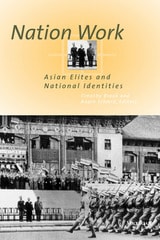
Nation Work
Asian Elites and National IdentitiesTimothy Brook and Andre Schmid, Editors
University of Michigan Press, 2000

Nation and Migration
How Citizens in Europe Are Coping with XenophobiaGyörgy Csepeli
Central European University Press, 2021
Nation and Migration provides a way to understand recent migration events in Europe that have attracted the world's attention. The emergence of the nations in the West promised homogenization, but instead the imagined national communities have everywhere become places of heterogeneity, and modern nation states have been haunted by the specter of minorities. This study analyses experiences relating to migration in 23 European countries. It is based on data from the International Social Survey Programme, a global cross-national collaborative exercise, with surveys made in 1995, 2003, and 2013. In the authors' view, a critical test for Europe will be its ability to find adequate responses to the challenges of globalization.
The book provides a detailed overview of how citizens in Europe are coping with a xenophobia fueled by their own sense of insecurity. The authors reconstruct the competing sociological reactions to migration in the forms of integration, assimilation and segregation. Hungary receives special attention: the data show that people living there are far less closed and xenophobic than they might seem through the prism of a media-instigated moral panic.

Nation and World, Church and God
The Legacy of Garry WillsEdited by Kenneth L. Vaux and Melanie Baffes
Northwestern University Press, 2014
Garry Wills is the polymathic public intellectual bemoaned as missing from American letters. A professor emeritus at Northwestern University, he has built upon his early studies in classics and patristics, while bringing his considerable intellect to bear on American culture, politics, and religion, notably through provocative articles and books on wars, past and present presidents, and the Catholic Church Wills has distinguished himself in the crowded field of Civil War history; fearlessly taken on the legacies of Richard Nixon and Ronald Reagan, among other presidents; and offered a critical voice in many fraught ethical discussions, especially in the areas of war and peace.
Nation and World, Church and God gathers original critical reflections by leading writers and scholars on Garry Wills’s life work. Organized around the themes of “Classics,” “Civil War,” “War and Peace,” and “Theology, Church, and the Arts,” the book reflects the cultural acumen, fine-grained political analysis, ethical candor, and theological wisdom of one of America’s most prolific writers.
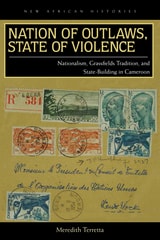
Nation of Outlaws, State of Violence
Nationalism, Grassfields Tradition, and State Building in CameroonMeredith Terretta
Ohio University Press, 2014
Nation of Outlaws, State of Violence is the first extensive history of Cameroonian nationalism to consider the global and local influences that shaped the movement within the French and British Cameroons and beyond. Drawing on the archives of the United Nations, France, Great Britain, Ghana, and Cameroon, as well as oral sources, Nation of Outlaws, State of Violence chronicles the spread of the Union des populations du Cameroun (UPC) nationalist movement from the late 1940s into the first postcolonial decade. It shows how, in the French and British Cameroon territories administered as UN Trusteeships after the Second World War, notions of international human rights, the promise of Third World independence, Pan-African federation, and national citizenship blended with local political and spiritual practices that resurfaced as the period of European rule came to a close. After French and British administrators banned the party in the mid-1950s, UPC nationalists adopted violence as a revolutionary strategy. In the 1960s, the nationalist vision disintegrated. The postcolonial regime labeled UPC nationalists “outlaws” and rounded them up for imprisonment or execution as the state shifted to single-party rule in 1966.
Nation of Outlaws, State of Violence traces the connection between local and transregional politics in the age of Africa’s decolonization and the early decades of the Cold War. Rather than stop at official independence as most conventional histories of African nationalist movements do, this book considers postindependence events as crucial to the history of Cameroonian nationalism and to an understanding of the postcolonial government that came to power on 1 January 1960. While the history of the UPC is a story that ends with the party’s failure to gain access to political power with independence, it is also a story of the postcolonial state’s failure to become a nation.

Nation on Board
Becoming Nigerian at SeaLynn Schler
Ohio University Press, 2016
In the 1940s, British shipping companies began the large-scale recruitment of African seamen in Lagos. On colonial ships, Nigerian sailors performed menial tasks for low wages and endured discrimination as cheap labor, while countering hardships by nurturing social connections across the black diaspora. Poor employment conditions stirred these seamen to identify with the nationalist sentiment burgeoning in postwar Nigeria, while their travels broadened and invigorated their cultural identities.
Working for the Nigerian National Shipping Line, they encountered new forms of injustice and exploitation. When mismanagement, a lack of technical expertise, and pillaging by elites led to the NNSL’s collapse in the early 1990s, seamen found themselves without prospects. Their disillusionment became a broader critique of corruption in postcolonial Nigeria.
In Nation on Board: Becoming Nigerian at Sea, Lynn Schler traces the fate of these seamen in the transition from colonialism to independence. In so doing, she renews the case for labor history as a lens for understanding decolonization, and brings a vital transnational perspective to her subject. By placing the working-class experience at the fore, she complicates the dominant view of the decolonization process in Nigeria and elsewhere.
Nation, Language, Islam
Tatarstan's Sovereignty MovementHelen M. Faller
Central European University Press, 2011

National Camera
Photography and Mexico’s Image EnvironmentRoberto Tejada
University of Minnesota Press, 2009
The “problem” of photography in Mexico, Tejada shows, reveals cross-cultural episodes that are rife with contradictions, especially in the complex terms of cultural and sexual difference. Analyzing such topics as territory, sexuality, and social and ethnic relations in image making, Tejada delves into the work of key figures including Manuel Alvarez Bravo, Edward Weston, Tina Modotti, Marius de Zayas, and Julien Levy, as well as the Agustín Víctor Casasola Archive, the Boystown photographs, and contemporary Mexican and Latina photo-based artists.
From the Mexican Revolution of 1910–1920 to the U.S.–Mexico borderlands of today, Tejada traces the connective thread that photography has provided between Mexican and U.S. American intellectual and cultural production and, in doing so, defines both nations.
National Cultures at Grass-root Level
Antonina Kloskowska
Central European University Press, 2001
The major dilemma this volume addresses is the function of national identity in a modern society, for despite the trend towards globalization, the world continues to be riddled with national conflict.
Kłoskowska begins by looking at the controversy between two competing concepts of the origin of the nation – political and ethnic. She examines the central issues of the argument, and in particular, the characteristics and effects of ethnic differences on personal identity and the appropriation of national culture. Her theories are based upon autobiographies by individuals belonging to various national minorities in Poland and other areas where ethnic borders are blurred. The group studied included mostly young intellectuals: Ukrainians, Belarussians and Silesian-Germans. She examines the national attitudes of the various countries the ethnic minorities have been forced to live with. In her conclusion, Kłoskowska takes the view that national cultures are either ‘open’ or ‘closed’ and stresses the importance of participating in more than one cultural medium.
National Cultures at the Grass-Root Level is rich in information on contemporary theories of the nation, on its origin, character and future, and offers a deep insight into the complex and often ambiguous reality of national attitudes.
National Duties
Custom Houses and the Making of the American StateGautham Rao
University of Chicago Press, 2016
In the wake of the American Revolution, if you had asked a citizen whether his fledgling state would survive more than two centuries, the answer would have been far from confident. The problem, as is so often the case, was money. Left millions of dollars of debt by the war, the nascent federal government created a system of taxes on imported goods and installed custom houses at the nation’s ports, which were charged with collecting these fees. Gradually, the houses amassed enough revenue from import merchants to stabilize the new government. But, as the fragile United States was dependent on this same revenue, the merchants at the same time gained outsized influence over the daily affairs of customs houses. As the United States tried to police this commerce in the early nineteenth century, the merchants’ stranglehold on custom house governance proved to be formidable.
In National Duties, Gautham Rao makes the case that the origins of the federal government and the modern American state lie in these conflicts at government custom houses between the American Revolution and the presidency of Andrew Jackson. He argues that the contours of the government emerged from the push-and-pull between these groups, with commercial interests gradually losing power to the administrative state, which only continued to grow and lives on today.
National History and the World of Nations
Capital, State, and the Rhetoric of History in Japan, France, and the United StatesChristopher L. Hill
Duke University Press, 2008
Delving into narrative histories, prose fiction, and social philosophy, Hill analyzes the rhetoric, narrative form, and intellectual genealogy of late-nineteenth-century texts that contributed to the creation of national history in each of the three countries. He discusses the global political economy of the era, the positions of the three countries in it, and the reasons that arguments about history loomed large in debates on political, economic, and social problems. Examining how the writing of national histories in the three countries addressed political transformations and the place of the nation in the world, Hill illuminates the ideological labor national history performed. Its production not only naturalized the division of the world by systems of states and markets, but also asserted the inevitability of the nationalization of human community; displaced dissent to pre-modern, pre-national pasts; and presented the subject’s acceptance of a national identity as an unavoidable part of the passage from youth to adulthood.

National Holidays in Czechoslovakia Between the World Wars
Celebrate the RepublicDagmar Hájková
Central European University Press, 2027

National Identities and Post-Americanist Narratives
Donald E. Pease
Duke University Press, 1994
This volume, originally published as a special issue of bounrary 2, focuses on the process of assembling and dismantling the American national narrative(s), sketching its inception and demolition. The contributors examine various cultural, political, and historical sources--colonial literature, mass movements, epidemics of disease, mass spectacle, transnational corporations, super-weapons, popular magazines, literary texts--out of which this narrative was constructed, and propose different understandings of nationality and identity following in its wake.
Contributors. Jonathan Arac, Lauren Berlant, Robert J. Corber, Elizabeth Freeman, Kathryn V. Lingberg, Jack Matthews, Alan Nadel, Patrick O'Donnell, Daniel O'Hara, Donald E. Pease, Ross Posnock, John Carlos Rowe, Rob Wilson
National Identity of Romanians in Transylvania
Sorin Mitu
Central European University Press, 2001
This meticulously researched and elegantly written book is the most authoritative study of the emergence of modern Romanian identity in Transylvania during the eighteenth and nineteenth centuries. Based upon a plethora of contemporary published sources, Mitu approaches national identity from a variety of perspectives - from within the Romanian community itself and their reaction to the image others had of them.
The author sheds new light on the problems of self-evaluation using a method he describes as "functional analysis" to examine a complex set of ideologies and propaganda. This approach helps the reader to understand the intricate web of contemporary Romanian nationalism.
National Identity of Romanians in Transylvania appeals to scholars of modern Romanian history, those focusing on the Habsburg Monarchy and the study of modern nationalism. The book is an important contribution to the expanding debate on nationalism and national identity from an East European perspective.
National Liberation and the Political Life of Exile
Sex, Gender, and Nation in the Struggle Against ApartheidRachel Sandwell
Ohio University Press, 2025
The first book-length study to reveal how women in exile shaped South Africa’s antiapartheid movement
This groundbreaking book explores the often-overlooked role of women in South Africa’s liberation movements, particularly within the African National Congress during its years in exile from 1960 to 1990. It examines how transformations in gender roles—though contested—were central to imagining a postapartheid South Africa.
Through an analysis of women’s diplomatic work and their advocacy for policies on sexual education, birth control, family life, and childcare, Rachel Sandwell challenges traditional narratives that have ignored or minimized women’s contributions. She highlights how South African women played a crucial role in connecting exiles to left-wing international organizations like the Women’s International Democratic Federation, positioning women as key figures in global anticolonial politics.
The book also explores how gender transformation was at the heart of the exiled antiapartheid movement’s vision for a free South Africa. Women fought for recognition beyond the role of “mothers of the nation,” sparking internal debates over revolutionary morality, the compatibility of motherhood with military service, and responses to sexual and domestic violence within the movement. These struggles mirrored broader ideological conflicts over nation building, belonging, and political identity as the African National Congress sought legitimacy as a government-in-exile.
Ultimately, National Liberation and the Political Life of Exile asks how we write histories of revolutionary movements—especially those that, despite their transformative ambitions, did not fully realize their goals. A vital contribution to feminist history, anticolonial studies, and the history of global liberation struggles, this book reshapes our understanding of gender and politics in the antiapartheid movement.
National Megalomania and Imagination of the Ancient World
Jie-Hyun Lim
Central European University Press, 2027
National Myths in the Middle East
Representations, Revisions, and Critiques, Volume 2003Adina Back , Magnus T. Bernhardsson, Mansour Bonakdarian, and Sally Charnow, eds.
Duke University Press, 0

National Parks Forever
Fifty Years of Fighting and a Case for IndependenceJonathan B. Jarvis and T. Destry Jarvis
University of Chicago Press, 2022
The US National Parks, what environmentalist and historian Wallace Stegner called America’s “best idea,” are under siege. Since 1972, partisan political appointees in the Department of the Interior have offered two conflicting views of the National Park Service (NPS): one vision emphasizes preservation and science-based decision-making, and another prioritizes economic benefits and privatization. These politically driven shifts represent a pernicious, existential threat to the very future of our parks.
For the past fifty years, brothers Jonathan B. and T. Destry Jarvis have worked both within and outside NPS as leaders and advocates. National Parks Forever interweaves their two voices to show how our parks must be protected from those who would open them to economic exploitation, while still allowing generations to explore and learn in them. Their history also details how Congress and administration appointees have used budget and staffing cuts to sabotage NPS’s ability to manage the parks and even threatened their existence. Drawing on their experience, Jarvis and Jarvis make a bold and compelling proposal: that it is time for NPS to be removed from the Department of the Interior and made an independent agency, similar to the Smithsonian Institution, giving NPS leaders the ability to manage park resources and plan our parks’ protection, priorities, and future.

National Parks Forever
Fifty Years of Fighting and a Case for IndependenceJonathan B. Jarvis and T. Destry Jarvis
University of Chicago Press, 2022
This is an auto-narrated audiobook edition of this book.
Two leaders of the National Park Service provide a front-row seat to the disastrous impact of partisan politics over the past fifty years—and offer a bold vision for the parks’ future.
The US National Parks, what environmentalist and historian Wallace Stegner called America’s “best idea,” are under siege. Since 1972, partisan political appointees in the Department of the Interior have offered two conflicting views of the National Park Service (NPS): one vision emphasizes preservation and science-based decision-making, and another prioritizes economic benefits and privatization. These politically driven shifts represent a pernicious, existential threat to the very future of our parks.
For the past fifty years, brothers Jonathan B. and T. Destry Jarvis have worked both within and outside NPS as leaders and advocates. National Parks Forever interweaves their two voices to show how our parks must be protected from those who would open them to economic exploitation, while still allowing generations to explore and learn in them. Their history also details how Congress and administration appointees have used budget and staffing cuts to sabotage NPS’s ability to manage the parks and even threatened their existence. Drawing on their experience, Jarvis and Jarvis make a bold and compelling proposal: that it is time for NPS to be removed from the Department of the Interior and made an independent agency, similar to the Smithsonian Institution, giving NPS leaders the ability to manage park resources and plan our parks’ protection, priorities, and future.

National Parks and the Supreme Court
Groundbreaking Legal BattlesCarla Chung Mattix
University of Nevada Press, 2026
This book examines five landmark Supreme Court cases involving national parks—Gettysburg, Yellowstone, Grand Canyon, Death Valley, and the National Mall. Each chapter blends legal analysis with historical context, tracing the origins of the parks and the disputes that brought them before the nation’s highest court. Spanning nearly a century, these cases reveal how the Court has shaped park policy, land use, Native American rights, water law, and free speech.
Through these pivotal decisions, National Parks and the Supreme Court offers a new lens on the contested terrain of the national parks, where legal, environmental, and cultural values collide. By exploring the courts’ influence on public lands, it deepens our understanding of the complexities of managing America’s most cherished landscapes.

National Past-Times
Narrative, Representation, and Power in Modern ChinaAnn Anagnost
Duke University Press, 1997
Using interviews and participant observation as well as close readings of official documents, propaganda materials, and popular media, Anagnost notes the discontinuities in the nation’s narrative—moments where this narrative has been radically reorganized at critical junctures in China’s modern history. Covering a broad range of issues relating to representation and power—issues that have presented themselves with particular clarity in the years since the violent crackdown on the student movement of 1989—National Past-Times critiques the ambiguous possibilities produced by the market, as well as new opportunities for "unfreedom" in the discipline of labor and the commodification of women. Anagnost begins with a retrospective reflection on the practice of "speaking bitterness" in socialist revolutionary practice. Subsequent essays discuss the culture debates of the 1980s, the discourse of social disorder, the issue of population control, the film The Story of Qiu Ju, and anomalies at the theme park "Splendid China."
National Rhetorics in the Syrian Immigration Crisis
Victims, Frauds, and FloodsClarke Rountree
Michigan State University Press, 2019
National Romanticism
The Formation of National MovementsMiroslav Hroch
Central European University Press, 2007
National Socialism and Gypsies in Austria
Erika Thurner
University of Alabama Press, 1998
In this first English translation of Erika Thurner's National Socialism and Gypsies in Austria, Gilya Gerda Schmidt makes available Thurner’s investigation of Camps Salzburg and Lackenbach, the two central areas of Gypsy persecution in Austria. Two factors made Thurner’s research especially difficult: the Roma and Sinti have more an oral tradition than a written one, and scholarship on the plight of the Gypsies is sparse. Through painstaking research, Thurner has been able to piece together fragments from Nazi documents, recollections of victims, accounts of bystanders and other eyewitnesses, and formal records to present her account. The result is a volume that truly enhances our understanding of the Gypsies’ experiences during this period.
The volume also focuses on broader aspects of the Gypsies’ ordeals: the ideological foundations and legal ordinances regarding Gypsies, the discrimination and persecution in Burgenland as a whole, the transports from Austria to Lodz and Chelmo, and the medical experimentation. The book has also been expanded, with a new study of Camp Salzburg, an updated bibliography, and numerous photographs, which were not included in the German edition.
The recent upsurge of anti-Gypsy violence in Austria illustrates both the horror of the treatment of Gypsy tribes and the timeliness of the subject of this volume.
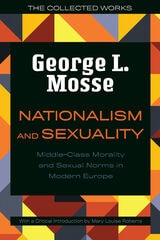
Nationalism and Sexuality
Middle-Class Morality and Sexual Norms in Modern EuropeGeorge L. Mosse, With a critical introduction by Mary Louise Roberts
University of Wisconsin Press, 2020

Nationalism and Terror
Ante Pavelic and Ustasha Terrorism from Fascism to the Cold WarGiorgio Cingolani
Central European University Press, 2018
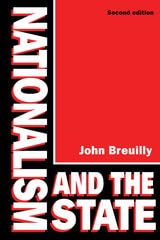
Nationalism and the State
John Breuilly
University of Chicago Press, 1993
Breuilly challenges the conventional view that nationalism emerges from a sense of cultural identity. Rather, he shows how elites, social groups, and foreign governments use nationalist appeals to mobilize popular support against the state. Nationalism, then, is a means of creating a sense of identity. This provocative argument is supported with a wide-ranging analysis of pertinent examples—national opposition in early modern Europe; the unification movement in Germany, Italy, and Poland; separatism under the Hapsburg and Ottoman empires; fascism in Germany, Italy, and Romania; post-war anti-colonialism and the nationalist resurgence following the breakdown of Soviet power.
Still the most comprehensive and systematic historical comparison of nationalist politics, Nationalism and the State is an indispensable book for anyone seeking to understand modern politics.
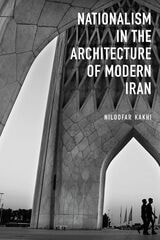
Nationalism in Architecture of Modern Iran
Niloofar Kakhi
Gingko, 2023
Nationalism in Architecture of Modern Iran is the first comprehensive book on modern architecture in Iran to be published in English. It addresses the relationship between nationalism and architecture in Iran and discusses the role Western architects played in the development of modern architecture in the country while introducing some of the most significant and recent projects in Iran. It investigates what it means to design a building that bears an Iranian or Islamic-Iranian identity and how to construct a conceptual platform for critically assessing representations of national identity in contemporary architecture. This book will directly help practicing architects and policymakers of the built environment, especially in Iran, as well as give a comprehensive understanding of the modern history of architecture in Iran to art historians and a broader audience. It introduces some of the most significant and recent projects in Iran for the first time.

Nationalism in India
Past and PresentIrfan Habib
Seagull Books, 2023
What makes a people living in a mere “geographical expression” a nation? From the French Revolution onwards, the word “nation” came to denote a people who wish to be collectively free. But free from what—colonial rule and inequality? Or religious and cultural diversity?
In this timely and succinct essay, Irfan Habib charts India’s struggle to consolidate a nationalist identity, to identify what it sought to be free from. Even as the colonial regime denied the very possibility of nationalism in the subcontinent, opposition to British rule fomented just such a sentiment. But resistance against colonial exploitation alone could not unify the Indian people. Internal inequalities—caste, poverty, religious bigotry—remained (and still remain) to be tackled.

Nationalismes, antisémitismes et débats autour de l’art juif
De quelques critiques d’art au temps de l’École de Paris (1925–1933)Alessandro Gallicchio
Diaphanes, 2023
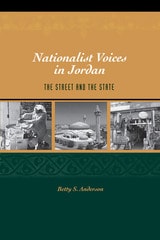
Nationalist Voices in Jordan
The Street and the StateBy Betty S. Anderson
University of Texas Press, 2005
According to conventional wisdom, the national identity of the Jordanian state was defined by the ruling Hashemite family, which has governed the country since the 1920s. But this view overlooks the significant role that the "Arab street"—in this case, ordinary Jordanians and Palestinians—played and continues to play in defining national identity in Jordan and the Fertile Crescent as a whole. Indeed, as this pathfinding study makes clear, "the street" no less than the state has been a major actor in the process of nation building in the Middle East during and after the colonial era.
In this book, Betty Anderson examines the activities of the Jordanian National Movement (JNM), a collection of leftist political parties that worked to promote pan-Arab unity and oppose the continuation of a separate Jordanian state from the 1920s through the 1950s. Using primary sources including memoirs, interviews, poetry, textbooks, and newspapers, as well as archival records, she shows how the expansion of education, new jobs in the public and private sectors, changes in economic relationships, the establishment of national militaries, and the explosion of media outlets all converged to offer ordinary Jordanians and Palestinians (who were under the Jordanian government at the time) an alternative sense of national identity. Anderson convincingly demonstrates that key elements of the JNM's pan-Arab vision and goals influenced and were ultimately adopted by the Hashemite elite, even though the movement itself was politically defeated in 1957.

Nationalizing Empires
Stefan Berger
Central European University Press, 2015

Nationalizing a Borderland
War, Ethnicity, and Anti-Jewish Violence in East Galicia, 1914–1920Alexander Victor Prusin
University of Alabama Press, 2005
Nationalizing a Borderland enriches understanding of ethnic conflict by examining the factors in the Austro-Hungarian province of Galicia between 1914 and 1920 that led to the rise of xenophobic nationalism and to the ethnocide of World War II. From Russian, Polish, Ukrainian, and Austrian archival sources, Prusin argues that while the violence inflicted upon Jews during that period may at first seem irrational and indiscriminate, a closer examination reveals that it was generated by traditional antisemitism and by the security concerns of the Russian and Polish militaries in the front zone. This violence, Prusin contends, served as a means of reshaping the socio-economic and political space of the province by diminishing Jewish cultural and economic influence.
Native Acts
Law, Recognition, and Cultural AuthenticityJoanne Barker
Duke University Press, 2011
Native Agency
Indians in the Bureau of Indian AffairsValerie Lambert
University of Minnesota Press, 2022
What happens when American Indians take over an institution designed to eliminate them?
The Bureau of Indian Affairs was hatched in the U.S. Department of War to subjugate and eliminate American Indians. Yet beginning in the 1970s, American Indians and Alaska Natives took over and now run the agency. Choctaw anthropologist Valerie Lambert argues that, instead of fulfilling settler-colonial goals, the Indians in the BIA have been leveraging federal power to fight settler colonialism, battle white supremacy, and serve the interests of their people.
Although the missteps and occasional blunders of the Indians in the BIA have at times damaged the federal–Indian relationship and fueled the ire of their people, and although the BIA is massively underfunded, Indians began crafting the BIA into a Native agency by reformulating the meanings of concepts that lay at its heart—concepts such as tribal sovereignty, treaties, the trust responsibility, and Indian land. At the same time, they pursued actions to strengthen and bolster tribes, to foster healing, to fight the many injustices Indians face, and to restore the Indian land base.
This work provides an essential national-level look at an intriguing and impactful form of Indigenous resistance. It describes, in great detail, the continuing assaults made on Native peoples and tribal sovereignty in the United States during the twenty-first century, and it sketches the visions of the future that Indians at the BIA and in Indian Country have been crafting for themselves.
Native American Autobiography
An AnthologyArnold Krupat
University of Wisconsin Press, 1994
Native American Autobiography is the first collection to bring together the major autobiographical narratives by Native American people from the earliest documents that exist to the present. The thirty narratives included here cover a range of tribes and cultural areas, over a span of more than 200 years.
From the earliest known written memoir—a 1768 narrative by the Reverend Samson Occom, a Mohegan, reproduced as a chapter here—to recent reminiscences by such prominent writers as N. Scott Momaday and Gerald Vizenor, the book covers a broad range of Native American experience. The sections include “Traditional Lives;” “The Christian Indians, from the Eighteenth Century to Indian Removal, 1830;” “The Resisting Indians, from Indian Removal to Wounded Knee, 1830-90;” “The Closed Frontier, 1890-;” “The Anthropologists' Indians, 1900-;” “‘Native American Renaissance,’ 1968-;” and “Traditional Lives Today.” Editor Arnold Krupat provides a general introduction, a historical introduction to each of the seven sections, extensive headnotes for each selection, and suggestions for further reading, making this an ideal resource for courses in American literature, history, anthropology, and Native American studies. General readers, too, will find a wealth of fascinating material in the life stories of these Native American men and women.
"This is the first comprehensive anthology of American Indian autobiography ever published. It will be of interest to virtually anyone teaching or studying the literatures of the native peoples of North America, as well as to a general audience, because of the informative, literate introductions and the absorbing narratives themselves."—William L. Andrews, series editor