Results by title
5448 books match the query 'History and criticism' and 117 start with n
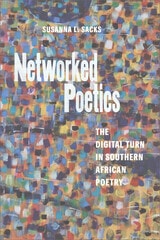
Networked Poetics
The Digital Turn in Southern African PoetrySusanna L. Sacks
University of Massachusetts Press, 2024
Winner of the 2025 MLA Scaglione Prize for African Studies
Simultaneously transnational and local, poetry in the twenty-first century is produced across digital networks, shaped through local communities, and evaluated on a global scale. It might start on social media, where a video of a poet circulates and goes viral, gaining international attention without ever going through traditional modes of publication. In Networked Poetics, Susanna L. Sacks introduces readers to the southern African poetry scene in Malawi, Zimbabwe, and South Africa, illustrating how contemporary poetry is shaped, from inception to canonization, by the influence of digital media publication.
Interweaving ethnographic observation and extensive literary analysis, Sacks demonstrates that, as more artists in Africa reach wider audiences through online publication, poetic form has shifted to reflect social media’s aesthetic norms of urgency, immediacy, and populism. These changes have, in turn, challenged elite processes of valuation, forcing literary institutions like prizes, festivals, and curricula to accommodate the digital turn.
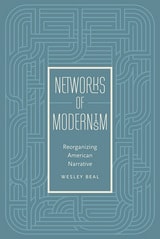
Networks of Modernism
Reorganizing American NarrativeWesley Beal
University of Iowa Press, 2015
In this ferment of social upheaval and technological change, the moderns found what we would today term “the network,” though they did not have the vocabulary for it that we do now, to be a versatile model for their aesthetic experiments in representing social space and social relations. Whether they used the figuration of the network as a kind of formal experiment to negotiate the tensions between dispersal and unity, fragment and totality, or took the network as a subject in itself, as seen when dealing with crowds or public spaces, the network was a way for writers and artists to conceptualize and explore their rapidly changing society. Through readings of the works of Randolph Bourne, Jean Toomer, Anita Loos, John Dos Passos, and Nathanael West, Networks of Modernism positions the network as the defining figure of American modernist aesthetics and explores its use as a conceptual tool used to think through the rapid changes in American society.
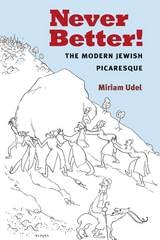
Never Better!
The Modern Jewish PicaresqueMiriam Udel
University of Michigan Press, 2016
The characters defined by this dual consciousness constitute a new kind of protagonist: a distinctively Jewish scapegrace whom Udel denominates the polit or refugee. Cousin to the Golden Age Spanish pícaro, the polit is a socially marginal figure who narrates his own story in discrete episodes, as if stringing beads on a narrative necklace. A deeply unsettled figure, the polit is allergic to sentimentality and even routine domesticity. His sequential misadventures point the way toward the heart of the picaresque, which Jewish authors refashion as a vehicle for modernism—not only in Yiddish, but also in German, Russian, English and Hebrew. Udel draws out the contours of the new Jewish picaresque by contrasting it against the nineteenth-century genre of progress epitomized by the Bildungsroman.
While this book is grounded in modern Jewish literature, its implications stretch toward genre studies in connection with modernist fiction more generally. Udel lays out for a diverse readership concepts in the history and theory of the novel while also explicating the relevant particularities of Jewish literary culture. In addressing the literary stylistics of a “minor” modernism, this study illuminates how the adoption of a picaresque sensibility allowed minority authors to write simultaneously within and against the literary traditions of Europe.
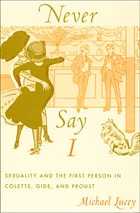
Never Say I
Sexuality and the First Person in Colette, Gide, and ProustMichael Lucey
Duke University Press, 2006
Considering novels along with journalism, theatrical performances, correspondences, and face-to-face encounters, Lucey focuses on the interlocking social and formal dimensions of using the first person. He argues for understanding the first person not just as a grammatical category but also as a collectively produced social artifact, demonstrating that Proust’s, Gide’s, and Colette’s use of the first person involved a social process of assuming the authority to speak about certain issues, or on behalf of certain people. Lucey reveals these three writers as both practitioners and theorists of the first person; he traces how, when they figured themselves or other first persons in certain statements regarding same-sex identity, they self-consciously called attention to the creative effort involved in doing so.
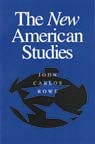
New American Studies
John Carlos Rowe
University of Minnesota Press, 2002
A clarion call for a more theoretically and politically informed approach to American Studies
John Carlos Rowe, a leading American Studies scholar, has examined his field of study and declared it not ready for the twenty-first century. In The New American Studies, Rowe demands a reinvention of the discipline that includes a commitment to making it more theoretically informed, and he draws on the work of cultural critics, postmodernist theorists, and scholars in ethnic, gender, gay, and media studies. Rowe asserts that with American Studies’s strong history of social criticism and practical pedagogy it is an easy leap to the type of progressive commitments characteristic of these areas of scholarship.
The New American Studies is a compelling combination of theory and application, synthesis and polemic. Rowe traces the evolution of American Studies over the last quarter century and looks to the future, placing the field in a postnationalist context that encompasses all of the Americas and the disparate cultural zones within. He then demonstrates the kind of literary and cultural interpretation he calls for, examining subjects ranging from Hawthorne’s and James’s responses to nineteenth-century sexual mores, to the ways television legitimated itself in its first few decades, to the Elián González custody case.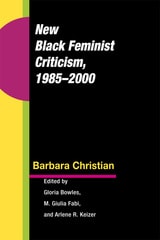
New Black Feminist Criticism, 1985-2000
Barbara Christian. Edited by Gloria Bowles, M. Giulia Fabi, and Arlene Keizer
University of Illinois Press, 2007
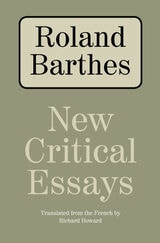
New Critical Essays
Roland Barthes
Northwestern University Press, 2009
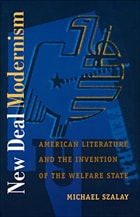
New Deal Modernism
American Literature and the Invention of the Welfare StateMichael Szalay
Duke University Press, 2000
Szalay situates his study within a liberal culture bent on security, a culture galvanized by its imagined need for private and public insurance.
Taking up prominent exponents of social and economic security—such as Franklin Delano Roosevelt, John Maynard Keynes, and John Dewey—Szalay demonstrates how the New Deal’s revision of free-market culture required rethinking the political function of aesthetics. Focusing in particular on the modernist fascination with the relation between form and audience, Szalay offers innovative accounts of Busby Berkeley, Jack London, James M. Cain, Robert Frost, Ayn Rand, Betty Smith, and Gertrude Stein, as well as extended analyses of the works of Ernest Hemingway, John Steinbeck, and Richard Wright.

New Hard-Boiled Writers
1970s–1990sLeRoy Lad Panek
University of Wisconsin Press, 2000
The author comments both on the way the hard-boiled story has changed over the past three decades and examines the work of ten significant contemporary hard-boiled writers. Chapters on Robert B. Parker, James Crumley, Loren Estleman, Sara Paretsky, Sue Grafton, Carl Hiaasen, Earl Emerson, Robert Crais, James Lee Burke, and Walter Mosley demonstrate how these writers have used the hard-boiled hero to make powerful statements about life in the last quarter of the twentieth century.
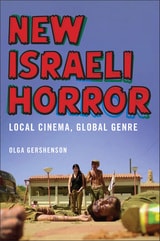
New Israeli Horror
Local Cinema, Global GenreOlga Gershenson
Rutgers University Press, 2024
Before 2010, there were no Israeli horror films. Then distinctly Israeli serial killers, zombies, vampires, and ghosts invaded local screens. The next decade saw a blossoming of the genre by young Israeli filmmakers. New Israeli Horror is the first book to tell their story. Through in-depth analysis, engaging storytelling, and interviews with the filmmakers, Olga Gershenson explores their films from inception to reception. She shows how these films challenge traditional representations of Israel and its people, while also appealing to audiences around the world.
Gershenson introduces an innovative conceptual framework of adaptation, which explains how filmmakers adapt global genre tropes to local reality. It illuminates the ways in which Israeli horror borrows and diverges from its international models. New Israeli Horror offers an exciting and original contribution to our understanding of both Israeli cinema and the horror genre.
A companion website to this book is available at https://websites.umass.edu/newisraelihorror/
Book trailer: https://youtu.be/oVJsD0QCORw (https://youtu.be/oVJsD0QCORw)
New Latina Narrative
The Feminine Space of Postmodern EthnicityEllen McCracken
University of Arizona Press, 1999
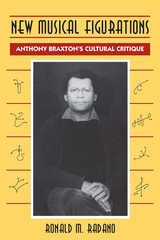
New Musical Figurations
Anthony Braxton's Cultural CritiqueRonald M. Radano
University of Chicago Press, 1993
Born in 1945, Braxton is not only a virtuoso jazz saxophonist but an innovative theoretician and composer of experimental art music. His refusal to conform to the conventions of official musical culture has helped unhinge the very ideologies on which definitions of "jazz," "black music," "popular music," and "art music" are founded.
New Musical Figurations gives the richest view available of this many-sided artist. Radano examines Braxton's early years on the South Side of Chicago, whose vibrant black musical legacy inspired him to explore new avenues of expression. Here is the first detailed history of Braxton's central role in the Association for the Advancement of Creative Musicians, the principal musician-run institution of free jazz in the United States. After leaving Chicago, Braxton was active in Paris and New York, collaborating with Philip Glass, Steve Reich, Frederic Rzewski, and other composers affiliated with the experimental-music movement. From 1974 to 1981, he gained renown as a popular jazz performer and recording artist. Since then he has taught at Mills College and Wesleyan University, given lectures on his theoretical musical system, and written works for chamber groups as well as large, opera-scale pieces.
The neglect of radical, challenging figures like Braxton in standard histories of jazz, Radano argues, mutes the innovative voice of the African-American musical tradition. Refreshingly free of technical jargon, New Musical Figurations is more than just another variation on the same jazz theme. Rather, it is an exploratory work as rich in theoretical vision as it is in historical detail.
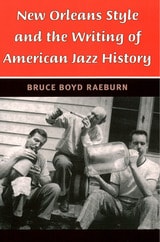
New Orleans Style and the Writing of American Jazz History
Bruce Boyd Raeburn
University of Michigan Press, 2009
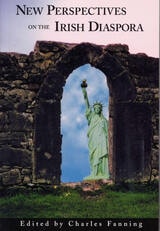
New Perspectives on the Irish Diaspora
Edited by Charles Fanning
Southern Illinois University Press, 2000
In New Perspectiveson the Irish Diaspora, Charles Fanning incorporates eighteen fresh perspectives on the Irish diaspora over three centuries and around the globe. He enlists scholarly tools from the disciplines of history, sociology, literary criticism, folklore, and culture studies to present a collection of writings about the Irish diaspora of great variety and depth.
New Perspectives on the Life and Art of Richard Crashaw
Edited by John R. Roberts
University of Missouri Press, 1990
Richard Crashaw (1612/13-1649) has been one of the most neglected, misunderstood, misread, and unappreciated of the so-called major metaphysical poets. Critics have long labeled Crashaw’s poetry “foreign,” “grotesque,: “deficient in judgment and taste,” and even “sexually perverse.” In recent years, however, Crashaw’s role in providing an understanding and appreciation of seventeenth century poetic theory and aesthetics has become increasingly more evident to literary scholars and critics. They now generally agree that his poetry occupies a permanent and significant position in the intellectual, religious, and literary history of his time.
This collection of ten original critical and historical essays on the life and art of Crashaw will serve as a further impetus to the renewed interest in Crashaw. In the introduction, John R. Roberts and Lorraine M. Roberts survey past Crashavian criticism, giving the reader an overall view of the critical response to Crashaw and his work. The introduction also signals new directions for future scholarship. Scholars, critics, and students of metaphysical, baroque, and religious poetry will find these essays engaging and insightful.
New Science, New World
Denise Albanese
Duke University Press, 1996
Albanese reads the inaugurators of the scientific revolution against the canonical authors of early modern literature, discussing Galileo’s Dialogue on the Two Chief World Systems and Bacon’s New Atlantis as well as Milton’s Paradise Lost and Shakespeare’s The Tempest. She examines how the newness or “novelty” of investigating nature is expressed through representations of the New World, including the native, the feminine, the body, and the heavens. “New” is therefore shown to be a double sign, referring both to the excitement associated with a knowledge oriented away from past practices, and to the oppression and domination typical of the colonialist enterprise. Exploring the connections between the New World and the New Science, and the simultaneously emerging patterns of thought and forms of writing characteristic of modernity, Albanese insists that science is at its inception a form of power-knowledge, and that the modern and postmodern division of “Two Cultures,” the literary and the scientific, has its antecedents in the early modern world.
New Science, New World makes an important contribution to feminist, new historicist, and cultural materialist debates about the extent to which the culture of seventeenth-century England is proto-modern. It will offer scholars and students from a wide range of fields a new critical model for historical practice.
New Spain, New Literatures
Luis Martín-Estudillo
Vanderbilt University Press, 2010
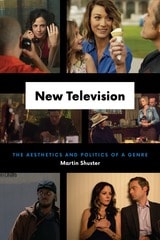
New Television
The Aesthetics and Politics of a GenreMartin Shuster
University of Chicago Press, 2017
Philosopher Martin Shuster argues that television is the modern art form, full of promise and urgency, and in New Television, he offers a strong philosophical justification for its importance. Through careful analysis of shows including The Wire, Justified, and Weeds, among others; and European and Anglophone philosophers, such as Stanley Cavell, Hannah Arendt, Martin Heidegger, and John Rawls; Shuster reveals how various contemporary television series engage deeply with aesthetic and philosophical issues in modernism and modernity. What unifies the aesthetic and philosophical ambitions of new television is a commitment to portraying and exploring the family as the last site of political possibility in a world otherwise bereft of any other sources of traditional authority; consequently, at the heart of new television are profound political stakes.
New Troy
Fantasies Of Empire In The Late Middle AgesSylvia Federico
University of Minnesota Press, 2003
Examines the political and literary uses of the Trojan legend in the medieval period
England in the late fourteenth century witnessed a large-scale social revolt, a lingering and seemingly hopeless war with France, and fierce factional conflicts in royal politics and London civic government—struggles in which all parties sought to justify their actions by claiming historical precedent. How the Trojan legend figured in these claims—and in competing assertions of authorial legitimacy, nationhood, and rule in the later Middle Ages—is the complex nexus of history, myth, literature, and identity that Sylvia Federico explores in this ambitious book.
During the late medieval period, many European political and social groups took great pains to associate themselves with the ancient city; the claim on Troy, Federico asserts, was crucial to nationhood and was always a political act. Her book examines the poetry and prose of several late medieval authors, focusing particularly on how Chaucer’s use of the Trojan legend helped to set the terms by which the Ricardian and Lancastrian periods were distinguished, and further helped to establish English literary history as a noble precedent in its own right. Federico’s book affords remarkable insight into the workings of the medieval historical imagination.
New Visions of Community in Contemporary American Fiction
Tan, Kingsolver, Castillo, MorrisonMagali Cornier Michael
University of Iowa Press, 2006

New Women, New Novels
Ardis, Ann
Rutgers University Press, 1990
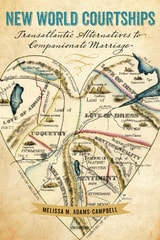
New World Courtships
Transatlantic Alternatives to Companionate MarriageMelissa M. Adams-Campbell
Dartmouth College Press, 2015
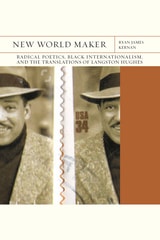
New World Maker
Radical Poetics, Black Internationalism, and the Translations of Langston HughesRyan James Kernan, foreword by Robin D. G. Kelley
Northwestern University Press, 2022
Through original research and close readings alert to the foreign prosody underlying Hughes’s work, New World Maker recuperates his political writing, which had been widely maligned by Cold War detractors and adherents of New Criticism, and affirms his place as a progenitor of African diasporic literature and within the pantheon of US modernists. Demonstrating the integral part translation played in Hughes’s creative process, this book challenges a number of common assumptions about this canonical thinker and offers important insights for scholars of African diasporic literature, comparative literature, and American, Caribbean, and translation studies.
New World, Known World
Shaping Knowledge in Early Anglo-American WritingDavid Read
University of Missouri Press, 2005
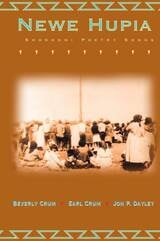
Newe Hupia
Shoshoni Poetry SongsBeverly Crum, Earl Crum, and Jon P. Dayley
Utah State University Press, 2002
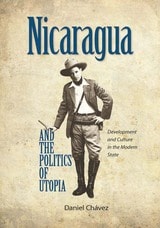
Nicaragua and the Politics of Utopia
Development and Culture in the Modern StateDaniel Chavez
Vanderbilt University Press, 2015
For each era, Chavez reveals the ways Nicaraguan popular culture adapted and interpreted the new political order, shaping, critiquing, or amplifying the regime's message of stability and prosperity for the people. These tactics of interpretation, otherwise known as meaning-making, became all-important for the Nicaraguan people, as they opposed the autocracy of Somocismo, or complemented the Sandinistas, or struggled to find their place in the Neoliberal era. In every case, Chavez shows the reflective nature of cultural production and its pursuit of utopian idealism.
Nice and Noir
Contemporary American Crime FictionRichard B. Schwartz
University of Missouri Press, 2002
Nightmares in the Dream Sanctuary
War and the Animated FilmDonna Kornhaber
University of Chicago Press, 2019
Generation after generation, artists have turned to this most fantastical of mediums to capture real-life horrors they can express in no other way. From Chinese animators depicting the Japanese invasion of Shanghai to Bosnian animators portraying the siege of Sarajevo, from African animators documenting ethnic cleansing to South American animators reflecting on torture and civil war, from Vietnam-era protest films to the films of the French Resistance, from firsthand memories of Hiroshima to the haunting work of Holocaust survivors, the animated medium has for more than a century served as a visual repository for some of the darkest chapters in human history. It is a tradition that continues even to this day, in animated shorts made by Russian dissidents decrying the fighting in Ukraine, American soldiers returning from Iraq, or Middle Eastern artists commenting on the Israeli-Palestinian conflict, the Arab Spring, or the ongoing crisis in Yemen.
Nightmares in the Dream Sanctuary: War and the Animated Film vividly tells the story of these works and many others, covering the full history of animated film and spanning the entire globe. A rich, serious, and deeply felt work of groundbreaking media history, it is also an emotional testament to the power of art to capture the endurance of the human spirit in the face of atrocity.
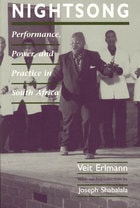
Nightsong
Performance, Power, and Practice in South AfricaVeit Erlmann
University of Chicago Press, 1996
Veit Erlmann provides the first comprehensive interpretation of isicathamiya performance practice and its relation to the culture and consciousness of the Zulu migrant laborers who largely compose its choirs. In songs and dances, the performers oppose the class and racial oppression that reduces them to "labor units." At the same time, Erlmann argues, the performers rework dominant images to symbolically reconstruct their "home," an imagined world of Zulu rural tradition and identity.
By contrasting the live performance of isicathamiya to its reproduction in mass media, recordings, and international concerts, Erlmann addresses important issues in performance studies and anthropology, and looks to the future of isicathamiya live performance in the new South Africa. Featuring an Introduction by Joseph Shabalala, the lead singer and founder of Ladysmith Black Mambazo, this book will be essential reading for anyone interested in the study of music, performance, popular culture, or South Africa.
Nimble Believing
Dickinson and the UnknownJames McIntosh
University of Michigan Press, 2004
--Harold Bloom, Genius
" . . . a truly literary study in the largest, most humane, sense. Instead of subjecting poems to the distortions of theory, it brings biography, theology, psychology, and cultural history to bear on the intricacies of language, where all the issues of the poet's life and work converge, contend, and seek resolution."
--Albert Gelpi, American Literature
" . . . insightful readings of many of Dickinson's difficult poems and . . . a significant contribution to Dickinson studies."
---Choice
"McIntosh shows the power of Dickinson's religious quest in word, in verse, and in truth. He shows that she was much more than an ever-adolescent angry rebel trying to subvert the religious oppression of benighted Amherst neighbors."
---Emily Dickinson Journal
Nineteenth-Century Women at the Movies
Adapting Classic Women's Fiction to FilmBarbara Tepa Lupack
University of Wisconsin Press, 1999
This volume’s twelve essays offer critical insights not only into the visions of the novelist and the filmmaker but also into contemporary cultural concerns. The adaptations of novels by eight popular writers are analyzied: Mary Shelley, Jane Austen, Charlotte Brontë, Emily Brontë, Harriet Beecher Stowe, Louisa May Alcott, Ouida, and George Eliot.
No Machos or Pop Stars
When the Leeds Art Experiment Went PunkGavin Butt
Duke University Press, 2022
No More Chainsaws
Feminist Criticism and the New Wave of Women's Horror CinemaDan Vena
Rutgers University Press, 2026
“Welcome to the Golden Age of Women-Directed Horror.” Over the last fifteen years, there has been a sustained global influx of women artists working in mainstream and independent horror cinemas earning notable public and industry acclaim. As a result, now, for the first time in horror history, there is also a concentrated corpus of films that explicitly address topics of identity, sexuality, trauma, and monstrosity from women’s perspectives. No More Chainsaws offers an in-depth analysis of some of the earliest and underrated releases within this New Wave of women’s horror cinema: Catherine Hardwicke’s Twilight (2008), Karyn Kusama’s Jennifer’s Body (2009), Jennifer and Sylvia Soska’s American Mary (2012), and Kimberly Peirce’s Carrie (2013). No More Chainsaws articulates the ways in which these contemporary films attempt to liberate horror from an overdetermining gendered lexicon of violence and terror.
No More Separate Spheres!
A Next Wave American Studies ReaderCathy N. Davidson and Jessamyn Hatcher, eds.
Duke University Press, 2002
Using American literary studies as a way to talk about changing categories of analysis, these essays discuss the work of such major authors as Catharine Sedgwick, Herman Melville, Pauline E. Hopkins, Frederick Douglass, Catharine Beecher, Ralph Waldo Emerson, W. E. B. Du Bois, Sarah Orne Jewett, Nathaniel Hawthorne, María Ampara Ruiz de Burton, Ann Petry, Gwendolyn Brooks, Cynthia Kadohata, Chang Rae-Lee, and Samuel Delany. No More Separate Spheres! shows scholars and students different ways that gender can be approached and incorporated into literary interpretations. Feisty and provocative, it provides a forceful analysis of the limitations of any theory of gender that applies only to women, and urges suspicion of any argument that posits “woman” as a universal or uniform category.
By bringing together essays from the influential special issue of American Literature of the same name, a number of classic essays, and several new pieces commissioned for this volume, No More Separate Spheres! will be an ideal teaching tool, providing a key supplementary text in the American literature classroom.
Contributors. José F. Aranda, Lauren Berlant, Cathy N. Davidson, Judith Fetterley, Jessamyn Hatcher, Amy Kaplan, Dana D. Nelson, Christopher Newfield, You-me Park, Marjorie Pryse, Elizabeth Renker, Ryan Schneider, Melissa Solomon, Siobhan Somerville, Gayle Wald , Maurice Wallace
No One to Meet
Imitation and Originality in the Songs of Bob DylanRaphael Falco
University of Alabama Press, 2022
WINNER OF THE ELIZABETH AGEE PRIZE IN AMERICAN LITERATURE
A groundbreaking appreciation of Dylan as a literary practitioner.
The literary establishment tends to regard Bob Dylan as an intriguing, if baffling, outsider. That changed overnight when Dylan was awarded the 2016 Nobel Prize in Literature, challenging us to think of him as an integral part of our national and international literary heritage. No One to Meet: Imitation and Originality in the Songs of Bob Dylan places Dylan the artist within a long tradition of literary production and offers an innovative way to understand his unique and often controversial methods of composition.
Dylan expert Raphael Falco traces the similarities between the way Dylan borrows, digests, and transforms traditional songs and what Renaissance writers called imitatio. Although Dylan’s lyrical postures may suggest an avant-garde consciousness, No One to Meet shows that Dylan’s creative process creatively expands methods used by classical and Renaissance authors.
Drawing on numerous examples, including Dylan’s previously unseen manuscript excerpts and archival materials, Raphael Falco illuminates how the ancient process of poetic imitation, handed down from Greco-Roman antiquity, allows us to make sense of Dylan’s musical and lyrical technique. By placing Dylan firmly in the context of an age-old poetic practice, No One to Meet deepens our appreciation of Dylan’s songs and allows us to celebrate him as what he truly is: a great writer.
No One's Witness
A Monstrous PoeticsSyd Zolf
Duke University Press, 2021

No Place Else
Explorations in Utopian and Dystopian FictionEric S Rabkin
Southern Illinois University Press, 1983
Writers have created fictions of social perfection at least since Plato’s Republic. Sir Thomas More gave this thread of intellectual history a name when he called his contribution to it Utopia, Greek for noplace.
With each subsequent author cognizant of his predecessors and subject to altered real-world conditions which suggest ever-new causes for hope and alarm, “no place” changed. The fourteen essays presented in this book critically assess man’s fascination with and seeking for “no place.”
“In discussing these central fictions, the contributors see ‘no place’ from diverse perspectives: the sociological, the psychological, the political, the aesthetic. In revealing the roots of these works, the contributors cast back along the whole length of utopian thought. Each essay stands alone; together, the essays make clear what ‘no place’ means today. While it may be true that ‘no place’ has always seemed elsewhere or elsewhen, in fact all utopian fiction whirls contemporary actors through a costume dance no place else but here.”—from the Preface
The contributors are Eric S. Rabkin, B. G. Knepper, Thomas J.Remington, Gorman Beauchamp, William Matter, Ken Davis, Kenneth M. Roemer, William Steinhoff, Howard Segal, Jack Zipes, Kathleen Woodward, Merritt Abrash, and James W. Bittner.
No Short Journeys
The Interplay of Cultures in the History and Literature of the BorderlandsCecil Robinson
University of Arizona Press, 1992
"In graceful prose, the longtime English professor leads readers on a leisurely stroll through the literary landscape of the Southwest."—Journal of Arizona History
"Does more for reconstructing American literature than any of the contemporary American literature anthologies that are on the market today. . . . Strongly recommended."—Choice
Noir Anxiety
Kelly Oliver
University of Minnesota Press, 2002
Investigates the fears and desires about sexuality and racial identity that shape film noir.
Among the elements that define the classic film noir-chiaroscuro lighting, voice-over narration, and such archetypal characters as the world-weary private eye and the femme fatale-perhaps no element is more responsible for the genre’s continued popularity among movie buffs, filmmakers, and critics than the palpable sense of anxiety that emanates from the screen. Because the genre emerged in the shadow of the Second World War, this profound psychological and philosophical unease is usually ascribed either to postwar fears about the atomic bomb or to the reactions of returning soldiers to a new social landscape. In Noir Anxiety, however, Kelly Oliver and Benigno Trigo interpret what has been called the "free-floating anxiety" of film noir as concrete apprehensions about race and sexuality.
Applying feminist and postcolonial psychoanalytic theory to traditional noir films (Murder, My Sweet; The Lady from Shanghai; Vertigo; and Touch of Evil) and the "neo-noirs" of the 1970s, 1980s, and 1990s (Chinatown, Devil in a Blue Dress, and Bound), the authors uncover a rich array of unconscious worries and desires about ambiguous sexual, racial, and national identities, often displaced onto these films’ narrative and stylistic components. In particular, Oliver and Trigo focus on the looming absence of the mother figure within the genre and fears about maternal sexuality and miscegenation. Drawing on the work of Freud and Julia Kristeva, Noir Anxiety locates film noir’s studied ambivalence toward these critical themes within the genre’s social, historical, and cinematic context.
Nomadic Voices of Exile
Feminine Identity in the Francophone Literature of the MaghrebValérie K. Orlando
Ohio University Press, 1999
Contemporary French writing on the Maghreb—that part of Africa above the Sahara—is truly postmodern in scope, the rich product of multifaceted histories promoting the blending of two worlds, two identities, two cultures, and two languages.
Nomadic Voices of Exile demonstrates how that postmodern sentiment has altered perceptions concerning Maghrebian feminine identity since the end of the French-colonial era. The authors discussed here, both those who reside in the Maghreb and those who have had to seek asylum in France, find themselves at the intersection of French and North African viewpoints, exposing a complicated world that must be negotiated and redefined.
In looking at the authors whose writings extend beyond a gender-based dialogue to include such issues as race, politics, religion, and history, Valérie Orlando explores the rich and changing landscape of the literature and the culture, addresses the stereotypes that have defined the past, and navigates the space of the exiled, a space previously at the peripheries of Western discourse.
Nomadic Voices of Exile will be useful to a variety of classrooms—women’s studies, Middle East studies, Francophone literature, Third World women writers—and to anyone interested in postcolonial and postmodern theory and philosophy and the history of the Maghreb through literature.
Nomodeiktes
Greek Studies in Honor of Martin OstwaldRalph M. Rosen and Joseph Farrell, Editors
University of Michigan Press, 1994
Nomodeiktes: Greek Studies in Honor of Martin Ostwald offers fascinating discussions of many of these areas, and it helps illuminate ways in which modern perceptions of this complex period are right and are wrong. Important observations are made on Greek historians and historiography, on politics and society, and on Greek philosophy and literature. The analyses of these major areas of investigation will be very useful for all interested in this centrally important period and for those who know the lure of that vivid and compelling city, Athens.
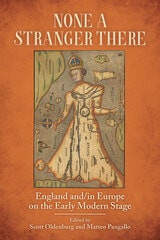
None a Stranger There
England and/in Europe on the Early Modern StageEdited by Scott Oldenburg and Matteo Pangallo
University of Alabama Press, 2025
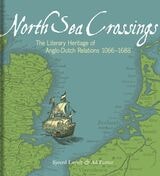
North Sea Crossings
The Literary Heritage of Anglo-Dutch Relations 1066–1688Sjoerd Levelt and Ad Putter
Bodleian Library Publishing, 2022
This richly illustrated book tells the story of cultural exchange between the people of the Low Countries and England in the Middle Ages and the Early Modern period, revealing how Anglo-Dutch connections changed the literary landscape on both sides of the North Sea.
Ranging from the Norman Conquest of 1066 to the “Glorious Revolution” of 1688, North Sea Crossings uncovers the lasting impact of contacts and collaborations between Dutch and English speakers on historical writing, map-making, manuscript production, and early printing. The literary heritage of Anglo-Dutch relations is explored and lavishly illustrated through a unique collection of manuscripts, early prints, maps, and other treasures from the Bodleian Library.
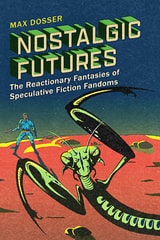
Nostalgic Futures
The Reactionary Fantasies of Speculative Fiction FandomsMax Dosser
Rutgers University Press, 2026
Speculative fiction imagines impossible futures and alternative pasts, alien species and angelic monsters, technological marvels and magical solutions. In recent years, however, many in its fandoms have protested the inclusion of nonwhite, nonmale, and nonheterosexual characters as betrayals of their beloved media for the sake of “wokeness.” Nostalgic Futures: The Reactionary Fantasies of Speculative Fiction Fandoms examines how contemporary fan controversies— particularly those surrounding gender, race, and sexuality in speculative fiction media—intersect with reactionary movements within and beyond fandom. This book explores how the nostalgic fantasies of fans and far-right movements contribute to broader reactionary discourses, shaping not only the past they long for but the future they fear. From the Hugo Awards and PuppyGate to Star Wars’ #NotMyJedi to Mass Effect and The Last of Us boycotts, Nostalgic Futures reveals how speculative fiction fandom has become a site of contestation over our visions of the past, present, and future.

Not Altogether Human
Pantheism and the Dark Nature of the American RenaissanceHardack Richard
University of Massachusetts Press, 2012
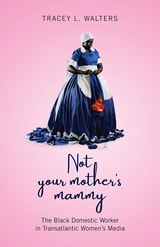
Not Your Mother's Mammy
The Black Domestic Worker in Transatlantic Women’s MediaTracey L Walters
Rutgers University Press, 2021
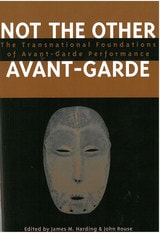
Not the Other Avant-Garde
The Transnational Foundations of Avant-Garde PerformanceEdited by James M. Harding and John Rouse
University of Michigan Press, 2010
Not the Other Avant-Garde is groundbreaking in both avant-garde studies and performance studies and will be a valuable contribution to the fields of theater studies, modernist studies, art history, literature, and music history.
"Joins the growing field of critical and transnational theories on the arts. . . its grounding in live performance and its foregrounding of the performative human body presents a new theoretical paradigm that is pathbreaking."
--Haiping Yan, University of California, Los Angeles
James M. Harding is Associate Professor of English at Mary Washington University. He is author of Adorno and "A Writing of the Ruins": Essays on Modern Aesthetics and Anglo-American Literature and Culture and editor of Contours of the Theatrical Avant-Garde: Performance and Textuality.
John Rouse is Associate Professor of Theater at the University of California, San Diego. He is author of Brecht and the West German Theatre.
Notes on Nowhere
Feminism, Utopian Logic, and Social TransformationJennifer Burwell
University of Minnesota Press, 1997
Notes on Nowhere was first published in 1997. Minnesota Archive Editions uses digital technology to make long-unavailable books once again accessible, and are published unaltered from the original University of Minnesota Press editions.
The term utopia implies both "good place" and "nowhere." Since Sir Thomas More wrote Utopia in 1516, debates about utopian models of society have sought to understand the implications of these somewhat contradictory definitions. In Notes on Nowhere, author Jennifer Burwell uses a cross section of contemporary feminist science fiction to examine the political and literary meaning of utopian writing and utopian thought.
Burwell provides close readings of the science fiction novels of five feminist writers-Marge Piercy, Sally Gearhart, Joanna Russ, Octavia Butler, and Monique Wittig-and poses questions central to utopian writing: Do these texts promote a tradition in which narratives of the ideal society have been used to hide rather than reveal violence, oppression, and social divisions? Can a feminist critical utopia offer a departure from this tradition by using utopian narratives to expose contradiction and struggle as central aspects of the utopian impulse? What implications do these questions have for those who wish to retain the utopian impulse for emancipatory political uses?
As one way of answering these questions, Burwell compares two "figures" that inform utopian writing and social theory. The first is the traditional abstract "revolutionary" subject who contradicts existing conditions and who points us to the ideal body politic. The second, "resistant," subject is partial, concrete, and produced by conditions rather than operating outside of them. In analyzing contemporary changes in the subject's relationship to social space, Burwell draws from and revises "standpoint approaches" that tie visions of social transformation to a group's position within existing conditions.
By exploring the dilemmas, antagonisms, and resolutions within the critical literary feminist utopia, Burwell creates connections to a similar set of problems and resolutions characterizing "nonliterary" discourses of social transformation such as feminism, gay and lesbian studies, and Marxism. Notes on Nowhere makes an original, significant, and persuasive contribution to our understanding of the political and literary dimensions of the utopian impulse in literature and social theory.
Jennifer Burwell teaches in the Department of English at Wesleyan University in Connecticut.
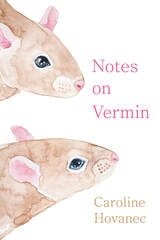
Notes on Vermin
Caroline Hovanec
University of Michigan Press, 2025
Notes on Vermin is an atlas of the literary vermin that appear in modern and contemporary literature, from Franz Kafka’s gigantic insect to Richard Wright’s city rats to Namwali Serpell’s storytelling mosquitoes. As parasites, trespassers, and collectives, vermin animals prove useful to writers who seek to represent life in the margins of power. Drawing on psychoanalysis, cultural studies, eco-Marxism, and biopolitics, this book explores four uses for literary vermin: as figures for the repressed thought, the uncommitted fugitive, the freeloading parasite, and the surplus life. In a series of short, accessible, interlinked essays, Notes on Vermin explores what animal pests can show us about our cultures, our environments, and ourselves.
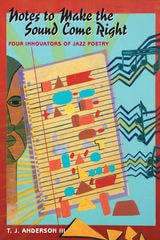
Notes to Make the Sound Come Right
Four Innovators of Jazz PoetryT.J. Anderson III
University of Arkansas Press, 2004