Results by title
3064 books match the query 'Social conditions' and 85 start with n
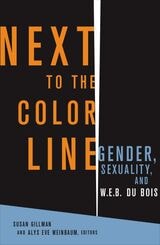
Next to the Color Line
Gender, Sexuality, and W. E. B. Du BoisSusan Gillman
University of Minnesota Press, 2007
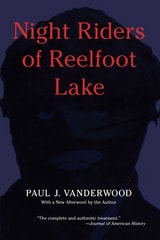
Night Riders of Reelfoot Lake
Paul Vanderwood
University of Alabama Press, 2003
Reelfoot Lake has been a hunting and fishing paradise from the time of its creation in 1812, when the New Madrid earthquake caused the Mississippi River to flow backward into low-lying lands. Situated in the northwestern corner of the state of Tennessee, it attracted westward-moving pioneers, enticing some to settle permanently on its shores.
Threatened in 1908 with the loss of their homes and livelihoods to aggressive, outsider capitalists, rural folk whose families had lived for generations on the bountiful lake donned hoods and gowns and engaged in “night riding,” spreading mayhem and death throughout the region as they sought vigilante justice. They had come to regard the lake as their own, by “squatters’ rights,” but now a group of entrepreneurs from St. Louis had bought the titles to the land beneath the shallow lake and were laying legal claim to Reelfoot in its entirety. People were hanged, beaten, and threatened and property destroyed before the state militia finally quelled the uprising. A compromise that made the lake public property did not entirely heal the wounds which continue to this day.
Paul Vanderwood reconstructs these harrowing events from newspapers and other accounts of the time. He also obtained personal interviews with participants and family members who earlier had remained mum, still fearing prosecution. The Journal of American History declares his book “the complete and authentic treatment” of the horrific dispute and its troubled aftermath.
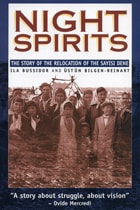
Night Spirits
The Story of the Relocation of the Sayisi DeneIla Bussidor
University of Manitoba Press, 1997

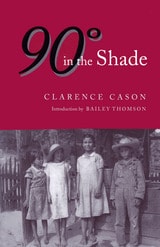
Ninety Degrees In The Shade
Clarence E. Cason
University of Alabama Press, 1983
In 1935, Cason collected his thoughts in a small book of essays titled 90° in the Shade. In it, he declared that climate and the relaxation afforded by field and stream had given southerners excellent reasons for their notoriously slow pace of life. Still, he wrote, "there is much work that ought to be done below the Potomac." Cason captured the pathos of race relations and other persistent problems and declared that the abominable practice of lynching would end when the best people of the South risked their personal and commercial standing to denounce it. Just days before the book's publication, however, Cason shot himself in his campus office. He left no explanation, but apparently he feared angry reaction from fellow citizens to his mild criticisms and gentle suggestions for change.
The University of Alabama Press brought the book back into print in 1983. This new edition of Cason's classic features an introduction by journalist and UA professor H. Bailey Thomson, allowing yet another generation the enjoyment of Cason's perceptive writing, not so much for any remedy he proposed but rather for the open-minded and loving way in which he addressed the region's tragic experience.
Ninety Degrees in the Shade
Clarence E. Cason
University of Alabama Press, 2001
A candid, courageous portrait of the South as told by a writer unafraid to confront its heat, its history, and its humanity.
Clarence Cason belonged to that restless generation of southern intellectuals who, between the world wars, questioned the South's stubborn traditionalism, even as they tried to explain and defend its distinctiveness. From his professorial perch at The University of Alabama, Cason wrote polished essays for leading national publications while contributing weekly editorials for newspaper readers. As a journalist in academia, he cultivated a broad audience for his eloquent though tentative observations about the "character" of a region that seemed to be a separate province of the nation.
In 1935, Cason collected his thoughts in a small book of essays titled 90° in the Shade. In it, he declared that climate and the relaxation afforded by field and stream had given southerners excellent reasons for their notoriously slow pace of life. Still, he wrote, "there is much work that ought to be done below the Potomac." Cason captured the pathos of race relations and other persistent problems and declared that the abominable practice of lynching would end when the best people of the South risked their personal and commercial standing to denounce it. Just days before the book's publication, however, Cason shot himself in his campus office. He left no explanation, but apparently he feared angry reaction from fellow citizens to his mild criticisms and gentle suggestions for change.
The University of Alabama Press brought the book back into print in 1983. This new edition of Cason's classic features an introduction by journalist and UA professor H. Bailey Thomson, allowing yet another generation the enjoyment of Cason's perceptive writing, not so much for any remedy he proposed but rather for the open-minded and loving way in which he addressed the region's tragic experience.
This second reprint edition of a classic work on southern culture will allow a new generation of readers to enjoy Cason's observant, graceful writing.

Nisei Sansei
Jere Takahashi
Temple University Press, 1998

Nitinikiau Innusi
I Keep the Land AliveTshaukuesh Elizabeth Penashue
University of Manitoba Press, 2019

No Alternative
Childbirth, Citizenship, and Indigenous Culture in MexicoBy Rosalynn A. Vega
University of Texas Press, 2018
Recent anthropological scholarship on “new midwifery” centers on how professional midwives in various countries are helping women reconnect with “nature,” teaching them to trust in their bodies, respecting women’s “choices,” and fighting for women’s right to birth as naturally as possible. In No Alternative, Rosalynn A. Vega uses ethnographic accounts of natural birth practices in Mexico to complicate these narratives about new midwifery and illuminate larger questions of female empowerment, citizenship, and the commodification of indigenous culture, by showing how alternative birth actually reinscribes traditional racial and gender hierarchies.
Vega contrasts the vastly different birthing experiences of upper-class and indigenous Mexican women. Upper-class women often travel to birthing centers to be delivered by professional midwives whose methods are adopted from and represented as indigenous culture, while indigenous women from those same cultures are often forced by lack of resources to use government hospitals regardless of their preferred birthing method. Vega demonstrates that women’s empowerment, having a “choice,” is a privilege of those capable of paying for private medical services—albeit a dubious privilege, as it puts the burden of correctly producing future members of society on women’s shoulders. Vega’s research thus also reveals the limits of citizenship in a neoliberal world, as indigeneity becomes an object of consumption within a transnational racialized economy.
No Apocalypse, No Integration
Modernism and Postmodernism in Latin AmericaMartín Hopenhayn
Duke University Press, 2001
What form does the crisis of modernity take in Latin America when societies are politically demobilized and there is no revolutionary agenda in sight? How does postmodern criticism reflect on enlightenment and utopia in a region marked by incomplete modernization, new waves of privatization, great masses of excluded peoples, and profound sociocultural heterogeneity? In No Apocalypse, No Integration Martín Hopenhayn examines the social and philosophical implications of the triumph of neoliberalism and the collapse of leftist and state-sponsored social planning in Latin America.
With the failure of utopian movements that promised social change, the rupture of the link between the production of knowledge and practical intervention, and the defeat of modernization and development policy established after World War II, Latin American intellectuals and militants have been left at an impasse without a vital program of action. Hopenhayn analyzes these crises from a theoretical perspective and calls upon Latin American intellectuals to reevaluate their objects of study, their political reality, and their society’s cultural production, as well as to seek within their own history the elements for a new collective discourse. Challenging the notion that strict adherence to a single paradigm of action can rescue intellectual and cultural movements, Hopenhayn advocates a course of epistemological pluralism, arguing that such an approach values respect for difference and for cultural and theoretical diversity and heterodoxy.
This essay collection will appeal to readers of sociology, public policy, philosophy, cultural theory, and Latin American history and culture, as well as to those with an interest in Latin America’s current transition.
No Easy Walk
Newark, 1980-1993Helen M. Stummer
Temple University Press, 1994
No Mexicans, Women, or Dogs Allowed
The Rise of the Mexican American Civil Rights MovementBy Cynthia E. Orozco
University of Texas Press, 2009
Founded by Mexican American men in 1929, the League of United Latin-American Citizens (LULAC) has usually been judged according to Chicano nationalist standards of the late 1960s and 1970s. Drawing on extensive archival research, including the personal papers of Alonso S. Perales and Adela Sloss-Vento, No Mexicans, Women, or Dogs Allowed presents the history of LULAC in a new light, restoring its early twentieth-century context.
Cynthia Orozco also provides evidence that perceptions of LULAC as a petite bourgeoisie, assimilationist, conservative, anti-Mexican, anti-working class organization belie the realities of the group's early activism. Supplemented by oral history, this sweeping study probes LULAC's predecessors, such as the Order Sons of America, blending historiography and cultural studies. Against a backdrop of the Mexican Revolution, World War I, gender discrimination, and racial segregation, No Mexicans, Women, or Dogs Allowed recasts LULAC at the forefront of civil rights movements in America.
No More, No More
Slavery And Cultural Resistance In Havana And New OrleansDaniel E. Walker
University of Minnesota Press, 2004
An illuminating look at the festival performances of slaves in Havana and New Orleans
However urban slave societies might have differed from their rural counterparts, they still relied on a concerted assault on the psychological, social, and cultural identity of their African-descended inhabitants to maintain power and control. This ambitious book looks at how people of African descent in two such societies—Havana and New Orleans in the nineteenth century—created and maintained their own forms of cultural resistance to the slave regime’s assault and, in the process, put forth autonomous views of self and the social landscape.
In Havana’s annual Día de Reyes festival and in the weekly activities that took place at New Orleans’s Congo Square, author Daniel Walker identifies specific cultural beliefs and activities that Africans brought to the New World and modified in order to withstand and contest the dehumanizing effects of oppression. No More, No More crosses disciplinary boundaries as well, elucidating the economic, social, cultural, and demographic operations at work in two cities and the wide-scale efforts at cultural resistance embodied in public performances.
No One Was Killed
The Democratic National Convention, August 1968John Schultz
University of Chicago Press, 2009
While other writers contemplated the events of the 1968 Chicago riots from the safety of their hotel rooms, John Schultz was in the city streets, being threatened by police, choking on tear gas, and listening to all the rage, fear, and confusion around him. The result, No One Was Killed, is his account of the contradictions and chaos of convention week, the adrenalin, the sense of drama and history, and how the mainstream press was getting it all wrong.
"A more valuable factual record of events than the city’s white paper, the Walker Report, and Theodore B. White’s Making of a President combined."—Book Week
"As a reporter making distinctions between Yippie, hippie, New Leftist, McCarthyite, police, and National Guard, Schultz is perceptive; he excels in describing such diverse personalities as Julian Bond and Eugene McCarthy."—Library Journal
"High on my short list of true, lasting, inspired evocations of those whacked-out days when the country was fighting a phantasmagorical war (with real corpses), and police under orders were beating up demonstrators who looked at them funny."—Todd Gitlin, from the foreword
No Way Out
Precarious Living in the Shadow of Poverty and Drug DealingWaverly Duck
University of Chicago Press, 2015
Duck’s short stay in Bristol Hill quickly transformed into a long-term study—one that forms the core of No Way Out. This landmark book challenges the common misconception of urban ghettoes as chaotic places where drug dealing, street crime, and random violence make daily life dangerous for their residents. Through close observations of daily life in these neighborhoods, Duck shows how the prevailing social order ensures that residents can go about their lives in relative safety, despite the risks that are embedded in living amid the drug trade. In a neighborhood plagued by failing schools, chronic unemployment, punitive law enforcement, and high rates of incarceration, residents are knit together by long-term ties of kinship and friendship, and they base their actions on a profound sense of community fairness and accountability. Duck presents powerful case studies of individuals whose difficulties flow not from their values, or a lack thereof, but rather from the multiple obstacles they encounter on a daily basis.
No Way Out explores how ordinary people make sense of their lives within severe constraints and how they choose among unrewarding prospects, rather than freely acting upon their own values. What emerges is an important and revelatory new perspective on the culture of the urban poor.

Nomads of a Desert City
Personal Stories from Citizens of the StreetBarbara Seyda
University of Arizona Press, 2001
You see them as faceless shapes on the median or in city parks. You recognize them by their cardboard signs, their bags of aluminum cans, or their weathered skin. But you do not know them.
In Nomads of a Desert City Barbara Seyda meets the gazes of our homeless neighbors and, with an open heart and the eye of an accomplished photographer, uncovers their compelling stories of life on the edge.
Byrdy is a teenager from Alaska who left a violent husband and misses the young daughter her mother now cares for. Her eyes show a wisdom that belies her youth. Samuel is 95 and collects cans for cash. His face shows a lifetime of living outside while his eyes hint at the countless stories he could tell. Lamanda worked as an accountant before an act of desperation landed her in prison. Now she struggles to raise the seven children of a woman she met there. Dorothy—whose earliest memories are of physical and sexual abuse—lives in a shelter, paycheck to paycheck, reciting affirmations so she may continue “to grace the world with my presence.”
They live on the streets or in shelters. They are women and men, young and old, Native or Anglo or Black or Hispanic. Their faces reflect the forces that have shaped their lives: alcoholism, poverty, racism, mental illness, and abuse. But like desert survivors, they draw strength from some hidden reservoir.
Few recent studies on homelessness offer such a revealing collection of oral history narratives and compelling portraits. Thirteen homeless women and men open a rare window to enrich our understanding of the complex personal struggles and triumphs of their lives. Nomads of a Desert City sheds a glaring light on the shadow side of the American Dream—and takes us to the crossroads of despair and hope where the human spirit survives.
Normalizing Inequality
How Californians Make Sense of the Growing DivideG. Cristina Mora
Russell Sage Foundation, 2026
California has long been mythologized as the quintessential land of opportunity and reinvention—a place where anyone, regardless of origin, can forge a new life and realize their aspirations. Yet beneath this gilded narrative lies a starker reality: California ranks among the most unequal states in one of the world's most unequal countries, where the middle class finds itself increasingly squeezed. Economic inequality is not an anomaly but part of a broader global phenomenon, as disparities deepen across the world. While we know a lot about its contours, its evolution over time and its intersections with race and immigration, we understand far less about how ordinary people interpret and internalize it. In Normalizing Inequality, sociologists G. Cristina Mora and Tianna S. Paschel illuminate how middle-class Californians perceive and come to accept the inequalities that surround them.
Drawing on extensive interviews and surveys, Mora and Paschel uncover a profound paradox at the heart of middle-class consciousness. They find that Californians are keenly aware of the systemic causes of inequality—they recognize policies engineered to benefit the wealthy, they acknowledge how structural racism makes it hard for some groups to get ahead—yet they consistently minimize these forces. Instead, they gravitate toward explanations rooted in individualism, moral character, and the idea that things are worse in other places. Racism and racial inequality in California become palatable when framed as "not as bad as the South." Immigrant exploitation, however severe, transforms into evidence of the American Dream fulfilled simply upon arrival. Economic pressures that displace others become surmountable through personal industriousness and forbearance.
These beliefs about inequality grow more troubling still. Middle-class Californians sometimes blame disempowered people for their circumstances—acknowledging structural barriers facing homeless and undocumented populations while simultaneously faulting them for insufficient drive or criminal behavior that compounds their difficulties. When contemplating California's future, interviewees envision economic prosperity propelled by technological innovation, yet remain curiously unconcerned with how present inequalities might shape that tomorrow. Their imagined future is one where White and Asian American populations thrive, while Black, Latino, and economically marginalized Californians either vanish through displacement or fade into irrelevance. As respondents use these interpretive frameworks to make sense of inequality, they lean heavily on California's foundational narratives of opportunity, sanctuary and multiracial promise.
Normalizing Inequality offers an incisive examination of how ordinary citizens make sense of inequality and, through that very process of sense-making, how they tolerate and passively reproduce the conditions they often claim to deplore.
North of Empire
Essays on the Cultural Technologies of SpaceJody Berland
Duke University Press, 2009
Berland explores how understandings of space and time, empire and margin, embodiment and technology, and nature and culture are shaped by broadly conceived communications technologies including pianos, radio, television, the Web, and satellite imaging. Along the way, she provides a useful overview of the assumptions driving communications research on both sides of the U.S.-Canadian border, and she highlights the distinctive contributions of the Canadian communication theorists Harold Innis and Marshall McLuhan. Berland argues that electronic mediation is central to the construction of social space and therefore to anti-imperialist critique. She illuminates crucial links between how space is traversed, how it is narrated, and how it is used. Making an important contribution to scholarship on globalization, Berland calls for more sophisticated accounts of media and cultural technologies and their complex “geographies of influence.”

Nostalgic Futures
The Reactionary Fantasies of Speculative Fiction FandomsMax Dosser
Rutgers University Press, 2026
Speculative fiction imagines impossible futures and alternative pasts, alien species and angelic monsters, technological marvels and magical solutions. In recent years, however, many in its fandoms have protested the inclusion of nonwhite, nonmale, and nonheterosexual characters as betrayals of their beloved media for the sake of “wokeness.” Nostalgic Futures: The Reactionary Fantasies of Speculative Fiction Fandoms examines how contemporary fan controversies— particularly those surrounding gender, race, and sexuality in speculative fiction media—intersect with reactionary movements within and beyond fandom. This book explores how the nostalgic fantasies of fans and far-right movements contribute to broader reactionary discourses, shaping not only the past they long for but the future they fear. From the Hugo Awards and PuppyGate to Star Wars’ #NotMyJedi to Mass Effect and The Last of Us boycotts, Nostalgic Futures reveals how speculative fiction fandom has become a site of contestation over our visions of the past, present, and future.
Not Only the Market
Martin Potucek
Central European University Press, 1999
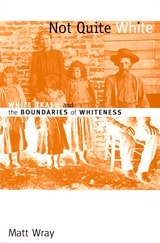
Not Quite White
White Trash and the Boundaries of WhitenessMatt Wray
Duke University Press, 2006
Of crucial importance are the ideas about poor whites that circulated through early-twentieth-century public health campaigns, such as hookworm eradication and eugenic reforms. In these crusades, impoverished whites, particularly but not exclusively in the American South, were targeted for interventions by sanitarians who viewed them as “filthy, lazy crackers” in need of racial uplift and by eugenicists who viewed them as a “feebleminded menace” to the white race, threats that needed to be confined and involuntarily sterilized.
Part historical inquiry and part sociological investigation, Not Quite White demonstrates the power of social categories and boundaries to shape social relationships and institutions, to invent groups where none exist, and to influence policies and legislation that end up harming the very people they aim to help. It illuminates not only the cultural significance and consequences of poor white stereotypes but also how dominant whites exploited and expanded these stereotypes to bolster and defend their own fragile claims to whiteness.

Not in Front of the Children
'Indecency,' Censorship, and the Innocence of YouthHeins, Marjorie
Rutgers University Press, 2007
From Huckleberry Finn to Harry Potter, from Internet filters to the v-chip, censorship exercised on behalf of children and adolescents is often based on the assumption that they must be protected from “indecent” information that might harm their development—whether in art, in literature, or on a Web site. But where does this assumption come from, and is it true?
In Not in Front of the Children, Marjorie Heins explores the fascinating history of “indecency” laws and other restrictions aimed at protecting youth. From Plato’s argument for rigid censorship, through Victorian laws aimed at repressing libidinous thoughts, to contemporary battles over sex education in public schools and violence in the media, Heins guides us through what became, and remains, an ideological minefield. With fascinating examples drawn from around the globe, she suggests that the “harm to minors” argument rests on shaky foundations.

Not of Pure Blood
The Free People of Color and Racial Prejudice in Nineteenth-Century Puerto RicoJay Kinsbruner
Duke University Press, 1996
Following a discussion of Puerto Rican racial prejudice in historical perspective, Kinsbruner describes residential patterns, marriages, births, deaths, occupations, and family and household matters to demonstrate that free people of color were a disadvantaged community whose political, social, and economic status was diminished by racism. He analyzes the complexities and contradictions of Puerto Rican racial prejudice and discrimination, explains the subtleties of “shade discrimination,” and examines the profoundly negative impact on race relations of the U.S. occupation of the island following the Spanish American War.
Looking behind the myth of Puerto Rican racial equity, Not of Pure Blood will be of interest to specialists in Caribbean studies, Puerto Rican history, and Latin America studies, and to scholars in a variety of fields investigating questions of racism and discrimination.

Not the Camilla We Knew
One Woman's Path from Small-town America to the Symbionese Liberation ArmyRachael Hanel
University of Minnesota Press, 2022
The mystery of how an ordinary Minnesota girl came to be, briefly, one of the most wanted domestic terrorists in the United States
Behind every act of domestic terrorism there is someone’s child, an average American whose life took a radical turn for reasons that often remain mysterious. Camilla Hall is a case in point: a pastor’s daughter from small-town Minnesota who eventually joined the ranks of radicals like Sara Jane Olson (aka Kathleen Soliah) in the notorious Symbionese Liberation Army before dying in a shootout with Los Angeles Police in May 1974. How could a “good girl” like Camilla become one of the most wanted domestic terrorists in the United States? Rachael Hanel tells her story here, revealing both the deep humanity and the extraordinary circumstances of Camilla Hall’s life.
Camilla’s childhood in a tight-knit religious family was marred by loss and grief as, one after another, her three siblings died. Her path from her Minnesota home to her final, radical SLA family featured years as an artist and activist—in welfare offices, political campaigns, union organizing, culminating in a love affair that would be her introduction to the SLA. Through in-depth research and extensive interviews, Hanel pieces together Camilla’s bewildering transformation from a “gentle, zaftig, arty, otherworldy” young woman (as one observer remarked), working for social change within the system, into a gun-wielding criminal involved in the kidnapping of Patty Hearst.
During this time of mounting unrest and violence, Camilla Hall’s story is of urgent interest for what it reveals about the forces of radicalization. But as Hanel ventures ever further into Camilla’s past, searching out the critical points where character and cause might intersect, her book becomes an intriguing, disturbing, and ultimately deeply moving journey into the dark side of America’s promise.
Notes from the Sex Worker Left
Lumpen TheoryHeather Berg
Duke University Press, 2026
Nothing Has to Make Sense
Upholding White Supremacy through Anti-Muslim RacismSherene H. Razack
University of Minnesota Press, 2022
How Western nations have consolidated their whiteness through the figure of the Muslim in the post-9/11 world
While much has been written about post-9/11 anti-Muslim racism (often termed Islamophobia), insufficient attention has been given to how anti-Muslim racism operates through law and is a vital part of law’s protection of whiteness. This book fills this gap while also providing a unique new global perspective on white supremacy. Sherene H. Razack, a leading critical race and feminist scholar, takes an innovative approach by situating law within media discourses and historical and contemporary realities. We may think of law as logical, but, argues Razack, its logic breaks down when the subject is Muslim.
Tracing how white subjects and majority-white nations in the post-9/11 era have consolidated their whiteness through the figure of the Muslim, Razack examines four sites of anti-Muslim racism: efforts by American evangelical Christians to ban Islam in the school curriculum; Canadian and European bans on Muslim women’s clothing; racial science and the sentencing of Muslims as terrorists; and American national memory of the torture of Muslims during wars and occupations. Arguing that nothing has to make sense when the subject is Muslim, she maintains that these legal and cultural sites reveal the dread, phobia, hysteria, and desire that mark the encounter between Muslims and the West.
Through the prism of racism, Nothing Has to Make Sense argues that the figure of the Muslim reveals a world divided between the deserving and the disposable, where people of European origin are the former and all others are confined in various ways to regimes of disposability. Emerging from critical race theory, and bridging with Islamophobia/critical religious studies, it demonstrates that anti-Muslim racism is a revelatory window into the operation of white supremacy as a global force.
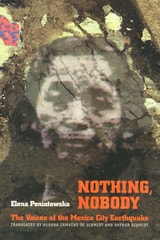
Nothing, Nobody
The Voices of the Mexico City EarthquakeElena Poniatowska, translated by Aurora Camacho de Schmidt, foreword by Arthur Schmidt
Temple University Press, 1995
September 19, 1985: A powerful earthquake hits Mexico City in the early morning hours. As the city collapses, the government fails to respond. Long a voice of social conscience, prominent Mexican journalist Elena Poniatowska chronicles the disintegration of the city's physical and social structure, the widespread grassroots organizing against government corruption and incompetence, and the reliency of the human spirit. As a transformative moment in the life of mexican society, the earthquake is as much a component of the country's current crisis as the 1982 debt crisis, the problematic economic of the last ten years, and the recent elections.
In masterfully weaving together a multiplicity of voices, Poniatowska has reasserted the inherent value and latent power of people working together. Punctuated by Poniatowska's own experiences and observations, these post disaster testimonies speak of the disruption of families and neighborhoods, of the destruction of homes and hospitals, of mutilation and death—the collective loss of a city. Drawing the reader dramatically into the scene of national horror through dozens of personal stories, Poniatowska demonstrates the importance of courage and self-reliance in redeeming life from chaos.

Novel Bondage
Slavery, Marriage, and Freedom in Nineteenth-Century AmericaTess Chakkalakal
University of Illinois Press, 2013
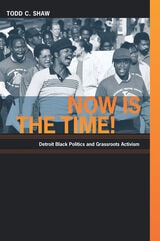
Now Is the Time!
Detroit Black Politics and Grassroots ActivismTodd C. Shaw
Duke University Press, 2009
Shaw uses the tools of social movement analysis, including the quantitative analysis of budgets, electoral data, and housing statistics, as well as historical research and personal interviews, to better understand the dilemmas, innovations, and dynamics of grassroots activism. He begins with a history of discriminatory housing practices and racial divisions that deeply affected Detroit following the Second World War and set the stage for the election of the city’s first black mayor, Coleman Young. By emphasizing downtown redevelopment, Mayor Young’s administration often collided with low-income housing advocates. Only through grassroots activism were those advocates able to delay or derail governmental efforts to demolish low-income housing in order to make way for more upscale development. Shaw then looks at present-day public housing activism, assessing the mixed success of the nationally sponsored HOPE VI project aimed at fostering home ownership in low-income areas. Descriptive and prescriptive, Now Is the Time! traces the complicated legacy of community activism to illuminate what is required for grassroots activists to be effective in demanding public accountability to poor and marginalized citizens.
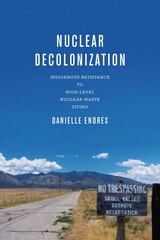
Nuclear Decolonization
Indigenous Resistance to High-Level Nuclear Waste SitingDanielle Endres
The Ohio State University Press, 2023
Honorable Mention, 2024 NCA Public Address Division’s Marie Hochmuth Nichols Award
Honorable Mention, 2025 Association for the Rhetoric of Science, Technology, and Medicine Book Award
While research demonstrates how Indigenous populations have been disproportionately affected by the global nuclear production complex, less attention has been given to tactics that have successfully resisted such projects. Danielle Endres’s Nuclear Decolonization shifts the conversation around nuclear colonialism in important ways, offering an account of how the Western Shoshone, Southern Paiute, and Skull Valley Goshute peoples and nations prevented two high-level nuclear waste sites from being built on their lands.
Using a decolonial approach, Endres highlights two sets of rhetorical tactics—Indigenous Lands rhetorics and national interest rhetorics—used to fight nuclear colonialism. The book reframes nuclear decolonization as fundamentally a struggle for the return of Indigenous lands while also revealing how Native activists selectively move between Indigenous nationhood and US citizenship in order to resist settler decision-making. Working at the intersection of Indigenous antinuclear advocacy, Indigenized environmental justice, and decolonization, Nuclear Decolonization centers Native activism and voices while amplifying the power and resilience of Indigenous peoples and nations.
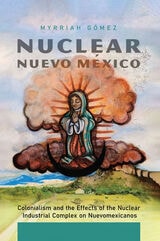
Nuclear Nuevo México
Colonialism and the Effects of the Nuclear Industrial Complex on NuevomexicanosMyrriah Gómez
University of Arizona Press, 2022
Contrary to previous works that suppress Nuevomexicana/o presence throughout U.S. nuclear history, Nuclear Nuevo México focuses on recovering the voices and stories that have been lost or ignored in the telling of this history. By recuperating these narratives, Myrriah Gómez tells a new story of New Mexico, one in which the nuclear history is not separate from the collective colonial history of Nuevo México but instead demonstrates how earlier eras of settler colonialism laid the foundation for nuclear colonialism in New Mexico.
Gómez examines the experiences of Nuevomexicanas/os who have been impacted by the nuclear industrial complex, both the weapons industry and the commercial industry. Gómez argues that Los Alamos was created as a racist project that targeted poor and working-class Nuevomexicana/o farming families, along with their Pueblo neighbors, to create a nuclear empire. The resulting imperialism has left a legacy of disease and distress throughout New Mexico that continues today.

Nuclear Suburbs
Cold War Technoscience and the Pittsburgh RenaissancePatrick Vitale
University of Minnesota Press, 2021
From submarines to the suburbs—the remaking of Pittsburgh during the Cold War
During the early Cold War, research facilities became ubiquitous features of suburbs across the United States. Pittsburgh’s eastern and southern suburbs hosted a constellation of such facilities that became the world’s leading center for the development of nuclear reactors for naval vessels and power plants. The segregated communities that surrounded these laboratories housed one of the largest concentrations of nuclear engineers and scientists on earth. In Nuclear Suburbs, Patrick Vitale uncovers how the suburbs shaped the everyday lives of these technology workers.
Using oral histories, Vitale follows nuclear engineers and scientists throughout and beyond the Pittsburgh region to understand how the politics of technoscience and the Cold War were embedded in daily life. At the same time that research facilities moved to Pittsburgh’s suburbs, a coalition of business and political elites began an aggressive effort, called the Pittsburgh Renaissance, to renew the region. For Pittsburgh’s elite, laboratories and researchers became important symbols of the new Pittsburgh and its postindustrial economy. Nuclear Suburbs exposes how this coalition enrolled technology workers as allies in their remaking of the city.
Offering lessons for the present day, Nuclear Suburbs shows how race, class, gender, and the production of urban and suburban space are fundamental to technoscientific networks, and explains how the “renewal” of industrial regions into centers of the tech economy is rooted in violence and injustice.
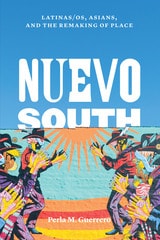
Nuevo South
Latinas/os, Asians, and the Remaking of PlaceBy Perla M. Guerrero
University of Texas Press, 2017
Latinas/os and Asians are rewriting the meaning and history of race in the American South by complicating the black/white binary that has frequently defined the region since before the Civil War. Arriving in southern communities as migrants or refugees, Latinas/os and Asians have experienced both begrudging acceptance and prejudice as their presence confronts and troubles local understandings of race and difference—understandings that have deep roots in each community’s particular racial history, as well as in national fears and anxieties about race.
Nuevo South offers the first comparative study showing how Latinas/os and Asians are transforming race and place in the contemporary South. Integrating political, economic, and social analysis, Perla M. Guerrero examines the reception of Vietnamese, Cubans, and Mexicans in northwestern Arkansas communities that were almost completely white until the mid-1970s. She shows how reactions to these refugees and immigrants ranged from reluctant acceptance of Vietnamese as former US allies to rejection of Cubans as communists, criminals, and homosexuals and Mexicans as “illegal aliens” who were perceived as invaders when they began to establish roots and became more visible in public spaces. Guerrero’s research clarifies how social relations are constituted in the labor sphere, particularly the poultry industry, and reveals the legacies of regional history, especially anti-Black violence and racial cleansing. Nuevo South thus helps us to better understand what constitutes the so-called Nuevo South and how historical legacies shape the reception of new people in the region.

Nuns Behaving Badly
Tales of Music, Magic, Art, and Arson in the Convents of ItalyCraig A. Monson
University of Chicago Press, 2010
Witchcraft. Arson. Going AWOL. Some nuns in sixteenth- and seventeenth-century Italy strayed far from the paradigms of monastic life. Cloistered in convents, subjected to stifling hierarchy, repressed, and occasionally persecuted by their male superiors, these women circumvented authority in sometimes extraordinary ways. But tales of their transgressions have long been buried in the Vatican Secret Archive. That is, until now.
In Nuns Behaving Badly, Craig A. Monson resurrects forgotten tales and restores to life the long-silent voices of these cloistered heroines. Here we meet nuns who dared speak out about physical assault and sexual impropriety (some real, some imagined). Others were only guilty of misjudgment or defacing valuable artwork that offended their sensibilities. But what unites the women and their stories is the challenges they faced: these were women trying to find their way within the Catholicism of their day and through the strict limits it imposed on them. Monson introduces us to women who were occasionally desperate to flee cloistered life, as when an entire community conspired to torch their convent and be set free. But more often, he shows us nuns just trying to live their lives. When they were crossed—by powerful priests who claimed to know what was best for them—bad behavior could escalate from mere troublemaking to open confrontation.
In resurrecting these long-forgotten tales and trials, Monson also draws attention to the predicament of modern religious women, whose “misbehavior”—seeking ordination as priests or refusing to give up their endowments to pay for priestly wrongdoing in their own archdioceses—continues even today. The nuns of early modern Italy, Monson shows, set the standard for religious transgression in their own age—and beyond.
Náyari History, Politics, and Violence
From Flowers to AshPhilip E. Coyle
University of Arizona Press, 2001
By studying the history of religious practices that legitimate such authority, Philip Coyle shows that a contradiction exists between ceremonially based forms of political authority and the bureaucratic and military modes of power that have been deployed by outside governments in their attempts to administer the region. He then shows how the legitimacy of traditional authority is renewed or undermined through the performance of ceremonies.
Coyle explores linkages between long-term political and economic processes and changes in Náyari ceremonial life from Spanish contact to the present day. As a participant-observer of Náyari ceremonies over a ten-year period, he gained an understanding of the history of their ceremonialism and its connections to practically every other aspect of Náyari life. His descriptions of the Holy Week Festival, mitote ceremonies, and other public performances show how struggles over political legitimacy are intimately tied to the meanings of the ceremonies. With its rich ethnographic descriptions, provocative analyses, and clear links between data and theory, Coyle's study marks a major contribution to the ethnography of the Indians of western Mexico and Latin America more generally. It also provides unusual insight into the violence raging across the Mexican countryside and helps us understand the significance of indigenous people in a globalizing world.

neckbone
visual versesavery r. young; foreword by Theaster Gates
Northwestern University Press, 2019