Results by title
22279 books match the query 'Social Science' and 509 start with n
New Deal Radio
The Educational Radio ProjectDavid Goodman
Rutgers University Press, 2022
Contextualizing the different series aired by the Educational Radio Project as part of a unified project about radio and citizenship is crucial to understanding them. New Deal Radio argues that this distinctive government commercial partnership amounted to a critical intervention in US broadcasting and an important chapter in the evolution of public radio in America.
New Destinations
Mexican Immigration in the United StatesVictor Zuniga
Russell Sage Foundation, 2005

New Directions in Economic Anthropology
Susana Narotzky
Pluto Press, 1997

New Directions in Israeli Media
Film, Television, and Digital ContentEdited by Yaron Peleg, Eran Kaplan, and Ido Rosen
University of Texas Press, 2025
A comprehensive analysis of the major trends and developments in contemporary Israeli media.
In the twenty-first century, Israeli filmmaking has transformed from a localized industry into a globally recognized and diverse national cinema, its filmmakers gaining prominence internationally and introducing new themes, aesthetics, and voices to the scene. At the same time, Israeli television shows have emerged as a dominant force, propelled by the spread of streaming. Through the rise of online content creation and consumption, especially in the 2010s, new voices have revolutionized the creative landscape.
With Israel’s position at the cutting edge of technology and virtual platforms, Israeli media has seen a boom, winning prizes at international film festivals and adapting shows like Euphoria, Homeland, and Fauda for wider audiences. In New Directions in Israeli Media, thirteen contributors detail the shifting dynamics of Israeli cinema, television, and online content in the digital age, exploring how globalization, technological advances, and changing audience preferences are reshaping creative industries. Editors Yaron Peleg, Eran Kaplan, and Ido Rosen have assembled a volume that prompts critical reflection on the intersection of art, technology, and culture in a rapidly changing media landscape.
New Faces in New Places
The Changing Geography of American ImmigrationDouglas S. Massey
Russell Sage Foundation, 2008

New Formations, New Questions
Asian American Studies, Volume 5Elaine H. Kim and Lisa Lowe, eds.
Duke University Press, 0
In one essay, the status of Asians born in America both before and after the 1965 Immigration and Nationality Act is compared, with particular attention directed toward the exploitation of Asian immigrants as a source of cheap physical labor. In another piece, the link between America’s colonization of Asian countries and international sex tourism is explored. As these essays make clear, the United States easily exploits Asians and Asian Americans as it simultaneously enforces distinctions that render Asians linguistically, culturally, and racially “foreign.” Also included is an essay based on a series of interviews with Filipino store owners and workers in Southern California; analysis of the Christian Ecumenical perspectives on the Asian sex tour industry and the activities of ECPAT, a group established to end child prostitution in Asian tourism; and an account of a South Asian woman’s attempt to unionize taxicab drivers in New York City.
Contributors. Anuradha G. Advani, Enrique Bonus, Oscar V. Campomanes, Y. David Chung, Allan DeSouza, Gayatri Gopinath, Helen Heran Jun, Laura Hyun Yi Kang, Peter Kiang, Elaine H. Kim, Min-Jung Kim, Lisa Lowe, Eithne Liubheid, Long Nguyen, Viet Thanh Nguyen, Eliza Noh
New Frontiers in the Study of the Global African Diaspora
Between Uncharted Themes and Alternative RepresentationsRita Kiki Edozie
Michigan State University Press, 2018
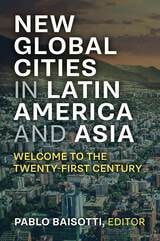
New Global Cities in Latin America and Asia
Welcome to the Twenty-First CenturyPablo Baisotti, Editor
University of Michigan Press, 2022
New Global Cities in Latin America and Asia: Welcome to the Twenty-First Century proposes new visions of global cities and regions historically considered “secondary” in the international context. The arguments are not only based on material progress made by these metropolises, but also on the growing social difficulties experienced (e.g., organized crime, drug trafficking, slums, economic inequalities). The book illustrates the growth of cities according to these problems arising from the modernity of the new century, comparing Latin American and Asian cities.
This book analyzes the complex relationships within cities through an interdisciplinary approach, complementing other research and challenging orthodox views on global cities. At the same time, the book provides new theoretical and methodological tools to understand the progress of “Third World” cities and the way of understanding “globality” in the 21st century by confronting the traditional views with which global cities were appreciated since the 1980s. Pablo Baisotti brings together researchers from various fields who provide new interpretative keys to certain cities in Latin America and Asia.
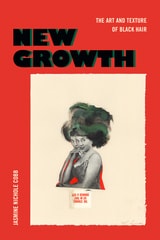
New Growth
The Art and Texture of Black HairJasmine Nichole Cobb
Duke University Press, 2022

New Hard-Boiled Writers
1970s–1990sLeRoy Lad Panek
University of Wisconsin Press, 2000
The author comments both on the way the hard-boiled story has changed over the past three decades and examines the work of ten significant contemporary hard-boiled writers. Chapters on Robert B. Parker, James Crumley, Loren Estleman, Sara Paretsky, Sue Grafton, Carl Hiaasen, Earl Emerson, Robert Crais, James Lee Burke, and Walter Mosley demonstrate how these writers have used the hard-boiled hero to make powerful statements about life in the last quarter of the twentieth century.
New Imaginaries, Volume 14
Dilip Parameshwar Gaonkar and Benjamin Lee, eds.
Duke University Press, 0
Contributors to this collection include major voices in the fields of philosophy, critical literature, sociology, anthropology, and communication studies. The articles consider how people conceive of and categorize themselves as part of a cohesive group under the multiple rubrics of the public and counterpublic, nation, ethnos, civilization, genealogy, democracy, and the market. Many of the essays are situated in specific national and cultural sites such as Africa, Australia, eighteenth-century England, the European Union, India, and Turkey. Others examine the intersections of global financial markets and democratic institutions.
As a whole, New Imaginaries suggests a new way of synthesizing economic, political, and cultural approaches to social life.
Contributors. Arjun Appadurai, Craig Calhoun, Dilip Parameshwar Gaonkar, Nilüfer Göle, Benjamin Lee, Edward LiPuma, Achille Mbembe, Mary Poovey, Elizabeth A. Povinelli, Charles Taylor, Michael Warner
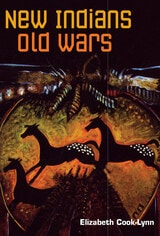
New Indians, Old Wars
Elizabeth Cook-Lynn
University of Illinois Press, 2006
Addressing Native American Studies' past, present, and future, the essays in New Indians, Old Wars tackle the discipline head-on, presenting a radical revision of the popular view of the American West in the process. Instead of luxuriating in its past glories or accepting the widespread historians' view of the West as a shared place, Elizabeth Cook-Lynn argues that it should be fundamentally understood as stolen.
Firmly grounded in the reality of a painful past, Cook-Lynn understands the story of the American West as teaching the political language of land theft and tyranny. She argues that to remedy this situation, Native American studies must be considered and pursued as its own discipline, rather than as a subset of history or anthropology. She makes an impassioned claim that such a shift, not merely an institutional or theoretical change, could allow Native American studies to play an important role in defending the sovereignty of indigenous nations today.
New Islamic Urbanism
The Architecture of Public and Private Space in Jeddah, Saudi ArabiaStefan Maneval
University College London, 2019
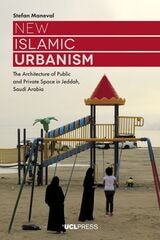
Combining Michael Warner’s concepts of publics and counterpublics with theories of space and sociological approaches to architecture, Stefan Maneval explores the concept of New Islamic Urbanism in Saudi Arabia, arguing that this architectural trend, which is characterized by an emphasis on privacy protection through high enclosures, gates, blinds, and tinted windows, constitutes for some an important element of piety. At the same time, it enables different conceptions of privacy, banned social practices, as well as the formation of publics and counterpublics.
Based on rich ethnographic data collected by the author, New Islamic Urbanism challenges normative assumptions on gender segregation in Muslim societies and provides a nuanced account of the meaning of publicness and privacy in Muslim contexts in general. It will be of particular interest to an academic readership in Middle East and Islamic studies, as well as in architecture, urban planning and anthropology.
New Israeli Horror
Local Cinema, Global GenreOlga Gershenson
Rutgers University Press, 2024
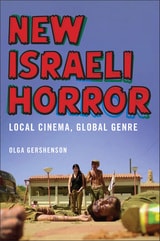
Before 2010, there were no Israeli horror films. Then distinctly Israeli serial killers, zombies, vampires, and ghosts invaded local screens. The next decade saw a blossoming of the genre by young Israeli filmmakers. New Israeli Horror is the first book to tell their story. Through in-depth analysis, engaging storytelling, and interviews with the filmmakers, Olga Gershenson explores their films from inception to reception. She shows how these films challenge traditional representations of Israel and its people, while also appealing to audiences around the world.
Gershenson introduces an innovative conceptual framework of adaptation, which explains how filmmakers adapt global genre tropes to local reality. It illuminates the ways in which Israeli horror borrows and diverges from its international models. New Israeli Horror offers an exciting and original contribution to our understanding of both Israeli cinema and the horror genre.
A companion website to this book is available at https://websites.umass.edu/newisraelihorror/
Book trailer: https://youtu.be/oVJsD0QCORw (https://youtu.be/oVJsD0QCORw)
New Italian Migrations to the United States
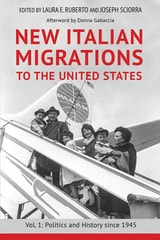
Vol. 1: Politics and History since 1945Edited by Laura E. Ruberto and Joseph Sciorra: Afterword by Donna Gabaccia
University of Illinois Press, 2017
Contributors: Ottorino Cappelli, Donna Gabaccia, Stefano Luconi, Maddalena Marinari, James S. Pasto, Rodrigo Praino, Laura E. Ruberto, Joseph Sciorra, Donald Tricarico, and Elizabeth Zanoni.
New Italian Migrations to the United States
Vol. 2: Art and Culture since 1945Laura Ruberto, Joseph Sciorra
University of Illinois Press, 2017
Contributors: John Allan Cicala, Simone Cinotto, Teresa Fiore, Incoronata (Nadia) Inserra, Laura E. Ruberto, Joseph Sciorra, and Anthony Julian Tamburri.
New Jack Jocks
Rebels, Race, And The American AthleteLarry Platt
Temple University Press, 2003
New Jersey Dreaming
Capital, Culture, and the Class of '58Sherry B. Ortner
Duke University Press, 2005
Ortner tracked down nearly all 304 of her classmates. She interviewedabout 100 in person and spoke with most of the rest by phone, recording her classmates’ vivid memories of time, place, and identity. Ortner shows how social class affected people’s livesin many hidden and unexamined ways. She also demonstrates that the Class of ‘58’s extreme upward mobility must be understood in relation to the major identity movements of the twentieth century—the campaign against anti-Semitism, the Civil Rights movement, and feminism.
A multisited study combining field research with an interdisciplinary analytical framework, New Jersey Dreaming is a masterly integration of developments at the vanguard of contemporary anthropology. Engaging excerpts from Ortner's field notes are interspersed throughout the book. Whether recording the difficulties and pleasures of studying one's own peer group, the cultures of driving in different parts of the country, or the contrasting experiences of appointment-making in Los Angeles and New York, they provide a rare glimpse into the actual doing of ethnographic research.
New Jersey's Multiple Municipal Madness
Karcher, Alan
Rutgers University Press, 1998
Alan Karcher looks at the history and high cost of New Jersey's multiple municipalities. He investigates the economic considerations, political pressures, and personal agendas that created the bizarre configurations dividing the Garden State, while analyzing the public policies that allowed and even encouraged the formation of new municipalities. Karcher also examines the political dynamics that thwarted every effort of New Jersey metropolises to join the front ranks of major American cities.
Karcher identifies the major motivations behind the unparalleled experience of New Jersey's municipal multiplication. He delves deeply into the primary causes of new lines being drawn, such as road appropriations, the location of a railroad station, control of a local school district, the regulation of alcohol sales, and the preservation of exclusivity prior to the acceptance of zoning. He also assesses the present situation and what has happened in the past 60 years since the municipal multiplication madness ceased, calling on elected officials to confront reality and correct yesterday's excesses.
The genesis of the present political map of the state is a story that while interesting is not always charming, while fascinating is far from edifying. Little in the history can be called quaint. Rather it is a story of separation and exclusion, of division and greed, of preservation of prerogatives and prejudices. It is a story that supports the conclusion that these lines are rarely the product of chance, rather they were drawn by politicians with very human foibles and frailties, and with very narrow agendas-agendas that have proven to be egregiously expensive for today's taxpayers.
Alan Karcher, the former Speaker of the New Jersey Assembly during the activist 1980s, currently practices municipal law in Middlesex County. He represents the third generation of his family to serve as a member of the New Jersey State Legislature.
New Jersey's Postsuburban Economy
James W. Hughes and Joseph J. Seneca
Rutgers University Press, 2015
From the rural agricultural and natural resource based economy and lifestyle of the seventeenth century to today’s postindustrial, suburban-dominated, automobile-dependent economy, the economic drivers which were considered to be an asset are now viewed by many to be the state’s greatest disadvantage. On the brink of yet another transformation, this one driven by a new technology and an internet based global economy, New Jersey will have to adapt itself yet again—this time to a postsuburban digital economy.
Hughes and Seneca describe the forces that are now propelling the state into yet another economic era. They do this in the context of historical economic transformations of New Jersey, setting out the technological, demographic, and transportation shifts that defined and drove them.
New Jewish Identities
András Kovács
Central European University Press, 2003
New Korean Wave
Transnational Cultural Power in the Age of Social MediaDal Yong Jin
University of Illinois Press, 2016
New Languages of the State
Indigenous Resurgence and the Politics of Knowledge in BoliviaBret Gustafson
Duke University Press, 2009
Gustafson shows that bilingual education is an issue that extends far beyond the classroom. Public schools are at the center of a broader battle over territory, power, and knowledge as indigenous movements across Latin America actively defend their languages and knowledge systems. In attempting to decolonize nation-states, the indigenous movements are challenging deep-rooted colonial racism and neoliberal reforms intended to mold public education to serve the market. Meanwhile, market reformers nominally embrace cultural pluralism while implementing political and economic policies that exacerbate inequality. Juxtaposing Guarani life, language, and activism with intimate portraits of reform politics among academics, bureaucrats, and others in and beyond La Paz, Gustafson illuminates the issues, strategic dilemmas, and imperfect alliances behind bilingual intercultural education.
New Latina Narrative
The Feminine Space of Postmodern EthnicityEllen McCracken
University of Arizona Press, 1999
New Lines
Critical GIS and the Trouble of the MapMatthew W. Wilson
University of Minnesota Press, 2017
New Lines takes the pulse of a society increasingly drawn to the power of the digital map, examining the conceptual and technical developments of the field of geographic information science as this work is refracted through a pervasive digital culture. Matthew W. Wilson draws together archival research on the birth of the digital map with a reconsideration of the critical turn in mapping and cartographic thought.
Seeking to bridge a foundational divide within the discipline of geography—between cultural and human geographers and practitioners of Geographic Information Systems (GIS)—Wilson suggests that GIS practitioners may operate within a critical vacuum and may not fully contend with their placement within broader networks, the politics of mapping, the rise of the digital humanities, the activist possibilities of appropriating GIS technologies, and more.
Employing the concept of the drawn and traced line, Wilson treads the theoretical terrain of Deleuze, Guattari, and Gunnar Olsson while grounding their thoughts with the hybrid impulse of the more-than-human thought of Donna Haraway. What results is a series of interventions—fractures in the lines directing everyday life—that provide the reader with an opportunity to consider the renewed urgency of forceful geographic representation. These five fractures are criticality, digitality, movement, attention, and quantification. New Lines examines their traces to find their potential and their necessity in the face of our frenetic digital life.

New Lives for Ancient and Extinct Crops
Edited by Paul E. Minnis
University of Arizona Press, 2014
New Lives for Ancient and Extinct Crops profiles nine plant species that were important contributors to human diets and had medicinal uses in antiquity: maygrass, chenopod, marshelder, agave, little barley, chia, arrowroot, little millet, and bitter vetch. Each chapter is written by a well-known scholar, who illustrates the global value of the ancient crop record to inform the present. From eastern and western North America, Mesoamerica, South America, western Asia, and south-central Asia, the contributors provide examples of the unexpected wealth of information available in the archaeological record about ancient and extinct crops.
New Maricón Cinema
Outing Latin American FilmBy Vinodh Venkatesh
University of Texas Press, 2016
Recent critically and commercially acclaimed Latin American films such as XXY, Contracorriente, and Plan B create an affective and bodily connection with viewers that elicits in them an emotive and empathic relationship with queer identities. Referring to these films as New Maricón Cinema, Vinodh Venkatesh argues that they represent a distinct break from what he terms Maricón Cinema, or a cinema that deals with sex and gender difference through an ethically and visually disaffected position, exemplified in films such as Fresa y chocolate, No se lo digas a nadie, and El lugar sin límites.
Covering feature films from Argentina, Chile, Cuba, Ecuador, Mexico, Peru, the United States, and Venezuela, New Maricón Cinema is the first study to contextualize and analyze recent homo-/trans-/intersexed-themed cinema in Latin America within a broader historical and aesthetic genealogy. Working with theories of affect, circulation, and orientations, Venkatesh examines key scenes in the work of auteurs such as Marco Berger, Javier Fuentes-León, and Julia Solomonoff and in films including Antes que anochezca and Y tu mamá también to show how their use of an affective poetics situates and regenerates viewers in an ethically productive cinematic space. He further demonstrates that New Maricón Cinema has encouraged the production of “gay friendly” commercial films for popular audiences, which reflects wider sociocultural changes regarding gender difference and civil rights that are occurring in Latin America.
New Masters, New Servants
Migration, Development, and Women Workers in ChinaYan Hairong
Duke University Press, 2008
Yan analyzes how the migrant women workers are subjected to, make sense of, and reflect on a range of state and neoliberal discourses about development, modernity, consumption, self-worth, quality, and individual and collective longing and struggle. She offers keen insight into the workers’ desire and efforts to achieve suzhi (quality) through self-improvement, the way workers are treated by their employers, and representations of migrant domestic workers on television and the Internet and in newspapers and magazines. In so doing, Yan demonstrates that contestations over the meanings of migrant workers raise broad questions about the nature of wage labor, market economy, sociality, and postsocialism in contemporary China.
New Media Futures
The Rise of Women in the Digital ArtsEdited by Donna J. Cox, Ellen Sandor, and Janine Fron
University of Illinois Press, 2018

New Mexico and the Pimería Alta
The Colonial Period in the American SouthwestJohn G. Douglass
University Press of Colorado, 2017
Focusing on the two major areas of the Southwest that witnessed the most intensive and sustained colonial encounters, New Mexico and the Pimería Alta compares how different forms of colonialism and indigenous political economies resulted in diverse outcomes for colonists and Native peoples. Taking a holistic approach and studying both colonist and indigenous perspectives through archaeological, ethnohistoric, historic, and landscape data, contributors examine how the processes of colonialism played out in the American Southwest.
Although these broad areas—New Mexico and southern Arizona/northern Sonora—share a similar early colonial history, the particular combination of players, sociohistorical trajectories, and social relations within each area led to, and were transformed by, markedly diverse colonial encounters. Understanding these different mixes of players, history, and social relations provides the foundation for conceptualizing the enormous changes wrought by colonialism throughout the region. The presentations of different cultural trajectories also offer important avenues for future thought and discussion on the strategies for missionization and colonialism.
The case studies tackle how cultures evolved in the light of radical transformations in cultural traits or traditions and how different groups reconciled to this change. A much needed up-to-date examination of the colonial era in the Southwest, New Mexico and the Pimería Alta demonstrates the intertwined relationships between cultural continuity and transformation during a time of immense change and highlights contemporary thought on the colonial experience.
Contributors: Joseph Aguilar, Jimmy Arterberry, Heather Atherton, Dale Brenneman, J. Andrew Darling, John G. Douglass, B. Sunday Eiselt, Severin Fowles, William M. Graves, Lauren Jelinek, Kelly L. Jenks, Stewart B. Koyiyumptewa, Phillip O. Leckman, Matthew Liebmann, Kent G. Lightfoot, Lindsay Montgomery, Barnet Pavao-Zuckerman, Robert Preucel, Matthew Schmader, Thomas E. Sheridan, Colleen Strawhacker, J. Homer Thiel, David Hurst Thomas, Laurie D. Webster
New Migrants in the Marketplace
Boston's Ethnic EntrepreneursMarilyn Halter
University of Massachusetts Press, 2013
Using an ethnographic, comparative approach, New Migrants in the Marketplace: Boston's Ethnic Entrepreneurs examines the economic culture and small business activity of a range of new migrant groups in the Greater Boston Area, including Jews from the former Soviet Union, British West Indians, Greeks, Puerto Ricans, Dominicans, Khmers, and Haitians.
Contributors are Mehdi Bozorgmehr, Claudia Der-Martirosian, Marilyn Halter, Violet Johnson, Peggy Levitt, Ivan Light, Caesar Mavratsas, Georges Sabagh, and Nancy Smith-Hefner. The book includes a photo essay by Steven J. Gold.
New Organs Within Us
Transplants and the Moral EconomyAsl1han Sanal
Duke University Press, 2011
New Orleans Sports
Playing Hard in the Big EasyThomas Aiello
University of Arkansas Press, 2019
Tracing that history from the early nineteenth century to the present, while also surveying the state of the city’s sports historiography, New Orleans Sports places sport in the context of race relations, politics, and civic and business development to expand that historiography—currently dominated by a text that stops at 1900—into the twentieth century, offering a modern examination of sports in the city.

New Patterns in Global Television Formats
Edited by Karina Aveyard, Albert Moran, and Pia Majbritt Jensen
Intellect Books, 2016
New People in Old Neighborhoods
The Role of Immigrants in Rejuvenating New York's CommunitiesLouis Winnick
Russell Sage Foundation, 1990
New Perspectives on Environmental Justice
Gender, Sexuality, and ActivismStein, Rachel
Rutgers University Press, 2004
Women make up the vast majority of activists and organizers of grassroots movements fighting against environmental ills that threaten poor and people of color communities. New Perspectives on Environmental Justice is the first collection of essays that pays tribute to the enormous contributions women have made in these endeavors.
The writers offer varied examples of environmental justice issues such as children's environmental health campaigns, cancer research, AIDS/HIV activism, the Environmental Genome Project, and popular culture, among many others. Each one focuses on gender and sexuality as crucial factors in women's or gay men's activism and applies environmental justice principles to related struggles for sexual justice. The contributors represent a wide variety of activist and scholarly perspectives including law, environmental studies, sociology, political science, history, medical anthropology, American studies, English, African and African American studies, women's studies, and gay and lesbian studies, offering multiple vantage points on gender, sexuality, and activism.
Feminist/womanist impulses shape and sustain environmental justice movements around the world, making an understanding of gender roles and differences crucial for the success of these efforts.
New Perspectives on Etruria and Early Rome
Sinclair Bell
University of Wisconsin Press, 2009
Paying tribute to Richard Daniel De Puma, a scholar who has made significant and influential contributions to Etruscan and Roman studies, the contributors to this collection echo the ambition and creativity of his work while offering an up-to-date survey of contemporary Etruscan scholarship. In surveying new developments in both fields, the work collected here represent the diverse, interdisciplinary interests of De Puma as well as areas of recent groundbreaking research.
New Perspectives on Mimbres Archaeology
Three Millennia of Human Occupation in the North American SouthwestEdited by Barbara J. Roth, Patricia A. Gilman, and Roger Anyon
University of Arizona Press, 2018
New Perspectives on Mimbres Archaeology brings together these experts in a single volume for the first time. The contributors discuss current knowledge of the people who lived in the Mimbres region of the southwestern United States and how our knowledge has changed since the Mimbres Foundation, directed by Steven A. LeBlanc, began the first modern archaeological investigations in the region. Many of these authors have spent decades conducting the fieldwork that has allowed for a broader understanding of Mimbres society.
Focusing on a variety of important research topics of interest to archaeologists—including the social contexts of people and communities, the role of ritual and ideology in Mimbres society, evidence of continuities and cultural change through time, and the varying impacts of external influences throughout the region—New Perspectives on Mimbres Archaeology presents recent data on and interpretations of the entire pre-Hispanic sequence of occupation. Additional contributions include a history of nonprofit archaeology by William H. Doelle and a concluding chapter by Steven A. LeBlanc reflecting on his decades-long work in Mimbres archaeology and outlining important areas for the next wave of research.
New Perspectives on the Origins of Americanist Archaeology
Edited by David L. Browman and Stephen Williams
University of Alabama Press, 2002
In this landmark book, experienced scholars take a retrospective look at the developing routes that have brought American archaeologists into the 21st century.
In 1996, the Society for American Archaeology's Committee on the History of Archaeology established a biennial symposium
named after Gordon R. Willey, one of the fathers of American archaeology, to focus on the history of the discipline. This volume grew out of the
second symposium, presented at the 1998 meeting of the Society for American Archaeology.
Interest in the intellectual history of the field is certainly nothing new—the first such volume appeared in 1856—but previously, focus has been on individuals and their theories and methods, or on various government agencies that supported, developed, or mandated
excavations in North America. This volume, however, focuses on the roots of Americanist archaeology, including its pre-1915 European connections, and on some of the earliest work by women archaeologists, which has been largely overlooked.
Full of valuable insights for archaeologists and anthropologists—both professional and amateur—into the history and
development of Americanist archaeology, New Perspectives will also inspire and serve as a model for future research.
David Browman is Professor of Anthropology and Chair of the Interdisciplinary Program in Archaeology at Washington University. Stephen Williams is Professor Emeritus of Anthropology at Harvard University.
New Politics Of Race
Globalism, Difference, JusticeHoward Winant
University of Minnesota Press, 2004
New Queer Cinema
A Critical ReaderAaron, Michele
Rutgers University Press, 2004
Coined in the early 1990s to describe a burgeoning film movement, “New Queer Cinema” has turned the attention of film theorists, students, and audiences to the proliferation of intelligent, stylish, and daring work by lesbian and gay filmmakers within independent cinema and to the infiltration of “queer” images and themes into the mainstream. Why did this shift take place? Was it political gains, cultural momentum, or market forces that energized the evolution and transformation of this cinematic genre?
New Queer Cinema: A Critical Reader provides a definitive and highly readable guide to the development of this important and controversial film movement. The volume is divided into four sections: defining “new queer cinema,” assessing its filmmakers, examining geographic and national differences, and theorizing spectatorship. Chapters address the work of pivotal directors (such as Todd Haynes and Gregg Araki) and salient films (including Paris is Burning and Boys Don’t Cry), as well as unconventional and non-Anglo-American work (experimental filmmaking and third world cinema).
With a critical eye to its uneasy relationship to the mainstream, New Queer Cinema explores the aesthetic, sociocultural, political, and, necessarily, commercial investments of the movement. It is the first full-length study of recent developments in queer cinema that combines indispensable discussions of central issues with exciting new work by key writers.
New Queer Cinema
The Director's CutB. Ruby Rich
Duke University Press, 2013
As a critic, curator, journalist, and scholar, Rich has been inextricably linked to the New Queer Cinema from its inception. This volume presents her new thoughts on the topic, as well as bringing together the best of her writing on the NQC. She follows this cinematic movement from its origins in the mid-1980s all the way to the present in essays and articles directed at a range of audiences, from readers of academic journals to popular glossies and weekly newspapers. She presents her insights into such NQC pioneers as Derek Jarman and Isaac Julien and investigates such celebrated films as Go Fish, Brokeback Mountain, Itty Bitty Titty Committee, and Milk. In addition to exploring less-known films and international cinemas (including Latin American and French films and videos), she documents the more recent incarnations of the NQC on screen, on the web, and in art galleries.
New Queer Television
From Marginalization to MainstreamificationEdited by Thomas Brassington, Debra Ferreday, and Dany Girard
Intellect Books, 2024
Though queer critics and queer theory tend to frame queer identities as marginal, this edited volume draws attention to a dynamic field in which a wide variety of queer identities can be put on display and consumed by audiences. Cementing a foundational understanding of queerness that is at odds with current shifts in media production, contributors present a broad variety of queer identities from across a range of televisual shows and genres to reconsider the marginalization of queerness in the twenty-first century. Doing so challenges preexisting notions that such “mainstreamification” necessitates being subsumed by the cisheteropatriarchy. This project argues the opposite, showing that heteronormative assumptions are outdated and that new queer representations lay the groundwork for filling gaps that queer criticism has left open.
New Roots in America's Sacred Ground
Religion, Race, and Ethnicity in Indian AmericaJoshi, Khyati Y
Rutgers University Press, 2006
In this compelling look at second-generation Indian Americans, Khyati Y. Joshi draws on case studies and interviews with forty-one second-generation Indian Americans, analyzing their experiences involving religion, race, and ethnicity from elementary school to adulthood. As she maps the crossroads they encounter as they navigate between their homes and the wider American milieu, Joshi shows how their identities have developed differently from their parents’ and their non-Indian peers’ and how religion often exerted a dramatic effect.
The experiences of Joshi’s research participants reveal how race and religion interact, intersect, and affect each other in a society where Christianity and whiteness are the norm. Joshi shows how religion is racialized for Indian Americans and offers important insights in the wake of 9/11 and the backlash against Americans who look Middle Eastern and South Asian.
Through her candid insights into the internal conflicts contemporary Indian Americans face and the religious and racial discrimination they encounter, Joshi provides a timely window into the ways that race, religion, and ethnicity interact in day-to-day life.
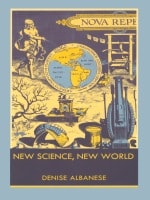
New Science, New World
Denise Albanese
Duke University Press, 1996
Albanese reads the inaugurators of the scientific revolution against the canonical authors of early modern literature, discussing Galileo’s Dialogue on the Two Chief World Systems and Bacon’s New Atlantis as well as Milton’s Paradise Lost and Shakespeare’s The Tempest. She examines how the newness or “novelty” of investigating nature is expressed through representations of the New World, including the native, the feminine, the body, and the heavens. “New” is therefore shown to be a double sign, referring both to the excitement associated with a knowledge oriented away from past practices, and to the oppression and domination typical of the colonialist enterprise. Exploring the connections between the New World and the New Science, and the simultaneously emerging patterns of thought and forms of writing characteristic of modernity, Albanese insists that science is at its inception a form of power-knowledge, and that the modern and postmodern division of “Two Cultures,” the literary and the scientific, has its antecedents in the early modern world.
New Science, New World makes an important contribution to feminist, new historicist, and cultural materialist debates about the extent to which the culture of seventeenth-century England is proto-modern. It will offer scholars and students from a wide range of fields a new critical model for historical practice.
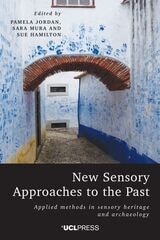
New Sensory Approaches to the Past
Applied Methods in Sensory Heritage and ArchaeologyEdited by Pamela Jordan, Sara Mura, and Sue Hamilton
University College London, 2025
In recent years, archaeologists and other researchers dealing with heritage sites have increasingly emphasized the fact that people in the past interacted with their natural and built environment through all of their senses. In turn, they have come to acknowledge the limits of research methods that rely solely on visual analysis. Presenting studies of historical environments from multiple fields, from archaeology to acoustics, through the lens of the senses, New Sensory Approaches to the Past showcases the latest developments in sensory research through real-world scenarios of human-environment connections. Interdisciplinary examples of diverse sensory in-situ studies will enable readers to replicate and enhance their own investigations. Further, the volume pushes beyond historically Western frameworks of sensory perception towards a more global understanding of the senses.
New Social Movements
From Ideology to Identityedited by Enrique Laraña, Hank Johnston and Joseph R. Gusfield
Temple University Press, 1994
Cultural changes over the past two decades have led to a proliferation of new social movements in Europe and the United States. New social movements such as ecology, peace, ethnicity, New Age philosophies, alternative medicine, and gender and sexual identity are among those that are emerging to challenge traditional categories in social movement theory. Synthesizing classic and modern perspectives the contributors help to redefine the field of social movements and advance an understanding of them through cross-cultural research, comparison with older movements, and an examination of the dimensions of identity—individual, collective, and melding of the two.
New South African Keywords
Nick Shepherd
Ohio University Press, 2008
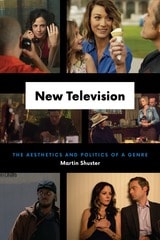
New Television
The Aesthetics and Politics of a GenreMartin Shuster
University of Chicago Press, 2017
Philosopher Martin Shuster argues that television is the modern art form, full of promise and urgency, and in New Television, he offers a strong philosophical justification for its importance. Through careful analysis of shows including The Wire, Justified, and Weeds, among others; and European and Anglophone philosophers, such as Stanley Cavell, Hannah Arendt, Martin Heidegger, and John Rawls; Shuster reveals how various contemporary television series engage deeply with aesthetic and philosophical issues in modernism and modernity. What unifies the aesthetic and philosophical ambitions of new television is a commitment to portraying and exploring the family as the last site of political possibility in a world otherwise bereft of any other sources of traditional authority; consequently, at the heart of new television are profound political stakes.
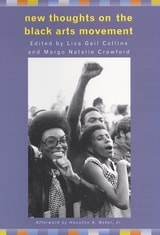
New Thoughts on the Black Arts Movement
Edited by Lisa Gail Collins and Margo Natalie Crawford
Rutgers University Press, 2006