Results by title
71 books match the query 'Adventures' and 2 start with o
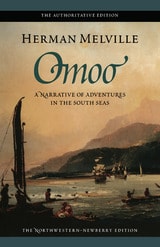
Omoo
A Narrative of Adventures in the South Seas, Volume TwoHerman Melville
Northwestern University Press, 1999
Melville's second book, Omoo, begins where his first book, Typee, left off. As the author said, "It embraces adventures in the South Seas (of a totally different character from 'Typee') and includes an eventful cruise in an English Colonial Whaleman (a Sydney Ship) and a comical residence on the island of Tahiti." The popular success of his first novel encouraged Melville to write a sequel, hoping it would be "a fitting successor." Typee describes Polynesian life in its "primitive" state, while Omoo represents it as affected by non-native influences.
Whitman praised its "good-natured style." But many reviewers doubted Melville's veracity, and some objected to his "raciness" and "indecencies." Some also denounced his criticism of missionary endeavors, for his attacks on missionaries were more polemical than those undertaken in the earlier book. Omoo, however, influenced later visitors to Tahiti such as Pierre Loti, Henry Adams, John La Farge, and Jack London; it was the book that sent Robert Louis Stevenson to the South Seas.
Whitman praised its "good-natured style." But many reviewers doubted Melville's veracity, and some objected to his "raciness" and "indecencies." Some also denounced his criticism of missionary endeavors, for his attacks on missionaries were more polemical than those undertaken in the earlier book. Omoo, however, influenced later visitors to Tahiti such as Pierre Loti, Henry Adams, John La Farge, and Jack London; it was the book that sent Robert Louis Stevenson to the South Seas.
[more]
Omoo
A Narrative of Adventures in the South Seas, Volume Two, Scholarly EditionHerman Melville
Northwestern University Press, 1968
Melville's second book, Omoo, begins where his first book, Typee, left off. As the author said, "It embraces adventures in the South Seas (of a totally different character from 'Typee') and includes an eventful cruise in an English Colonial Whaleman (a Sydney Ship) and a comical residence on the island of Tahiti." The popular success of his first novel encouraged Melville to write a sequel, hoping it would be "a fitting successor." Typee describes Polynesian life in its "primitive" state, while Omoo represents it as affected by non-native influences.
This scholarly edition aims to present a text as close to the author's intention as surviving evidence permits. Based on collations of all editions publishing during Melville's lifetime, it incorporates author corrections and many emendations made by the present editors. This edition of Omoo is an Approved Text of the Center for Editions of American Authors (Modern Language Association of America).
This scholarly edition aims to present a text as close to the author's intention as surviving evidence permits. Based on collations of all editions publishing during Melville's lifetime, it incorporates author corrections and many emendations made by the present editors. This edition of Omoo is an Approved Text of the Center for Editions of American Authors (Modern Language Association of America).
[more]