Results by title
1563 books match the query 'African American & Black Studies' and 22 start with o

ON BOARD THE USS MASON
THE WORLD WAR II DIARY OF JAMES A. DUNNMANSEL G. BLACKFORD
The Ohio State University Press, 2016
Dunn kept a day-to-day diary during his spare time on board the Mason. Such diaries are a rarity, for the navy (and other armed services) forbade the keeping of diaries, fearful lest secret information fall into enemy hands. The diary chronicles the Mason’s wartime activities, from the first convoy to the final return to the United States. It captures the feeling and meaning of life on board with an immediacy not fully found in retrospective accounts. The diary accurately records the mortal danger Dunn and his shipmates were in while attacking enemy submarines or dealing with extreme weather conditions in the North Atlantic. It conveys the boredom the men encountered while confined on long, tedious convoys and the joy of shore leaves. Here is the daily life aboard ship—the duties and the pastimes that made shipboard life endurable.
Equally interesting, the diary reveals what it meant to be an African American in a white navy within a segregated American society, the shipboard tensions, and the shipboard cooperation and sense of unity. It also portrays the life of an African American onshore in the United States, Great Britain, and North Africa and the love story that unfolded between James and his wife, Jane.
Supplemented by additional sources, including interviews with Dunn, this diary is a personal view into an important part of American history. Like the Tuskegee airmen, the men of the USS Mason paved the way for desegregation in America’s armed forces, contributing to a civil rights movement that changed the face of a nation.
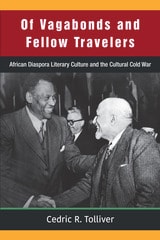
Of Vagabonds and Fellow Travelers
African Diaspora Literary Culture and the Cultural Cold WarCedric R. Tolliver
University of Michigan Press, 2019

On Black Breath
Kimberly Bain
Duke University Press, 2027
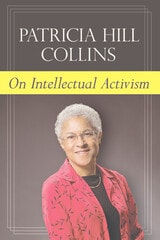
On Intellectual Activism
Patricia Hill Collins
Temple University Press, 2012
Sociologist Patricia Hill Collins has been called in Contemporary Sociology “one of the defining voices of contemporary feminist and race scholarship.” Well known for her contributions to sociology, social theory, and cultural studies, her numerous publications indicate why she has been a tireless voice for social justice causes such as the dynamics of race, social class, gender, and sexual equality, and also black feminist politics.
In On Intellectual Activism, Collins asks scholars and public intellectuals to assess the meaning of their work. She challenges readers to rethink the potential of speaking truth to power, and examines both the role of the intellectual in public life and how well questions of contemporary social issues are communicated to the public at large.
The contents of this volume—public lectures, previously published pieces, interviews, and new essays—illustrate the important conceptual anchors of Collins’ work and reflect on the major themes of her illustrious career. These timely and thought-provoking essays include topics ranging from black feminist thought, critical education, public sociology, and resisting racism to new visions for activist intellectuals.
On Music Theory, and Making Music More Welcoming for Everyone
Philip Ewell
University of Michigan Press, 2023
Winner of the 2024 Association of American Publishers PROSE Award for Music and Performing Arts
Since its inception in the mid-twentieth century, American music theory has been framed and taught almost exclusively by white men. As a result, whiteness and maleness are woven into the fabric of the field, and BIPOC music theorists face enormous hurdles due to their racial identities. In On Music Theory, Philip Ewell brings together autobiography, music theory and history, and theory and history of race in the United States to offer a black perspective on the state of music theory and to confront the field’s white supremacist roots. Over the course of the book, Ewell undertakes a textbook analysis to unpack the mythologies of whiteness and western-ness with respect to music theory, and gives, for the first time, his perspective on the controversy surrounding the publication of volume 12 of the Journal of Schenkerian Studies. He speaks directly about the antiblackness of music theory and the antisemitism of classical music writ large and concludes by offering suggestions about how we move forward. Taking an explicitly antiracist approach to music theory, with this book Ewell begins to create a space in which those who have been marginalized in music theory can thrive.
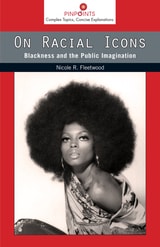
On Racial Icons
Blackness and the Public ImaginationFleetwood, Nicole R
Rutgers University Press, 2015
Nicole R. Fleetwood’s answers to these questions will change the way you think about the next photograph that you see depicting a racial event, black celebrity, or public figure. In On Racial Icons, Fleetwood focuses a sustained look on photography in documenting black public life, exploring the ways in which iconic images function as celebrations of national and racial progress at times or as a gauge of collective racial wounds in moments of crisis.
Offering an overview of photography’s ability to capture shifting race relations, Fleetwood spotlights in each chapter a different set of iconic images in key sectors of public life. She considers flash points of racialized violence in photographs of Trayvon Martin and Emmett Till; the political, aesthetic, and cultural shifts marked by the rise of pop stars such as Diana Ross; and the power and precarity of such black sports icons as Serena Williams and LeBron James; and she does not miss Barack Obama and his family along the way. On Racial Icons is an eye-opener in every sense of the phrase.
On the Cultural Achievements of Negroes
Henri Gregoire
University of Massachusetts Press, 1996
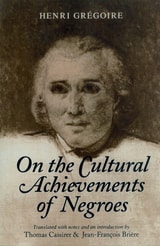
First published in French in 1808 and translated into English two years later under the title An Enquiry Concerning the Intellectual and Moral Faculties, and Literature of the Negroes, this book was a touchstone for nineteenth-century abolitionists in England and the United States. Written by Abbe Henri Gregoire (1750–1831), it argued vigorously against assumptions of black inferiority and in favor of the humanity, equality, and cultural achievements of people of African heritage. His treatise summarized most of the available written thought on race up to that time. A leading activist in the French Revolution, Gregoire reflected in his arguments the spirit of “libertie, egalite, and fraternite” and anticipated twentieth-century race inquiry and theory. Although influential in its time, the first translation of Gregoire's work was incomplete and flawed. This new edition presents a fresh, accurate, and complete text of this key document in the history of Western racial thought. The book includes a substantial biography of Gregoire and analysis of the historical context in which he wrote and the impact of his work.
On the Eve of the Cybercultural Revolution
Black Power and Capitalism in the 1960sBrian Bartell
University of Minnesota Press, 2025
Uncovering the Black Power movement’s contributions to theorizing the politics of automation
On the Eve of the Cybercultural Revolution offers a comprehensive look at the Black Power movement’s theoretical work and insights into the entanglement of capitalism, technology, and racism. Drawing upon James and Grace Lee Boggs’s expanded notion of the cybercultural era, Brian Bartell demonstrates how a range of artists, writers, and activists from the 1960s prefigured the wider discourse around automation and made it a central concern of their politics.
Rather than reducing automation to an isolated technical phenomenon, theorists of the Black radical tradition identified its important historical antecedents in colonialism and plantation slavery, emphasizing how the emerging cyberculture joined with issues such as the reorganization of labor, ecological harm, and racial inequality. Examining the work of Martin Luther King Jr., Noah Purifoy, the Black Panthers, and others, On the Eve of the Cybercultural Revolution outlines the new forms of social reproduction conceived outside of the dominant structures of racial capitalism.
Bartell synthesizes a wide range of source texts, including political speeches, literature, and activist archives, to show how the Black Power movement sought to create a postscarcity, more-than-capitalist economy. By shedding light on the movement’s underexplored engagement with theories of technology, he provides a crucial key to understanding the historical dynamics responsible for our technocapitalist present.
Retail e-book files for this title are screen-reader friendly.

On the Run
Fugitive Life in an American CityAlice Goffman
University of Chicago Press, 2014
Alice Goffman spent six years living in one such neighborhood in Philadelphia, and her close observations and often harrowing stories reveal the pernicious effects of this pervasive policing. Goffman introduces us to an unforgettable cast of young African American men who are caught up in this web of warrants and surveillance—some of them small-time drug dealers, others just ordinary guys dealing with limited choices. All find the web of presumed criminality, built as it is on the very associations and friendships that make up a life, nearly impossible to escape. We watch as the pleasures of summer-evening stoop-sitting are shattered by the arrival of a carful of cops looking to serve a warrant; we watch—and can’t help but be shocked—as teenagers teach their younger siblings and cousins how to run from the police (and, crucially, to keep away from friends and family so they can stay hidden); and we see, over and over, the relentless toll that the presumption of criminality takes on families—and futures.
While not denying the problems of the drug trade, and the violence that often accompanies it, through her gripping accounts of daily life in the forgotten neighborhoods of America's cities, Goffman makes it impossible for us to ignore the very real human costs of our failed response—the blighting of entire neighborhoods, and the needless sacrifice of whole generations.
On the Sleeve of the Visual
Race as Face ValueAlessandra Raengo
Dartmouth College Press, 2013
One Nation Under A Groove
Motown and American CultureGerald Early
University of Michigan Press, 2004
How it got to be that way and how it changed the face of American popular culture are the subjects of this concise study of Berry Gordy's phenomenal creation. Author Gerald Early tells the story of the cultural and historical conditions that made Motown Records possible, including the dramatic shifts in American popular music of the time, changes in race relations and racial attitudes, and the rise of a black urban population. Early concentrates in particular on the 1960s and 70s, when Motown had its biggest impact on American musical tastes and styles.
With this revised and expanded edition, the author provides an up-to-date bibliography of the major books that have been written about Motown Records specifically, and black American music generally. Plus, new appendices feature interviews with four of the major creators of the Motown Sound: Berry Gordy, Stevie Wonder, Diana Ross, and Marvin Gaye.
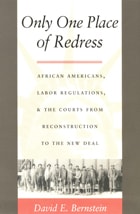
Only One Place of Redress
African Americans, Labor Regulations, and the Courts from Reconstruction to the New DealDavid E. Bernstein
Duke University Press, 2001
A pioneer in applying the insights of public choice theory to legal history, Bernstein contends that the much-maligned jurisprudence of the Lochner era—with its emphasis on freedom of contract and private market ordering—actually discouraged discrimination and assisted groups with little political clout. To support this thesis he examines the motivation behind and practical impact of laws restricting interstate labor recruitment, occupational licensing laws, railroad labor laws, minimum wage statutes, the Davis-Bacon Act, and New Deal collective bargaining. He concludes that the ultimate failure of Lochnerism—and the triumph of the regulatory state—not only strengthened racially exclusive labor unions but contributed to a massive loss of employment opportunities for African Americans, the effects of which continue to this day.
Scholars and students interested in race relations, labor law, and legal or constitutional history will be fascinated by Bernstein’s daring—and controversial—argument.

Only a Black Athlete Can Save Us Now
Grant Farred
University of Minnesota Press, 2021
A call to arms exploring the protest movements of 2020 as they reverberated through the athletic world
Starting with the refusal of George Hill of the Milwaukee Bucks to participate in an August 2020 playoff game following the shooting of Jacob Blake by police in Kenosha, Wisconsin, Grant Farred shows how the Covid-restricted NBA “bubble” released an energy that spurred athletes into radical action. They disrupted athletic normalcy, and in their grief and rage against American racism they demonstrated the true progressivism lacking in even the most reformist-minded politicians and pundits. Farred goes on to trace the radicalism of black athletes in a number of sports, including the WNBA, women’s tennis, the NFL, and NASCAR, locating contemporary athletes in a lineage that runs through Muhammad Ali as well as Tommy Smith and John Carlos at the 1968 Olympics.
Only a Black Athlete Can Save Us Now uses sport as a point of departure to argue that the dystopic crisis of our current moment offers a singular opportunity to reimagine how we live in the world.
Forerunners: Ideas First is a thought-in-process series of breakthrough digital publications. Written between fresh ideas and finished books, Forerunners draws on scholarly work initiated in notable blogs, social media, conference plenaries, journal articles, and the synergy of academic exchange. This is gray literature publishing: where intense thinking, change, and speculation take place in scholarship.

Open Admissions
The Poetics and Pedagogy of Toni Cade Bambara, June Jordan, Audre Lorde, and Adrienne Rich in the Era of Free CollegeDanica Savonick
Duke University Press, 2024

Open Wound
The Long View of Race in AmericaWilliam McKee Evans
University of Illinois Press, 2009
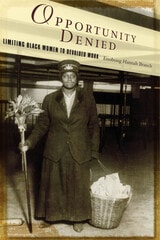
Opportunity Denied
Limiting Black Women to Devalued WorkBranch, Enobong
Rutgers University Press, 2011
Blacks and Whites. Men and Women. Historically, each group has held very different types of jobs. The divide between these jobs was stark—clean or dirty, steady or inconsistent, skilled or unskilled. In such a rigidly segregated occupational landscape, race and gender radically limited labor opportunities, relegating Black women to the least desirable jobs. Opportunity Denied is the first comprehensive look at changes in race, gender, and women’s work across time, comparing the labor force experiences of Black women to White women, Black men and White men. Enobong Hannah Branch merges empirical data with rich historical detail, offering an original overview of the evolution of Black women’s work.
From free Black women in 1860 to Black women in 2008, the experience of discrimination in seeking and keeping a job has been determinedly constant. Branch focuses on occupational segregation before 1970 and situates the findings of contemporary studies in a broad historical context, illustrating how inequality can grow and become entrenched over time through the institution of work.
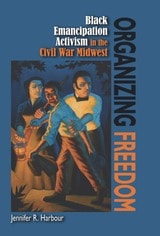
Organizing Freedom
Black Emancipation Activism in the Civil War MidwestJennifer R. Harbour
Southern Illinois University Press, 2020
Despite banning slavery, Illinois and Indiana share an antebellum history of severely restricting rights for free black people while protecting the rights of slaveholders. Nevertheless, as Harbour shows, black Americans settled there, and in a liminal space between legal slavery and true freedom, they focused on their main goals: creating institutions like churches, schools, and police watches; establishing citizenship rights; arguing against oppressive laws in public and in print; and, later, supporting their communities throughout the Civil War.
Harbour’s sophisticated gendered analysis features black women as being central to the seeking of emancipated freedom. Her distinct focus on what military service meant for the families of black Civil War soldiers elucidates how black women navigated life at home without a male breadwinner at the same time they began a new, public practice of emancipation activism. During the tumult of war, Midwestern black women negotiated relationships with local, state, and federal entities through the practices of philanthropy, mutual aid, religiosity, and refugee and soldier relief.
This story of free black people shows how the ideal of equality often competed against reality in an imperfect nation. As they worked through the sluggish, incremental process to achieve abolition and emancipation, Midwestern black activists created a unique regional identity.
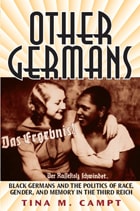
Other Germans
Black Germans and the Politics of Race, Gender, and Memory in the Third ReichTina M. Campt
University of Michigan Press, 2005

Otherwise Worlds
Against Settler Colonialism and Anti-BlacknessTiffany Lethabo King, Jenell Navarro, and Andrea Smith, editors
Duke University Press, 2020
Contributors. Maile Arvin, Marcus Briggs-Cloud, J. Kameron Carter, Ashon Crawley, Denise Ferreira da Silva, Chris Finley, Hotvlkuce Harjo, Sandra Harvey, Chad B. Infante, Tiffany Lethabo King, Jenell Navarro, Lindsay Nixon, Kimberly Robertson, Jared Sexton, Andrea Smith, Cedric Sunray, Se’mana Thompson, Frank B. Wilderson
Our Caribbean
A Gathering of Lesbian and Gay Writing from the AntillesThomas Glave, ed.
Duke University Press, 2008
The thirty-seven authors hail from the Bahamas, Barbados, Cuba, the Dominican Republic, Grenada, Guyana, Haiti, Jamaica, Panama, Puerto Rico, St. Vincent, St. Kitts, Suriname, and Trinidad. Many have lived outside the Caribbean, and their writing depicts histories of voluntary migration as well as exile from repressive governments, communities, and families. Many pieces have a political urgency that reflects their authors’ work as activists, teachers, community organizers, and performers. Desire commingles with ostracism and alienation throughout: in the evocative portrayals of same-sex love and longing, and in the selections addressing religion, family, race, and class. From the poem “Saturday Night in San Juan with the Right Sailors” to the poignant narrative “We Came All the Way from Cuba So You Could Dress Like This?” to an eloquent call for the embrace of difference that appeared in the Nassau Daily Tribune on the eve of an anti-gay protest, Our Caribbean is a brave and necessary book.
Contributors: José Alcántara Almánzar, Aldo Alvarez, Reinaldo Arenas, Rane Arroyo, Jesús J. Barquet, Marilyn Bobes, Dionne Brand, Timothy S. Chin, Michelle Cliff, Wesley E. A. Crichlow,
Mabel Rodríguez Cuesta, Ochy Curiel, Faizal Deen, Pedro de Jesús, R. Erica Doyle, Thomas Glave,
Rosamond S. King, Helen Klonaris, Lawrence La Fountain-Stokes, Audre Lorde, Shani Mootoo,
Anton Nimblett, Achy Obejas, Leonardo Padura Fuentes, Virgilio Piñera, Patricia Powell, Kevin Everod Quashie, Juanita Ramos, Colin Robinson, Assotto Saint, Andrew Salkey, Lawrence Scott,
Makeda Silvera, H. Nigel Thomas, Rinaldo Walcott, Gloria Wekker, Lawson Williams

Our Children, Their Children
Confronting Racial and Ethnic Differences in American Juvenile JusticeEdited by Darnell F. Hawkins and Kimberly Kempf-Leonard
University of Chicago Press, 2005
Our Children, Their Children provides a state-of-the-science examination of racial and ethnic disparities in the American juvenile justice system. Here, contributors document the precise magnitude of these disparities, seek to determine their causes, and propose potential solutions. In addition to race and ethnicity, contributors also look at the effects on juvenile justice of suburban sprawl, the impact of family and neighborhood, bias in postarrest decisions, and mental health issues. Assessing the implications of these differences for public policy initiatives and legal reforms, this volume is the first critical summary of what is known and unknown in this important area of social research.
Out of the Shadows
A Biographical History of African American AthletesDavid K. Wiggins
University of Arkansas Press, 2008