Results by title
240 books match the query 'Agriculture & Food' and 5 start with o

One Small Farm
Photographs of a Wisconsin Way of LifeCraig Schreiner
Wisconsin Historical Society Press, 2013
“People’s lives are written on the fields of old farms. The rows of the fields are like lines on a page, blank and white in winter, filled in with each year’s story of happiness, disappointment, drought, rain, sun, scarcity, plenty. The chapters accumulate, and people enter and leave the narrative. Only the farm goes on.”—From the Introduction
In One Small Farm, Craig Schreiner’s evocative color photographs capture one family as they maintain the rhythms and routines of small farm life near Pine Bluff, Wisconsin. “Milk in the morning and milk at night. Feed the cows and calves. Plant crops. Grind feed. Chop and bale hay. Cut wood. Clean the barn. Spread manure on the fields. Plow snow and split wood in winter. In spring, pick rocks from the fields. Cultivate corn. Pick corn. Harvest oats and barley. Help calves be born. Milk in the morning and milk at night.”
There’s much more to life on the farm than just chores, of course, and Schreiner captures the rhythms and richness of everyday life on the farm in all seasons, evoking both the challenges and the joys and providing viewers a window into a world that is quickly fading. In documenting the Lamberty family’s daily work and life, these thoughtful photos explore larger questions concerning the future of small farm agriculture, Wisconsin cultural traditions, and the rural way of life.
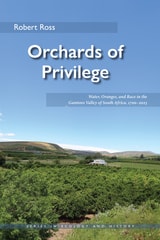
Orchards of Privilege
Water, Oranges, and Race in the Gamtoos Valley of South Africa, 1700–2023Robert Ross
Ohio University Press, 2025
This study of the Gamtoos River floodplain in South Africa’s Eastern Cape Province traces its transformation from an eighteenth-century natural landscape of thick bush into an agricultural zone now threatened by climate change. The first half of the book explains how missionaries from the London Missionary Society and residents of the Hankey Mission Station introduced irrigation, turning the area into a community of small-scale farmers. Despite early failures, by 1849 they had constructed South Africa’s first major irrigation tunnel and aqueduct. However, conflicts between the missionaries and residents led to the loss of communal lands to privatization, which ultimately impoverished the local farmers. The second half explores efforts to develop the valley for large-scale agriculture, addressing challenges like drought, flash floods, and saline water. By the mid-twentieth century, Afrikaners dominated the area, benefiting from the construction in 1970 of the Kouga Dam, which provided fresh water for the floodplain. This led to the rise of a wealthy white farming community, sustained by apartheid policies and labor from the “Coloured” and African populations. In the early twenty-first century, however, this prosperity has become threatened by severe droughts linked to global climate change. In view of these historical transformations, the Gamtoos River floodplain exemplifies the complex interplay between human ambition, environmental challenges, and sociopolitical forces.

Organic Coffee
Sustainable Development by Mayan FarmersMaria Elena Martinez-Torres
Ohio University Press, 2006
Maria Elena Martinez-Torres explains how Mayan farmers have built upon their ethnic networks to make a crucial change in their approach to agriculture. Taking us inside Chiapas, Mexico's poorest state and scene of the 1994 Zapatista uprising, she examines the anatomy of the ongoing organic coffee boom and the fair-trade movement. The organic coffee boom arose as very poor farmers formed cooperatives, revalued their ethnic identity, and improved their land through organic farming. The result has been significant economic benefits for their families and ecological benefits for the future sustainability of agriculture in the region.
Organic Coffee refutes the myth that organic farming is less productive than chemical-based agriculture and gives us reasons to be hopeful for indigenous peoples and peasant farmers
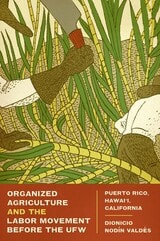
Organized Agriculture and the Labor Movement before the UFW
Puerto Rico, Hawai’i, CaliforniaBy Dionicio Nodín Valdés
University of Texas Press, 2011
Puerto Rico, Hawai'i, and California share the experiences of conquest and annexation to the United States in the nineteenth century and mass organizational struggles by rural workers in the twentieth. Organized Agriculture and the Labor Movement before the UFW offers a comparative examination of those struggles, which were the era's longest and most protracted campaigns by agricultural workers, supported by organized labor, to establish a collective presence and realize the fruits of democracy.
Dionicio Nodín Valdés examines critical links between the earlier conquests and the later organizing campaigns while he corrects a number of popular misconceptions about agriculture, farmworkers, and organized labor. He shows that agricultural workers have engaged in continuous efforts to gain a place in the institutional life of the nation, that unions succeeded before the United Farm Workers and César Chávez, and that the labor movement played a major role in those efforts. He also offers a window into understanding crucial limitations of institutional democracy in the United States, and demonstrates that the widespread lack of participation in the nation's institutions by agricultural workers has not been due to a lack of volition, but rather to employers' continuous efforts to prevent worker empowerment.
Organized Agriculture and the Labor Movement before the UFW demonstrates how employers benefitted not only from power and wealth, but also from imperialism in both its domestic and international manifestations. It also demonstrates how workers at times successfully overcame growers' advantages, although they were ultimately unable to sustain movements and gain a permanent institutional presence in Puerto Rico and California.

Our Precious Corn
YukwanénsteRebecca M. Webster
Michigan State University Press, 2023