Results by title
3576 books match the query 'American' and 80 start with o
O Paradise
PoemsWilliam Trowbridge
University of Arkansas Press, 1995
As Howard Nemerov has said in praise of William Trowbridge’s first poetry collection: “he is very much up on the peculiarities of our little world … He is both funny and serious, seriously funny; probably the best, if not the only, way of dealing with the complex predicament.”
Continuing in this third collection of poems to work in the realm of the serio-comic, Trowbridge explores other borderlands—between the tangible world and the intuitive one, between actuality and memory, between consciousness and unconsciousness, between self as flesh and blood and self as ghost.
This is fast-faced, nervy poetry whose witty, vernacular language moves surprisingly toward transcendence.
O'Neill's Shakespeare
Normand Berlin
University of Michigan Press, 1993
In O'Neill's Shakespeare , Normand Berlin explores the relationship of William Shakespeare and Eugene O'Neill through detailed, often surprising, intertextual readings of the two great playwrights' work. "Of course, it would have been impossible for O'Neill not to have been influenced by Shakespeare," acknowledges Berlin. But this is an influence of an unusual and extraordinary sort, "a family romance" that transcends their obvious differences—a romance that "takes in all O'Neill's life and art."
In the first book-length study of this crucial literary and dramatic relationship, Berlin probes far beyond the usual listing of allusions and references. This is the exploration of an "essential, basic, even natural" connection, in which Shakespeare is shown to have fundamentally shaped O'Neill's creative imagination. Following O'Neill's career chronologically, Berlin divides his study into two parts. The "first career" (culminating in Mourning Becomes Electra) is explored through recurring themes that evoke Shakespeare: the sea, black and white, and the family. O'Neill's "second career" (from Ah! Wilderness until the last plays) is examined through Shakespearean genre classifications: comedy, history, tragedy, and tragicomedy. Though always grounded in close textual readings, Berlin's analysis spirals outward to encompass O'Neill's artistic and psychological development and touches on the questions of tradition, transcendence, and human nature inevitably raised when such literary connections across history are drawn.
O'Neill's Shakespeare is more than a reminder that Shakespeare continues to haunt Western culture; it is a careful and fascinating analysis of a particular legacy in American drama. The book has insights to offer to specialists in Shakespeare and O'Neill, and to any reader interested in the transmission of ideas through Western culture. Berlin's study of the unconscious and conscious uses of Shakespeare by O'Neill provide a valuable new understanding of O'Neill's artistry. It is also an eloquent, thoughtful account that blends the transcendence of Shakespeare's influence with the particular ways in which every era must refashion Shakespeare so that "the past becomes the present."
Object Lessons
Robyn Wiegman
Duke University Press, 2012
Objects of Hunger
E. C. Belli
Southern Illinois University Press, 2019
Objects of Hunger explores in reflective, raw lyrics the dread and beauty of our inner worlds as expressed through our struggles against the self and the other. Each poem is a slender organism that speaks its own mind, unafraid of pathos; the emotions here have been tried on and lived in, and the work accrues, lyric after lyric, page after page. In the second section, World War I poems are broken down and dismantled, as the voices of that era’s poets meld with that of a postpartum mother, exposing a shared vernacular among these disparate experiences. Other poems in the collection explore the unraveling and entrapments of the domestic, but with tenacity in place of softness, using a lexicon gathered from Virginia Woolf’s The Waves and Djuna Barnes’s Nightwood, among others.
What emerges is a finely chiseled portrait of intimacy, one that takes seriously love and all discord, the fracas of reticence and familiarity. Belli gives this world to us by way of a throbbing asceticism, in an exploration of resignation, concession, persistence, and monstrosity. This collection tells what it is to need with abandon.
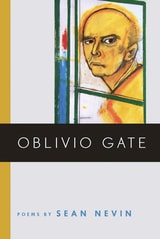
Oblivio Gate
Sean Nevin
Southern Illinois University Press, 2008
Suffused with lyrical grace and the language of loss, Sean Nevin's Oblivio Gate explores the mental and emotional struggles of Solomon, a veteran battling the onslaught of Alzheimer's disease. Set against Solomon's memories of the Korean War, Nevin's poems draw us into an intimate view of a man's confusion as everything he knows slowly unravels around him, leaving him abandoned in the suddenly unfamiliar landscape of his own mind. Readers experience first- hand Solomon's dismay as he watches himself inexorably slip away from reality, fighting to hold on to the shreds of his identity. Intertwined with his perspective are the voices of loved ones and caregivers who can only watch helplessly as Solomon is ravaged by the illness. Also central to the collection are the figures of Aurora and Tithonus, the famously doomed couple of mythology whose own happiness was destroyed by the inevitability of age and the betrayal of the body. But if this evocative portrait of Alzheimer's disease is tragic, it is also at moments inspiring.
Oblivio Gate reveals not only what is lost, but also what is found, what is pure, and even what is funny in our fleeting lives. Ultimately, Sean Nevin crafts an unforgettable collection of contemporary poetry that yields heartbreaking insight into memory, the mind, and an affliction that has left millions lost and looking for themselves.
Ocean Power
Poems from the DesertOfelia Zepeda
University of Arizona Press, 1995
Poet Ofelia Zepeda centers these poems on her own experiences growing up in a Tohono O'odham family, where desert climate profoundly influenced daily life, and on her perceptions as a contemporary Tohono O'odham woman. One section of poems deals with contemporary life, personal history, and the meeting of old and new ways. Another section deals with winter and human responses to light and air. The final group of poems focuses on the nature of women, the ocean, and the way the past relationship of the O'odham with the ocean may still inform present day experience. These fine poems will give the outside reader a rich insight into the daily life of the Tohono O'odham people.
Oceans at Home
Maritime and Domestic Fictions in Nineteenth-Century American Women's WritingMelissa Gniadek
University of Massachusetts Press, 2021
Melissa Gniadek explores the role of the ocean, with particular attention to the Pacific, in a diverse range of literary texts spanning the late 1820s through the mid-1860s from Lydia Maria Child, Caroline Kirkland, Harriet Beecher Stowe, Elizabeth Stoddard, and Harriet Prescott Spofford. Oceans at Home shows that authors employed maritime plots and stories from distant locations to probe contemporary concerns facing the continental United States, ranging from issues of gender restrictions in the domestic sphere to the racial prejudices against indigenous peoples that lay at the heart of settler colonialism.
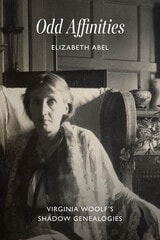
Odd Affinities
Virginia Woolf’s Shadow GenealogiesElizabeth Abel
University of Chicago Press, 2024
In recent decades, Virginia Woolf’s contribution to literary history has been located primarily within a female tradition. Elizabeth Abel dislodges Woolf from her iconic place within this tradition to uncover her shadowy presence in other literary genealogies. Abel elicits unexpected echoes of Woolf in four major writers from diverse cultural contexts: Nella Larsen, James Baldwin, Roland Barthes, and W. G. Sebald. By mapping the wayward paths of what Woolf called “odd affinities” that traverse the boundaries of gender, race, and nationality, Abel offers a new account of the arc of Woolf’s career and the transnational modernist genealogy constituted by her elusive and shifting presence. Odd Affinities will appeal to students and scholars working in New Modernist studies, comparative literature, gender and sexuality studies, and African American studies.
Odd Bloom Seen from Space
Timothy Daniel Welch
University of Iowa Press, 2017
But it’s in the act of discovery, through the hero’s immediate ancestry that Welch’s debut collection confronts big questions about family, music, art, and memory. Like a contemporary Diogenes who pursues meaning one small gesture at a time, Welch comes to learn truth is a “brutal commerce,” beauty is “white legs / upon which she shed her childhood,” time is “Michael Jackson / hooting in the trees,” and “Love is gradual, a bottle / by sips, a bottle / poured onto the floor.” There is wisdom to be gained from these inventive pursuits, but in the end it’s not what is said, but how it’s said with terse rhetoric, deep imagery, and surprising humor that makes Odd Bloom Seen from Space such a gorgeous, original, and baffling collection.
Of Cartography
PoemsEsther G. Belin
University of Arizona Press, 2017
In this long-anticipated collection, Belin daringly maps the poetics of womanhood, the body, institution, family, and love. Depicting the personal and the political, Of Cartography is an exploration of identity through language. With poems ranging from prose to typographic and linguistic illustrations, this distinctive collection pushes the boundaries of traditional poetic form.
Marking territory and position according to the Diné cardinal points, Of Cartography demands much from the reader, gives meaning to abstraction, and demonstrates the challenges of identity politics.
Of No Country I Know
New and Selected Poems and TranslationsDavid Ferry
University of Chicago Press, 1999
"Though Ferry is perhaps best known for his eloquent translations of Horace and Virgil, "Of No Country I Know" demonstrates that he deserves acclaim for his own poetry as well."—Carmela Ciuraru, New York Times Book Review
Of This River
Noah Davis
Michigan State University Press, 2020
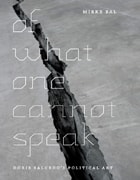
Of What One Cannot Speak
Doris Salcedo's Political ArtMieke Bal
University of Chicago Press, 2010
Doris Salcedo, a Colombian-born artist, addresses the politics of memory and forgetting in work that embraces fraught situations in dangerous places. Noted critic and theorist Mieke Bal narrates between the disciplines of contemporary culture in order to boldly reimagine the role of the visual arts. Both women are pathbreaking figures, globally renowned and widely respected. Doris Salcedo, meet Mieke Bal.
In Of What One Cannot Speak, Bal leads us into intimate encounters with Salcedo’s art, encouraging us to consider each work as a “theoretical object” that invites—and demands—certain kinds of considerations about history, death, erasure, and grief. Bal ranges widely through Salcedo’s work, from Salcedo’s Atrabiliarios series—in which the artist uses worn shoes to retrace los desaparecidos (“the disappeared”) from nations like Argentina, Chile, and Colombia—to Shibboleth, Salcedo’s once-in-a-lifetime commission by the Tate Modern, for which she created a rupture, as if by earthquake, that stretched the length of the museum hall’s concrete floor. In each instance, Salcedo’s installations speak for themselves, utilizing household items, human bones, and common domestic architecture to explore the silent spaces between violence, trauma, and identity. Yet Bal draws out even deeper responses to the work, questioning the nature of political art altogether and introducing concepts of metaphor, time, and space in order to contend with Salcedo’s powerful sculptures and installations.
An unforgettable fusion of art and essay, Of What One Cannot Speak takes us to the very core of events we are capable of remembering—yet still uncomfortably cannot speak aloud.
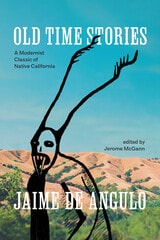
Old Time Stories
A Modernist Classic of Native CaliforniaJaime de Angulo
University of Chicago Press, 2026
Dismantled and scattered just before his death, Jaime de Angulo’s poetic masterpiece Old Time Stories is now reconstituted for the first time in this edition.
Jaime de Angulo’s Old Time Stories, a visual prose-poem drawing on his anthropological research among Indigenous communities in California, is a forgotten modernist treasure. Completed shortly before de Angulo’s death, the work has survived only in fragments, divided between an abridged 1953 publication and a limited edition from the 1970s. This new reconstituted edition gives contemporary readers—whether interested in experimental literature, linguistics, cultural anthropology, or Native American history—their first chance to engage with the complete work.
Structured around children’s stories inspired by the Indigenous tales and legends de Angulo encountered directly during his studies, Old Time Stories uses illustrations, different typefaces, and other experimental formatting techniques to translate rich oral and pictographic traditions into the condensed form of print. Beyond its significance as an innovative work of American literary modernism, it interrogates the colonialist foundations of Western modernity through this very reworking of Western literary conventions.
Olympic Butter Gold
PoemsJonathan Moody
Northwestern University Press, 2015
Jonathan Moody grew up during the Golden Ages of hip-hop and listened to rap that was as adventurous and diverse as his military upbringing. When rap’s Golden Ages expired, the music’s innovativeness and variety diminished. Moody’s second book, Olympic Butter Gold, winner of the 2014 Cave Canem Northwestern University Press Poetry Prize, responds to Chuck D’s claim that "if there was a HIP-HOP or Rap Olympics, I really don’t think the United States would get Gold, Silver or Brass." From the poem "Opening Ceremony," in the voice of a heroin addict struggling to use Lady Liberty’s torch to cook "The American Dream," to "Dear 2Pac," an autobiographical account of teaching Tupac Shakur’s poetry to engage high school students indifferent to literature, Moody shares a worldview that is simultaneously apocalyptic and promising.
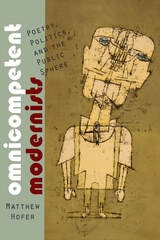
Omnicompetent Modernists
Poetry, Politics, and the Public SphereMatthew Hofer
University of Alabama Press, 2022
An innovative exploration of early twentieth-century avant-garde poetry’s relationship to the public sphere
“It is difficult / to get the news from poems / yet men die miserably every day / for lack / of what is found there,” as the poet William Carlos Williams memorably declared. In Omnicompetent Modernists: Poetry, Politics, and the Public Sphere, Matthew Hofer examines, through a multilayered literary critique of interwar modernist poetry, what it might mean to get the news, and more, from a poet.
Using pragmatist ideas about the public sphere as a tool, Hofer reveals how Langston Hughes, Ezra Pound, and Mina Loy sought to use literature to both express and enable thought. In Hughes, Pound, and Loy, Hofer attends to poets whose work vigorously imagined possible new relationships between language, thinking, and public society. Each poet had different goals and used different methods, but all found both inspiration and encouragement in popular political theory. Hughes advocated for a more just vision of color and class in the United States. Pound sought to condemn those whom he associated with public harm, linguistically, socially, economically, and politically. Loy championed the “psycho-democratic” representation of women, in both public and private life.
Although Hughes, Pound, and Loy are rarely considered together, what unites these three writers is how each reconceived the public realm, and revolutionized aesthetic form to articulate those visions. Hofer combines sharp intellectual historiography with rigorous literary criticism and the result is a study that reinvigorates both the poems and poets under consideration and speaks to the immense power of language in manipulating public opinion—with pertinent implications for the politics of the present.

On Dickinson
The Best from American LiteratureEdwin H. Cady
Duke University Press, 1990
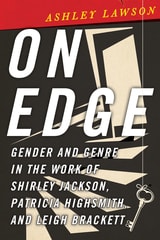
On Edge
Gender and Genre in the Work of Shirley Jackson, Patricia Highsmith, and Leigh BrackettAshley Lawson
The Ohio State University Press, 2024
Honorable Mention, 2025 PCA Emily Toth Award For Best Single Work In Women’s Studies
Finalist, 2025 Mystery Writers of America's Edgar Awards, Best Critical/Biographical Category
Finalist, Bouchercon New Orleans 2025 Anthony Awards, Best Critical/Non-Fiction
Nominated for the 2025 Macavity Awards, Best Mystery-related Nonfiction/Critical
Ashley Lawson’s On Edge presents a new picture of postwar American literature, arguing that biases against genre fiction have unfairly disadvantaged the legacies of authors like Shirley Jackson, Patricia Highsmith, and Leigh Brackett. Each of these women navigated a male-dominated postwar publishing world without compromising their values. Their category-defying treatment of gender roles and genre classifications created suspense in their work that spoke to the tensions of the “Age of Anxiety.” Lawson engages with foundational voices in American literature, genre theory, and feminism to argue that, by merging the dominant mode of literary realism with fantastical or heightened elements, Brackett, Jackson, and Highsmith responded to the big questions of their era with startling and unnerving answers. By elevating genre play to a marker of literary skill, Lawson contends, we can secure these writers a more prominent place within the canon of midcentury American literature and open the door for the recovery of their similarly innovative peers.
On Emerson
The Best from American LiteratureEdwin H. Cady and Louis J. Budd, eds.
Duke University Press, 1988
Presented in order of their first appearance, the articles in each volume constitute a revealing record of developing insights and important shifts of critical emphasis. Each article has opened a fresh line of inquiry, established a fresh perspective on a familiar topic, or settled a question that engaged the interest of experts.
On Faulkner
The Best from American LiteratureEdwin H. Cady and Louis J. Budd, editors
Duke University Press, 1989
Presented in order of their first appearance, the articles in each volume constitute a revealing record of developing insights and important shifts of critical emphasis. Each article has opened a fresh line of inquiry, established a fresh perspective on a familiar topic, or settled a question that engaged the interest of experts.
On Frost
The Best from American LiteratureEdwin H. Cady and Louis J. Budd, eds.
Duke University Press, 1991
Presented in order of their first appearance, the articles in each volume constitute a revealing record of developing insights and important shifts of critical emphasis. Each article has opened a fresh line of inquiry, established a fresh perspective on a familiar topic, or settled a question that engaged the interest of experts.
On Hawthorne
The Best from American LiteratureEdwin H. Cady and Louis J. Budd, eds.
Duke University Press, 1990
Presented in order of their first appearance, the articles in each volume constitute a revealing record of developing insights and important shifts of critical emphasis. Each article has opened a fresh line of inquiry, established a fresh perspective on a familiar topic, or settled a question that engaged the interest of experts.
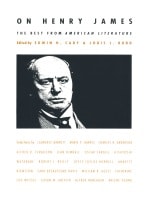
On Henry James
The Best from American LiteratureEdwin H. Cady and Louis J. Budd, eds.
Duke University Press, 1990
Presented in order of their first appearance, the articles in each volume constitute a revealing record of developing insights and important shifts of critical emphasis. Each article has opened a fresh line of inquiry, established a fresh perspective on a familiar topic, or settled a question that engaged the interest of experts.
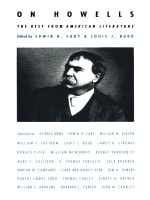
On Howells
The Best from American LiteratureEdwin H. Cady and Louis J. Budd, eds.
Duke University Press, 1993
Presented in order of their first appearance, the articles in each volume constitute a revealing record of developing insights and important shifts of critical emphasis. Each article has opened a fresh line of inquiry, established a fresh perspective on a familiar topic, or settled a question that engaged the interest of experts.
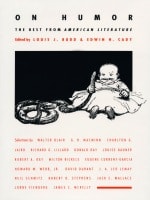
On Humor
The Best from American LiteratureLouis J. Budd and Edwin H. Cady, eds.
Duke University Press, 1992
Presented in order of their first appearance, the articles in each volume constitute a revealing record of developing insights and important shifts of critical emphasis. Each article has opened a fresh line of inquiry, established a fresh perspective on a familiar topic, or settled a question that engaged the interest of experts.
On Internal War
American and Soviet Approaches to Third World Clients and InsurgentsWilliam E. Odom
Duke University Press, 1992
On Internal War reviews the contrasting theory and practice in Soviet and American approaches to their competition in the Third World and relates them to indigenous causes of internal wars. Odom also integrates the military dimensions of insurgencies with external influences and internal politics. Drawing on political development theory, he underscores the sources of instability in Third World states that make insurgencies more likely and offers ways to assess the prospects for democracy in specific cases.
The centerpiece of the study is a practical application of the author’s analysis to three case studies—El Salvador, Guatemala, and the Philippines—and a regional assessment of the Middle East. Odom provides no panaceas but suggests that more promising strategies can be devised.
On Mark Twain
The Best from American LiteratureLouis J. Budd and Edwin H. Cady, eds.
Duke University Press, 1987
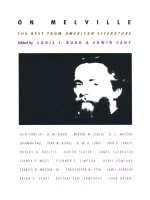
On Melville
The Best from American LiteratureLouis J. Budd and Edwin H. Cady, eds.
Duke University Press, 1988
Presented in order of their first appearance, the articles in each volume constitute a revealing record of developing insights and important shifts of critical emphasis. Each article has opened a fresh line of inquiry, established a fresh perspective on a familiar topic, or settled a question that engaged the interest of experts.
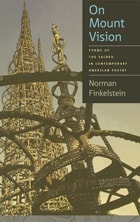
On Mount Vision
Forms of the Sacred in Contemporary American PoetryNorman Finkelstein
University of Iowa Press, 2010
Plumbing what the poet Michael Palmer calls “the dimension of the Spirit, with that troublesome, rebarbative capital letter,” Norman Finkelstein’s On Mount Vision asks how and why the sacred has remained a basic concern of contemporary experimental poets in our secular age. By charting the wandering, together and apart, of poetry and belief, Finkelstein illustrates the rich tapestry formed by the warp and woof of poetry, and the play of Gnosticism, antinomianism, spiritualism, and shamanism, which have commonly been regarded as heretical and sometimes been outright suppressed.
This beautifully written work begins with an overview of the spiritual problematics found in nineteenth- and early twentieth-century American poetry. Traveling slightly outside of the realm of the contemporary, Finkelstein’s discussions of Emerson, Whitman, and Eliot yield to close readings of the works of Robert Duncan, Jack Spicer, Ronald Johnson, Michael Palmer, Susan Howe, Nathaniel Mackey, and Armand Schwerner. In restoring verse to its place alongside scripture, Finkelstein reminds us why the sacred remains crucial to our understanding of postmodern American poetry.
On Poe
The Best from American LiteratureLouis J. Budd and Edwin H. Cady, eds.
Duke University Press, 1993
Presented in order of their first appearance, the articles in each volume constitute a revealing record of developing insights and important shifts of critical emphasis. Each article has opened a fresh line of inquiry, established a fresh perspective on a familiar topic, or settled a question that engaged the interest of experts.

On Second Thought
James Gray
University of Minnesota Press, 1946
On Spec
Tyrone Williams
Omnidawn, 2007
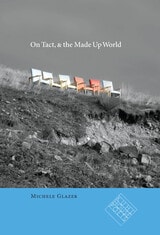
On Tact, & the Made Up World
Michele Glazer
University of Iowa Press, 2010
Michele Glazer’s poems take on questions of being and value, exploring not just what is, but how it is. The poems trouble borders—between self and other, old and young, sick and well, stranger and intimate; between physical states in processes of decay; and between line and phrase, sentence and interruption, prose and poem, resisting the desire for something irrefutable with an abiding skepticism.
The poems are drawn to missteps in perception and in language, those fractures that promise to crack open a surface to yield some other, greater meaning: “What is looked at is changed / what is looked for is gone.” From this collision of passion and severity come poems that are strange and darkly beautiful.
On Whitman
The Best from American LiteratureEdwin H. Cady
Duke University Press, 1987
On William Stafford
The Worth of Local ThingsTom Andrews, Editor
University of Michigan Press, 1995
The late William Stafford's poetry and essays have had a major influence on contemporary American poetry. Since his book Traveling Through the Dark won the National Book Award in 1963, his awards have grown exponentially as new work has appeared. The range of writers in the past four decades who have celebrated Stafford's work-- from Margaret Atwood to James Dickey-- is remarkable. On William Stafford: The Worth of Local Things helps clarify the precise nature of Stafford's influence by assembling the responses of some of our best poets and critics to his work, including Richard Hugo, Charles Simic, Louis Simpson, Robert Coles, Linda Pastan, and Robert Creeley. This collection offers a unique view of Stafford's sometimes controversial work and insight into several of the liveliest recent debates in poetics.
Tom Andrews is Assistant Professor of English, Ohio University.
On the Battlefield of Memory
The First World War and American Remembrance, 1919–1941Steven Trout
University of Alabama Press, 2010
This work is a detailed study of how Americans in the 1920s and 1930s interpreted and remembered the First World War. Steven Trout asserts that from the beginning American memory of the war was fractured and unsettled, more a matter of competing sets of collective memories—each set with its own spokespeople— than a unified body of myth. The members of the American Legion remembered the war as a time of assimilation and national harmony. However, African Americans and radicalized whites recalled a very different war. And so did many of the nation’s writers, filmmakers, and painters.
Trout studies a wide range of cultural products for their implications concerning the legacy of the war: John Dos Passos’s novels Three Soldiers and 1919, Willa Cather’s One of Ours, William March’s Company K, and Laurence Stallings’s Plumes; paintings by Harvey Dunn, Horace Pippin, and John Steuart Curry; portrayals of the war in The American Legion Weekly and The American Legion Monthly; war memorials and public monuments like the Tomb of the Unknown Soldier; and commemorative products such as the twelve-inch tall Spirit of the American Doughboy statue.
Trout argues that American memory of World War I was not only confused and contradictory during the ‘20s and ‘30s, but confused and contradictory in ways that accommodated affirmative interpretations of modern warfare and military service. Somewhat in the face of conventional wisdom, Trout shows that World War I did not destroy the glamour of war for all, or even most, Americans and enhanced it for many.
On the Desire to Levitate
PoemsAlison Powell
Ohio University Press, 2014
On the Desire to Levitate is the first collection of poems by Alison Powell. This striking collection includes vivid, unflinching meditations on aging, mythology, poetry, and family. In tight, elegant lines that alternate between homage and elegy, these poems explore known subjects with a rebellious eye: a defeated Hercules and a bitter Eurydice, a sympathetic Lucifer, and generations of adolescent girls as mythical adventurers moving within a beloved but confining Midwest. Yet in Powell’s skillful hands, hardship never overtakes: as judge Charles Hood writes, “There’s often a delicious humor in this work, and always a deep and lasting integrity.”
On the Poetry of Philip Levine
Stranger to NothingChristopher Buckley, Editor
University of Michigan Press, 1990
Readers and critics alike have applauded Philip Levine's poems for their eloquent and elegiac narrative and their vivas for the dignity of the human spirit. In 1987 Levine received the esteemed Ruth Lilly Prize, given by the Modern Poetry Association and the American Council for the Arts in recognition of outstanding poetic achievement. On the Poetry of Philip Levine, the first critical collection to focus on this original and highly acclaimed poet, selects essays and reviews that span three decades. Included are pieces by Richard Howard, Stephen Yenser, Ralph J. Mills, Jr., and Dave Smith.
UNDER DISCUSSION Donald Hall, General Editor
On the Wing
American Poems of Air and Space FlightOlsen, Karen Yelena
University of Iowa Press, 2005
Once When Green
PoemsMark Irwin
University of Massachusetts Press, 2025
“We breathe, and then / vanish,” proclaims a speaker in Once When Green, a new collection by accomplished poet Mark Irwin. While deeply personal, the book engages the earth, “gulls, / gray, quarreling air, their ha-ha-ha-ing at our trace / of garbage and carbon,” and addresses mortality as well as the consequences of global warming—how it impacts humans, animals, and the plant life that sustains us all. Poems here accent the lateness of our attempt to control pollution, while interrogating the natural world through myth and the voicings of different creatures, beings displaced or relegated to other spaces, including apes, birds, and an arcade bear that reflects: “I once thought that was freedom— / but how in a receding wilderness no longer mine?”
Sighting those areas where metropolis and wilderness collide, Irwin conveys the tension between the natural and digital world as a speaker laments: “I am so lonely for a river’s one rushing / minute with scuttling crayfish, nymphs, and eddies blurring clouds, not its / imagined thousand pixels changing colors toward forms / on a screen.” These poems remind us how forms of the spirit cannot be bound by technology and capitalism, imploring “how to become explorers, cartographers / again.”

Once, This Forest Belonged to a Storm
Austen Leah Rose
University of Massachusetts Press, 2023
Does history live inside of us? Are we capable of transcending the past or are we destined to repeat it? With understated humor and grace, Once, This Forest Belonged to a Storm wrestles with questions of inheritance, spiritual unrest, the integrity of the self, and humanity’s relationship to the natural world. Excavating both personal and historical trauma and the rippling effects of the Holocaust, Austen Leah Rose writes of “the silence that follows after silence.” The poems in this debut collection map a surreal journey from alienation to belonging, as our speaker floats across the night sky over Los Angeles, communes with Shakespeare in a hotel room, attends a dinner party in outer space, and drifts down a river for fourteen years with her sister.
One Foot in the Finite
Melville's Realism ReclaimedK. L. Evans
Northwestern University Press, 2018
One Kind of Everything
Poem and Person in Contemporary AmericaDan Chiasson
University of Chicago Press, 2007
One Kind of Everything elucidates the uses of autobiography and constructions of personhood in American poetry since World War II, with helpful reference to American literature in general since Emerson. Taking on one of the most crucial issues in American poetry of the last fifty years, celebrated poet Dan Chiasson explores what is lost or gained when real-life experiences are made part of the subject matter and source material for poetry. In five extended, scholarly essays—on Robert Lowell, Elizabeth Bishop, Frank Bidart, Frank O’Hara, and Louise Glück—Chiasson looks specifically to bridge the chasm between formal and experimental poetry in the United States. Regardless of form, Chiasson argues that recent American poetry is most thoughtful when it engages most forcefully with autobiographical material, either in an effort to embrace it or denounce it.
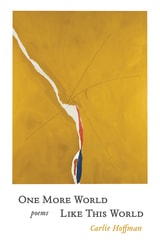
One More World Like This World
Carlie Hoffman
Four Way Books, 2025
Approaching adaptation as a coping mechanism against perpetual exile, Hoffman recasts female archetypes as contemporary women, drawing a throughline between the narrative past and present circumstances. Persephone follows her captor “deeper inside the replica of girlhood,” and Eurydice in New Jersey “knew where she was going” as she made her way to death across “the parking lot and graveyard’s / fertile grass.” Rather than simply retelling a familiar tale, Hoffman’s poems illuminate mythology as a discourse with time and recognize solidarity between women as a conversation that continues beyond the grave.
The timeless wisdom of this collection is how it unveils the constant and concurrent tragedies taking place everywhere around us while salvaging the irreducible pleasure of living from the wrecks of perception. Despite it all, we want to live. Perhaps, Hoffman seems to say, we were expelled from the garden not once but again and again, and, each time we exit, we go out searching for one more world like this world. “The apple’s a for-sale sign swaying from the tree,” she writes in the collection’s final poem “Borges Sells Me the Apple, Sells Me the World.” Or, to revisit the stage set in “Teaching the Persona Poem at Ramapo College of New Jersey,” “Outside the classroom window, snow falls, unencumbered / by a wind from nowhere the night Eurydice chooses to stay.”
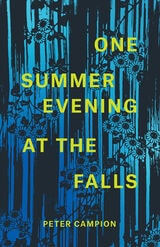
One Summer Evening at the Falls
Peter Campion
University of Chicago Press, 2021
That charge of summer nights, that edge, like everyone’s checking
everyone out. Lingering a moment in the crowd
gathered to watch the rush and crash and let the mist
drift upward to our faces, I’m here: the future feels
open again. Even alone tonight—still: open.
Campion’s poems introduce us to a range of people, all of whom are rendered with distinctiveness and intimacy. Their voices proliferate through the collection, with lyric folding into speech, autobiography becoming dramatic monologue, and casual storytelling taking on a ritualistic intensity. The poems in One Summer Evening at the Falls show how each character and each moment can be worthy of love and that this love both undoes us and makes us who we are. In narrative and lyric, in formal verse and free, Campion brings contemporary playfulness together with his classical talent to create this far-reaching and tender collection.
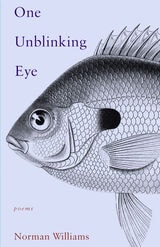
One Unblinking Eye
PoemsNorman Williams
Ohio University Press, 2003
The poems in One Unblinking Eye cast a steady and serious gaze at life outside the beltways. Whether testifying at a prayer meeting in Indiana, tramping the backwoods of northern New England, or working on an oil derrick in the Gulf, the inhabitants of these poems live on the margins of society. “They are the left-behind, odd-manneredones/Who speak in starts,” Norman Williams writes of the last residents of a West Virginia mining town. Describing the woods of central Maine, he speaks of “lives … scraped from sides/Of deer and garden plots; where double-wides,/On concrete pads abut a hard-pan road.”
It is the art of these poems to convince the reader that these lives matter. There is desperation here, and madness, but there is an equal measure of determination and faith. In one poem, Mr. Williams writes of a fisherman haunted by his daughter’s death, who “casts his line/In hopes a flash and strike will draw him back.” These words describe the poet’s method as well. The work in this collection is built on a supple metrical foundation; it is filled with glancing rhymes and wordplay; and it is touched off by striking images. It is, in other words, composed with care, and it richly rewards a careful reading.
Norman Williams writes in Burlington, Vermont, where he works as an attorney. His first book, The Unlovely Child, was published by Alfred A. Knopf to enthusiastic reviews. Anthony Hecht wrote that “the voice of these poems is marvelously modulated, low-key in its acceptances, modest in its exultations, steady and unintoxicated in its long vision. It is my fixed conviction that with his first book he has fashioned a landmark in our literature, and sounded a uniquely American note with beautiful certainty.”
With his second book, more than fifteen years in the making, Norman Williams reafirms the truth of that assessment.
One Word
Marc Straus
Northwestern University Press, 1994
Only
Rebecca Foust
Four Way Books, 2022

Only Efficient Instrument
American Women Writers And Periodical, 1837-1916Aleta Feinsod Cane
University of Iowa Press, 2001
Many farsighted women writers in nineteenth-century America made thoughtful and sustained use of newspapers and magazines to effect social and political change. “The Only Efficient Instrument”: American Women Writers and the Periodical, 1837-1916 examines these pioneering efforts and demonstrates that American women had a vital presence in the political and intellectual communities of their day.
Women writers and editors of diverse social backgrounds and ethnicities realized very early that the periodical was a powerful tool for education and social reform—it was the only efficient instrument to make themselves and their ideas better known. This collection of critical essays explores American women's engagement with the periodical press and shows their threefold use of the periodical: for social and political advocacy; for the critique of gender roles and social expectations; and for refashioning the periodical as a more inclusive genre that both articulated and obscured such distinctions as class, race, and gender.
Including essays on familiar figures such as Margaret Fuller, Harriet Beecher Stowe, Kate Chopin, and Charlotte Perkins Gilman, “The Only Efficient Instrument” also focuses on writings from lesser-known authors, including Native American Zitkala-Sä, Mexican American María Cristina Mena, African American Frances Ellen Watkins Harper, and the Lowell factory workers. Covering nearly eighty years of publishing history, from the press censure of the outspoken Angelina Grimké in 1837 to the last issue of Gilman's Forerunner in 1916, this fascinating collection breaks new ground in the study of the women's rights movement in America.
Open Your Hand
Teaching as a Jew, Teaching as an AmericanIlana M. Blumberg
Rutgers University Press, 2019