Results by title
977 books match the query 'American literature' and 30 start with o
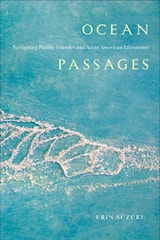
Ocean Passages
Navigating Pacific Islander and Asian American LiteraturesErin Suzuki
Temple University Press, 2021
In her pathbreaking book, Ocean Passages, Erin Suzuki explores how movement through—and travel across—the ocean mediates the construction of Asian American and Indigenous Pacific subjectivities in the wake of the colonial conflicts that shaped the modern transpacific. Ocean Passages considers how Indigenous Pacific scholars have emphasized the importance of the ocean to Indigenous activism, art, and theories of globalization and how Asian American studies might engage in a deconstructive interrogation of race in conversation with this Indigenous-centered transnationalism.
The ocean passages that Suzuki addresses include the U.S. occupation and militarization of ocean space; refugee passage and the history and experiences of peoples displaced from the Pacific Islands; migratory circuits and the labors required to cross the sea; and the different ways that oceans inform postcolonial and settler colonial nationalisms. She juxtaposes work by Indigenous Pacific and Asian American artists and authors including James George, Maxine Hong Kingston, Kathy Jetñil-Kijiner, lê thi diếm thúy, Ruth Ozeki, and Craig Santos Perez. In Ocean Passages, Suzuki explores what new ideas, alliances, and flashpoints might arise when comparing and contrasting Asian and Pacific Islander passages across a shared sea.

Of Huck and Alice
Humorous Writing in American LiteratureNeil Schmitz
University of Minnesota Press, 1983
Of Huck and Alice was first published in 1983. Minnesota Archive Editions uses digital technology to make long-unavailable books once again accessible, and are published unaltered from the original University of Minnesota Press editions.
Huck Finn and Alice B. Toklas allow Mark Twain and Gertrude Stein to slip away from the cramped and smothery intentions of proper writing. Like Krazy Kat, who transforms the hurt of Ignatz Mouse's brick into humorous bliss, Huck and Alice brilliantly misrepresent painful authority. As exemplars of humorous skepticism, Mark Twain and Gertrude Stein are at the center of this far-ranging book that begins with an examination of Jacksonian dialect humor, ends with an account of the humorous style in post-modern American fiction, and considers along the way the sweet parlance of Krazy Kat, the meaning of Harpo Marx's silence, and the iconicity of Woody Allen's face. Schmitz's analysis of the humorous style explores the texture of its language, discusses its preferred forms, and shows how the humorist frames his or her question within the text.
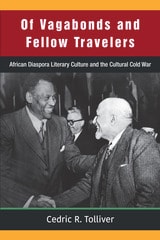
Of Vagabonds and Fellow Travelers
African Diaspora Literary Culture and the Cultural Cold WarCedric R. Tolliver
University of Michigan Press, 2019

On Dickinson
The Best from American LiteratureEdwin H. Cady
Duke University Press, 1990
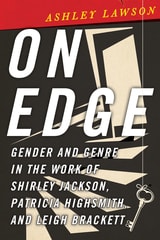
On Edge
Gender and Genre in the Work of Shirley Jackson, Patricia Highsmith, and Leigh BrackettAshley Lawson
The Ohio State University Press, 2024
Honorable Mention, 2025 PCA Emily Toth Award For Best Single Work In Women’s Studies
Finalist, 2025 Mystery Writers of America's Edgar Awards, Best Critical/Biographical Category
Finalist, Bouchercon New Orleans 2025 Anthony Awards, Best Critical/Non-Fiction
Nominated for the 2025 Macavity Awards, Best Mystery-related Nonfiction/Critical
Ashley Lawson’s On Edge presents a new picture of postwar American literature, arguing that biases against genre fiction have unfairly disadvantaged the legacies of authors like Shirley Jackson, Patricia Highsmith, and Leigh Brackett. Each of these women navigated a male-dominated postwar publishing world without compromising their values. Their category-defying treatment of gender roles and genre classifications created suspense in their work that spoke to the tensions of the “Age of Anxiety.” Lawson engages with foundational voices in American literature, genre theory, and feminism to argue that, by merging the dominant mode of literary realism with fantastical or heightened elements, Brackett, Jackson, and Highsmith responded to the big questions of their era with startling and unnerving answers. By elevating genre play to a marker of literary skill, Lawson contends, we can secure these writers a more prominent place within the canon of midcentury American literature and open the door for the recovery of their similarly innovative peers.
On Emerson
The Best from American LiteratureEdwin H. Cady and Louis J. Budd, eds.
Duke University Press, 1988
Presented in order of their first appearance, the articles in each volume constitute a revealing record of developing insights and important shifts of critical emphasis. Each article has opened a fresh line of inquiry, established a fresh perspective on a familiar topic, or settled a question that engaged the interest of experts.
On Faulkner
The Best from American LiteratureEdwin H. Cady and Louis J. Budd, editors
Duke University Press, 1989
Presented in order of their first appearance, the articles in each volume constitute a revealing record of developing insights and important shifts of critical emphasis. Each article has opened a fresh line of inquiry, established a fresh perspective on a familiar topic, or settled a question that engaged the interest of experts.
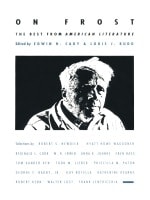
On Frost
The Best from American LiteratureEdwin H. Cady and Louis J. Budd, eds.
Duke University Press, 1991
Presented in order of their first appearance, the articles in each volume constitute a revealing record of developing insights and important shifts of critical emphasis. Each article has opened a fresh line of inquiry, established a fresh perspective on a familiar topic, or settled a question that engaged the interest of experts.
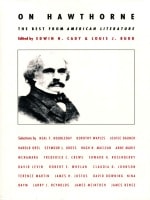
On Hawthorne
The Best from American LiteratureEdwin H. Cady and Louis J. Budd, eds.
Duke University Press, 1990
Presented in order of their first appearance, the articles in each volume constitute a revealing record of developing insights and important shifts of critical emphasis. Each article has opened a fresh line of inquiry, established a fresh perspective on a familiar topic, or settled a question that engaged the interest of experts.
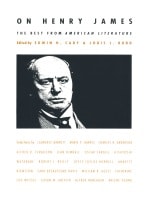
On Henry James
The Best from American LiteratureEdwin H. Cady and Louis J. Budd, eds.
Duke University Press, 1990
Presented in order of their first appearance, the articles in each volume constitute a revealing record of developing insights and important shifts of critical emphasis. Each article has opened a fresh line of inquiry, established a fresh perspective on a familiar topic, or settled a question that engaged the interest of experts.
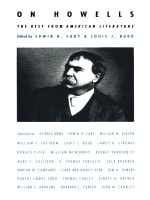
On Howells
The Best from American LiteratureEdwin H. Cady and Louis J. Budd, eds.
Duke University Press, 1993
Presented in order of their first appearance, the articles in each volume constitute a revealing record of developing insights and important shifts of critical emphasis. Each article has opened a fresh line of inquiry, established a fresh perspective on a familiar topic, or settled a question that engaged the interest of experts.
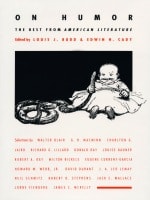
On Humor
The Best from American LiteratureLouis J. Budd and Edwin H. Cady, eds.
Duke University Press, 1992
Presented in order of their first appearance, the articles in each volume constitute a revealing record of developing insights and important shifts of critical emphasis. Each article has opened a fresh line of inquiry, established a fresh perspective on a familiar topic, or settled a question that engaged the interest of experts.
On Mark Twain
The Best from American LiteratureLouis J. Budd and Edwin H. Cady, eds.
Duke University Press, 1987
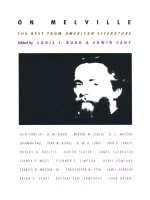
On Melville
The Best from American LiteratureLouis J. Budd and Edwin H. Cady, eds.
Duke University Press, 1988
Presented in order of their first appearance, the articles in each volume constitute a revealing record of developing insights and important shifts of critical emphasis. Each article has opened a fresh line of inquiry, established a fresh perspective on a familiar topic, or settled a question that engaged the interest of experts.
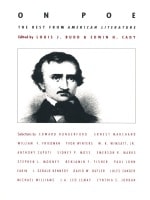
On Poe
The Best from American LiteratureLouis J. Budd and Edwin H. Cady, eds.
Duke University Press, 1993
Presented in order of their first appearance, the articles in each volume constitute a revealing record of developing insights and important shifts of critical emphasis. Each article has opened a fresh line of inquiry, established a fresh perspective on a familiar topic, or settled a question that engaged the interest of experts.
On Whitman
The Best from American LiteratureEdwin H. Cady
Duke University Press, 1987
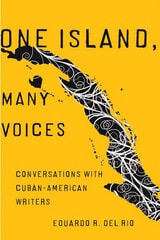
One Island, Many Voices
Conversations with Cuban-American WritersEduardo R. del Rio
University of Arizona Press, 2008
From playwright Dolores Prida to author and literary critic Gustavo Pérez Firmat, these voices run the gamut of both genre and personality. In addition to the essential facts of literary accomplishment, the interviews include a wealth of insight into each writer’s history, motivations, concerns, and relationship to language. These personal details serve to humanize and illuminate the unique circumstances and realities that have shaped both the authors and their work.
What del Rio has ultimately brought together is a series of intimate sketches that will not only serve as an important reference for any discussion of the literature but will also help readers to develop for themselves a sense of what Cuban-American writing is, and what it is not.
CONTENTS
Preface
Acknowledgments
Introduction
Nilo Cruz
Roberto Fernández
Cristina García
Carolina Hospital
Eduardo Machado
Dionisio Martínez
Pablo Medina
Achy Obejas
Ricardo Pau-Llosa
Gustavo Pérez Firmat
Dolores Prida
Virgil Suárez
Epilogue
Notes
Bibliography
Index
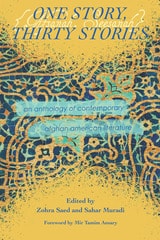
One Story, Thirty Stories
An Anthology of Contemporary Afghan American LiteratureZohra Saed
University of Arkansas Press, 2010
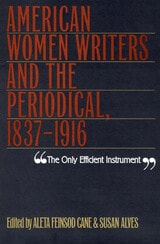
Only Efficient Instrument
American Women Writers And Periodical, 1837-1916Aleta Feinsod Cane
University of Iowa Press, 2001
Many farsighted women writers in nineteenth-century America made thoughtful and sustained use of newspapers and magazines to effect social and political change. “The Only Efficient Instrument”: American Women Writers and the Periodical, 1837-1916 examines these pioneering efforts and demonstrates that American women had a vital presence in the political and intellectual communities of their day.
Women writers and editors of diverse social backgrounds and ethnicities realized very early that the periodical was a powerful tool for education and social reform—it was the only efficient instrument to make themselves and their ideas better known. This collection of critical essays explores American women's engagement with the periodical press and shows their threefold use of the periodical: for social and political advocacy; for the critique of gender roles and social expectations; and for refashioning the periodical as a more inclusive genre that both articulated and obscured such distinctions as class, race, and gender.
Including essays on familiar figures such as Margaret Fuller, Harriet Beecher Stowe, Kate Chopin, and Charlotte Perkins Gilman, “The Only Efficient Instrument” also focuses on writings from lesser-known authors, including Native American Zitkala-Sä, Mexican American María Cristina Mena, African American Frances Ellen Watkins Harper, and the Lowell factory workers. Covering nearly eighty years of publishing history, from the press censure of the outspoken Angelina Grimké in 1837 to the last issue of Gilman's Forerunner in 1916, this fascinating collection breaks new ground in the study of the women's rights movement in America.
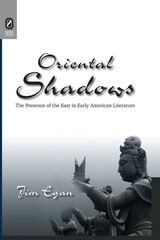
Oriental Shadows
The Presence of the East in Early American LiteratureJim Egan
The Ohio State University Press, 2011
Through the use of several iconic early American authors (Anne Bradstreet, James Kirkpatrick, Benjamin Franklin, and Edgar Allan Poe), Jim Egan’s Oriental Shadows: The Presence of the East in Early American Literature explores the presence of “the East” in American writing.
In bringing to light this largely overlooked archive of images within the American literary canon, Oriental Shadows suggests that the East played a key role in the emergence of a distinctively American literary tradition and, further, that early American identity was born as much from figures of the East as it was from the colonists’ encounters with the frontier.
Orientalism and Modernism
The Legacy of China in Pound and WilliamsZhaoming Qian
Duke University Press, 1995
Consulting rare and unpublished materials, Qian traces Pound’s and Williams’s remarkable dialogues with the great Chinese poets—Qu Yuan, Li Bo, Wang Wei, and Bo Juyi—between 1913 and 1923. His investigation reveals that these exchanges contributed more than topical and thematic ideas to the Americans’ work and suggests that their progressively modernist style is directly linked to a steadily growing contact and affinity for similar Chinese styles. He demonstrates, for example, how such influences as the ethics of pictorial representation, the style of ellipsis, allusion, and juxtaposition, and the Taoist/Zen–Buddhist notion of nonbeing/being made their way into Pound’s pre-Fenollosan Chinese adaptations, Cathay, Lustra, and the Early Cantos, as well as Williams’s Sour Grapes and Spring and All. Developing a new interpretation of important work by Pound and Williams, Orientalism and Modernism fills a significant gap in accounts of American Modernism, which can be seen here for the first time in its truly multicultural character.
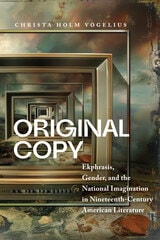
Original Copy
Ekphrasis, Gender, and the National Imagination in Nineteenth-Century American LiteratureChrista Holm Vogelius
University of Massachusetts Press, 2025
When critics of poet Phillis Wheatley, the first African American to publish a collection of poetry, dismiss her work as derivative, they fail to see her writing as part of a new creative pantheon, sitting alongside other works that, like the popular copybooks in antebellum America, are structured as a conversation between artistic allies. Different kinds of copying in this period were distinctly feminized practices, such as artistic copying, pedagogical recitation, and literary imitation. Ekphrasis, the literary description of a work of visual art, reveals a particularly interesting form of copying, as the artwork in question becomes a kind of mediated space between author and reader; this practice, then, becomes the emblematic form of literature as collective production.
Original Copy frames ekphrasis and other forms of literary and visual copy-work as key concepts for understanding the discussions of nationalism, originality, and gender that dominated US literary circles during the first half of the nineteenth century. Christa Holm Vogelius focuses on four major writers of the period—Phillis Wheatley, Margaret Fuller, Sophia Hawthorne, and Henry Longfellow—to offer a narrative of a self-consciously feminine antebellum literary culture that was equally invested in literary nationality and convention. The explicitly feminized forms of the copy between and within media, she argues, became a productive means by which writers across a variety of genres interrogated the ill-defined but ubiquitous idea of an “original” American literature. Original Copy bridges three bodies of scholarship that have remained largely distinct—studies of literary nationalism and transnationalism, scholarship on gender in nineteenth century literary culture, and aesthetic and media theory—to argue for the significance of both imitation and intimate author-reader relations to the development of an American literature.
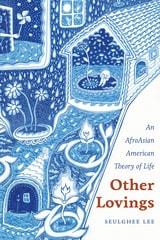
Other Lovings
An AfroAsian American Theory of LifeSeulghee Lee
The Ohio State University Press, 2025
In Other Lovings, Seulghee Lee traces the presence and plenitude of love embedded in Black and Asian American literatures and cultures to reveal their irreducible power to cohere minoritarian social life. Bringing together Black studies, Asian American studies, affect theory, critical theory, and queer of color critique, Lee examines the bonds of love in works by Amiri Baraka, Audre Lorde, David Henry Hwang, Gayl Jones, Fred Moten, Adrian Tomine, and Charles Yu. He attends to the ontological force of love in popular culture, investigating Asian American hip-hop and sport through readings of G Yamazawa, Year of the Ox, and Jeremy Lin, as well as in Black public culture through bell hooks, Martin Luther King Jr., and Cornel West.
By assessing love’s positive function in these works, Lee argues against critical regimes, such as Afropessimism and racial melancholia, that center negativity. In revealing what Black and Asian American traditions share in their positive configurations of being and collectivity, and in their responses to the overarching logic of white supremacy, Other Lovings suggests possibilities for thinking beyond sociological opposition and historical difference and toward political coalition and cultural affinity. Ultimately, Other Lovings argues for a counter-ontology of love—its felt presence, its relational possibilities, and its lived practices.

Other Sisterhoods
LITERARY THEORY AND U.S. WOMEN OF COLOREdited by Sandra Kumamoto Stanley
University of Illinois Press, 1998
The fifteen contributors to Other Sisterhoods: Literary Theory and
U.S. Women of Color examine the ways that women writers of color have
contributed to the discourse of literary and cultural theory. They focus
on the impact of key issues, such as social construction and identity
politics, on the works of women writers of color, as well as on the ways
these women deal with differences relating to gender, class, race/ethnicity,
and sexuality. The book also explores the ways women writers of color
have created their own ethnopoetics within the arena of literary and cultural
theory, helping to redefine the nature of theory itself.
"A sophisticated resource that will do much to carry us through
to the next century. Great work!" -- Alvina E. Quintana, author of
Home Girls: Chicana Literary Voices
CONTRIBUTORS:Sandra Kumamoto Stanley, AnaLouise Keating, Dionne
Espinoza, Kimberly N. Brown, Marilyn Edelstein, Tomo Hattori, Robin Riley
Fast, King-Kok Cheung, Timothy Libretti, Renae Moore Bredin, Jennifer
Browdy de Hernandez, Kimberly M. Blaeser, Kathryn Bond Stockton, Eun Kyung
Min, Cecilia Rodriguez Milanes
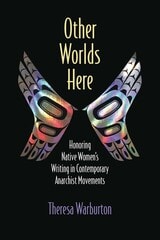
Other Worlds Here
Honoring Native Women’s Writing in Contemporary Anarchist MovementsTheresa Warburton
Northwestern University Press, 2021
All is not lost, however. Rather than centering a critical indictment of contemporary anarchist politics, Other Worlds Here maintains that a defining characteristic of New Anarchism is its ability to adapt and transform. Through close readings of texts by Native women authors, Warburton argues that anarchists must shift the paradigm that another world is possible to one that recognizes other worlds already here: stories, networks, and histories that lay out methods of building reciprocal relationships with the land and its people. Analyzing memoirs, poetry, and novels by writers including Deborah Miranda, Elissa Washuta, Heid E. Erdrich, Janet Rogers, and Leslie Marmon Silko, Other Worlds Here extends the study of Native women’s literatures beyond ethnographic analysis of Native experience to advance a widely applicable, contemporary political critique.
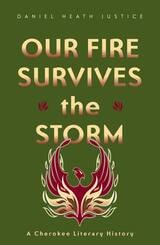
Our Fire Survives the Storm
A Cherokee Literary HistoryDaniel Heath Justice
University of Minnesota Press, 2006
Through cycles of war and peace, resistance and assimilation, trauma and regeneration, Cherokees have long debated what it means to be Cherokee through protest writings, memoirs, fiction, and retellings of traditional stories. Justice employs the Chickamauga consciousness of resistance and Beloved Path of engagement—theoretical approaches that have emerged out of Cherokee social history—to interpret diverse texts composed in English, a language embraced by many as a tool of both access and defiance.
Justice’s analysis ultimately locates the Cherokees as a people of many perspectives, many bloods, mingled into a collective sense of nationhood. Just as the oral traditions of the Cherokee people reflect the living realities and concerns of those who share them, Justice concludes, so too is their literary tradition a textual testament to Cherokee endurance and vitality.
Daniel Heath Justice is assistant professor of aboriginal literatures at the University of Toronto.
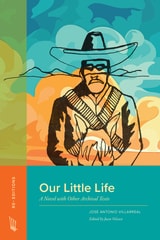
Our Little Life
A Novel with Other Archival TextsBy José Antonio Villarreal, edited by Juan Velasco
Lever Press, 2025
Our Little Life offers a much longer version of the Pocho story that extends a further 100 pages into the postwar period and follows Richard Rubio’s return from war and the changing shape of Mexican-American life in the 1940s. This newly discovered manuscript reveals Villarreal’s attention to Rubio’s struggles with PTSD and his efforts to depict a community and a family’s struggles with identity, belonging, and survival in postwar California. Our Little Life is an important work of archival recovery that sheds new light on Villarreal’s authorship and his place not only in Mexican-American literature but in the twentieth-century American literary canon.
This first publication of Our Little Life includes a scholarly introduction that places this unpublished novel in the landscape of contemporary Mexican-American literary studies and offers a brilliant examination of how novels grow and change. The volume also includes materials from the Villarreal Special Collection that recontextualize the writer’s vision, editing, and marketing of this and later novels. Our Little Life will be of interest not only to everyone in Mexican-American literary studies, but also to scholars of postwar America, women and gender studies, LGBTQ studies, ethnic studies, and migration and border studies.
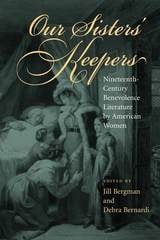
Our Sisters' Keepers
Nineteenth-Century Benevolence Literature by American WomenEdited by Jill Bergman and Debra Bernardi
University of Alabama Press, 2005
American culture has long had a conflicted relationship with assistance to the poor. Cotton Mather and John Winthrop were staunch proponents of Christian charity as fundamental to colonial American society, while transcendentalists harbored deep skepticism towards benevolence in favor of Emersonian self-reliance and Thoreau’s insistence on an ascetic life. Women in the 19th century, as these essays show, approached issues of benevolence far differently than their male counterparts, consistently promoting assistance to the impoverished, in both their acts and their writings.
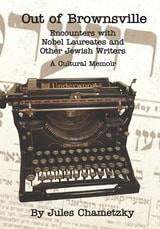
Out of Brownsville
Encounters with Nobel Laureates and Other Jewish Writers: A Cultural MemoirJules Chametzky
University of Massachusetts Press, 2012
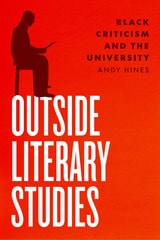
Outside Literary Studies
Black Criticism and the UniversityAndy Hines
University of Chicago Press, 2022
This striking contribution to Black literary studies examines the practices of Black writers in the mid-twentieth century to revise our understanding of the institutionalization of literary studies in America. Andy Hines uncovers a vibrant history of interpretive resistance to university-based New Criticism by Black writers of the American left. These include well-known figures such as Langston Hughes and Lorraine Hansberry as well as still underappreciated writers like Melvin B. Tolson and Doxey Wilkerson. In their critical practice, these and other Black writers levied their critique from “outside” venues: behind the closed doors of the Senate Permanent Subcommittee on Investigations, in the classroom at a communist labor school under FBI surveillance, and in a host of journals. From these vantages, Black writers not only called out the racist assumptions of the New Criticism, but also defined Black literary and interpretive practices to support communist and other radical world-making efforts in the mid-twentieth century. Hines’s book thus offers a number of urgent contributions to literary studies: it spotlights a canon of Black literary texts that belong to an important era of anti-racist struggle, and it fills in the pre-history of the rise of Black studies and of ongoing Black dissent against the neoliberal university.