Results by title
1038 books match the query 'Antiquities' and 26 start with o
Oaxaca
Arqueología de una Región MesoamericanaNelly M. Robles García
University Press of Colorado, 2019
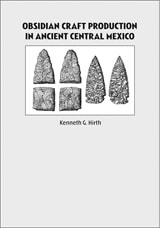
Obsidian Craft Production in Ancient Central Mexico
Kenneth Hirth
University of Utah Press, 2006
The appearance of such craft specialists—who produced large quantities of goods for other households—represented a significant and fundamental change in the structure of prehistoric economies. In central Mexico one particularly important craft specialty was the making of obsidian prismatic blades, the cutting tools of choice.
Unlike most other craft activities, obsidian craft production can be studied using archaeological techniques. Obsidian Craft Production in Ancient Central Mexico examines the obsidian craft industry found at the site of Xochicalco, Morelos, between A.D. 650 and 900, the Gobernador or Epiclassic period when independent city-states appeared throughout central Mexico to fill the political vacuum left by the decline of Teotihuacan. Because the demand for obsidian tools remained constant, author Kenneth Hirth contends that obsidian can serve as a general model for discussing craft production and economic organization on a broader theoretical level.
Obsidian Reflections
Symbolic Dimensions of Obsidian in MesoamericaDavid M. Carballo
University Press of Colorado, 2014
Exploring the materiality of this volcanic glass rather than only its functionality, this book considers the interplay among people, obsidian, and meaning and how these relationships shaped patterns of procurement, exchange, and use. An international group of scholars hailing from Belize, France, Japan, Mexico, and the United States provides a variety of case studies from Mexico, Guatemala, Belize, and Honduras. The authors draw on archaeological, iconographic, ethnographic, and ethnohistoric data to examine obsidian as a touchstone for cultural meaning, including references to sacrificial precepts, powerful deities, landscape, warfare, social relations, and fertility.
Obsidian Reflections underscores the necessity of understanding obsidian from within its cultural context—the perspective of the indigenous people of Mesoamerica. It will be of great interest to Mesoamericanists as well as students and scholars of lithic studies and material culture.
Obsidian
Geology and Archaeology in the North American SouthwestM. Steven Shackley
University of Arizona Press, 2005
Of Caves and Shell Mounds
Edited by Kenneth C. Carstens and Patty Jo Watson
University of Alabama Press, 1996
Ancient human groups in the Eastern Woodlands of North America were long viewed as homogeneous and stable hunter-gatherers, changing little until the late prehistoric period when Mesoamerican influences were thought to have stimulated important economic and social developments. The authors in this volume offer new, contrary evidence to dispute this earlier assumption, and their studies demonstrate the vigor and complexity of prehistoric peoples in the North American Midwest and Midsouth. These peoples gathered at favored places along midcontinental streams to harvest mussels and other wild foods and to inter their dead in the shell mounds that had resulted from their riverside activities. They created a highly successful, pre-maize agricultural system beginning more than 4,000 years ago, established far-flung trade networks, and explored and mined the world's longest cave—the Mammoth Cave System in Kentucky.
Contributors include:
Kenneth C. Carstens, Cheryl Ann Munson, Guy Prentice, Kenneth B. Tankersley, Philip J. DiBlasi, Mary C. Kennedy, Jan Marie Hemberger, Gail E. Wagner, Christine K. Hensley, Valerie A. Haskins, Nicholas P. Herrmann, Mary Lucas Powell, Cheryl Claassen, David H. Dye, and Patty Jo Watson
Of Marshes and Maize
Preceramic Agricultural Settlement in the Cienega Valley, Southeastern ArizonaBruce B. Huckell
University of Arizona Press, 1995
Of Summits and Sacrifice
An Ethnohistoric Study of Inka Religious PracticesBy Thomas Besom
University of Texas Press, 2009
In perhaps as few as one hundred years, the Inka Empire became the largest state ever formed by a native people anywhere in the Americas, dominating the western coast of South America by the early sixteenth century. Because the Inkas had no system of writing, it was left to Spanish and semi-indigenous authors to record the details of the religious rituals that the Inkas believed were vital for consolidating their conquests. Synthesizing these arresting accounts that span three centuries, Thomas Besom presents a wealth of descriptive data on the Inka practices of human sacrifice and mountain worship, supplemented by archaeological evidence.
Of Summits and Sacrifice offers insight into the symbolic connections between landscape and life that underlay Inka religious beliefs. In vivid prose, Besom links significant details, ranging from the reasons for cyclical sacrificial rites to the varieties of mountain deities, producing a uniquely powerful cultural history.
Ohio’s First Peoples
James H. O'Donnell
Ohio University Press, 2004
Although founders of the state like Rufus Putnam pointed to the remaining prehistoric earthworks at Marietta as evidence that the architects were a people of “ingenuity, industry, and elegance,” their words did not prevent a rivalry with the area’s Indian inhabitants that was settled only through decades of warfare and treaty-making.
Native American armies managed to win battles with Josiah Harmar and Arthur St. Clair, but not the war with Anthony Wayne. By the early nineteenth century only a few native peoples remained, still hoping to retain their homes. Pressures from federal and state governments as well as the settlers‘ desire for land, however, left the earlier inhabitants no refuge. By the mid-1840s they were gone, leaving behind relatively few markers on the land.
Ohio’s First Peoples depicts the Native Americans of the Buckeye State from the time of the well-known Hopewell peoples to the forced removal of the Wyandots in the 1840s.
Professor James O’Donnell presents the stories of the early Ohioans based on the archaeological record. In an accessible narrative style, he provides a detailed overview of the movements of Fort Ancient peoples driven out by economic and political forces in the seventeenth century. Ohio’s plentiful game and fertile farmlands soon lured tribes such as the Wyandots, Shawnees, and Delawares, which are familiar to observers of the historic period.
In celebrating the bicentennial of Ohio, we need to remember its earliest residents. Ohio’s First Peoples recounts their story and documents their contribution to Ohio’s full heritage.
Old Mobile Archaeology
Gregory A. Waselkov
University of Alabama Press, 2005
An archaeological guide to the earliest French settlement on the northern Gulf Coast. Archaeological excavations since 1989 have uncovered exciting evidence of the original townsite of Mobile, first capital of the Louisiana colony, and remnants of the colony's port on Dauphin Island.
Olmec Lithic Economy at San Lorenzo
Kenneth Hirth
University Press of Colorado, 2020
The obsidian blade was the cutting tool of choice across Mesoamerica and used in a wide range of activities, from domestic food preparation to institutional ritual activities. Hirth and Cyphers conducted a three-decade investigation of obsidian artifacts recovered at Puerto Malpica, the earliest known workshop, and seventy-six other sites on San Lorenzo Island, where these tools were manufactured for local and regional distribution. Evidence recovered from these excavations provides some of the first information on how early craft specialists operated and how the specialized technology used to manufacture obsidian blades spread across Mesoamerica. The authors use geochemical analyses to identify thirteen different sources for obsidian during San Lorenzo’s occupation. This volcanic glass, not locally available, was transported over great distances, arriving in nodular and finished blade form.
Olmec Lithic Economy at San Lorenzo offers a new way to analyze the Preclassic lithic economy—the procurement, production, distribution, and consumption of flaked stone tools—and shows how the study of lithics aids in developing a comprehensive picture of the internal structure and operation of Olmec economy. The book will be significant for Mesoamericanists as well as students and scholars interested in economy, lithic technology, and early complex societies.
Olmec to Aztec
Settlement Patterns in the Ancient Gulf LowlandsBarbara L. Stark
University of Arizona Press, 1997
On Being Maya and Getting By
Heritage Politics and Community Development in YucatánSarah R. Taylor
University Press of Colorado, 2018
The book explores how Ek’Balam villagers negotiate and maneuver through a web of social programs, tourists, volunteers, and expectations while living their daily lives. Focusing on the active processes in which residents choose to participate, author Sarah R. Taylor provides insights into how the ideological conflicts surrounding economic development play out in the negotiations between internal community politics and external social actors. The conflicts implicit to conceptions of “community” as a target for development are made explicit through the systematic questioning of what exactly it means to be a member of a local, indigenous, or sustainable community in the process of being developed.
On Being Maya and Getting By is a rich description of how one community is actively negotiating with tourism and development and also a call for a more complex analysis of how rural villages are connected to greater urban, national, and global forces.
On Desert Shores
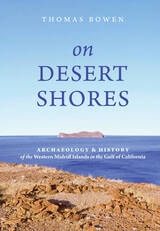
Archaeology and History of the Western Midriff Islands in the Gulf of CaliforniaThomas Bowen
University of Utah Press, 2022
Bowen draws on a wide range of sources, including the first archaeological field work ever conducted on the islands, written accounts dating back to the sixteenth century, oral histories of native people, contemporary interviews, and his own firsthand experiences. Among those cast in the islands’ historical drama are the Seri (Comcaac) people of Sonora, the extinct Cochimís of Baja California, Spanish explorers, Jesuit missionaries, pearl fishers, egg collectors, guano miners, hydrographers, cartographers, small-scale Mexican fishermen, recreational anglers, writers, photographers, ecotourists, shipwreck victims, and, most importantly, scientists. The final chapter documents the impact of this human activity on the islands’ ecosystems and examines conservation efforts now underway. Compelling and richly illustrated, this broadly based work provides a unique picture of these extraordinary islands.
On Land and Sea
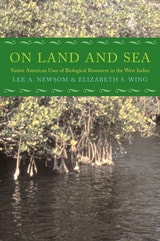
Native American Uses of Biological Resources in the West IndiesLee A. Newsom and Elizabeth S. Wing
University of Alabama Press, 2003
During the vast stretches of early geologic time, the islands of the Caribbean archipelago separated from continental land masses, rose and sank many times, merged with and broke from other land masses, and then by the mid-Cenozoic period settled into the current pattern known today. By the time Native Americans arrived, the islands had developed complex, stable ecosystems. The actions these first colonists took on the landscape—timber clearing, cultivation, animal hunting and domestication, fishing and exploitation of reef species—affected fragile land and sea biotic communities in both beneficial and harmful ways.
On Land and Sea examines the condition of biosystems on Caribbean islands at the time of colonization, human interactions with those systems through time, and the current state of biological resources in the West Indies. Drawing on a massive data set collected from long-term archaeological research, the study reconstructs past lifeways on these small tropical islands. The work presents a wide range of information, including types of fuel and construction timber used by inhabitants, cooking techniques for various shellfish, availability and use of medicinal and ritual plants, the effects on native plants and animals of cultivation and domestication, and diet and nutrition of native populations.
The islands of the Caribbean basin continue to be actively excavated and studied in the quest to understand the earliest human inhabitants of the New World. This comprehensive work will ground current and future studies and will be valuable to archaeologists, anthropologists, botanists, ecologists, Caribbeanists, Latin American historians, and anyone studying similar island environments.

On the Street of the Hidden Shops
One City Block, Two Thousand Years, and a Walk Through the Layered Lives of RomeElizabeth Rodini
University of Chicago Press, 2026
Delve into Rome’s lost history through the stories of a single city block.
Cutting through the heart of Rome is Via delle Botteghe Oscure, a time-worn street named for the mysterious “shops” said to run beneath it. History lies thick here, a museum atop a convent atop ancient ruins; layered in are traces of artisans and poets, pilgrims and saints, a Fascist deportation, a communist coffee bar, a political assassination, and shopkeepers, too. These stories all rest upon a single city block, the same place where, in 13 BCE, the triumphal Roman general Lucius Cornelius Balbus built a monumental theater complex in his own honor.
Elizabeth Rodini’s On the Street of the Hidden Shops digs deep into this corner of the city, uncovering a set of surprising, often poignant narratives that range across two thousand years. For as the walls of Balbus’s compound decayed and the neighborhood was rebuilt, this block would come to shelter Romans from all walks of life: the daughters of local prostitutes, an earnest young man in search of a bride, an entrepreneur determined to preserve the city’s colorful dialect, a Jewish family recently liberated from the nearby Ghetto, and a band of idealistic archaeologists unearthing a long-forgotten past, as well as a gifted baker, a medieval donkey, and a Renaissance ghost. Their stories survive in archives and artifacts but also in the enduring power of rumor and legend.
On the Street of the Hidden Shops invites us on a captivating journey to one place across many centuries. Its tight urban focus reveals a Rome most visitors miss, while uncovering some of the many Romes that have been largely lost to history.
On the Trail of the Maya Explorer
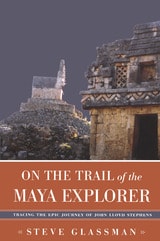
Tracing the Epic Journey of John Lloyd StephensSteve Glassman
University of Alabama Press, 2003
A Mesoamerican travel book from two perspectives and two centuries.
In 1839 John Lloyd Stephens, then 31 years old, and his traveling companion, artist Frederick Catherwood, disappeared into the vast rain forest of eastern Guatemala. They had heard rumors that remains of a civilization of incomparable artistic and cultural merit were moldering in the steamy lowland jungles. They braved Indian uprisings, road agents, heat, and biting insects to eventually encounter what is today known as the lost civilization of the Maya.
In 1841 Stephens published Incidents of Travel in Central America, Chiapas, and Yucatan to instant acclaim with both American and international audiences. His conversational style was fresh and crisp and his subject matter, the search for lost cities on the Central American isthmus, was romantic and adventurous. Stephens's book has been characterized as the "great American nonfiction narrative of the 19th century." Indeed, what Stephens wrote about the Maya makes a major contribution to Maya studies.
Steve Glassman retraces Stephens's route, visiting the same archaeological sites, towns, markets, and churches and meeting along the way the descendants of those people Stephens described, from mestizo en route to the cornfields to town elders welcoming the Norte Americanos. Glassman's work interlaces discussion of the history, natural environment, and architecture of the region with descriptions of the people who live and work there. Glassman compares his 20th-century experience with Stephens's 19th-century exploration, gazing in awe at the same monumental pyramids, eating similar foods, and avoiding the political clashes that disrupt the governments and economies of the area.
Stephens's books are still widely available, but his importance to literary professionals has been overlooked. With this new travelogue, Glassman reaffirms Stephens's reputation and brings his work to wider critical and public attention.
Oregon Archaeology
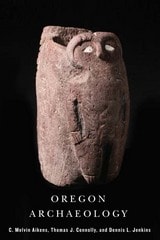
Melvin C. Aikens
Oregon State University Press, 2011
Origins Of A Pacific Coast Chiefdom
Jeanne E Arnold
University of Utah Press, 2001
When Europeans first visited California, they encountered one of the most culturally diverse regions of the New World. The coasts and ecologically richest areas were dotted with small polities which were supported not by horticulture but exclusively by hunting, fishing, and gathering, placing them among the more complex hunter-gatherer groups in the world.
The Origins of a Pacific Coast Chiefdom considers the Chumash, perhaps the most hierarchically organized of the California groups. It explores the final thousand years of coastal Chumash culture, which culminated in the complex society witnessed by the earliest Spanish explorers.
Chumash life was characterized by settled villages, massive production of prestige goods, sophisticated plank canoes, and extensive maritime exchange systems—features more characteristic of agricultural societies. Archaeological sites in the island Chumash area are exceptionally well preserved, permitting precise interpretations of both subtle and major changes in technologies, subsistence, prestige goods, and specialized shell and lithic industries. The data and interpretations presented here are the result of fifteen years of intensive investigation on the Channel Islands.
Origins of the Ñuu
Archaeology in the Mixteca Alta, MexicoStephen A. Kowalewski
University Press of Colorado, 2009
The ñuu - the kingdoms of the famous Mixtec codices - are traced back through the Postclassic and Classic periods to their beginnings in the first states of the Terminal Formative, revealing their origin, evolution, and persistence through two cycles of growth and collapse. Challenging assumptions that the Mixtec were peripheral to better-known peoples such as the Aztecs or Maya, the book asserts that the ñuu were a major demographic and economic power in their own right.
Older explanations of multiregional or macroregional systems often portrayed civilizations as rising in a cradle or hearth and spreading outward. New macroregional studies show that civilizations are products of more complex interactions between regions, in which peripheries are not simply shaped by cores but by their interactions with multiple societies at varying distances from major centers. Origins of the Ñuu is a significant contribution to this emerging area of archaeological research.
Ostraka and Other Inscribed Material from Bir Shawish, Small Oasis
Excavation Seasons 2005 and 2007Marek Dospel
University of Michigan Press, 2020
Informal documents and remains of material culture, when analyzed properly, offer a unique window into the daily lives and workings of ancient civilizations. Published here in their archaeological context and with any relevant artifacts, the documents and inscriptions excavated recently in Egypt’s Western Desert represent a valuable addition to our meager documentation of the Bahriya Oasis in the first centuries CE.
This is the first comprehensive treatment of an archaeological dataset from the archaeological exploration of Bīr Shawīsh. Dating to around 400 CE, these primary historical sources include documentary texts written on ostraka, informal inscriptions on various ceramic objects, plus a group of incised lids. The core of the volume consists of an annotated edition and analytical indices. This is prefaced by the historical and archaeological context and is followed by a synthesis of selected issues inherent to the published material. The book includes appendices and pictures of all published objects. Doubling the number of texts and inscriptions published to date from the Small Oasis, this new corpus furthers our understanding of the economic, administrative, and social history of Late Antique Egypt.
Our Hidden Landscapes
Indigenous Stone Ceremonial Sites in Eastern North AmericaLucianne Lavin
University of Arizona Press, 2023
This volume introduces readers to eastern North America’s Indigenous ceremonial stone landscapes (CSLs)—sacred sites whose principal identifying characteristics are built stone structures that cluster within specific physical landscapes. Our Hidden Landscapes presents these often unrecognized sites as significant cultural landscapes in need of protection and preservation.
In this book, Native American authors provide perspectives on the cultural meaning and significance of CSLs and their characteristics, while professional archaeologists and anthropologists provide a variety of approaches for better understanding, protecting, and preserving them. The chapters present overwhelming evidence in the form of oral tradition, historic documentation, ethnographies, and archaeological research that these important sites created and used by Indigenous peoples are deserving of protection.
This work enables archaeologists, historians, conservationists, foresters, and members of the general public to recognize these important ritual sites.
Contributors
Nohham Rolf Cachat-Schilling
Robert DeFosses
James Gage
Mary Gage
Doug Harris
Julia A. King
Lucianne Lavin
Johannes (Jannie) H. N. Loubser
Frederick W. Martin
Norman Muller
Charity Moore Norton
Paul A. Robinson
Laurie W. Rush
Scott M. Strickland
Elaine Thomas
Kathleen Patricia Thrane
Matthew Victor Weiss
Out of Many, One People
The Historical Archaeology of Colonial JamaicaEdited by James A. Delle, Mark W. Hauser, and Douglas W. Armstrong
University of Alabama Press, 2011
Normal0falsefalsefalseEN-USX-NONEX-NONEMicrosoftInternetExplorer4

Out of the Attic
Inventing Antiques in Twentieth-Century New EnglandBriann G. Greenfield
University of Massachusetts Press, 2009
In this era of Antiques Roadshow and eBay, it is hard to imagine a time when Americans did not treasure the home furnishings of elite early American families. But as this book demonstrates, antiquing—particularly the practice of valuing old things for their aesthetic qualities—is a relatively recent invention whose origins can be found in the early years of the twentieth century. Although nineteenth-century Americans did appreciate heirlooms, they saw them as memory markers, tangible representations of honored ancestors or local history.
In Out of the Attic, Briann G. Greenfield traces the transformation of antiques from family keepsakes to valuable artistic objects, examining the role of collectors, dealers, and museum makers in the construction of a new tradition based on the aesthetic qualities of early American furnishings. While recognizing the significance of antiques as symbols of an enduring American culture, Greenfield also delves behind popular rhetoric to examine the development of a retail structure specifically designed to facilitate the buying and selling of old wares. With antique shops proliferating all over New England, pickers going door-to-door in search of “finds,” and forgers taking illicit advantage of growing demand, antique owners and collectors found themselves trying to navigate a retail market characterized by escalating prices and high stakes purchases. In this sense, antiques functioned as more than remnants of a treasured past; they became modern consumer goods.
The book is divided into a series of case studies, each intended to illuminate some aspect of “the dynamic of consumer history.” One chapter examines the role of Jewish dealers in promoting American antiques; another profiles Jessie Baker Gardner, a small-time collector and would-be museum maker from Providence, Rhode Island. Greenfield also looks at the institutionalization of antiques, with chapters focusing on Henry Flynt of Deerfield, Massachusetts, who embraced the “aestheticization of antiques” in the 1940s and 1950s, and on Smithsonian curator C. Malcolm Watkins, who challenged the decorative art market during the 1950s and 1960s by purchasing old tools and crude furniture for the nation's museum.
Out of the Cold
Archaeology on the Arctic Rim of North AmericaOwen K. Mason
University Press of Colorado, 2018
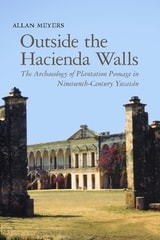
Outside the Hacienda Walls
The Archaeology of Plantation Peonage in Nineteenth-Century YucatánAllan Meyers
University of Arizona Press, 2012
Drawing on a dozen years of archaeological and historical investigation, Allan Meyers breaks new ground in the study of Yucatán haciendas. He explores a plantation village called San Juan Bautista Tabi, which once stood at the heart of a vast sugar estate. Occupied for only a few generations, the village was abandoned during the revolutionary upheaval. Its ruins now lie within a state-owned ecological reserve.
Through oral histories, archival records, and physical remains, Meyers examines various facets of the plantation landscape. He presents original data and fresh interpretations on settlement organization, social stratification, and spatial relationships. His systematic approach to "things underfoot," small everyday objects that are now buried in the tropical forest, offers views of the hacienda experience that are often missing in official written sources. In this way, he raises the voices of rural, mostly illiterate Maya speakers who toiled as laborers. What emerges is a portrait of hacienda social life that transcends depictions gleaned from historical methods alone.
Students, researchers, and travelers to Mexico will all find something of interest in Meyers's lively presentation. Readers will see the old haciendas—once forsaken but now experiencing a rebirth as tourist destinations—in a new light. These heritage sites not only testify to social conditions that prevailed before the Mexican Revolution, but also remind us that the human geography of modern Yucatán is as much a product of plantation times as it is of more ancient periods.
Oysters in the Land of Cacao
Archaeology, Material Culture, and Societies at Islas de Los Cerros and the Western Chontalpa, Tabasco, MexicoBradley E. Ensor
University of Arizona Press, 2020
This book synthesizes data from multiyear investigations at a coastal site complex in Tabasco—Islas de Los Cerros (ILC)—providing the first modern, systematic descriptions and analyses of material culture that challenge preconceptions while enabling new perspectives on cultural developments from the Formative to Late Classic periods through the lens of regional comparisons and contemporary theoretical trends. Ensor introduces a political ecological understanding of the environment and archaeological features, overturns a misconception that the latter were formative shell middens, provides an alternative pottery classification more appropriate for the materials and for contemporary theory, and introduces new approaches for addressing formation processes and settlement history.
Building on the empirical analyses and discussions of problems in Mesoamerican archaeology, this book contributes new approaches to practice and agency perspectives, holistically integrating intra- and interclass agency, kinship strategies, gender and age dynamics, layered cultural identities, landscapes, social memory, and foodways and feasting. Oysters in the Land of Cacao addresses issues important to coastal archaeology within and beyond Mesoamerica. It delivers an overdue regional synthesis and new observations on settlement patterns, elite power, and political economies.