Results by title
71 books match the query 'Armed Forces' and 3 start with o
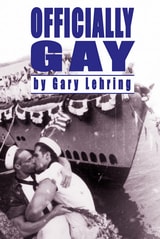
Officially Gay
The Political Construction Of SexualityGary L. Lehring
Temple University Press, 2003
In 1993, simply the idea that lesbians and gays should be able to serve openly in the military created a firestorm of protest from right-wing groups and powerful social conservatives that threatened to derail the entire agenda of a newly elected President. Nine short years later, in the wake of September 11, 2001, the Pentagon's suspension of discharge of gay and lesbians went largely overlooked and unremarked by political pundits, news organizations, military experts, religious leaders and gay activists. How can this collective cultural silence be explained? Officially Gay follows the military's century-long attempt to identify and exclude gays and lesbians. It traces how the military historically constructed definitions of homosexual identity relying upon religious, medical, and psychological discourses that defined homosexuals as evil, degenerate, and unstable, making their risk to national security obvious, and mandating their exclusion from the Armed Services. Officially Gay argues that this process made possible greater regulation and scrutiny of gays and lesbians both in and out of the military while simultaneously helping to create a gay and lesbian political movement and helped shape the direction that movement would take.
[more]
Oh, Say, Can You See
The Semiotics of the Military in Hawai’iKathy E. Ferguson
University of Minnesota Press, 1998
Considers what the military presence in Hawai’i tells us about colonialism, gender, race, and class.
Everywhere you look in Hawai’i, you might see the military. And yet, in daily life few residents see the military at all-it is hidden in plain sight. This paradox of invisibility and visibility, of the available and the hidden, is the subject of Oh, Say, Can You See?, which maps the power relations involving gender, race, and class that define Hawai’i in relation to the national security state.
Western intruders into Hawai’i-from the early explorers, missionaries, and sugar planters to the military, tourists, and foreign investors-have seen the island nation as a feminine place, waiting to embrace those who come to penetrate, protect, mold, and develop, yet conveniently lacking whatever the newcomers claim to possess. Thus feminized, this book contends, the islands and the people have been reinscribed with meanings according to the needs, fears, and desires of outsiders. Authors Kathy E. Ferguson and Phyllis Turnbull locate and “excavate” sites of memory, such as cemeteries, memorials, monuments, and museums, to show how the military constructs its gendered narrative upon prior colonial discourses. Among the sites considered are Fort DeRussy, Pearl Harbor, and Punchbowl Cemetery, as well as the practices of citizenship that are produced or foreclosed by the narratives of order and security written upon Hawai’i by the military.This semiotic investigation of ways the military marks Hawai’i necessarily explores the intersection of immigration, colonialism, military expansion, and tourism on the islands. Attending to the ways in which the military represents itself and others represent the military, the authors locate the particular representational elements that both conceal and reveal the military’s presence and power; in doing so, they seek to expand discursive space so that other voices can be heard. ISBN 0-8166-2978-1 Cloth $49.95xxISBN 0-81662979-X Paper $19.95x240 pages 5 7/8 x 9 DecemberBorderlines Series, Volume 10Translation inquiries: University of Minnesota Press[more]
Out in Force
Sexual Orientation and the MilitaryEdited by Gregory M. Herek, Jared B. Jobe, and Ralph M. Carney
University of Chicago Press, 1996
Can the U.S. military integrate gay personnel into its ranks and still accomplish its mission? In 1993, this question became the center of a heated debate when President Clinton attempted to lift the long-standing ban on gays in the military. This debate persists because the compromise policy "Don't Ask, Don't Tell, Don't Pursue," faces serious legal challenges, and is likely to go to the Supreme Court before the end of the decade. Just below the surface of this debate rages a more general argument about the status of gay people in America.
Both sides base their views on assumptions about the consequences of integration. Even defenders of the ban grudgingly acknowledge that homosexuals are fully capable of serving with distinction. Few question gay service members' abilities or patriotism; justifications for the ban are now predicated on heterosexuals' negative reactions.
Out in Force refutes the notions that homosexuality is incompatible with military service and that gay personnel would undermine order and discipline. Leading social science scholars of sexual orientation and the military offer reasoned and comprehensive discussions about military organizations, human sexuality, and attitudes toward individuals and groups. They demonstrate forcefully that the debate is really about the military as an institution, and how that institution will adapt to larger social changes. The contributors show that the ban could be successfully eliminated, and set forth a program for implementation. In sorting opinion from fact, myth from reality, Out in Force stands as an invaluable guide for the military, lawmakers, and the courts as they continue to grapple with this question of institutional and societal change.
[more]