Results by title
379 books match the query 'Botany' and 7 start with o
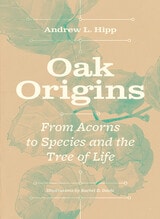
Oak Origins
From Acorns to Species and the Tree of LifeAndrew L. Hipp
University of Chicago Press, 2024
An oak begins its life with the precarious journey of a pollen grain, then an acorn, then a seedling. A mature tree may shed millions of acorns, but only a handful will grow. One oak may then live 100 years, 250 years, or even 13,000 years. But the long life of an individual is only a part of these trees’ story.
With naturalist and leading researcher Andrew L. Hipp as our guide, Oak Origins takes us through a sweeping evolutionary history, stretching back to a population of trees that lived more than 50 million years ago. We travel to the ancient tropical Earth to see the ancestors of the oaks evolving side by side with the dinosaurs. We journey from the oaks’ childhood in the once-warm forests of the Arctic to the montane cloud forests of Mexico and the broad-leaved evergreen forests of Southeast Asia. We dive into current research on oak genomes to see how scientists study genes’ movement between species and how oaks evolve over generations—spanning tens of millions of years. Finally, we learn how oak evolutionary history shapes the forests we know today, and how it may even shape the forests of the future.
Oaks are familiar to almost everyone, and beloved. They are embedded in our mythology. They have fed us, housed us, provided wood for our ships and wine barrels and homes and halls, planked our roads, and kept us warm. Every oak also has the potential to feed thousands of birds, squirrels, and mice and host countless insects, mosses, fungi, and lichens. But as Oak Origins makes clear, the story of the oaks’ evolution is not just the story of one important tree. It is the story of the Tree of Life, connecting all organisms that have ever lived on Earth, from oaks’ last common ancestor to us.
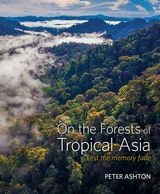
On the Forests of Tropical Asia
Lest the Memory FadePeter Ashton
Royal Botanic Gardens, Kew, 2014
On the Forests of Tropical Asia is the first book to describe the forests of the entire tropical Asian region, from Sind to New Guinea. It opens with chapters on physical geography and geological history and then moves on to address forest and tree structure and dynamics, floristics, and symbiotic organisms, as well as genetics, evolutionary history, species diversity, and human impact. A final chapter covers future policy and practice options for saving what remains. Hundreds of full-color illustrations serve as a lasting testimony to the diverse forests. Ashton combines existing research with his own experience and collaborations, creating a broad, comprehensive understanding of forest variation. By presenting a clear picture of where the forests stand today, he offers a framework for future research, policy, and conservation.
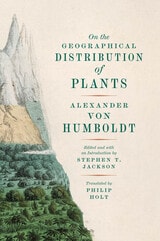
On the Geographical Distribution of Plants
Alexander von Humboldt
University of Chicago Press, 2027
The first English translation of an essay that is among Alexander von Humboldt’s least known but most important scientific works.
In the nineteenth century, Alexander von Humboldt was arguably the world’s most famous celebrity after Napoleon. What started in 1799 as a serendipitous trip to the New World tropics with his friend Aimé Bonpland to collect plants and minerals expanded into a five-year exploration of Venezuela, Colombia, Ecuador, Perú, México, and Cuba. The discoveries the two amassed were nothing short of staggering, and much of our knowledge of tropical botany, zoology, geography, and geology can be traced back to these journeys. The voyage, and the publication of Humboldt’s travel narratives and scientific studies from these expeditions, which totaled dozens of books, elevated Humboldt to cult status.
In the past two decades, Humboldt’s writings have been rediscovered in multiple fields, including biogeography; Earth and environmental sciences; American and Latin American studies; nineteenth-century art, poetry, and literature; and transatlantic cultural history. His ideas are profoundly relevant to twenty-first-century thinking on the relationship between humans and nature, and the ecological framework in which he viewed the world remains essential two centuries after his travels.
Among his many interests, Humboldt invested considerable effort in explaining the underlying causes of the uneven distribution of plant species across the globe. His extended essay On the Geographical Distribution of Plants is among his least known but most important works, laying foundations for the development of ecology, climatology, and evolutionary biology in the following decades. It was first published in 1815 as an introduction to a seven-volume Latin botanical monograph, Nova genera et species plantarum (New Genera and Species of Plants). The essay, republished in 1817 as a standalone volume, held great influence over nineteenth-century naturalists. It is Humboldt’s most comprehensive and detailed treatment of plant geography. In the essay, he applies what he calls “botanical arithmetic” to reveal ecological and biogeographic patterns of plants, applications that still ground modern macroecology; and he provides frameworks to link vegetation patterns and climate, which are essential in modern Earth system science. Introduced and organized by ecologist Stephen T. Jackson and translated from Latin to English by Philip Holt, this book is essential for the libraries of scientists, historians, and all Humboldt admirers.
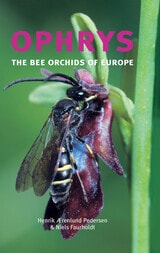
Ophrys
The Bee Orchids of EuropeHenrik Ærenlund Pedersen and Niels Faurholdt
Royal Botanic Gardens, Kew, 2007
Ophrys – the Bee Orchids of Europe is an easy to use, comprehensive introduction to the plants found in Europe. It can be used as a field guide (with keys, descriptions and numerous colour photographs) and a standard reference (with chapters on structure, biology, evolution and conservation). The chapter by Richard Manuel gives ample guidelines for cultivation for growers, and is especially helpful for conservationists introducing plants back into the wild.
The classification is based on a broad species concept, and offers an alternative to the finely split classifications of the genus that prevail in most recent field guides.
Finally, the chapter ‘recommended Ophrys excursions’ is ideal for planning field trips."
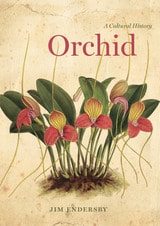
Orchid
A Cultural HistoryJim Endersby
University of Chicago Press, 2016
Following the stories of orchids throughout history, Jim Endersby divides our attraction to them into four key themes: science, empire, sex, and death. When it comes to empire, for instance, orchids are a prime example of the exotic riches sought by Europeans as they shaped their plans for colonization. He also reveals how Charles Darwin’s theory of evolution became intimately entangled with the story of the orchid as he investigated their methods of cross-pollination. As he shows, orchids—perhaps because of their extraordinarily diverse colors, shapes, and sizes—have also bloomed repeatedly in films, novels, plays, and poems, from Shakespeare to science fiction, from thrillers to elaborate modernist novels.
Featuring many gorgeous illustrations from the collection of the Royal Botanic Gardens, Kew, Orchid: A Cultural History tells, for the first time, the extraordinary story of orchids and our prolific interest in them. It is an enchanting tale not only for gardeners and plant collectors, but anyone curious about the flower’s obsessive hold on the imagination in history, cinema, literature, and more.
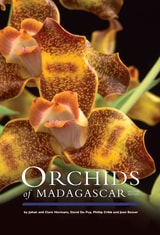
Orchids of Madagascar Second Edition
Edited by Johan Hermans, Clare Hermans, David Du Puy, Phillip Cribb, and Jean Bosser
Royal Botanic Gardens, Kew, 2007
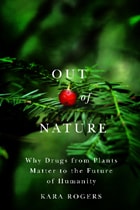
Out of Nature
Why Drugs from Plants Matter to the Future of HumanityKara Rogers
University of Arizona Press, 2012
About half of all species under threat of extinction in the world today are plants. The loss of plant biodiversity is disturbing for many reasons, but especially because it is a reflection of the growing disconnect between humans and nature. Plants have been used for millennia in traditional systems of healing and have held a significant place in drug development for Western medicine as well. Despite the recent dominance of synthetic drug production, natural product discovery remains the backbone of drug development. As the diversity of life on Earth is depleted and increasing numbers of species become lost to extinction, we continue to lose opportunities to achieve advances in medicine.
Through stories of drug revelation in nature and forays into botany, human behavior, and conservation, Kara Rogers sheds light on the multiple ways in which humans, medicine, and plants are interconnected. With accessible and engaging writing, she explores the relationships between humans and plants, relating the stories of plant hunters of centuries past and examining the impact of human activities on the environment and the world's biodiversity. Rogers also highlights the role that plant-based products can play in encouraging conservation and protecting the heritage and knowledge of indigenous peoples.
Out of Nature provides a fresh perspective on modern drug innovation and its relationship with nature. The book delves into the complexity of biophilia—the innate human attraction to life in the natural world—and suggests that the reawakening of this drive is fundamental to expanding conservation efforts and improving medicine. Rogers's examination of plants, humans, and drug discovery also conveys a passionate optimism for the future of biodiversity and medicine. Including a collection of hand-drawn maps and plant illustrations created by the author, this well-researched narrative will inspire as well as inform.