Results by title
444 books match the query 'Chemistry' and 8 start with o
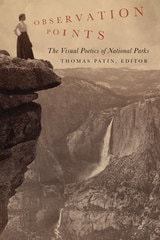
Observation Points
The Visual Poetics of National ParksThomas Patin
University of Minnesota Press, 2012
National parks are the places that present ideas of nature to Americans: Zion, Yosemite, Grand Canyon, Yellowstone bring to mind quintessential and awe-inspiring wilderness. By examining how rhetoric—particularly visual rhetoric—has worked to shape our views of nature and the “natural” place of humans, Observation Points offers insights into questions of representation, including the formation of national identity.
As Thomas Patin reveals, the term “nature” is artificial and unstable, in need of constant maintenance and reconstruction. The process of stabilizing its representation, he notes, is unavoidably political. America’s national parks and monuments show how visual rhetoric operates to naturalize and stabilize representations of the environment. As contributors demonstrate, visual rhetoric is often transparent, structuring experience while remaining hidden in plain sight. Scenic overlooks and turnouts frame views for tourists. Visitor centers, with their display cases and photographs and orientation films, provide their own points of view—literally and figuratively. Guidebooks, brochures, and other publications present still other ways of seeing. At the same time, images of America’s “natural” world have long been employed for nationalist and capitalist ends, linking expansionism with American greatness and the “natural” triumph of European Americans over Native Americans.
The essays collected here cover a wide array of subjects, including park architecture, landscape painting, public ceremonies, and techniques of display. Contributors are from an equally broad range of disciplines—art history, geography, museum studies, political science, American studies, and many other fields. Together they advance a provocative new visual genealogy of representation.
Contributors: Robert M. Bednar, Southwestern U, Georgetown, Texas; Teresa Bergman, U of the Pacific; Albert Boime, UCLA; William Chaloupka, Colorado State U; Gregory Clark, Brigham Young U; Stephen Germic, Rocky Mountain College; Gareth John, St. Cloud State U, Minnesota; Mark Neumann, Northern Arizona U; Peter Peters, Maastricht U; Cindy Spurlock, Appalachian State U; David A. Tschida, U of Wisconsin, Eau Claire; Sabine Wilke, U of Washington.
Oceanic Becoming
The Pacific beneath the PavementsRob Wilson
Duke University Press, 2025
Oceaning
Governing Marine Life with DronesAdam Fish
Duke University Press, 2024
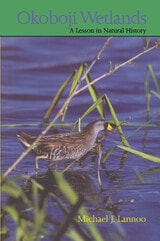
Okoboji Wetlands
A Lesson in Natural HistoryMichael J. Lannoo
University of Iowa Press, 1996
Lake Okoboji in northwest Iowa is the jewel of the Iowa Great Lakes. A region of wetlands formed by prairie potholes, the area is rich with lakes, sloughs, fens, creeks, prairies, and kettleholes. In this readable and beautifully illustrated volume, Michael Lannoo presents an extensive natural history of Okoboji and its cherished wetlands that examines that world of our grandparents, compares it to today's world, and extrapolates to the world of our grandchildren.
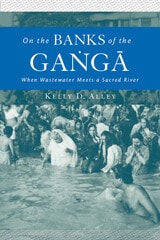
On the Banks of the Ganga
When Wastewater Meets a Sacred RiverKelly D. Alley
University of Michigan Press, 2002
Alley investigates ethno-semantic, discursive, and institutional data to flesh out the interplay between religious, scientific, and official discourses about the river Ganga. Using a new outward layering methodology, she points out that anthropological analysis must separate the historical and discursive strands of the debates concerning waste and sacred purity in order to reveal the cultural complexities that surround the Ganga. Ultimately, she addresses a deeply rooted cultural paradox: if the Ganga river is considered sacred by Hindus across India, then why do the people allow it to become polluted?
Examining areas of contemporary concern such as water usage and urban waste management in the most populated river basin in the world, this book will appeal to anthropologists and readers in religious, environmental, and Asian studies, as well as geography and law.
Kelly D. Alley is Associate Professor and Director of Anthropology at Auburn University. In addition to being a prolific writer, she has conducted research on public culture and environmental issues in northern India for over a decade. Alley is currently overseeing a project to ameliorate river pollution problems in India.
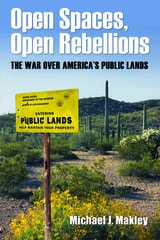
Open Spaces, Open Rebellions
The War over America’s Public LandsMichael J. Makley
University of Massachusetts Press, 2017
In Open Spaces, Open Rebellions, Michael J. Makley offers a succinct and compelling history of the federal government's management of public lands. As Makley reveals, beginning in the nineteenth century and continuing to the present day, debates over how best to balance the use of these lands by the general public, fee-paying ranchers, and resource developers have always been complex and contentious. Indeed, these debates have often been met with demands for privatization or state control, best exemplified by the Sagebrush Rebellion of the 1980s and the 2016 occupation of Oregon's Malheur National Wildlife Refuge.
Osiris, Volume 19
Landscapes of Exposure: Knowledge and Illness in Modern EnvironmentsEdited by Gregg Mitman, Michelle Murphy, and Christopher Sellers
University of Chicago Press, 2004
Our Way Or The Highway
Inside The Minnehaha Free StateMary Losure
University of Minnesota Press, 2002
An eyewitness account of this controversial environmental action.
Construction plans for the reroute of Highway 55 through south Minneapolis sparked an environmental movement that pitted activists against public authorities in one of the most dramatic episodes in the city’s history. Mary Losure was there; as a reporter for Minnesota Public Radio she witnessed the neighborhood’s transformation from a quiet street to the center of an emotionally charged standoff. Fueled by idealism and anger, a diverse coalition banded together to try to stop the highway expansion. Beginning in 1998, this group sustained protests for more than one year and eventually faced an unprecedented show of force by law enforcement.
In Our Way or the Highway Losure offers an inside view of the activist subculture that converged into a makeshift encampment dubbed the "Minnehaha Free State." Here, a retired stenographer befriended EarthFirst! members and appeared in the organization’s national journal, fist raised in protest of the destruction of her home. A pipe fitter abandoned his old life to defend what he believed to be the sacred sites of his Dakota ancestors. A dreamy, dreadlocked seeker hitchhiked to Minneapolis and spent days perched in a doomed cottonwood tree. A police lieutenant watched the trees fall and felt surprising sympathy for the activists’ beliefs. Engagingly written, Our Way or the Highway reveals the motivations, perceptions, and dynamics of those involved in this conflict of wills and ideals.Among the issues Losure explores are the roles of ecoanarchism and grassroots activism in the age of globalization. This fascinating subculture, brought to the spotlight during protests over the World Trade Organization in Seattle and Genoa, has been largely undocumented in the mainstream press. With a practiced reporter’s eye, Mary Losure shows the activists’ world and the way the establishment views them, and ultimately she lays bare the power of the existing order and the fragility and absolute necessity of dissent.