496 books match the query 'Christian Theology' and 18 start with o
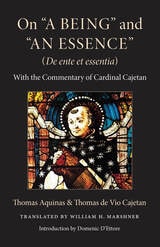
cover of On "A Being" and "An Essence" (<i>De ente et essentia</i>)

On "A Being" and "An Essence" (<i>De ente et essentia</i>)

Thomas Aquinas

Catholic University of America Press, 2026
The In De Ente et Essentia is a polemical work of a brilliant young Dominican professor, Thomas de Vio Cajetan (1469-1534), eager to defend the philosophical legacy of Thomas Aquinas. Drawing from the full range of St. Thomas's writings, the work offers a coherent Thomistic metaphysical theory set against the rival Scotist and Averroist positions defended at Italian Universities in the 1490s. This new English translation is an invitation to philosophers and historians to re-engage with Cajetan, with his 15th Century rivals, and, of course, with Thomas Aquinas himself. It is also a challenge and inspiration to do metaphysics through dialectical engagement with the greatest rival theories of our own time and place.
[more]
cover of On Illustrious Men

On Illustrious Men

Saint Jerome

Catholic University of America Press, 1999

Often cited as a source of biographical information on ancient Christian authors, On Illustrious Men provides St. Jerome's personal evaluations of his forebears and contemporaries, as well as catalogs of patristic writings known to him
[more]
cover of On Job

On Job

Blind Didymus the Blind

Catholic University of America Press, 0
This volume provides the first full length English translation of the commentary on the Book of Job by Didymus the Blind. One of the earliest line-by-line commentaries on Job to survive from late antiquity, it covers the entirety of the first sixteen chapters of the LXX text of Job with a few unfortunate lacunae. It represents the third commentary of Didymus published in the Fathers of the Church series (preceded by Didymus’ On Genesis and On Zechariah translated by Robert C. Hill) and the last of the commentaries discovered at Tura in 1941 that was edited for circulation in late antiquity, since Didymus’ comments on Ecclesiastes and Psalms are unedited transcripts of his public lectures, replete with student questions. The Book of Job has garnered perpetual attention because of its intriguing dialogues between God and the Devil, Job and his wife, Job and his three friends and inevitably between Job and God. In recent years, it has become the focus of attention among scholars seeking to make sense of the horrors of the Holocaust and other 20th century atrocities where unlimited human cruelty and injustice strained any notions of Providence and the salvific nature of suffering by the righteous. Written at a pivotal time when Christianity and Rabbinic Judaism were emerging as distinct interpretive traditions, Didymus’ commentary on the book of Job offers important insights into the interpretation of Job based on the LXX translation which was a foundational text for early Christian doctrine, spirituality and liturgy. His presentation of Job as the icon of a student-loving teacher stands in contrast to the portrait of a blasphemous Job more familiar to modern audiences that value a bold iconoclastic character who puts God on trial for allowing human injustice. Didymus’ comments on Job hint at the blind teacher’s own mature consideration of his experience as a Christian teacher, concerned to train other potential leaders in the burgeoning post-Constantinian Church, whether as an ecclesiastical minister, monastic abba, governor, or teacher. As such, this early Christian commentary on the Book of Job merits further study because it illustrates an early exegetical trajectory that was already embedded in the Christian tradition prior Jerome’s advocacy of the Hebraica Veritas.
[more]
cover of On Job, Volume 2

On Job, Volume 2

Franklin T. St. Albert the Great

Catholic University of America Press, 2025
Even prior to his death on 15 November 1280, the Dominican master Albert of Lauingen was legendary for his erudition. He was widely recognized for the depth and breadth of his learning in the philosophical disciplines as well as in the study of God, earning him the titles Doctor universalis and Doctor expertus. Moreover, his authoritative teaching merited him the moniker Magnus, an appellation bestowed on no other man of the High Middle Ages. This volume contains the second half of Albert the Great’s commentary On Job (on chs. 22-42), translated into English for the first time; a translation of the first half of the work appeared in an earlier volume of the Fathers of the Church, Mediaeval Continuation series (vol. 19, 2019). Albert completed Super Iob in 1272 or 1274, when he was over seventy years old, at the Dominican Kloster of Heilige Kreuz in Cologne, where, as lector emeritus of the Order, he likely lectured on this profound biblical book. Significantly, Albert may have been inspired to produce On Job by his most famous student, Thomas Aquinas, who had written his own Joban commentary, the Expositio super Iob ad litteram, while serving as conventual lector at San Domenico in Orvieto from 1261 to 1264. Yet Albert occupies a unique position in the history of the interpretation of Job: he is the first and only exegete in history who explicitly reads the whole book as a debate in the mode of an academic or scholastic disputation among Job and his friends about divine providence concerning human affairs. Albert understands God, in the final chapters of Job, to determine the disputed question in favor of Job and against his friends, namely declaring that He (i.e., God) rules human life with no consideration of human works, but rather that divine governance is dissimilar to every mode of human rule.
[more]
cover of On Love and Charity: Readings from the Commentary on the Sentences of Peter Lombard (Thomas Aquinas in Translation)

On Love and Charity

Readings from the Commentary on the Sentences of Peter Lombard (Thomas Aquinas in Translation)

Saint Thomas Aquinas

Catholic University of America Press, 2008
No description available
[more]
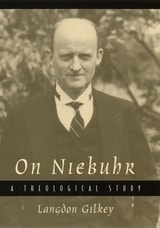
cover of On Niebuhr: A Theological Study

On Niebuhr

A Theological Study

Langdon Gilkey

University of Chicago Press, 2001
Langdon Gilkey's insightful, engaging book offers a detailed—and not uncritical—examination of one of the most influential American theologians of the twentieth century.
[more]
cover of On Repentance and Almsgiving

On Repentance and Almsgiving

Saint John Chrysostom

Catholic University of America Press, 1998
No description available
[more]
cover of On Resurrection

On Resurrection

Irven M. St. Albert the Great

Catholic University of America Press, 2020
According to 1 Cor 15.44 and 1 Cor 15.52, the human body “is sown an animal body, [but] it will rise a spiritual body” and “the dead will rise again incorruptible, and we will be changed.” These passages prompted many questions: What is a spiritual body? How can a body become incorruptible? Where will the resurrected body be located? And, what will be the nature of its experience? Medieval theologians sought to answer such questions but encountered troubling paradoxes stemming from the conviction that the resurrected body will be an “impassible body” or constituted from “incorruptible matter.” By the thirteenth century the resurrection demanded increased attention from Church authorities, not only in response to certain popular heresies but also to calm heated debates at the University of Paris. William of Auvergne, Bishop of Paris, officially condemned ten errors in 1241 and in 1244, including the proposition that the blessed in the resurrected body will not see the divine essence. In 1270 Parisian Bishop Étienne Tempier condemned the view that God cannot grant incorruption to a corruptible body, and in 1277 he rejected propositions that a resurrected body does not return as numerically one and the same, and that God cannot grant perpetual existence to a mutable, corruptible body. The Dominican scholar Albert the Great was drawn into the university debates in Paris in the 1240s and responded in the text translated here for the first time. In it, Albert considers the properties of resurrected bodies in relation to Aristotelian physics, treats the condition of souls and bodies in heaven, discusses the location and punishments of hell, purgatory, and limbo, and proposes a “limbo of infants” for unbaptized children. Albert’s On Resurrection not only shaped the understanding of Thomas Aquinas but also that of many other major thinkers.
[more]
cover of On the Body and Blood of the Lord; On the Truth of the Body and Blood of Christ in the Eucharist

On the Body and Blood of the Lord; On the Truth of the Body and Blood of Christ in the Eucharist

Catholic University of America Press, 2009
In this first English translation of Lanfranc's De corpore et sanguine Domini adversus Berengarium, the reader learns firsthand both the history of the crisis and the doctrinal issues in question
[more]
cover of On the Cessation of the Laws

On the Cessation of the Laws

Robert Grosseteste

Catholic University of America Press, 2012
In On the Cessation of the Laws, Grosseteste draws out the theological, christological, and soteriological issues implicit in the question of the relationship between the Old and New Covenants.
[more]
cover of On the Formation of the Clergy

On the Formation of the Clergy

Bleeded Hrabanus Maurus

Catholic University of America Press, 2023
Among the intellectuals of the Carolingian Renaissance of the ninth century, few are as prolific and influential as Hrabanus Maurus (c.780-856), a monk and abbot of the monastery of Fulda and then archbishop of Mainz. Most famous among modern authors as the putative author of the hymn “Come, Holy Ghost,” Hrabanus was highly esteemed by generations of medieval intellectuals, including Dante, who located the archbishop among St. Bonaventure’s cohort in the sphere of the Sun. This volume presents for the first time in English translation Hrabanus’s pedagogical masterpiece On the Formation of Clergy (De institutione clericorum). Unveiled on the Feast of All Saints in 819, at the dedication of the great Salvator basilica, Hrabanus’ work addresses the most important focuses of the Carolingian Renaissance: education and ecclesiastical reform. The treatise promotes a careful balance between classical training and Christian ethics and features the robust pedagogy of the early medieval monastic curriculum. At points it even offers glimpses into the energetic environment of Fulda’s classrooms. On the Formation of Clergy also supplies a program for ecclesiastical reform. It provides readers with a primer on ecclesiastical hierarchy and liturgy, providing glosses on church offices and explanations of important church activities. Hrabanus divided his opus into three books. Book One explains Holy Orders. It lays out the distinctions between clergy and laity, enumerates the ranks of the priesthood, describes clerical vesture, and explores the sacraments. Book Two examines priestly life. It considers ascetic disciplines appropriate for priests at different grades, describes expected prayer routines, and identifies important doctrinal teachings and principal liturgical feasts. Book Three treats biblical studies and preaching. It lays out a curriculum for the liberal arts, connects the liberal arts to catechetics and homiletics, and integrates academic study with moral instruction. On the Formation of Clergy was widely read throughout the Middle Ages. Beyond its impact on the Carolingian Renaissance, the treatise guided legal analysis in Gratian’s Decretum, supplied examples for Peter Lombard’s Sentences, and is cited by theological titans from Rupert of Deutz to Thomas Aquinas to Gabriel Biel.
[more]
cover of On the Incomprehensible Nature of God

On the Incomprehensible Nature of God

Saint John Chrysostom

Catholic University of America Press, 1984
No description available
[more]
cover of On the Moderation of Reason in Religious Matters

On the Moderation of Reason in Religious Matters

Ludovico Antonio Muratori

Catholic University of America Press, 2024
Lodovico Antonio Muratori (1672 –1750) was an Italian Catholic priest, notable as historian and a leading scholar of his age, and for his discovery of the Muratorian fragment, the earliest known list of New Testament books. No other book inspired Catholics of the 18th century more than Muratori's On the Moderation of Reason in Religious Matters. Ever since its publication in 1714, it had virtually a magisterial status by those who sought to revitalize the intellectual verve of Catholic theology. In essay form, Muratori addressed the fundamental challenges of doubt, authority, blind faith, the Copernican worldview, and the limitations of human reason. This work is a must-read for anyone looking to deepen their understanding of the intersection between religion and reason.
[more]
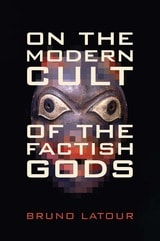
cover of On the Modern Cult of the Factish Gods

On the Modern Cult of the Factish Gods

Bruno Latour

Duke University Press, 2010
On the Modern Cult of the Factish Gods continues the project that the influential anthropologist, philosopher, and science studies theorist Bruno Latour advanced in his book We Have Never Been Modern. There he redescribed the Enlightenment idea of universal scientific truth, arguing that there are no facts separable from their fabrication. In this concise work, Latour delves into the “belief in naive belief,” the suggestion that fetishes—objects invested with mythical powers—are fabricated and that facts are not. Mobilizing his work in the anthropology of science, he uses the notion of “factishes” to explore a way of respecting the objectivity of facts and the power of fetishes without forgetting that both are fabricated. While the fetish-worshipper knows perfectly well that fetishes are man-made, the Modern icon-breaker inevitably erects new icons. Yet Moderns sense no contradiction at the core of their work. Latour pursues his critique of critique, or the possibility of mediating between subject and object, or the fabricated and the real, through the notion of “iconoclash,” making productive comparisons between scientific practice and the worship of visual images and religious icons.
[more]
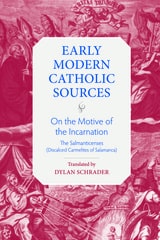
cover of On the Motive of the Incarnation

On the Motive of the Incarnation

Dylan The Salmanticenses

Catholic University of America Press, 2019

The Catholic University of America Press is pleased to announce a new series, Early Modern Catholic Sources, edited by Ulrich L. Lehner and Trent Pomplun. This series – the only one of its kind – will provide translations of early modern Catholic texts of theological interest written between 1450 and 1800. The first volume in this series is On the Motive of the Incarnation, the first English translation of the seventeenth-century Discalced Carmelites at the University of Salmanca treatise on the motive of the Incarnation. Originally intended for students of their order, it became a major contribution to broader theological discourse. In this treatise, they defend the assertion that God intended Christ’s Incarnation essentially as a remedy for sin, such that if Adam had not sinned Christ would not have become incarnate, and that, at the same time, God intended all other works of nature and grace for the sake of Christ at their end. The Salmanticenses’ position thus combines elements of the Franciscan and Dominican traditions, stemming from the thought of Blessed John Duns Scotus and Saint Thomas Aquinas. This treatise is an exhaustive effort to show how the Scotistic emphasis on the primacy of Christ as the first willed and intended by God can be articulated within a Thomistic framework that acknowledges the contingency of the Incarnation on the need for redemption. In addition to the translation, the volume will include a brief introduction and extensive notes for theologians, historians, and students.
[more]
cover of On the Sacraments

On the Sacraments

Albert Marie St. Albert the Great

Catholic University of America Press, 2027
Albert the Great’s On the Sacraments is a scholastic treatise loosely based on Peter Lombard’s Sentences. Albert treats the full range of theological issues that will be found in his later Commentary on the Sentences, although in a much leaner manner. In this work, Albert finds himself less bound to the commentary style and sometimes more free to put forward his own conclusions. For example, Albert offers his own definition of a sacrament rather than only critiquing those of others. In most cases, Albert offers the same teaching which he will later present in his more mature Commentary on the Sentences, although there are a few points on which his teaching varies. These have often been noted in the introduction and footnotes. Albert’s sacramental theology centers intensely around the idea of inner healing. Albert’s paradigm for understanding the seven sacraments is Christ the Divine Physician who applies distinct medicines to seven different wounds. Albert roots a strong theology of sacramental signification and (dispositive) causality in the life and power of Christ. He writes, “there are two things in the Son of God, namely power and wisdom, from whom every sacrament draws power, there must be two things in a sacrament corresponding to these, namely, a cause and a sign.” It is partially his consistent application of the rubric of signification and causality to each sacrament that allows Albert to offer a breakthrough teaching on the sacrament of marriage as able to cause grace.
[more]
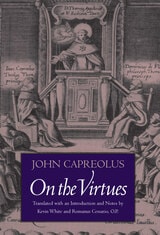
cover of On the Virtues

On the Virtues

Jean Capreolus

Catholic University of America Press, 2001
The selection from Capreolus's work represented in this translation shows him defending Aquinas's conclusions on faith, hope, charity, the gifts of the Holy Spirit, and the virtues against such adversaries.
[more]
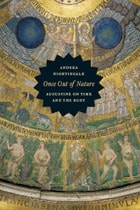
cover of Once Out of Nature: Augustine on Time and the Body

Once Out of Nature

Augustine on Time and the Body

Andrea Nightingale

University of Chicago Press, 2011

Once Out of Nature offers an original interpretation of Augustine’s theory of time and embodiment. Andrea Nightingale draws on philosophy, sociology, literary theory, and social history to analyze Augustine’s conception of temporality, eternity, and the human and transhuman condition.
 
In Nightingale’s view, the notion of embodiment illuminates a set of problems much larger than the body itself: it captures the human experience of being an embodied soul dwelling on earth. In Augustine’s writings, humans live both in and out of nature—exiled from Eden and punished by mortality, they are “resident aliens” on earth. While the human body is subject to earthly time, the human mind is governed by what Nightingale calls psychic time. For the human psyche always stretches away from the present moment—where the physical body persists—into memories and expectations. As Nightingale explains, while the body is present in the here and now, the psyche cannot experience self-presence. Thus, for Augustine, the human being dwells in two distinct time zones, in earthly time and in psychic time. The human self, then, is a moving target. Adam, Eve, and the resurrected saints, by contrast, live outside of time and nature: these transhumans dwell in an everlasting present.
 
Nightingale connects Augustine’s views to contemporary debates about transhumans and suggests that Augustine’s thought reflects our own ambivalent relationship with our bodies and the earth. Once Out of Nature offers a compelling invitation to ponder the boundaries of the human.
[more]