281 books match the query 'Criticism, interpretation, etc' and 5 start with o
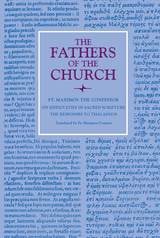
cover of On Difficulties in Sacred Scripture: The Responses to Thalassios

On Difficulties in Sacred Scripture

The Responses to Thalassios

Maximos St. Maximos the Confessor

Catholic University of America Press, 2018
Maximos the Confessor (ca. 580-662) is now widely recognized as one of the greatest theological thinkers, not simply in the entire canon of Greek patristic literature, but in the Christian tradition as a whole. A peripatetic monk and prolific writer, his penetrating theological vision found expression in an unparalleled synthesis of biblical exegesis, ascetic spirituality, patristic theology, and Greek philosophy, which is as remarkable for its conceptual sophistication as for its labyrinthine style of composition. On Difficulties in Sacred Scripture, presented here for the first time in a complete English translation (including the 465 scholia), contains Maximos’s virtuosic theological interpretations of sixty-five difficult passages from the Old and New Testaments. Because of its great length, along with its linguistic and conceptual difficulty, the work as a whole has been largely neglected. Yet alongside the Ambigua to John, On Difficulties in Sacred Scripture: The Responses to Thalassios deserves to be ranked as the Confessor’s greatest work and one of the most important patristic treatises on the interpretation of Scripture, combining the interconnected traditions of monastic devotion to the Bible, the biblical exegesis of Origen, the sophisticated symbolic theology of Dionysius the Areopagite, and the rich spiritual anthropology of Greek Christian asceticism inspired by the Cappadocian Fathers.
[more]
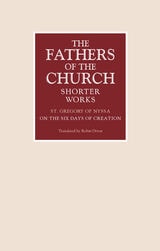
cover of On the Six Days of Creation

On the Six Days of Creation

Robin St. Gregory of Nyssa

Catholic University of America Press, 2021
The first volume of our new series, Fathers of the Church: Shorter Works, will be available in the summer of 2021. This series, to be printed only in paperback format, will offer English translations of treatises, homilies, poems, and letters of the Church Fathers in slim, easily affordable volumes. In this way a multitude of important writings will become accessible to scholars and students as well as the reading public. This is the first complete English translation of St. Gregory of Nyssa’s treatise On the Six Days of Creation (In Hexaemeron). It was probably written in 380-381, and is designed as both a defense and a critique of his recently deceased brother St. Basil’s better known homilies on the creation story as set out in the first chapter of Genesis. At the same time it incorporates Gregory’s own observations on the Genesis text, which reflect his desire to show the consistency between Scripture and the philosophy and natural science of his day A notable feature is Gregory’s presentation of God’s creation of the world as what has been called a “substantification” of God’s own will, creatio ex Deo rather than creatio ex nihilo. Other ideas of his seem interestingly to foreshadow those of modern science, notably his challenge to the idea that matter is a primary ontological category and his theory that the world as we know it developed through a process of “sequence” (akolouthia) from an originally simultaneous creation of everything. Gregory differs from Basil in maintaining that the “waters above the firmament” in Genesis 1 are spiritual rather than physical in nature. He uses a modified form of Aristotle’s theory of elements, together with some interesting observations on geography and meteorology, to construct a detailed and ingenious account of the “water cycle.” This description enables him to refute Basil’s notion that there needs to be an extra supply of physical water above the firmament so that the water lost from earthly seas and rivers through evaporation can be “topped up.”
[more]
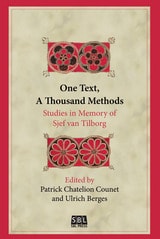
cover of One Text, A Thousand Methods: Studies in Memory of Sjef van Tilborg

One Text, A Thousand Methods

Studies in Memory of Sjef van Tilborg

Patrick Chatelion Counet

SBL Press, 2016

A Brill classic now in paperback from SBL Press

Essays in this volume describe the shift in biblical exegesis within the last several decades from the interpretation of biblical texts as the outcome of historical development, or diachronic methodology, to the exploration of the text as the result of a reading process rather than a historical process, or synchronic methodology. The methods discussed include ideology criticism, semantic and poetic analysis, cognitive linguistics, drama theory, narratology, deconstruction, and anthropology, and intertextuality. The authors of this work challenge biblical scholars not to just perform exegesis, but to explore the methods and aims underlying their interpretations.

Features:

  • Essays examine texts from the Old or New Testament through the lens of one of the many modern synchronic methods used in postmodern literary interpretation
  • Fifteen essays from top scholars in the field
[more]
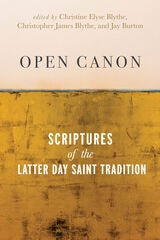
cover of Open Canon: Scriptures of the Latter Day Saint Tradition

Open Canon

Scriptures of the Latter Day Saint Tradition

Edited by Christine Elyse Blythe, Christopher James Blythe, and Jay Burton

University of Utah Press, 2022

The publication of the Book of Mormon in 1830 began a new scriptural tradition. Resisting the long-established closed biblical canon, the Book of Mormon posited that the Bible was incomplete and corrupted. With a commitment to an open canon, a variety of Latter Day Saint denominations have emerged, each offering their own scriptural works to accompany the Bible, the Book of Mormon, and other revelations of Joseph Smith. Open Canon breaks new ground as the first volume to examine these writings as a single spiritual heritage.

Chapters cover both well-studied and lesser-studied works, introducing readers to scripture dictated by nineteenth- and twentieth-century revelators such as James Strang, Lucy Mack Smith, Sidney Rigdon, Harry Edgar Baker, and Charles B. Thompson, among others. Contributors detail how various Latter Day Saint denominations responded to scriptures introduced during the ministry of Joseph Smith and how churches have employed the Book of Mormon, the Doctrine and Covenants, and the Lectures of Faith over time. Bringing together studies from across denominational boundaries, this book considers what we can learn about Latter Day Saint resistance to the closed canon and the nature of a new American scriptural tradition.
[more]
cover of Opening Scripture: Bible Reading and Interpretive Authority in Puritan New England

Opening Scripture

Bible Reading and Interpretive Authority in Puritan New England

Lisa M. Gordis

University of Chicago Press, 2003

"Opening Scripture provides a thorough and original account of ministerial and lay strategies for interpreting Scripture in the Massachusetts Bay. Demonstrating an impressive command of the vast literature and history of the period, Lisa Gordis moves deftly through discussions of major figures and events. This is a significant intervention in the study of Puritan New England."—Sandra M. Gustafson, University of Notre Dame

What role did the Bible really play in Puritan New England? Many have treated it as a blunt instrument used to cudgel dissenters into submission, but Lisa M. Gordis reveals instead that Puritan readings of the Bible showed great complexity and literary sophistication—so much complexity, in fact, that controversies over biblical interpretation threatened to tear Puritan society apart.

Drawing on Puritan preaching manuals and sermons as well as the texts of early religious controversies, Gordis argues that Puritan ministers did not expect to impose their views on their congregations. Instead they believed that interpretive consensus would emerge from the process of reading the Bible, with the Holy Spirit assisting readers to understand God's will. Treating the conflict over Roger Williams, the Antinomian Controversy, and the reluctant compromises of the Halfway Covenant as symptoms of a crisis that was as much literary as it was social or spiritual, Opening Scripture explores the profound consequences of Puritan negotiations over biblical interpretation for New England's literature and history.
[more]