Results by title
161 books match the query 'Cuba' and 3 start with o
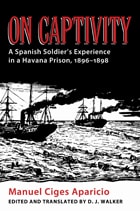
On Captivity
A Spanish Soldier's Experience in a Havana Prison, 1896-1898Manuel Ciges Aparicio
University of Alabama Press, 2012
A rare and unfiltered witness to Spain’s colonial collapse—Ciges Aparicio’s prison memoir exposes the political, human, and moral stakes of the Cuban War of Independence.
Ciges enlisted in the Spanish army in 1893 at the age of twenty. He served in Africa and then in Cuba, where he opposed Spanish General Valeriano Weyler’s policies in Cuba as well as the war itself. Ciges soon found himself imprisoned and facing execution for treason as punishment for an article critical of Weyler’s conducting of the war that was intercepted by Spanish authorities before it could be published in the pro-Cuban Parisian paper L’Intransigeant.
First published in book form in 1903, Ciges’s account includes detailed observations concerning prison organization, perceptions of political events and personalities of the time, as well as graphic descriptions of the daily life of the men confined in the infamous prison. Ciges is the only one of the so-called Generation of 1898—writers considered to have been deeply marked by el desastre (the loss of the colonies)—who was in Cuba during the war years. His witness to events there, colored by his stance as a freethinker and political skeptic, constitutes a significant historical document. Following his release from prison, Ciges returned to Spain where he resumed his career as an activist journalist and also earned acclaim as a translator and novelist. In time, his political allegiances shifted from socialism to liberal republicanism. He was acting as provincial governor of Avila when he was killed by unidentified assassins on August 4, 1936—eighteen days after the Falangist uprising against the Second Republic.
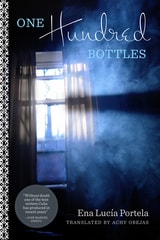
One Hundred Bottles
By Ena Lucía Portela
University of Texas Press, 2010
One Hundred Bottles, with its intersecting characters and unresolved whodunits, can be read as a murder mystery. But it's really a survivor's story. In a voice that blends gossip, storytelling, and literature, Z—the vivacious heroine of Portela's award-winning novel—relates her rum-soaked encounters with the lesbian underground, the characters carving up her home, and the terrifying-but-irresistible Moisés. As entertaining as any detective drama, One Hundred Bottles is ultimately made real by very rough love, intense friendship, and something small that decides to live.
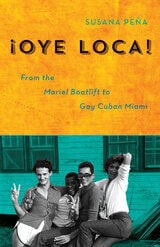
Oye Loca
From the Mariel Boatlift to Gay Cuban MiamiSusana Peña
University of Minnesota Press, 2013
During only a few months in 1980, 125,000 Cubans entered the United States as part of a massive migration known as the Mariel boatlift. The images of boats of all sizes, in various conditions, filled with Cubans of all colors and ages, triggered a media storm. Fleeing Cuba’s repressive government, many homosexual men and women arrived in the United States only to face further obstacles. Deemed “undesirables” by the U.S. media, the Cuban state, and Cuban Americans already living in Miami, these new entrants marked a turning point in Miami’s Cuban American and gay histories.
In Oye Loca, Susana Peña investigates a moment of cultural collision. Drawing from first-person stories of Cuban Americans as well as government documents and cultural texts from both the United States and Cuba, Peña reveals how these discussions both sensationalized and silenced the gay presence, giving way to a Cuban American gay culture. Through an examination of the diverse lives of Cuban and Cuban American gay men, we learn that Miami’s gay culture was far from homogeneous. By way of in-depth interviews, participant observation, and archival analysis, Peña shows that the men who crowded into small apartments together, bleached their hair with peroxide, wore housedresses in the street, and endured ruthless insults challenged what it meant to be Cuban in Miami.
Making a critical incision through the study of heteronormativity, homosexualities, and racialization, ultimately Oye Loca illustrates how a single historical event helped shape the formation of an entire ethnic and sexual landscape.