Results by title
4531 books match the query 'Cultural & Ethnic Studies' and 66 start with o

ON BOARD THE USS MASON
THE WORLD WAR II DIARY OF JAMES A. DUNNMANSEL G. BLACKFORD
The Ohio State University Press, 2016
Dunn kept a day-to-day diary during his spare time on board the Mason. Such diaries are a rarity, for the navy (and other armed services) forbade the keeping of diaries, fearful lest secret information fall into enemy hands. The diary chronicles the Mason’s wartime activities, from the first convoy to the final return to the United States. It captures the feeling and meaning of life on board with an immediacy not fully found in retrospective accounts. The diary accurately records the mortal danger Dunn and his shipmates were in while attacking enemy submarines or dealing with extreme weather conditions in the North Atlantic. It conveys the boredom the men encountered while confined on long, tedious convoys and the joy of shore leaves. Here is the daily life aboard ship—the duties and the pastimes that made shipboard life endurable.
Equally interesting, the diary reveals what it meant to be an African American in a white navy within a segregated American society, the shipboard tensions, and the shipboard cooperation and sense of unity. It also portrays the life of an African American onshore in the United States, Great Britain, and North Africa and the love story that unfolded between James and his wife, Jane.
Supplemented by additional sources, including interviews with Dunn, this diary is a personal view into an important part of American history. Like the Tuskegee airmen, the men of the USS Mason paved the way for desegregation in America’s armed forces, contributing to a civil rights movement that changed the face of a nation.
Occupied Refuge
Humanitarian Colonization and the Camp in KenyaHanno Brankamp
Duke University Press, 2026

Ocean Passages
Navigating Pacific Islander and Asian American LiteraturesErin Suzuki
Temple University Press, 2021
In her pathbreaking book, Ocean Passages, Erin Suzuki explores how movement through—and travel across—the ocean mediates the construction of Asian American and Indigenous Pacific subjectivities in the wake of the colonial conflicts that shaped the modern transpacific. Ocean Passages considers how Indigenous Pacific scholars have emphasized the importance of the ocean to Indigenous activism, art, and theories of globalization and how Asian American studies might engage in a deconstructive interrogation of race in conversation with this Indigenous-centered transnationalism.
The ocean passages that Suzuki addresses include the U.S. occupation and militarization of ocean space; refugee passage and the history and experiences of peoples displaced from the Pacific Islands; migratory circuits and the labors required to cross the sea; and the different ways that oceans inform postcolonial and settler colonial nationalisms. She juxtaposes work by Indigenous Pacific and Asian American artists and authors including James George, Maxine Hong Kingston, Kathy Jetñil-Kijiner, lê thi diếm thúy, Ruth Ozeki, and Craig Santos Perez. In Ocean Passages, Suzuki explores what new ideas, alliances, and flashpoints might arise when comparing and contrasting Asian and Pacific Islander passages across a shared sea.
Ocean, as Much as Rain
Stories, Lyrical Prose, and Poems from TibetTsering Woeser. Edited and Translated by Fiona Sze-Lorrain with Dechen Pemba.
Duke University Press, 2026
Oceanic Becoming
The Pacific beneath the PavementsRob Wilson
Duke University Press, 2025
Odd Tribes
Toward a Cultural Analysis of White PeopleJohn Hartigan Jr.
Duke University Press, 2005
Odd Tribes engages debates in history, anthropology, sociology, and cultural studies over how race matters. Hartigan tracks the spread of “white trash” from an epithet used only in the South prior to the Civil War to one invoked throughout the country by the early twentieth century. He also recounts how the cultural figure of “white trash” influenced academic and popular writings on the urban poor from the 1880s through the 1990s. Hartigan’s critical reading of the historical uses of degrading images of poor whites to ratify lines of color in this country culminates in an analysis of how contemporary performers such as Eminem and Roseanne Barr challenge stereotypical representations of “white trash” by claiming the identity as their own. Odd Tribes presents a compelling vision of what cultural studies can be when diverse research methodologies and conceptual frameworks are brought to bear on pressing social issues.
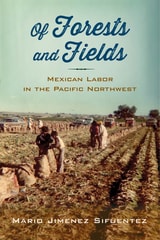
Of Forests and Fields
Mexican Labor in the Pacific NorthwestMario Jimenez Sifuentez
Rutgers University Press, 2016
Just looking at the Pacific Northwest’s many verdant forests and fields, it may be hard to imagine the intense work it took to transform the region into the agricultural powerhouse it is today. Much of this labor was provided by Mexican guest workers, Tejano migrants, and undocumented immigrants, who converged on the region beginning in the mid-1940s. Of Forests and Fields tells the story of these workers, who toiled in the fields, canneries, packing sheds, and forests, turning the Pacific Northwest into one of the most productive agricultural regions in the country.
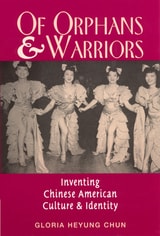
Of Orphans and Warriors
Inventing Chinese American Culture and IdentityChun, Gloria Heyung
Rutgers University Press, 1999
"We were as American as can be," states Jadin Wong in recalling the days when she used to dance at a San Francisco nightclub during the 1940s. Wong belonged to an all-Chinese chorus line at a time when all East Asians were called "Orientals." In this context, then, what did it mean for Wong, an American-born Chinese, to say that she thought of herself as an "American"? Of Orphans and Warriors explores the social and cultural history of largely urban, American-born Chinese from the 1930s through the 1990s, focusing primarily on those living in California. Chun thus opens a window onto the ways in which these Americans born of Chinese ancestry negotiated their identity over a half century.
Past scholarship has portrayed these individuals as desiring to assimilate into mainstream American culture, but being prevented from doing so by the immigrant parent generation. Taking a new approach, Chun uses memoirs, autobiographies, and fictional writings to unravel complex issues of ethnic identity as both culturally defined and individually negotiated. She concludes that, while indeed many Chinese Americans were caught between the lures of mainstream American culture and their parents' old-world values, this liminal position offered them unprecedented opportunities to carve out new identities for themselves from a position of strength.
Of Vagabonds and Fellow Travelers
African Diaspora Literary Culture and the Cultural Cold WarCedric R. Tolliver
University of Michigan Press, 2019
Ogoni Women's Activism
The Transnational Struggle for Justice against Big Oil and the StateDomale Dube
University of Illinois Press, 2025
Dube’s account examines and documents the issues that drew women into the movement, from concerns for themselves and their communities to grander visions for the Ogoni. As she shows, these issues not only influenced organizing in Nigeria but also the diaspora in general and the United States in particular. Ogoni women relied upon nonviolent protest to realize their aims. Dube looks at their campaigns and how their actions reflected their concerns, values, interests, and priorities. The result is a rare account of Black women and transnational organizing for women’s, climate, and environmental justice that merges a history of their involvement with an in-depth analysis of the racial, gender, and ethnic dimensions of the Ogoni Struggle.

Ojo en Celo / Eye in Heat
PoemsMargarita Pintado Burgos; Translated by Alejandra Quintana Arocho
University of Arizona Press, 2024
Aflame with desire, the eye conjures, dreams, invents itself, sees what it wants. The eye sees what it is able to see.
Ojo en celo / Eye in Heat brings into sharp relief the limits of our gaze. It shows us what it is to escape the mirror and move beyond mirages. Margarita Pintado Burgos invites us to ponder the impasse while showing us ways to see better, to break the habit of lying, and to confront images along with language.
With devastating clarity, Pintado Burgos’s poems, presented in both Spanish and English, give voice to the world within and beyond sight: the plants, the trees, the birds, the ocean waves, the fruit forgotten in the kitchen, the house’s furniture. Light takes on new dimensions to expose, manipulate, destroy, and nourish. Alejandra Quintana Arocho’s sensitive English translation renders the stark force of these poems without smoothing over the language of the original.
This collection is for anyone who has felt the weight of beauty that remains hidden. It is for those who have left behind a mother, a father, a country. It is for those who know that there is no way out of the poem, for those who have had to live off a house of words and need that house to be as real as possible. Pintado Burgos writes as a woman, exile, daughter, sister, lover, and artist empowered by the restorative potential of the creative phenomenon.
Old China Through the Eyes of a Storyteller
Julie Moss Herrera
Parkhurst Brothers, Inc., 2012
“Having traveled on the same People to People Ambassador journey to China with Julie, I have seen Julie's anthology from inception to fruition. It is a masterful, engaging, informative and scholarly addition to our understanding and appreciation of Chinese culture, particularly storytelling and folk traditions, from ancient days to today. Practicing storytellers will especially appreciate her tips for telling and context clues at the end of each story.”
--Judith Heineman, storyteller, producer and Illinois Humanities Road Scholar

Old Town Road
A Song by Lil Nas X with Billy Ray CyrusChris Molanphy
Duke University Press, 2023

On Becoming Filipino
Selected Writings of Carlos BulosanE. San Juan
Temple University Press, 1995

On Being Included
Racism and Diversity in Institutional LifeSara Ahmed
Duke University Press, 2012

On Black Breath
Kimberly Bain
Duke University Press, 2027
On Black Sisters Street
A NovelChika Unigwe
Ohio University Press, 2012
On Intellectual Activism
Patricia Hill Collins
Temple University Press, 2012
Sociologist Patricia Hill Collins has been called in Contemporary Sociology “one of the defining voices of contemporary feminist and race scholarship.” Well known for her contributions to sociology, social theory, and cultural studies, her numerous publications indicate why she has been a tireless voice for social justice causes such as the dynamics of race, social class, gender, and sexual equality, and also black feminist politics.
In On Intellectual Activism, Collins asks scholars and public intellectuals to assess the meaning of their work. She challenges readers to rethink the potential of speaking truth to power, and examines both the role of the intellectual in public life and how well questions of contemporary social issues are communicated to the public at large.
The contents of this volume—public lectures, previously published pieces, interviews, and new essays—illustrate the important conceptual anchors of Collins’ work and reflect on the major themes of her illustrious career. These timely and thought-provoking essays include topics ranging from black feminist thought, critical education, public sociology, and resisting racism to new visions for activist intellectuals.

On Music Theory, and Making Music More Welcoming for Everyone
Philip Ewell
University of Michigan Press, 2023
Winner of the 2024 Association of American Publishers PROSE Award for Music and Performing Arts
Since its inception in the mid-twentieth century, American music theory has been framed and taught almost exclusively by white men. As a result, whiteness and maleness are woven into the fabric of the field, and BIPOC music theorists face enormous hurdles due to their racial identities. In On Music Theory, Philip Ewell brings together autobiography, music theory and history, and theory and history of race in the United States to offer a black perspective on the state of music theory and to confront the field’s white supremacist roots. Over the course of the book, Ewell undertakes a textbook analysis to unpack the mythologies of whiteness and western-ness with respect to music theory, and gives, for the first time, his perspective on the controversy surrounding the publication of volume 12 of the Journal of Schenkerian Studies. He speaks directly about the antiblackness of music theory and the antisemitism of classical music writ large and concludes by offering suggestions about how we move forward. Taking an explicitly antiracist approach to music theory, with this book Ewell begins to create a space in which those who have been marginalized in music theory can thrive.
On My Own
Korean Businesses and Race Relations in AmericaIn-Jin Yoon
University of Chicago Press, 1997
In On My Own, In-Jin Yoon combines an intimate fieldwork account of Korean-black relations in Chicago and Los Angeles with extensive quantitative analysis at the national level. Yoon argues that a complete understanding of the contemporary Korean-American community requires systematic analyses of patterns of Korean immigration, entrepreneurship, and race relations with other minority groups. He explains how small business has become the major economic activity of Korean immigrants and how Korean businesses in minority neighborhoods have intensified racial tensions between Koreans and minorities like blacks and Latinos.
“A groundbreaking study of Korean-black relations. Yoon’s insights on immigration, entrepreneurship, and race relations significantly enhance our understanding of urban racial tensions.”—William Julius Wilson, Harvard University
On Racial Icons
Blackness and the Public ImaginationFleetwood, Nicole R
Rutgers University Press, 2015
Nicole R. Fleetwood’s answers to these questions will change the way you think about the next photograph that you see depicting a racial event, black celebrity, or public figure. In On Racial Icons, Fleetwood focuses a sustained look on photography in documenting black public life, exploring the ways in which iconic images function as celebrations of national and racial progress at times or as a gauge of collective racial wounds in moments of crisis.
Offering an overview of photography’s ability to capture shifting race relations, Fleetwood spotlights in each chapter a different set of iconic images in key sectors of public life. She considers flash points of racialized violence in photographs of Trayvon Martin and Emmett Till; the political, aesthetic, and cultural shifts marked by the rise of pop stars such as Diana Ross; and the power and precarity of such black sports icons as Serena Williams and LeBron James; and she does not miss Barack Obama and his family along the way. On Racial Icons is an eye-opener in every sense of the phrase.
On Site, In Sound
Performance Geographies in América LatinaKirstie A. Dorr
Duke University Press, 2018

On the Arab-Jew, Palestine, and Other Displacements
Selected Writings of Ella ShohatElla Shohat
Pluto Press, 2017
Spanning several decades, Ella Shohat's work has introduced conceptual frameworks that fundamentally challenged conventional understandings of Palestine, Zionism and the Middle East, focusing on the pivotal figure of the Arab-Jew. This book gathers together her most influential political essays, interviews, speeches, testimonies and memoirs, as well as previously unpublished material.
Defying the binarist and Eurocentric Arab-versus-Jew rendering of the Israeli/Palestinian conflict, Shohat's work has dared to engage with the deeper historical and cultural questions swirling around colonialism, Orientalism and nationalism. Shohat's paradigm-shifting work unpacks such fraught issues as the anomalies of the national/colonial in Zionist discourse; the narrating of Jewish pasts in Muslim spaces; the links and distinctions between the dispossession of the Nakba and the dislocation of Arab-Jews; the traumatic memories triggered by partition and border-crossing; the echoes within Islamophobia of the anti-Semitic figure of 'the Jew'; and the efforts to imagine a possible future inter-communal 'convivencia'.
Shohat's transdisciplinary perspective illuminates the cultural politics in and around the Middle East. Juxtaposing texts of various genres written in divergent contexts, the book offers a vivid sense of the author's intellectual journey.
On the Banks of the Ganga
When Wastewater Meets a Sacred RiverKelly D. Alley
University of Michigan Press, 2002
Alley investigates ethno-semantic, discursive, and institutional data to flesh out the interplay between religious, scientific, and official discourses about the river Ganga. Using a new outward layering methodology, she points out that anthropological analysis must separate the historical and discursive strands of the debates concerning waste and sacred purity in order to reveal the cultural complexities that surround the Ganga. Ultimately, she addresses a deeply rooted cultural paradox: if the Ganga river is considered sacred by Hindus across India, then why do the people allow it to become polluted?
Examining areas of contemporary concern such as water usage and urban waste management in the most populated river basin in the world, this book will appeal to anthropologists and readers in religious, environmental, and Asian studies, as well as geography and law.
Kelly D. Alley is Associate Professor and Director of Anthropology at Auburn University. In addition to being a prolific writer, she has conducted research on public culture and environmental issues in northern India for over a decade. Alley is currently overseeing a project to ameliorate river pollution problems in India.

On the Border of Belonging
Luisa Capetillo, Ofelia Rodríguez Acosta, and Evangelina Rodríguez PerozoStephanie Rivera Berruz
Rutgers University Press, 2027
On the Border of Belonging: Luisa Capetillo, Ofelia Rodríguez Acosta, and Evangelina Rodríguez Perozo is a philosophical-historiographical project that spearheads the construction of an intellectual tradition of women from the Hispanophone Caribbean at the turn of the 20th century. On the Border of Belonging engages Luisa Capetillo (Puerto Rico), Ofelia Rodríguez Acosta (Cuba), Evangelina Rodríguez Perozo (Dominican Republic) as interlocutors with the landfall of Western modernity revealing a tense intersection between a desire to belong to modernity while sitting on the margins of its possibilities. The vexed relationship with belonging creates a counter-archive of contradictions that reveals a vivid philosophical patchwork that spirals and repeats across the archipelago. In this crosscurrent of ideas, Luisa Capetillo defends the possibilities of a spiritual- anarchist political life; Ofelia Rodríguez Acosta challenges the norms of love and kinship; and Evangelina Rodríguez Perozo contests the standards of maternal and infant care.
On the Cultural Achievements of Negroes
Henri Gregoire
University of Massachusetts Press, 1996
First published in French in 1808 and translated into English two years later under the title An Enquiry Concerning the Intellectual and Moral Faculties, and Literature of the Negroes, this book was a touchstone for nineteenth-century abolitionists in England and the United States. Written by Abbe Henri Gregoire (1750–1831), it argued vigorously against assumptions of black inferiority and in favor of the humanity, equality, and cultural achievements of people of African heritage. His treatise summarized most of the available written thought on race up to that time. A leading activist in the French Revolution, Gregoire reflected in his arguments the spirit of “libertie, egalite, and fraternite” and anticipated twentieth-century race inquiry and theory. Although influential in its time, the first translation of Gregoire's work was incomplete and flawed. This new edition presents a fresh, accurate, and complete text of this key document in the history of Western racial thought. The book includes a substantial biography of Gregoire and analysis of the historical context in which he wrote and the impact of his work.
On the Eve of the Cybercultural Revolution
Black Power and Capitalism in the 1960sBrian Bartell
University of Minnesota Press, 2025
Uncovering the Black Power movement’s contributions to theorizing the politics of automation
On the Eve of the Cybercultural Revolution offers a comprehensive look at the Black Power movement’s theoretical work and insights into the entanglement of capitalism, technology, and racism. Drawing upon James and Grace Lee Boggs’s expanded notion of the cybercultural era, Brian Bartell demonstrates how a range of artists, writers, and activists from the 1960s prefigured the wider discourse around automation and made it a central concern of their politics.
Rather than reducing automation to an isolated technical phenomenon, theorists of the Black radical tradition identified its important historical antecedents in colonialism and plantation slavery, emphasizing how the emerging cyberculture joined with issues such as the reorganization of labor, ecological harm, and racial inequality. Examining the work of Martin Luther King Jr., Noah Purifoy, the Black Panthers, and others, On the Eve of the Cybercultural Revolution outlines the new forms of social reproduction conceived outside of the dominant structures of racial capitalism.
Bartell synthesizes a wide range of source texts, including political speeches, literature, and activist archives, to show how the Black Power movement sought to create a postscarcity, more-than-capitalist economy. By shedding light on the movement’s underexplored engagement with theories of technology, he provides a crucial key to understanding the historical dynamics responsible for our technocapitalist present.
Retail e-book files for this title are screen-reader friendly.
On the Margins
Essays on the History of Jews in EstoniaAnton Weiss-Wendt
Central European University Press, 2017
Estonia is perhaps the only country in Europe that lacks a comprehensive history of its Jewish minority. Spanning over 150 years of Estonian Jewish history, On the Margins is a truly unique book. Rebuilding a life beyond so-called Pale of Jewish Settlement in the Russian Empire, the Jewish cultural autonomy in interwar Estonia, and the trauma of Soviet occupation of 1940–41 are among the issues addressed in the book but most profoundly, the book wrestles with the subject of the Holocaust and its legacy in Estonia.
Specifically, it examines the quasi-legal system of murder instituted in Nazi-occupied Estonia, confiscation of Jewish property, and Jewish forced labor camps and develops an analysis of the causes of collaboration during the Holocaust. The book also explores the dynamics of war crimes trials in the Soviet Union since the 1960s and so-called denaturalization trials in the United States in the 1980s. The haunting memory of Soviet and Nazi rule, the book concludes, prevents a larger segment of today’s Estonian population from facing up to the Holocaust and the universal message that it carries.E
On the Run
Fugitive Life in an American CityAlice Goffman
University of Chicago Press, 2014
Alice Goffman spent six years living in one such neighborhood in Philadelphia, and her close observations and often harrowing stories reveal the pernicious effects of this pervasive policing. Goffman introduces us to an unforgettable cast of young African American men who are caught up in this web of warrants and surveillance—some of them small-time drug dealers, others just ordinary guys dealing with limited choices. All find the web of presumed criminality, built as it is on the very associations and friendships that make up a life, nearly impossible to escape. We watch as the pleasures of summer-evening stoop-sitting are shattered by the arrival of a carful of cops looking to serve a warrant; we watch—and can’t help but be shocked—as teenagers teach their younger siblings and cousins how to run from the police (and, crucially, to keep away from friends and family so they can stay hidden); and we see, over and over, the relentless toll that the presumption of criminality takes on families—and futures.
While not denying the problems of the drug trade, and the violence that often accompanies it, through her gripping accounts of daily life in the forgotten neighborhoods of America's cities, Goffman makes it impossible for us to ignore the very real human costs of our failed response—the blighting of entire neighborhoods, and the needless sacrifice of whole generations.

On the Semicivilized
Coloniality, Finance, and Embodied Sovereignty in CairoJulia Elyachar
Duke University Press, 2025
On the Sleeve of the Visual
Race as Face ValueAlessandra Raengo
Dartmouth College Press, 2013

On the Viking Trail
Travels in Scandinavian AmericaDon Lago
University of Iowa Press, 2004
When his father developed Alzheimer’s disease, Don Lago realized that the stories and traditions of his Swedish ancestors would be lost along with the rest of his father’s memories. Haunted by this inevitable tragedy, Lago set out to fight back against forgetting by researching and reclaiming his long-lost Scandinavian roots.
Beginning his quest with a visit to his ancestral home of Gränna, Sweden, Lago explores all facets of Scandinavian America—Swedish, Danish, Finnish, Norwegian, and Icelandic—along the way. He encounters Icelanders living in the Utah desert, a Titanic victim buried beneath a gigantic Swedish coffee pot in Iowa, an Arkansas town named after the famous Swedish opera singer Jenny Lind, a real-life Legoland in southern California, and other unique remnants of America’s Scandinavian past. Visits to Sigurd Olson’s legendary cabin on the banks of Burntside Lake in the Boundary Waters of Minnesota and Carl Sandburg’s birthplace in Galesburg, Illinois, further provide Lago with an acute sense of the Scandinavian values that so greatly influenced, and continue to influence, American society.
More than just a travel memoir, On the Viking Trail places Scandinavian immigrants and their history within the wider sweep of American culture. Lago’s perceptive eye and amusing tales remind readers of all ethnic backgrounds that to truly appreciate America one must never forget its immigrant past.
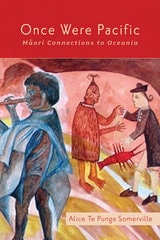
Once Were Pacific
Maori Connections to OceaniaAlice Te Punga Somerville
University of Minnesota Press, 2012
Native identity is usually associated with a particular place. But what if that place is the ocean? Once Were Pacific explores this question as it considers how Māori and other Pacific peoples frame their connection to the ocean, to New Zealand, and to each other through various creative works. Māori scholar Alice Te Punga Somerville shows how and when Māori and other Pacific peoples articulate their ancestral history as migratory seafarers, drawing their identity not only from land but also from water.
Although Māori are ethnically Polynesian, and Aotearoa New Zealand is clearly a part of the Pacific region, in New Zealand the terms “Māori” and “Pacific” are colloquially applied to two distinct communities: Māori are Indigenous, and “Pacific” refers to migrant communities from elsewhere in the region. Asking how this distinction might blur historical and contemporary connections, Te Punga Somerville interrogates the relationship between indigeneity, migration, and diaspora, focusing on texts: poetry, fiction, theater, film, and music, viewed alongside historical instances of performance, journalism, and scholarship.
In this sustained treatment of the Māori diaspora, Te Punga Somerville provides the first critical analysis of relationships between Indigenous and migrant communities in New Zealand.
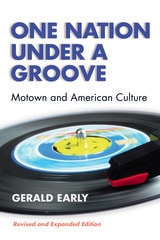
One Nation Under A Groove
Motown and American CultureGerald Early
University of Michigan Press, 2004
How it got to be that way and how it changed the face of American popular culture are the subjects of this concise study of Berry Gordy's phenomenal creation. Author Gerald Early tells the story of the cultural and historical conditions that made Motown Records possible, including the dramatic shifts in American popular music of the time, changes in race relations and racial attitudes, and the rise of a black urban population. Early concentrates in particular on the 1960s and 70s, when Motown had its biggest impact on American musical tastes and styles.
With this revised and expanded edition, the author provides an up-to-date bibliography of the major books that have been written about Motown Records specifically, and black American music generally. Plus, new appendices feature interviews with four of the major creators of the Motown Sound: Berry Gordy, Stevie Wonder, Diana Ross, and Marvin Gaye.
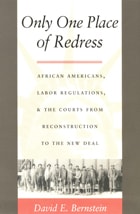
Only One Place of Redress
African Americans, Labor Regulations, and the Courts from Reconstruction to the New DealDavid E. Bernstein
Duke University Press, 2001
A pioneer in applying the insights of public choice theory to legal history, Bernstein contends that the much-maligned jurisprudence of the Lochner era—with its emphasis on freedom of contract and private market ordering—actually discouraged discrimination and assisted groups with little political clout. To support this thesis he examines the motivation behind and practical impact of laws restricting interstate labor recruitment, occupational licensing laws, railroad labor laws, minimum wage statutes, the Davis-Bacon Act, and New Deal collective bargaining. He concludes that the ultimate failure of Lochnerism—and the triumph of the regulatory state—not only strengthened racially exclusive labor unions but contributed to a massive loss of employment opportunities for African Americans, the effects of which continue to this day.
Scholars and students interested in race relations, labor law, and legal or constitutional history will be fascinated by Bernstein’s daring—and controversial—argument.

Only a Black Athlete Can Save Us Now
Grant Farred
University of Minnesota Press, 2021
A call to arms exploring the protest movements of 2020 as they reverberated through the athletic world
Starting with the refusal of George Hill of the Milwaukee Bucks to participate in an August 2020 playoff game following the shooting of Jacob Blake by police in Kenosha, Wisconsin, Grant Farred shows how the Covid-restricted NBA “bubble” released an energy that spurred athletes into radical action. They disrupted athletic normalcy, and in their grief and rage against American racism they demonstrated the true progressivism lacking in even the most reformist-minded politicians and pundits. Farred goes on to trace the radicalism of black athletes in a number of sports, including the WNBA, women’s tennis, the NFL, and NASCAR, locating contemporary athletes in a lineage that runs through Muhammad Ali as well as Tommy Smith and John Carlos at the 1968 Olympics.
Only a Black Athlete Can Save Us Now uses sport as a point of departure to argue that the dystopic crisis of our current moment offers a singular opportunity to reimagine how we live in the world.
Forerunners: Ideas First is a thought-in-process series of breakthrough digital publications. Written between fresh ideas and finished books, Forerunners draws on scholarly work initiated in notable blogs, social media, conference plenaries, journal articles, and the synergy of academic exchange. This is gray literature publishing: where intense thinking, change, and speculation take place in scholarship.

Open Admissions
The Poetics and Pedagogy of Toni Cade Bambara, June Jordan, Audre Lorde, and Adrienne Rich in the Era of Free CollegeDanica Savonick
Duke University Press, 2024
Open Wound
The Long View of Race in AmericaWilliam McKee Evans
University of Illinois Press, 2009
Opportunity Denied
Limiting Black Women to Devalued WorkBranch, Enobong
Rutgers University Press, 2011
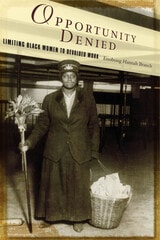
Blacks and Whites. Men and Women. Historically, each group has held very different types of jobs. The divide between these jobs was stark—clean or dirty, steady or inconsistent, skilled or unskilled. In such a rigidly segregated occupational landscape, race and gender radically limited labor opportunities, relegating Black women to the least desirable jobs. Opportunity Denied is the first comprehensive look at changes in race, gender, and women’s work across time, comparing the labor force experiences of Black women to White women, Black men and White men. Enobong Hannah Branch merges empirical data with rich historical detail, offering an original overview of the evolution of Black women’s work.
From free Black women in 1860 to Black women in 2008, the experience of discrimination in seeking and keeping a job has been determinedly constant. Branch focuses on occupational segregation before 1970 and situates the findings of contemporary studies in a broad historical context, illustrating how inequality can grow and become entrenched over time through the institution of work.
Opposition by Imitation
The Economics of Italian Anti-Mafia ActivismChristina Jerne
University of Minnesota Press, 2025
Defying the mafia with everyday acts of resistance
For more than 150 years, Italy has been home to a resilient and evolving resistance against the pervasive influence of mafias. While these criminal organizations are renowned for their vast international business enterprises, the collective actions taken to oppose them are less known. In Opposition by Imitation, Christina Jerne explores anti-mafia activism, revealing how ordinary people resist, counter, and prevent criminal economies from proliferating.
Drawing on ethnographic fieldwork among anti-mafia alliances in Campania, Sicily, and other parts of Italy, Jerne details a particular aspect of mafia activities: providing cash relief and other forms of patronage to individuals and groups. Her research shows how activism has evolved to imitate this sustaining role. Activists are increasingly challenging mafia control both by creating alternative economies—from producing food that interrupts mafia labor practices to organizing tourism that supports anti-mafia hospitality—and by subversively adopting business tactics similar to the mafia’s to compete with their social influence and legitimacy. Exposing the political implications of this mimetic opposition, Jerne points to its potential impact on crime prevention and criminalization, both in Italy and globally.
Opposition by Imitation shows how these modern-day Robin Hoods are redefining collective action, taking what was controlled by the mafias and returning it to the collective. This contentious economic turn, against the backdrop of broader social movements, reveals significant political possibilities afforded by imitative opposition.
Retail e-book files for this title are screen-reader friendly with images accompanied by short alt text and/or extended descriptions.
Ordinary Injustice
Rascuache Lawyering and the Anatomy of a Criminal CaseAlfredo Mirandé
University of Arizona Press, 2023
Building from author Alfredo Mirandé’s earlier work Rascuache Lawyer, the account is told by “The Professor,” who led a pro bono rascuache legal defense team comprising the professor, a retired prosecutor, and student interns, working without a budget, office, paralegals, investigators, or support staff. The book is a must-read for anyone interested in race, gender, and criminal injustice and will appeal not only to law scholars and social scientists but to lay readers interested in ethnographic field research, Latinx communities, and racial disparities in the legal system.
The case is presented as a series of letters to the author’s fictional alter-ego, Fermina Gabriel, an accomplished lawyer and singer. This narrative device allows the author to present the case as it happens, relaying the challenges and complexities as they occur and drawing the reader in.
While Ordinary Injustice deals with important, complicated legal issues and questions that arise in criminal defense work and looks at the case from the time of Juan’s arrest to the preliminary hearing, indictment, pretrial motions, and attempts to obtain a negotiated plea, it is written in nontechnical and engaging language that makes law accessible to the lay reader.

Organised Crime and Migration
Criminal Groups, Corruption and the Displacement Crisis in Central America and MexicoVictorie Knox
University of London Press, 2026
Organized criminal groups have been involved in the abuse of migrants and people-smuggling in Mexico for many years. A displacement crisis has emerged as people with different potential protection needs flee a complex mix of factors in Central America, from violence and threats from criminal gangs, persecution by state actors, gender violence, and hate crime to the impact of climate change, natural disasters, and entrenched inequality and poverty.
Drawing on original interview material with key informants speaking in their professional capacity and with migrants and refugees during their journey, the book analyzes organized crime’s role in provoking human displacement and the abuse of migrants, reflecting on state responsibility, the role of policy, corruption, and impunity in perpetuating abuse, and the implications for human rights. In doing so, it provides a new understanding of the likely consequences of implementing or externalizing migration policy in regions affected by endemic criminal violence and corruption globally.
Organizing Asian-American Labor
The Pacific Coast Canned-Salmon Industry, 1870-1942Chris Friday
Temple University Press, 1995
Between 1870 and 1942, successive generations of Asians and Asian Americans—predominantly Chinese, Japanese, and Filipino—formed the predominant body of workers in the Pacific Coast canned-salmon industry.
This study traces the shifts in the ethnic and gender composition of the cannery labor market from its origins through it decline and examines the workers' creation of work cultures and social communities. Resisting the label of cheap laborer, these Asian American workers established formal and informal codes of workplace behavior, negotiated with contractors and recruiters, and formed alliances to organize the workforce.
Whether he is discussing Japanese women workers' sharing of child-care responsibilities or the role of Filipino workers in establishing the Cannery and Field Workers Union, Chris Friday portrays Asian and Asian American workers as people who, while enduring oppressive restrictions, continually attempted to shape their own lives.
In the series Asian American History and Culture, edited by Sucheng Chan, David Palumbo-Liu, Michael Omi, K. Scott Wong, and Linda Trinh Võ.
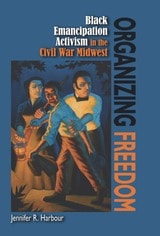
Organizing Freedom
Black Emancipation Activism in the Civil War MidwestJennifer R. Harbour
Southern Illinois University Press, 2020
Despite banning slavery, Illinois and Indiana share an antebellum history of severely restricting rights for free black people while protecting the rights of slaveholders. Nevertheless, as Harbour shows, black Americans settled there, and in a liminal space between legal slavery and true freedom, they focused on their main goals: creating institutions like churches, schools, and police watches; establishing citizenship rights; arguing against oppressive laws in public and in print; and, later, supporting their communities throughout the Civil War.
Harbour’s sophisticated gendered analysis features black women as being central to the seeking of emancipated freedom. Her distinct focus on what military service meant for the families of black Civil War soldiers elucidates how black women navigated life at home without a male breadwinner at the same time they began a new, public practice of emancipation activism. During the tumult of war, Midwestern black women negotiated relationships with local, state, and federal entities through the practices of philanthropy, mutual aid, religiosity, and refugee and soldier relief.
This story of free black people shows how the ideal of equality often competed against reality in an imperfect nation. As they worked through the sluggish, incremental process to achieve abolition and emancipation, Midwestern black activists created a unique regional identity.
Organizing for Equality
The Evolution of Women's and Racial-Ethnic Organizations in America, 1955-1985Minkoff, Debra C
Rutgers University Press, 1995
Women and racial-ethnic minorities have had long histories of mobilizing for equality in U.S. society, but recent decades have witnessed an unprecedented expansion in the number and visibility of voluntary and activist organizations committed to challenging gender and racial-ethnic discrimination. What conditions have encouraged this growth? Going beyond more familiar accounts of social movement development, Debra Minkoff uses multivariate techniques to demonstrate that there is an ecology of organizational evolution that has shaped the formation and survival of national women's, African-American, Asian American, and Latino social and political organizations. Changes in the environment for action during the 1960s promoted the creation of a niche for women's and minority organizational activity, and this sector continued to expand even as the climate for social action became increasingly conservative during the 1970s and 1980s. Drawing on recent advances in both social movement and organizational theory and research, Minkoff offers an organizational analysis of the evolution of the women's and racial-ethnic social change sector since the mid-1950s. She provides an original synthesis of social movement and organizational theory, and unique analysis of the development of these women's and minority organizations from the civil rights era to the present.
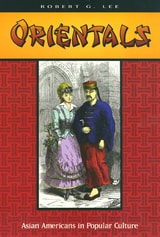
Orientals
Robert Lee
Temple University Press, 1999
The idea of Asians as mysterious strangers who could not be assimilated into the cultural mainstream was percolating to the surface of American popular culture in the mid-nineteenth century, when Chinese immigrant laborers began to arrive in this country in large numbers. Lee shows how the bewildering array of racialized images first proffered by music hall songsters and social commentators have evolved and become generalized to all Asian Americans, coalescing in particular stereotypes. Whether represented as Pollutant, Coolie, Deviant, Yellow Peril, Model Minority, or Gook, the Oriental is portrayed as alien and a threat to the American family -- the nation writ small.
Refusing to balance positive and negative stereotypes, Lee connects these stereotypes to particular historical moments, each marked by shifting class relations and cultural crises. Seen as products of history and racial politics, the images that have prevailed in songs, fiction, films, and nonfiction polemics are contradictory and complex. Lee probes into clashing images of Asians as (for instance) seductively exotic or devious despoilers of (white) racial purity, admirably industrious or an insidious threat to native laborers. When Lee dissects the ridiculous, villainous, or pathetic characters that amused or alarmed the American public, he finds nothing generated by the real Asian American experience; whether they come from the Gold Rush camps or Hollywood films or the cover of Newsweek, these inhuman images are manufactured to play out America's racial myths.
Orientals comes to grips with the ways that racial stereotypes come into being and serve the purposes of the dominant culture.
Origins and Destinations
The Making of the Second GenerationRenee Luthra
Russell Sage Foundation, 2018
Using surveys of second generation immigrant adults in New York and Los Angeles, Origins and Destinations explains why second generation experiences differ across national origin groups and why immigrant offspring with the same national background often follow different trajectories. Inter-group disparities stem from contexts of both emigration and immigration. Origin countries differ in value orientations: immigrant parents transmit lessons learned in varying contexts of emigration to children raised in the U.S. A system of migration control sifts immigrants by legal status, generating a context of immigration that favors some groups over others. Both contexts matter: schooling is higher among immigrant children from more secular societies (South Korea) than among those from more religious countries (the Philippines). When immigrant groups enter the U.S. migration system through a welcoming door, as opposed to one that makes authorized status difficult to achieve, education propels immigrant children to better jobs.
Diversity is also evident among immigrant offspring whose parents stem from the same place. Immigrant children grow up with homeland connections, which can both hurt and harm: immigrant offspring get less schooling when a parent lives abroad, but more schooling if parents in the U.S. send money to relatives living abroad. Though all immigrants enter the U.S. as non-citizens, some instantly enjoy legal status, while others spend years in the shadows. Children born abroad, but raised in the U.S. are all everyday Americans, but only some have become de jure Americans, a difference yielding across-the-board positive effects, even among those who started out in the same country.
Disentangling the sources of diversity among today’s population of immigrant offspring, Origins and Destinations provides a compelling new framework for understanding the second generation that is transforming America.

Origins of a Spontaneous Revolution
East Germany, 1989Karl-Dieter Opp, Peter Voss, and Christiane Gern
University of Michigan Press, 1995
Other 1898s
Working-Class Politics in the Postemancipation CaribbeanAnne Eller
Duke University Press, 2027
Other Britain, Other British
Contemporary Multicultural FictionA. Robert Lee
Pluto Press, 1995