Results by title
158 books match the query 'Cultural assimilation' and 7 start with o
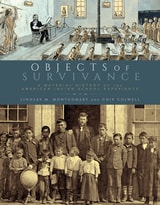
Objects of Survivance
A Material History of the American Indian School ExperienceLindsay M. Montgomery
University Press of Colorado, 2019
This visual and material archive serves as a lens through which to view a key moment in US history—when Native Americans were sequestered onto reservation lands, forced into unfamiliar labor economies, and attacked for their religious practices. Education, the government hoped, would be the final tool to permanently transform Indigenous bodies through moral instruction in Western dress, foodways, and living habits. Yet Lindsay Montgomery and Chip Colwell posit that Bratley’s collection constitutes “objects of survivance”—things and images that testify not to destruction and loss but to resistance and survival. Interwoven with documents and interviews, Objects of Survivance illuminates how the US government sought to control Native Americans and how Indigenous peoples endured in the face of such oppression.
Rejecting the narrative that such objects preserve dying Native cultures, Objects of Survivance reframes the Bratley Collection, showing how tribal members have reconnected to these items, embracing them as part of their past and reclaiming them as part of their contemporary identities. This unique visual and material record of the early American Indian school experience and story of tribal perseverance will be of value to anyone interested in US history, Native American studies, and social justice.
Co-published with the Denver Museum of Nature & Science
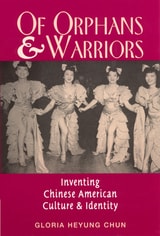
Of Orphans and Warriors
Inventing Chinese American Culture and IdentityChun, Gloria Heyung
Rutgers University Press, 1999
"We were as American as can be," states Jadin Wong in recalling the days when she used to dance at a San Francisco nightclub during the 1940s. Wong belonged to an all-Chinese chorus line at a time when all East Asians were called "Orientals." In this context, then, what did it mean for Wong, an American-born Chinese, to say that she thought of herself as an "American"? Of Orphans and Warriors explores the social and cultural history of largely urban, American-born Chinese from the 1930s through the 1990s, focusing primarily on those living in California. Chun thus opens a window onto the ways in which these Americans born of Chinese ancestry negotiated their identity over a half century.
Past scholarship has portrayed these individuals as desiring to assimilate into mainstream American culture, but being prevented from doing so by the immigrant parent generation. Taking a new approach, Chun uses memoirs, autobiographies, and fictional writings to unravel complex issues of ethnic identity as both culturally defined and individually negotiated. She concludes that, while indeed many Chinese Americans were caught between the lures of mainstream American culture and their parents' old-world values, this liminal position offered them unprecedented opportunities to carve out new identities for themselves from a position of strength.
One Day for Democracy
Independence Day and the Americanization of Iron Range ImmigrantsMary Lou Nemanic
Ohio University Press, 2007
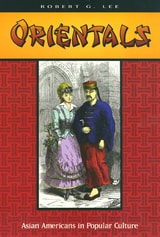
Orientals
Robert Lee
Temple University Press, 1999
The idea of Asians as mysterious strangers who could not be assimilated into the cultural mainstream was percolating to the surface of American popular culture in the mid-nineteenth century, when Chinese immigrant laborers began to arrive in this country in large numbers. Lee shows how the bewildering array of racialized images first proffered by music hall songsters and social commentators have evolved and become generalized to all Asian Americans, coalescing in particular stereotypes. Whether represented as Pollutant, Coolie, Deviant, Yellow Peril, Model Minority, or Gook, the Oriental is portrayed as alien and a threat to the American family -- the nation writ small.
Refusing to balance positive and negative stereotypes, Lee connects these stereotypes to particular historical moments, each marked by shifting class relations and cultural crises. Seen as products of history and racial politics, the images that have prevailed in songs, fiction, films, and nonfiction polemics are contradictory and complex. Lee probes into clashing images of Asians as (for instance) seductively exotic or devious despoilers of (white) racial purity, admirably industrious or an insidious threat to native laborers. When Lee dissects the ridiculous, villainous, or pathetic characters that amused or alarmed the American public, he finds nothing generated by the real Asian American experience; whether they come from the Gold Rush camps or Hollywood films or the cover of Newsweek, these inhuman images are manufactured to play out America's racial myths.
Orientals comes to grips with the ways that racial stereotypes come into being and serve the purposes of the dominant culture.
Origins and Destinations
The Making of the Second GenerationRenee Luthra
Russell Sage Foundation, 2018
Using surveys of second generation immigrant adults in New York and Los Angeles, Origins and Destinations explains why second generation experiences differ across national origin groups and why immigrant offspring with the same national background often follow different trajectories. Inter-group disparities stem from contexts of both emigration and immigration. Origin countries differ in value orientations: immigrant parents transmit lessons learned in varying contexts of emigration to children raised in the U.S. A system of migration control sifts immigrants by legal status, generating a context of immigration that favors some groups over others. Both contexts matter: schooling is higher among immigrant children from more secular societies (South Korea) than among those from more religious countries (the Philippines). When immigrant groups enter the U.S. migration system through a welcoming door, as opposed to one that makes authorized status difficult to achieve, education propels immigrant children to better jobs.
Diversity is also evident among immigrant offspring whose parents stem from the same place. Immigrant children grow up with homeland connections, which can both hurt and harm: immigrant offspring get less schooling when a parent lives abroad, but more schooling if parents in the U.S. send money to relatives living abroad. Though all immigrants enter the U.S. as non-citizens, some instantly enjoy legal status, while others spend years in the shadows. Children born abroad, but raised in the U.S. are all everyday Americans, but only some have become de jure Americans, a difference yielding across-the-board positive effects, even among those who started out in the same country.
Disentangling the sources of diversity among today’s population of immigrant offspring, Origins and Destinations provides a compelling new framework for understanding the second generation that is transforming America.
Out Of The Frying Pan
Bill Hosokawa
University Press of Colorado, 1998
Oye Loca
From the Mariel Boatlift to Gay Cuban MiamiSusana Peña
University of Minnesota Press, 2013
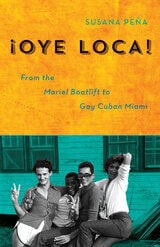
During only a few months in 1980, 125,000 Cubans entered the United States as part of a massive migration known as the Mariel boatlift. The images of boats of all sizes, in various conditions, filled with Cubans of all colors and ages, triggered a media storm. Fleeing Cuba’s repressive government, many homosexual men and women arrived in the United States only to face further obstacles. Deemed “undesirables” by the U.S. media, the Cuban state, and Cuban Americans already living in Miami, these new entrants marked a turning point in Miami’s Cuban American and gay histories.
In Oye Loca, Susana Peña investigates a moment of cultural collision. Drawing from first-person stories of Cuban Americans as well as government documents and cultural texts from both the United States and Cuba, Peña reveals how these discussions both sensationalized and silenced the gay presence, giving way to a Cuban American gay culture. Through an examination of the diverse lives of Cuban and Cuban American gay men, we learn that Miami’s gay culture was far from homogeneous. By way of in-depth interviews, participant observation, and archival analysis, Peña shows that the men who crowded into small apartments together, bleached their hair with peroxide, wore housedresses in the street, and endured ruthless insults challenged what it meant to be Cuban in Miami.
Making a critical incision through the study of heteronormativity, homosexualities, and racialization, ultimately Oye Loca illustrates how a single historical event helped shape the formation of an entire ethnic and sexual landscape.