Results by title
251 books match the query 'Environmental conditions' and 5 start with o

On the Banks of the Ganga
When Wastewater Meets a Sacred RiverKelly D. Alley
University of Michigan Press, 2002
Alley investigates ethno-semantic, discursive, and institutional data to flesh out the interplay between religious, scientific, and official discourses about the river Ganga. Using a new outward layering methodology, she points out that anthropological analysis must separate the historical and discursive strands of the debates concerning waste and sacred purity in order to reveal the cultural complexities that surround the Ganga. Ultimately, she addresses a deeply rooted cultural paradox: if the Ganga river is considered sacred by Hindus across India, then why do the people allow it to become polluted?
Examining areas of contemporary concern such as water usage and urban waste management in the most populated river basin in the world, this book will appeal to anthropologists and readers in religious, environmental, and Asian studies, as well as geography and law.
Kelly D. Alley is Associate Professor and Director of Anthropology at Auburn University. In addition to being a prolific writer, she has conducted research on public culture and environmental issues in northern India for over a decade. Alley is currently overseeing a project to ameliorate river pollution problems in India.
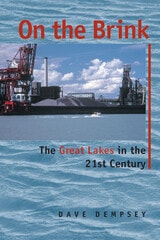
On the Brink
The Great Lakes in the 21st CenturyDave Dempsey
Michigan State University Press, 2004
As one of the world’s great natural treasures, the Great Lakes have also served in recent decades as an early warning system for many emerging environmental problems. In the early twenty-first century, as the Lakes face unprecedented challenges, we need to revisit both the wonder of the Lakes and the perils plaguing them, and to take action to protect this majestic ecosystem.
Dave Dempsey weaves the natural character and phenomena of the Great Lakes and stories of the schemes, calamities, and unusual human residents of the Basin with the history of their environmental exploitation and recovery. Contrasting the incomparable beauty and complexity of the Lakes, and the poetry, folklore, and citizen action they have inspired, with the disasters that short-sighted human folly has inflicted on the ecosystem, Dempsey makes this history both engaging and relevant to today’s debates and decisions.
Underlying the neglectful treatment of the Lakes are two irreconcilable and faulty human assumptions: that the Lakes are a system so big that human beings cannot do great harm to it, and that the Lakes are a resource that can be bent to the will of humankind. Dempsey finds evidence that, despite great changes in the laws governing the Lakes and public attitudes toward them in the last fifty years, government policy and institutions are still dominated by these dangerous attitudes.
A central theme of On the Brink is that citizens, who have displayed an increasing sense of commitment to the Lakes and a growing sense of place, must challenge their leaders to reform Great Lakes institutions. While everything from large-scale water exports to global climate change looms in the future of the Lakes, single-purpose solutions do not suffice—no more than a Band- aid would on a gaping wound. Dempsey shows that it is necessary to create a governing system that reflects the realities of life “on the ground” in communities and that taps into the passion and determination of citizens to protect these treasures.

Oneota Flow
The Upper Iowa River and Its PeopleDavid S. Faldet
University of Iowa Press, 2009
Whether profiling the chief of the last hunter-gatherers on the river, an early settler witnessing her first prairie fire and a modern wildlife biologist using fire to manage prairies, the manager of the Granger Farmer’s Co-op Creamery, or a landowner whose bottomlands are continually eaten away by floods, Faldet steadily develops the central idea that people are walking tributaries of the river basin in which they make their homes.
Faldet moves through the history of life along the now-polluted Upper Iowa, always focusing on the ways people depend on the river, the environment, and the resources of the region. He blends contemporary conversations, readings from the historical record, environmental research, and personal experience to show us that the health of the river is best guaranteed by maintaining the biological communities that nurture it. In return, taking care of the Upper Iowa is the best way to take care of our future.
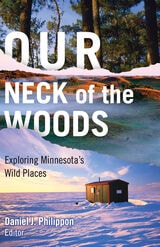
Our Neck of the Woods
Exploring Minnesota's Wild PlacesDaniel J. Philippon
University of Minnesota Press, 2009
What are the odds of finding Minnesota's tiniest orchid? Why take a Breathalyzer test to study frogs? How does ice fishing warm the heart? Who would live in such a cold, lean region? Our Neck of the Woods takes on these and other urgent (and sometimes quirky) questions, showcasing writers' own experiences in the best-loved places in Minnesota, including the North Shore, Lake Bemidji, the western prairies and grasslands, the Boundary Waters, and the Mesabi Iron Range.
The outdoor experiences described here range from sweeping natural history observations to adventurous tales of coming-of-age camping and hunting trips. We follow notable writers and conservationists Sigurd F. Olson, Paul Gruchow, Bill Holm, Jan Zita Grover, Greg Breining, Laurie Allmann, and many others as they descend a frozen river toward Lake Superior, explore a crystalline palace at minus 20 degrees, and trace a family's history along the Mississippi River. Writing on such themes as embracing winter, making camp, and finding wildness even amid development, these authors tell of hunting, fishing, birding, canoeing, and other great outdoor activities that help define what it means to be Minnesotan.
Drawn from the pages of Minnesota Conservation Volunteer magazine-published by the Department of Natural Resources since 1940-these writings evoke a strong sense of place and suggest that the outdoor experiences we share with others come to mean the most to us. With rich observations and spirited tales, Our Neck of the Woods beckons Minnesotans to work, play, and explore in the natural places close to their homes and hearts.
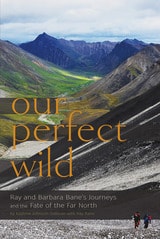
Our Perfect Wild
Ray & Barbara Bane's Journeys and the Fate of Far NorthKaylene Johnson-Sullivan with Ray Bane
University of Alaska Press, 2016
This book tells their story, a tale of dedication and tireless labor in the face of suspicion, resistance, and even violence. At a time when Alaska’s natural bounty remains under threat, Our Perfect Wild shows us an example of the commitment—and love—that will be required to preserve it.