Results by title
2706 books match the query 'European' and 56 start with o
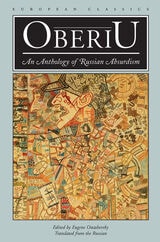
OBERIU
An Anthology of Russian AbsurdismEugene Ostashevsky
Northwestern University Press, 2006
Some called it the last of the Russian avant-garde, and others called it the first (and last) instance of Absurdism in Russia. Though difficulty to pigeon-hole, OBERIU and the pleasures of its poetry and prose are, with this volume, at long last fully open to English-speaking readers. Skillfully translated to preserve the weird charm of the originals, these poems and prose pieces display all the hilarity and tragedy, the illogical action and puppetlike violence and eroticism, and the hallucinatory intensity that brought down the wrath of the Soviet censors. Today they offer an uncanny reflection of the distorted reality they reject.
Object Lessons
The Novel as a Theory of ReferenceJami Bartlett
University of Chicago Press, 2016
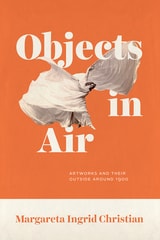
Objects in Air
Artworks and Their Outside around 1900Margareta Ingrid Christian
University of Chicago Press, 2021
Writers created an early theory of unbounded form that described what Christian calls an artwork’s ecstasis or its ability to stray outside its limits and engender its own space. Objects viewed in this perspective complicate the now-fashionable discourse of empathy aesthetics, the attention to self-projecting subjects, and the idea of the modernist self-contained artwork. For example, Christian invites us to historicize the immersive spatial installations and “environments” that have arisen since the 1960s and to consider their origins in turn-of-the-twentieth-century aesthetics. Throughout this beautifully written work, Christian offers ways for us to rethink entrenched narratives of aesthetics and modernism and to revisit alternatives.
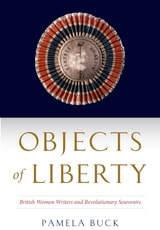
Objects of Liberty
British Women Writers and Revolutionary SouvenirsPamela Buck
University of Delaware Press, 2024
Observing America
The Commentary of British Visitors to the United States, 1890–1950Robert Frankel
University of Wisconsin Press, 2006
Robert Frankel examines the New World experiences of these commentators and the books they wrote about America. He also probes similar writings by other prominent observers from the British Isles, including Beatrice Webb, Rudyard Kipling, and George Bernard Shaw. The result is a book that offers keen insights into America’s national identity in a time of vast political and cultural change.
Obsessed
The Cultural Critic’s Life in the KitchenElisabeth Bronfen
Rutgers University Press, 2019
Even the most brilliant minds have to eat. And for some scholars, food preparation is more than just a chore; it’s a passion. In this unique culinary memoir and cookbook, renowned cultural critic Elisabeth Bronfen tells of her lifelong love affair with cooking and demonstrates what she has learned about creating delicious home meals. She recounts her cherished food memories, from meals eaten at the family table in postwar Germany to dinner parties with friends. Yet, in a thoughtful reflection on the pleasures of cooking for one, she also reveals that some of her favorite meals have been consumed alone.
Though it contains more than 250 mouth-watering recipes, Obsessed is anything but a conventional cookbook. As she shares a lifetime of knowledge acquired in the kitchen, Bronfen hopes to empower both novice and experienced home chefs to improvise, giving them hints on how to tweak her recipes to their own tastes. And unlike cookbooks that assume readers have access to an unlimited pantry, this book is grounded in reality, offering practical advice about food storage and reusing leftovers. As Bronfen serves up her personal stories and her culinary wisdom, reading Obsessed is like sitting down to a home-cooked meal with a clever friend.
Obsession, Aesthetics, and the Iberian City
The Partial Madness of Modern Urban CultureBenjamin Fraser
Vanderbilt University Press, 2021
This book investigates the social relationships implied in our urban modernity by concentrating on four cities that are in broad strokes representative of the cultural and linguistic heterogeneity of the Iberian peninsula. Each chapter introduces but moves well beyond an identifiable urban area in a given city, noting the cultural obsession implicit in its reconstruction as well as the role of obsession in its artistic representation of the urban environment. These areas are Barcelona’s Eixample district, Madrid’s Linear City, Lisbon’s central Baixa area, and Bilbao’s Seven Streets, or Zazpikaleak. The theme of obsession—which as explored is synonymous with the concept of partial madness—provides a point of departure for understanding the interconnection of both urbanistic and artistic discourses.

Octave Mirbeau
Two Plays: "Business is Business" and "Charity"Translated and Adapted by Richard J. Hand
Intellect Books, 2012
Octave Mirbeau was one of the most prolific literary figures of France’s storied Belle Époque, and his innovative theatrical works are only recently being rediscovered and appreciated by modern audiences. Here for the first time in English-language translation are his two most celebrated and successful plays: Business is Business, a classical comedy of manners recalling Molière; and Charity, a satirical comedy centered around the exploitation of adolescents in a dubious charity home. In addition to the play texts, this volume also includes an introduction contextualizing the works and the translation and adaptation process.
Odd Affinities
Virginia Woolf’s Shadow GenealogiesElizabeth Abel
University of Chicago Press, 2024
In recent decades, Virginia Woolf’s contribution to literary history has been located primarily within a female tradition. Elizabeth Abel dislodges Woolf from her iconic place within this tradition to uncover her shadowy presence in other literary genealogies. Abel elicits unexpected echoes of Woolf in four major writers from diverse cultural contexts: Nella Larsen, James Baldwin, Roland Barthes, and W. G. Sebald. By mapping the wayward paths of what Woolf called “odd affinities” that traverse the boundaries of gender, race, and nationality, Abel offers a new account of the arc of Woolf’s career and the transnational modernist genealogy constituted by her elusive and shifting presence. Odd Affinities will appeal to students and scholars working in New Modernist studies, comparative literature, gender and sexuality studies, and African American studies.
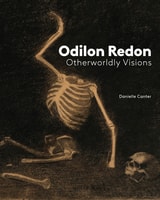
Odilon Redon
Otherworldly VisionsDanielle Canter
J. Paul Getty Trust, The, 2026
Enigmatic and haunting, the work of the French Symbolist Odilon Redon (1840–1916) intrigues and entrances all who encounter it. During the first half of his career, Redon created dramatically monochromatic charcoal drawings and lithographs, dreamily dark images that plumbed the depths of his wild imagination. Eventually, however, he also turned to pastels, adopting a bold colorful palette in fantastical explorations of the natural world.
Featuring more than seventy illustrations, this publication offers an overview of Redon's career. The informative, accessible essays examine his disparate influences from the worlds of religion, mythology, literature, and music, and demonstrate why Redon’s mysterious work is an important precursor to Surrealism.
This volume is published to accompany an exhibition on view at the J. Paul Getty Museum at the Getty Center from July 14 to October 18, 2026.
Odyssey of the Psyche
Jungian Patterns in Joyce's UlyssesJean Kimball
Southern Illinois University Press, 1997
The result of the interaction between Bloom and Dedalus, Kimball argues as a central tenet in her unique reading of Ulysses, is the gradual development of a relationship between the two protagonists that parallels C. G. Jung’s descriptions of the encounter between the Ego and the Shadow in that stage of his theoretical individuation process called "the realization of the shadow." These parallels form a unifying strand of meaning that runs throughout this multidimensional novel and is supported by the text and contexts of Ulysses.
Kimball has provided the first comprehensive study of the relationship between Jungian psychology and Joyce’s Ulysses. Bucking critical trends, she focuses on Stephen rather than Bloom. She also notes certain parallels—synchronicities—in the lives of both Jung and Joyce, not because the men influenced one another but because they speculated about personality at the same historical time. Finally, noting that both Jung and Joyce came from strong Christian backgrounds, she asserts that the doubleness of the human personality fundamental to Christian theology is carried over into Jung’s psychology and Joyce’s fiction.
Of Sondry Folk
The Dramatic Principle in the Canterbury TalesBy R. M. Lumiansky
University of Texas Press, 1955
Two hundred years before Shakespeare observed that “all the world’s a stage,” another writer with a flair for drama realized the same fact. This writer was Geoffrey Chaucer.
Chaucer, however, presented his dramatic efforts through the medium of short stories, and he is regularly referred to as one of the world’s great storytellers. Yet there are certain questions which arise time and again in the minds of literary scholars. Most of the tales in the Canterbury collection are excellent, but why did Chaucer include such obviously poor recitals as the dull “Melibeus” and the lengthy “Parson’s Tale”? Did he fail to recognize their lack of literary merit? Or were those of his stories which seem so dull to modern readers really popular in fourteenth-century England?
Of Sondry Folk is Lumiansky’s answer to such questions. But it is more than that. It is the revelation of Chaucer as dramatic writer. Chaucer, says Lumiansky, did not intend primarily to tell a series of good tales. Instead, he chose tales which suited his purpose of dramatic exposition of character. And the characters, though drawn from many walks of life, are not stereotypes. Their tales not only disclose what the Pilgrims think of themselves but reveal these Pilgrims as they really are—dull, romantic, egotistical, pious, or lustful.
Not all readers will agree with Lumiansky’s conclusions in this book. But his scholarship, his clear, uninvolved prose, and his wit and frankness make of it an excellent handbook for the student of the Canterbury Tales. Of Sondry Folk will increase the enjoyment and understanding of Chaucer’s art for any reader, lay or scholarly.
Of Spaces and Ideas
The Novels of Jim Crace and Simon MawerPetr Chalupský and Tereza Topolovská
Karolinum Press, 2024
Of Spaces and Ideas provides a deeper insight into the work of two contemporary British novelists, Jim Crace and Simon Mawer, with a particular emphasis on spatial sensibility as one of the defining elements of their poetics. Drawing on a range of literary-theoretical approaches to space, the study analyzes selected novels by the two writers to demonstrate the ways in which they render space and place and, above all, the ways in which their spatial representations allow them to express the key ideas behind their stories, namely those of identity, history, and the relationship between an individual and the environment in which they live.
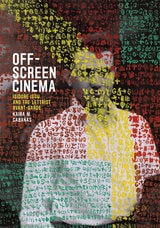
Off-Screen Cinema
Isidore Isou and the Lettrist Avant-GardeKaira M. Cabañas
University of Chicago Press, 2015
Off-Screen Cinema is the first monograph in English of the Lettrists. Offering a full portrait of the avant-garde scene of 1950s Paris, it focuses on the film works of key Lettrist figures like Gil J Wolman, Maurice Lemaître, François Dufrêne, and especially the movement's founder, Isidore Isou, a Romanian immigrant whose “discrepant editing” deliberately uncoupled image and sound. Through Cabañas's history, we see not only the full scope of the Lettrist project, but also its clear influence on Situationism, the French New Wave, the New Realists, as well as American filmmakers such as Stan Brakhage.
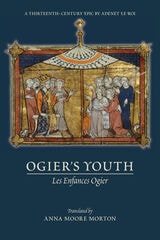
Ogier's Youth (Les Enfances Ogier)
A Thirteenth-Century Epic by Adenet le RoiAnna Moore Morton
Arizona Center for Medieval and Renaissance Studies, 2020
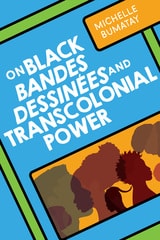
On Black Bandes Dessinées and Transcolonial Power
Michelle Bumatay
The Ohio State University Press, 2025
On Black Bandes Dessinées and Transcolonial Power is the first book-length study in English about Black francophone cartoonists and their work. Michelle Bumatay decenters Eurocentric conceptions of francophone comic art and foregrounds the ubiquity of Western racial stereotypes encoded in mainstream French and Belgian bandes dessinées as well as the imbalance of power between the Global North and the Global South carried over from the colonial era. By examining a diversity of Black cartoonists’ aesthetic and material responses to the colonially inherited medium of bandes dessinées, she argues that their innovations constitute important reparative work that combats racial stereotypes and challenges transcolonial power imbalances.
Bumatay demonstrates how Barly Baruti, Papa Mfumu’Eto, Marguerite Abouet, Japhet Miagotar, and other Black cartoonists throughout the francophone world employ a range of tactics to tell their own stories. Through a balance of historical context and close readings, she shows how these artists represent and comment on their everyday lives in a postcolonial reality, expose and critique racial capitalism and exploitation, and provide new ways of seeing and understanding Black francophone peoples and cultures.
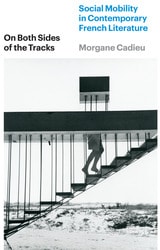
On Both Sides of the Tracks
Social Mobility in Contemporary French LiteratureMorgane Cadieu
University of Chicago Press, 2024
Social climbers have often been the core characters of novels. Their position between traditional tiers in society makes them touchstones for any political and literary moment, including our own. Morgane Cadieu’s study looks at a certain kind of social climber in contemporary French literature whom she calls the parvenant. Taken from the French term parvenu, which refers to one who is newly arrived, a parvenant is a character who shuttles between social groups. A parvenant may become part of a new social class but devises literary ways to come back, constantly undoing any fixed idea of social affiliation.
Focusing on recent French novels and autobiographies, On Both Sides of the Tracks speaks powerfully to issues of emancipation and class. Cadieu offers a fresh critical look at tales of social mobility in the work of Annie Ernaux, Kaoutar Harchi, Michel Houellebecq, Édouard Louis, and Marie NDiaye, among others, shedding fascinating light on upward mobility today as a formal, literary problem.
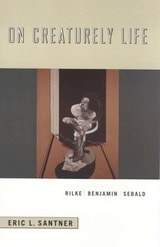
On Creaturely Life
Rilke, Benjamin, SebaldEric L. Santner
University of Chicago Press, 2006
Santner traces this theme of creaturely life from its poetic and philosophical beginnings in the first half of the twentieth century to the writings of the enigmatic German novelist W. G. Sebald. Sebald’s entire oeuvre, Santner argues, can be seen as an archive of creaturely life. For Sebald, the work on such an archive was inseparable from his understanding of what it means to engage ethically with another person’s history and pain, an engagement that transforms us from indifferent individuals into neighbors.
An indispensable book for students of Sebald, On Creaturely Life is also a significant contribution to critical theory.
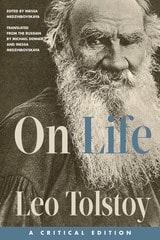
On Life
A Critical EditionLeo Tolstoy, Edited by Inessa Medzhibovskaya, Translated from the Russian by Michael Denner and Inessa Medzhibovskaya
Northwestern University Press, 2018
After its completion, On Life was suppressed by the tsars, attacked by the hierarchs of the Russian Orthodox Church, and then censored by the Stalinist regime. This critical edition is the first accurate translation of this unsung classic of Russian thought into English, based on a study of manuscript pages of Tolstoy's drafts, and the first scholarly edition of this work in any language. It includes a detailed introduction and annotations, as well as historical material, such as early drafts, documents related to the presentation of an early version at the Moscow Psychological Society, and responses to the work by philosophers, religious leaders, journalists, and ordinary readers of Tolstoy's day.
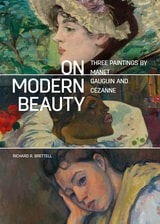
On Modern Beauty
Three Paintings by Manet, Gauguin, and CézanneRichard R. Brettell
J. Paul Getty Trust, The, 2019
Brettell shapes his manifesto around three masterworks from the collection of the J. Paul Getty Museum: Édouard Manet’s Jeanne (Spring), Paul Gauguin’s Arii Matamoe (The Royal End), and Paul Cézanne’s Young Italian Woman at a Table. The provocative discussion reveals how each of these exceptional paintings, though depicting very different subjects—a fashionable actress, a preserved head, and a weary working woman—enacts a revolutionary, yet enduring, icon of beauty.
On The Edge
Ukrainian - Central European - Russian Security TriangleMargarita M. Balmaceda
Central European University Press, 2001
A new globally significant relationship arising after the break-up of the Soviet Union is the main topic of this unparalleled volume – the geopolitical link between Russia, Ukraine and the three bordering ‘Central European’ states, Hungary, Poland and Slovakia. On the Edge is a path-breaking analysis of this triangular relationship with an in-depth focus on economic, political and, more importantly, security issues.
The expansion of NATO up to Ukraine’s borders is likely to leave Ukraine in a delicate position vis-à-vis Russia. On the Edge addresses key questions, such as: how are events in Ukraine affecting the security calculations of the Central European states; Central European relations with Russia and NATO; and relations among Central European states themselves? The volume examines what Central European states can do to solidify Ukraine’s independence and help it avoid international isolation.
On the Edge gives a Central European perspective on all these issues and suggests concrete forms of co-operation.
On the Bullet Train with Emily Brontë
Wuthering Heights in JapanJudith Pascoe
University of Michigan Press, 2017
In this and in her previous book, The Sarah Siddons Audio Files, Pascoe’s engaging narrative innovates a new scholarly form involving immersive research practice to attempt a cross-cultural version of reader-response criticism. On the Bullet Train with Emily Brontë will appeal to scholars in the fields of 19th-century British literature, adaptation studies, and Japanese literary history.
On the Excellence and Nobility of Women
A Defense of Women (1582–1583) for the Women of Belgica. A Bilingual EditionJehan Baptista Houwaert
Iter Press, 2025
Jehan Baptista Houwaert’s Excellence and Nobility of Women constitutes the eighth book of his Plain of the Nine Muses, or The Pleasure Garden of Virtuous Women (1582–1583), an immense conduct book for women in rhymed verse based on the many querelle texts of the French and Burgundian tradition but especially, in its French translation, on the pathbreaking Declamation on the Nobility and Preeminence of the Female Sex (1529) by Henricus Cornelius Agrippa von Nettesheim.
Like its model, Houwaert’s work asserts not merely the equality but the superiority of women. It is unique in that it is addressed not to a wealthy noblewoman or princess, as were most such defenses, but more democratically to the “girls, unmarried women, wives, and widows of Belgica”—all of them!
One Day a Year
2001–2011Christa Wolf
Seagull Books, 2017
The book is both a personal record and a unique document of our times. With her characteristic precision and transparency, Wolf examines the interplay of the private, subjective, and major contemporary historical events. She writes about Germany after 9/11, about her work on her last great book City of Angels, and also about her exhausting confrontation with old age. One Day a Year is a compelling and personal glimpse into the life of one of the world’s greatest writers.
One Hundred and One Poems by Paul Verlaine
A Bilingual EditionPaul Verlaine
University of Chicago Press, 1999
"Shapiro's skillfully rhymed formal translations are outstanding." —St. Louis Post-Dispatch "Best Book of 1999"
"Paul Verlaine's rich, stylized, widely-variable oeuvre can now be traced through his thirty years of published volumes, from 1866 to 1896, in a set of luminous new translations by Norman Shapiro. . . . [His] unique translations of this whimsical, agonized music are more than adequate to bring the multifarious Verlaine to a new generation of English speakers." —Genevieve Abravanel, Harvard Review
"Shapiro demonstrates his phenomenal ability to find new rhymes and always follows Verlaine's rhyme schemes." —Carrol F. Coates, ATA Chronicle
One of Us
The Mastery of Joseph ConradGeoffrey Galt Harpham
University of Chicago Press, 1996
In this book, Geoffrey Galt Harpham delves not only into Conrad's literary work and reputation but also into the concept of mastery. Outlining a psychology of composition that embraces Conrad's personal as well as historical circumstances, Harpham sheds new light on traditional issues in Conrad criticism, such as his Polish background and his preoccupation with the sea, by linking them to less frequently discussed subjects, including his elusive sexuality and his idiosyncratic relation to the English language.
One of Us represents both a methodological innovation in the practice of literary criticism and an important contribution to our understanding of how masters—and canons based on them—are made.
Only Among Women
Philosophies of Community in the Russian and Soviet Imagination, 1860–1940Anne Eakin Moss
Northwestern University Press, 2020
Order in Disorder
Intratextual Symmetry in Montaigne's “Essais”Randolph Paul Runyon
The Ohio State University Press, 2013
Order in Disorder: Intratextual Symmetry in Montaigne’s “Essais,” by Randolph Paul Runyon, offers a new answer to the question of how ordered the Essays may be. Following up on Montaigne’s likening them to a painter’s “grotesques” surrounding a central image, and seeing in this an allusion to the ancient Roman decorative style, rediscovered in the Renaissance, of symmetrical motifs on either side of a central image, Runyon uncovers an extensive network of symmetrical verbal echoes linking every chapter with another. Often two chapters of greatly different length and apparent importance (one on thumbs, for instance, balanced against one on the limits of human understanding) will in this way be brought together—not without, Runyon finds, an intended irony. The Essays emerge as even more self-reflexive than we thought, an amazingly intratextual work.
Ordering Customs
Ethnographic Thought in Early Modern VeniceKathryn Taylor
University of Delaware Press, 2023
Ornament as Crisis
Architecture, Design, and Modernity in Hermann Broch's "The Sleepwalkers"Sarah McGaughey
Northwestern University Press, 2015
Ornament as Crisis explores the ways in which the novels of Hermann Broch’s Sleepwalkers (Schlafwandler) trilogy participate in and employ the history of architecture and architectural theory.
Beginning with the visual and architectural experiences of the figures in each novel, Sarah McGaughey analyzes the role of architecture in the trilogy as a whole, while discussing work by Broch’s contemporaries on architecture. She argues that The Sleepwalkers allows us to better understand how literature responds and contributes to social, theoretical, and spatial concepts of architecture. Ornament as Crisis guides readers through the spaces of Broch’s mdernist masterpiece and the architectural debates of his time.
Ornamentalism
The Art of Renaissance AccessoriesEdited and with an Introduction by Bella Mirabella
University of Michigan Press, 2011
Lively, well-written, and richly illustrated with color plates, Ornamentalism will appeal to scholars of the material past and social practice, and those interested in fashion studies, manners and morals, gender and sexuality, theater and performance.
Orphan Girl
A Transaction, or an Account of the Entire Life of an Orphan Girl by way of Plaintful Threnodies in the Year 1685. The Aesop EpisodeAnna Stanislawska
Iter Press, 2016
Barry Keane's idiomatic and inventive verse translation brings to life this half-forgotten poetic account of a remarkable tale of triumph in the face of overwhelming oppression and allows Anna Stanislawska to take her place among the women poets of early modern Europe.

Orphic Songs
Dino Campana
Oberlin College Press, 1984
Orwell
Life and ArtJeffrey Meyers
University of Illinois Press, 2010
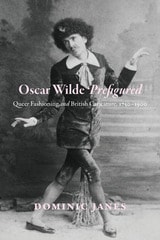
Oscar Wilde Prefigured
Queer Fashioning and British Caricature, 1750-1900Dominic Janes
University of Chicago Press, 2016
Oscar Wilde Prefigured is a study of the prehistory of this “queer moment” in 1895. Janes explores the complex ways in which men who desired sex with men in Britain had expressed such interests through clothing, style, and deportment since the mid-eighteenth century. He supplements the well-established narrative of the inscription of sodomitical acts into a homosexual label and identity at the end of the nineteenth century by teasing out the means by which same-sex desires could be signaled through visual display in Georgian and Victorian Britain. Wilde, it turns out, is not the starting point for public queer figuration. He is the pivot by which Georgian figures and twentieth-century camp stereotypes meet. Drawing on the mutually reinforcing phenomena of dandyism and caricature of alleged effeminates, Janes examines a wide range of images drawn from theater, fashion, and the popular press to reveal new dimensions of identity politics, gender performance, and queer culture.
Oscar Wilde and Modern Culture
The Making of a LegendJoseph Bristow
Ohio University Press, 2009
Oscar Wilde and Modern Culture: The Making of a Legend explores the meteoric rise, sudden fall, and legendary resurgence of an immensely influential writer’s reputation from his hectic 1881 American lecture tour to recent Hollywood adaptations of his dramas. Always renowned—if not notorious—for his fashionable persona, Wilde courted celebrity at an early age. Later, he came to prominence as one of the most talented essayists and fiction writers of his time.
In the years leading up to his two-year imprisonment, Wilde stood among the foremost dramatists in London. But after he was sent down for committing acts of “gross indecency” it seemed likely that social embarrassment would inflict irreparable damage to his legacy. As this volume shows, Wilde died in comparative obscurity. Little could he have realized that in five years his name would come back into popular circulation thanks to the success of Richard Strauss’s opera Salome and Robert Ross’s edition of De Profundi. With each succeeding decade, the twentieth century continued to honor Wilde’s name by keeping his plays in repertory, producing dramas about his life, adapting his works for film, and devising countless biographical and critical studies of his writings.
This volume reveals why, more than a hundred years after his demise, Wilde’s value in the academic world, the auction house, and the entertainment industry stands higher than that of any modern writer.
Oscar Wilde in America
The InterviewsEdited by Matthew Hofer and Gary Scharnhorst
University of Illinois Press, 2013
Oscar Wilde's Decorated Books
Nicholas Frankel
University of Michigan Press, 2000
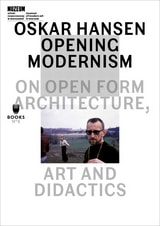
Oskar Hansen - Opening Modernism
On Open Form Architecture, Art and DidacticsM. Christine Boyer, Tomasz Fudala, Jola Gola, Aleksandra Kedziorek, Lukasz Ronduda, Felicity Scott, Karol Sienkiewicz, Mark Wasiuta, et al.
Museum of Modern Art in Warsaw, 2014
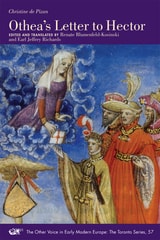
Othea’s Letter to Hector
Christine de Pizan
Iter Press, 2017
Othello
William Shakespeare
Arizona Center for Medieval and Renaissance Studies, 2022
In her update of Shakespeare’s Othello, Mfoniso Udofia engages with the racial malice at the heart of the play. Udofia’s take on this complicated story emphasizes the rhythm and lyrical patterns of Othello’s speech. Opening up the text to modern ears, Udofia presents us with a code-switched Othello.
This translation of Othello was written as part of the Oregon Shakespeare Festival’s Play On! project, which commissioned new translations of thirty-nine Shakespeare plays. These translations present the work of “The Bard” in language accessible to modern audiences while never losing the beauty of Shakespeare’s verse. Enlisting the talents of a diverse group of contemporary playwrights, screenwriters, and dramaturges from diverse backgrounds, this project reenvisions Shakespeare for the twenty-first century. These volumes make these works available for the first time in print—a new First Folio for a new era.
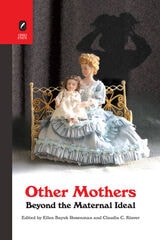
Other Mothers
Beyond the Maternal IdealEdited by Ellen Bayuk Rosenman and Claudia C. Klaver
The Ohio State University Press, 2008
This collection addresses this void, revealing the extraordinary diversity of Victorian motherhood. Exploring diaries, novels, and court cases, with contexts ranging from London to Egypt to Australia, these varied accounts take the collection “beyond the maternal ideal” to consider the multiple, unpredictable ways in which motherhood was experienced and imagined in this formative historical period.
Other Mothers joins revisionist approaches to femininity that now characterize Victorian studies. Its contents trace intersections among gender, race, and class; question the power of separate spheres ideology; and insist on the context-specific nature of social roles. The fifteen essays in this volume contribute to the fields of literary criticism, history, cultural studies, and history.
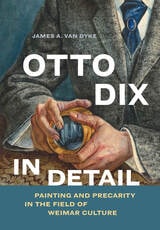
Otto Dix in Detail
Painting and Precarity in the Field of Weimar CultureJames A. van Dyke
University of Chicago Press, 2026
Offering a fresh look at German art during a period of extraordinary transition and precarity, James A. van Dyke focuses on overlooked but critically significant details in works completed by Otto Dix between 1919 and 1936. A small lump of paint, a monogram, an almost invisible self-portrait, the verso of a drawing, a patch of discoloration, and a web of fine cracks—van Dyke reveals such details, hidden in plain sight, as coded dialogue through which Dix addressed audiences and art-world insiders amid the combative world of cultural production in Weimar Germany. Sly, cutting, and provocative, these are the material traces of social relationships between the painter and those who represented threats to his professional ambition: an avant-garde mentor and rival, an increasingly skeptical critic, a prominent bourgeois photographer, and a local Nazi authority.
Proving that small things offer insight into the big picture, this book highlights Dix’s satirical, transgressive work as nuanced and polyvocal, reflecting the complex fields of power and economics in which the field of art is located.

Ottoman Eurasia in Early Modern German Literature
Cultural Translations (Francisci, Happel, Speer)Gerhild Scholz Williams
University of Michigan Press, 2021
Even a casual perusal of seventeenth-century European print production makes clear that the Turk was on everyone’s mind. Europe’s confrontation of and interaction with the Ottoman Empire in the face of what appeared to be a relentless Ottoman expansion spurred news delivery and literary production in multiple genres, from novels and sermons to calendars and artistic representations. The trans-European conversation stimulated by these media, most importantly the regularly delivered news reports, not only kept the public informed but provided the basis for literary conversations among many seventeenth-century writers, three of whom form the center of this inquiry: Daniel Speer (1636-1707), Eberhard Werner Happel (1647-1690), and Erasmus Francisci (1626-1694). The expansion of the Ottoman Empire during the sixteenth and seventeenth centuries offers the opportunity to view these writers' texts in the context of Europe and from a more narrowly defined Ottoman Eurasian perspective.
Ottoman Eurasia in Early Modern German Literature: Cultural Translations (Francisci, Happel, Speer) explores the variety of cultural and commercial conversations between Europe and Ottoman Eurasia as they negotiated their competing economic and hegemonic interests. Brought about by travel, trade, diplomacy, and wars, these conversations were, by definition, “cross-cultural” and diverse. They eroded the antagonism of “us and them,” the notion of the European center and the Ottoman periphery that has historically shaped the view of European-Ottoman interactions.
Our Lady Of Victorian Feminism
The Madonna in the Work of Anna Jameson, Margaret Fuller, and George EliotKimberly VanEsveld Adams
Ohio University Press, 2000
Our Lady of Victorian Feminism is about three nineteenth-century women, Protestants by background and feminists by conviction, who are curiously and crucially linked by their extensive use of the Madonna in arguments designed to empower women.
In the field of Victorian studies, few scholars have looked beyond the customary identification of the Christian Madonna with the Victorian feminine ideal—the domestic Madonna or the Angel in the House. Kimberly VanEsveld Adams shows, however, that these three Victorian writers made extensive use of the Madonna in feminist arguments. They were able to see this figure in new ways, freely appropriating the images of independent, powerful, and wise Virgin Mothers.
In addition to contributions in the fields of literary criticism, art history, and religious studies, Our Lady of Victorian Feminism places a needed emphasis on the connections between the intellectuals and the activists of the nineteenth-century women's movement. It also draws attention to an often neglected strain of feminist thought, essentialist feminism, which proclaimed sexual equality as well as difference, enabling the three writers to make one of their most radical arguments, that women and men are made in the image of the Virgin Mother and the Son, the two faces of the divine.
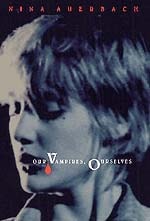
Our Vampires, Ourselves
Nina Auerbach
University of Chicago Press, 1995
"[Auerbach] has seen more Hammer movies than I (or the monsters) have had steaming hot diners, encountered more bloodsuckers than you could shake a stick at, even a pair of crossed sticks, such as might deter a very sophisticated ogre, a hick from the Moldavian boonies....Auerbach has dissected and deconstructed them with the tender ruthlessness of a hungry chef, with cogency and wit."—Eric Korn, Times Literary Supplement
"This seductive work offers profound insights into many of the urgent concerns of our time and forces us to confront the serious meanings that we invest, and seek, in even the shadiest manifestations of the eroticism of death."—Wendy Doniger, The Nation
"A vigorous, witty look at the undead as cultural icons."—Kirkus Review
"In case anyone should think this book is merely a boring lit-crit exposition...Auerbach sets matters straight in her very first paragraph. 'What vampires are in any given generation,' she writes, 'is a part of what I am and what my times have become. This book is a history of Anglo-American culture through its mutating vampires.'...Her book really takes off."—Maureen Duffy, New York Times Book Review
Our Vampires, Ourselves
Nina Auerbach
University of Chicago Press, 1995
Nina Auerbach shows how every age embraces the vampire it needs, and gets the vampire it deserves. Working with a wide range of texts, as well as movies and television, Auerbach locates vampires at the heart of our national experience and uses them as a lens for viewing the last two hundred years of Anglo-American cultural history.
"[Auerbach] has seen more Hammer movies than I (or the monsters) have had steaming hot diners, encountered more bloodsuckers than you could shake a stick at, even a pair of crossed sticks, such as might deter a very sophisticated ogre, a hick from the Moldavian boonies....Auerbach has dissected and deconstructed them with the tender ruthlessness of a hungry chef, with cogency and wit."—Eric Korn, Times Literary Supplement
"This seductive work offers profound insights into many of the urgent concerns of our time and forces us to confront the serious meanings that we invest, and seek, in even the shadiest manifestations of the eroticism of death."—Wendy Doniger, The Nation
"A vigorous, witty look at the undead as cultural icons."—Kirkus Review
"In case anyone should think this book is merely a boring lit-crit exposition...Auerbach sets matters straight in her very first paragraph. 'What vampires are in any given generation,' she writes, 'is a part of what I am and what my times have become. This book is a history of Anglo-American culture through its mutating vampires.'...Her book really takes off."—Maureen Duffy, New York Times Book Review
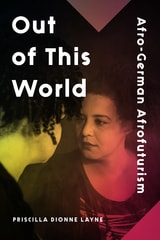
Out of This World
Afro-German AfrofuturismPriscilla Dionne Layne
Northwestern University Press, 2025
Examining Afro-German artists’ use of Afrofuturist tropes to critique German racial history
The term Afrofuturism was first coined in the 1990s to describe African diasporic artists’ use of science fiction, speculative fiction, and fantasy to reimagine the diaspora’s pasts and to counter not only Eurocentric prejudices but also pessimistic narratives. Out of This World: Afro-German Afrofuturism focuses on contemporary Black German Afrofuturist literature and performance that critiques Eurocentrism and, specifically, German racism and colonial history. This young generation has, Priscilla Layne argues, engaged with Afrofuturism to disrupt linear time and imagine alternative worlds, to introduce non-Western technologies into the German cultural milieu, and to consider the possibilities of posthumanism. Their experiments in futurist and speculative narratives offer new tools for breaking with the binary thinking about race, culture, and gender identity that have been enforced by repressive ideological and state apparatuses, such as educational, cultural, and police institutions. Rather than providing escapism or purely imaginary alternatives, however, they have created a space—outer and artistic—in which their lives matter.
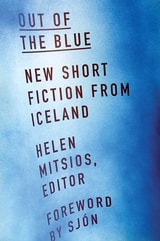
Out of the Blue
New Short Fiction from IcelandHelen Mitsios
University of Minnesota Press, 2017
A groundbreaking collection of fiction from Iceland’s best contemporary authors
This extraordinary collection, the first anthology of Icelandic short fiction published in English translation, features work by twenty of Iceland’s most popular and celebrated living authors—including Andri Snær Magnason, Jón Kalman Stefánsson, Kristín Ómarsdóttir, and Auður Jónsdóttir—granddaughter of Halldór Laxness, who won the 1955 Nobel Prize in Literature.
Celebrated in Europe and Scandinavia but less known in the English-speaking world, these writers traverse realms of darkness and light that will be familiar to readers who have fallen under the spell of Scandinavian fiction. While uniquely Icelandic in topography and tenor, with a touch of the island’s supernatural charm, the stories traffic in the enduring and universal complexities of human nature. Here is a fictional universe where the ghosts of Vikings and spirits tread, volcanoes grumble underfoot, and writers trip the Northern Lights fantastic across the landscape of the Icelandic imagination.
At long last, readers can enjoy award-winning stories now expertly rendered into English by the country’s most renowned translators. In “Killer Whale” a father contemplates euthanasia for a terminally ill child, in “Self Portrait” a vacationing family in Spain crosses paths with migrants, in “Escape for Men” a woman searches for an ex-lover in the South of France, and in “The Most Precious Secret” the nature of artists and the art world is mercilessly revealed. Both the Viking myths of Iceland’s forefathers and the cutting-edge modern world of the country today are brilliantly alive in these remarkable and original stories.
This collection is an excursion to an island where almost two million travelers descend yearly on a population of 345 thousand natives. Iceland is the place Björk calls home, the location where Game of Thrones was filmed—a place with open lava fields, glaciers, and iceberg lagoons among other natural wonders that is becoming one of the “hottest” tourist destinations on earth.
Out of the Blue transports readers to Iceland’s timeless and magical island of Vikings and geographical wonders, and it promises to be a seminal collection that will define Icelandic literature in translation for decades to come.
Contributors: Auður Ava Olafsdóttir, Kristín Eiríksdóttir, Þórarinn Eldjárn, Gyrðir Elíasson, Einar Örn Gunnarsson, Ólafur Gunnarsson, Einar Már Guðmundsson, Auður Jónsdóttir, Gerður Kristný, Andri Snær Magnason, Óskar Magnússon, Bragi Ólafsson, Kristín Ómarsdóttir, Óskar Árni Óskarsson, Magnús Sigurðsson, Jón Kalman Stefánsson, Ágúst Borgþór Sverrisson, Guðmundur Andri Thorsson, Þórunn Erlu-Valdimarsdóttir, Rúnar Helgi Vignisson.
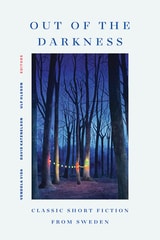
Out of the Darkness
Classic Short Fiction from SwedenVendela Vida
University of Minnesota Press, 2026
A treasure chest of stories by Swedish authors from the 1880s to the 1950s, many appearing for the first time in English
In the late nineteenth century, Swedish romanticism gave way to vibrant new literary styles that flourished through the 1950s. Out of the Darkness is the first anthology to bring the short fiction of this golden age of Swedish literature to English readers, celebrating the country’s rich literary tradition and several of its most renowned authors. The stories in this volume (many in entirely new translations, and most never before published in English) reflect the arc of the short story in Sweden, from realism to symbolism to modernist experimentation, and stand as lyrical exemplars of the creativity and depth of Swedish literature.
Some stories explore themes of crime and refuge, others ask what makes life meaningful, and some challenge sexual and social constructs of their time. All are fueled by shadows—of evil, madness, or fate, eerie fantasy or grim reality. Including internationally famous authors like August Strindberg, Stig Dagerman, and Nobel laureate Selma Lagerlöf, Out of the Darkness also features writing by influential women such as Victoria Benedictsson and Agnes von Krusenstjerna, who are less familiar to English readers. A showcase of stylistic virtuosity and incisive social commentary, Out of the Darkness at last brings this remarkable period of Swedish prose into the light.
Contributors: Victoria Benedictsson, Hjalmar Bergman, Karin Boye, Stig Dagerman, Thorsten Jonsson, Agnes von Krusenstjerna, Selma Lagerlöf, August Strindberg, Hjalmar Söderberg.
Retail e-book files for this title are screen-reader friendly.