Results by title
455 books match the query 'Feminism' and 3 start with o
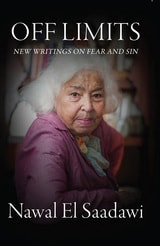
Off Limits
New Writings on Fear and SinNawal El Saadawi
Gingko, 2018
Off Limits presents a selection of El Saadawi’s most recent recollections and reflections in which she considers the role of women in Egyptian and wider Islamic society, the inextricability of imperialism from patriarchy, and the meeting points of East and West. These thoughtful and wide-reaching pieces leave no stone unturned and no view unchallenged, and the essays collected here offer further insight into this profound author’s ideas about women, society, religion, and national identity.
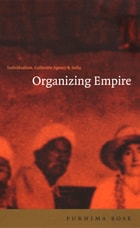
Organizing Empire
Individualism, Collective Agency, and IndiaPurnima Bose
Duke University Press, 2003
From a historically grounded, feminist perspective, Bose offers four case studies, each of which illuminates a distinct individualizing rhetorical strategy. She looks at the parliamentary debates on the Amritsar Massacre of 1919, in which several hundred unarmed Indian protesters were killed; Margaret Cousins’s firsthand account of feminist organizing in Ireland and India; Kalpana Dutt’s memoir of the Bengali terrorist movement of the 1930s, which was modeled in part on Irish anticolonial activity; and the popular histories generated by ex-colonial officials and their wives. Bringing to the fore the constraints that colonial domination placed upon agency and activism, Organizing Empire highlights the complexity of the multiple narratives that constitute British colonial history.
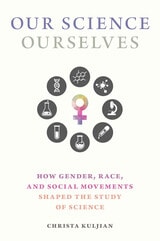
Our Science, Ourselves
How Gender, Race, and Social Movements Shaped the Study of ScienceChrista Kuljian
University of Massachusetts Press, 2024
When Christa Kuljian arrived on the Harvard College campus as a first-year student in the fall of 1980 with copies of Our Bodies, Ourselves and Ms. magazine, she was concerned that the women’s movement had peaked in the previous decade. She soon learned, however, that there was a long way to go in terms of achieving equality for women and that social movements would continue to be a critical force in society. She began researching the history of science and gender biases in science, and how they intersect with race, class, and sexuality.
In Our Science, Ourselves, Kuljian tells the origin story of feminist science studies by focusing on the life histories of six key figures—Ruth Hubbard, Rita Arditti, Evelyn Fox Keller, Evelynn Hammonds, Anne Fausto-Sterling, and Banu Subramaniam. These women were part of a trailblazing network of female scientists in the 1970s, 80s, and 90s who were drawn to the Boston area—to Harvard, MIT, and other universities—to study science, to network with other scientists, or to take a job. Inspired by the social and political activism of the women’s movement and organizations such as Science for the People, the Genes and Gender Collective, and the Combahee River Collective, they began to write and teach about women in science, gender and science, and sexist and racist bias and exclusion. They would lead the critiques of E. O. Wilson’s sociobiology in 1975 and Larry Summers’ comments about women in science thirty years later. The book also explores how these contributions differed from those of Nancy Hopkins’, author of the 1999 MIT report on women in science, and a “reluctant feminist.”
Drawing on a rich array of sources that combines published journal articles and books with archival materials and interviews with major luminaries of feminist science studies, Kuljian chronicles and celebrates the contributions that these women have made to our collective scientific knowledge and view of the world.