Results by title
329 books match the query 'Folklore & Mythology' and 13 start with o
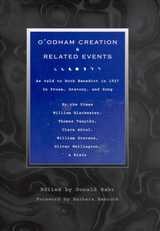
O'odham Creation and Related Events
As Told to Ruth Benedict in 1927Edited by Donald Bahr; Foreword by Barbara Babcock
University of Arizona Press, 2001
The origin stories of the O’odham (Pima) Indians of Arizona are renowned for their beauty and complexity but have been collected in only a handful of books. This volume—the third full O’odham telling of ancientness to appear in print—brings together dozens of stories collected in 1927 by anthropologist Ruth Benedict during her only visit to the Pimas. Never before published, they helped inspire Benedict to write her groundbreaking book Patterns of Culture.
The Pimas represented a way of life that Benedict at first called “Dionysian” after hearing the stories, narratives, songs, and oratory collected from various tellers during her three-month stay. The oral literature concerns the creation of the world and its transformations over time, the creation of the O’odham people, and other cultural traditions. Featuring a pair of man-gods, a female monster born of woman, and a conquest of Pimas by Pimas, they serve to mark the O’odham as a people distinct from their neighbors near and far.
The present volume contains more stories than any other source of Pima tales, plus more of the songs and orations that accompanied a telling. It includes “The Rafter,” a host of ancillary stories, numerous Coyote tales, and additional speeches tied to the narratives of ancientness. One long story, “The Feud,” found only in this collection, shows similarities to the Maya Popol Vuh.
Donald Bahr, a preeminent authority on the O’odham, has not only clarified the text but has also written an introduction that provides the background to the collection and analyzes Benedict’s probable reasons for never having published it. He has also included a previously unpublished text by Benedict, “Figures of Speech among the Pima.” O’odham Creation and Related Events represents an invaluable sourcebook of a people’s oral literature as well as a tribute to a singular scholar’s dedication and vision.
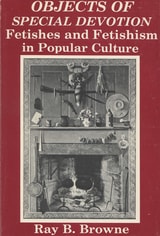
Objects of Special Devotion
Fetishes and Fetishism in Popular CultureRay B. Browne
University of Wisconsin Press, 1982
This book demonstrates the importance of the study of fetishes and fetishism in the study of popular culture. Some of the essays cover rather "conventional" manifestations in the world today; others demonstrate the fetishistic qualities of some unusual items. But all illustrate without any doubt that, like the icon, the ritual, and many other items in society, fetishes, fetishism and fetishists must be studied and understood before we can begin to understand the complexity of present-day society.
Oedipus
A Folklore CasebookEdited by Lowell Edmunds and Alan Dundes
University of Wisconsin Press, 1995
Classicist Lowell Edmunds and folklorist Alan Dundes both note that “the Oedipus tale is not likely to ever fade from view in Western civilization, [as] the tale continues to pack a critical family drama into a timeless form.” Looking beyond the story related in Sophocles’ drama—the ancient Theban myth of the son who unknowingly kills his father and marries his mother—Oedipus: A Folklore Casebook examines variations of the tale from Africa and South America to Eastern Europe and the Pacific. Taking sociological, psychological, anthropological, and structuralist perspectives, the nineteen essays reveal the complexities and multiple meanings of this centuries-old tale.
In addition to the well-known interpretations of the Oedipus myth by Sigmund Freud and James Frazer, this casebook includes insightful selections by an international group of scholars. Essays on a Serbian Oedipus legend by Friedrich Krauss and on a Gypsy version by Mirella Karpati, for example, stress the psychological stages of atonement after the Oedipus figure learns the truth about his actions. Anthropologist Melford E. Spiro investigates the myth’s appearance in Burma and the significance of the mother’s identification with the dragon (the sphinx figure). Vladimir Propp’s essay, translated into English for the first time, and Lowell Edmunds’s theoretical review discuss the relation of the Oedipus story to the larger study of folklore. The result is a comprehensive and fascinating casebook for students of folklore, classical mythology, anthropology, and sociology.
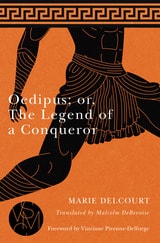
Oedipus; or, The Legend of a Conqueror
Marie Delcourt
Michigan State University Press, 2020

Of Corpse
Death and Humor in Folklore and Popular CulturePeter Narvaez
Utah State University Press, 2003
Laughter, contemporary theory suggests, is often aggressive in some manner and may be prompted by a sudden perception of incongruity combined with memories of past emotional experience. Given this importance of the past to our recognition of the comic, it follows that some "traditions" dispose us to ludic responses. The studies in Of Corpse: Death and Humor in Folklore and Popular Culture examine specific interactions of text (jokes, poetry, epitaphs, iconography, film drama) and social context (wakes, festivals, disasters) that shape and generate laughter. Uniquely, however, the essays here peruse a remarkable paradox---the convergence of death and humor.

On Being Human
Folklore of Mormon MissionariesWilliam A. Wilson
Utah State University Press, 1981
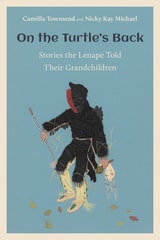
On the Turtle's Back
Stories the Lenape Told Their GrandchildrenCamilla Townsend
Rutgers University Press, 2023
The Lenape tribe, also known as the Delaware Nation, lived for centuries on the land that English colonists later called New Jersey. But once America gained its independence, they were forced to move further west: to Indiana, then Missouri, and finally to the territory that became Oklahoma. These reluctant migrants were not able to carry much from their ancestral homeland, but they managed to preserve the stories that had been passed down for generations.
On the Turtle’s Back is the first collection of Lenape folklore, originally compiled by anthropologist M. R. Harrington over a century ago but never published until now. In it, the Delaware share their cherished tales about the world’s creation, epic heroes, and ordinary human foibles. It features stories told to Harrington by two Lenape couples, Julius and Minnie Fouts and Charles and Susan Elkhair, who sought to officially record their legends before their language and cultural traditions died out. More recent interviews with Lenape elders are also included, as their reflections on hearing these stories as children speak to the status of the tribe and its culture today. Together, they welcome you into their rich and wondrous imaginative world.
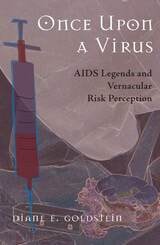
Once Upon A Virus
Diane E. Goldstein
Utah State University Press, 2004
Once Upon a Virus explores how contemporary, or "urban," legends are indicators of culturally complex attitudes toward health and illness.
Tracing the rich tradition of AIDS legends in relation to current scholarship on belief, Diane Goldstein shows how such stories not only articulate widespread perceptions of risk, health care, and health policy, they also influence official and scientific approaches to the disease and its management. Notions that appear in narratives of who gets AIDS, how and why, are indicators of broad issues involving health beliefs, concerns, and needs.

Oral Literature, Gender, and Precedence in East Timor
Metaphysics in NarrativeDavid Hicks
National University of Singapore Press, 2020

Oral Patterns of Performance
Story and SongBarre Toelken
Utah State University Press, 2003
To many Native American cultures, songs and stories are dramatic enactments of reality, and words bring reality into existence. In this chapter from his award-winning book, The Anguish of Snails, Toelken thoughtfully approaches a number of stories from Native American traditions, discussing how narratives can be touchstones of shared values among closely associated traditional people and how songs and stories go far beyond an evening's entertainment or "lessons” about life. A traditional narrative can be a culturally structured way of thinking and of experiencing the patterns that make culture real.
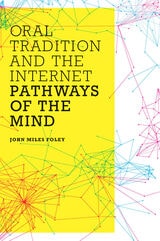
Oral Tradition and the Internet
Pathways of the MindJohn Miles Foley
University of Illinois Press, 2012
challenging the default medium of the linear book and page and all that they entail, Oral Tradition and the Internet shows readers that there are large, complex, wholly viable, alternative
worlds of media-technology out there--if only they are willing to explore, to think outside the usual, culturally constructed categories. This "brick-and-mortar" book exists as an extension of
The Pathways Project (http://pathwaysproject.org), an open-access online suite of chapter-nodes, linked websites, and multimedia all dedicated to exploring and demonstrating the
dynamic relationship between oral tradition and Internet technology
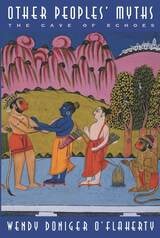
Other Peoples' Myths
The Cave of EchoesWendy Doniger O'Flaherty
University of Chicago Press, 1995
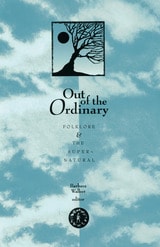
Out Of The Ordinary
Folklore and the SupernaturalBarbara Walker
Utah State University Press, 1995
Out of the Ordinary explores the functions of belief and supernatural experience within an array of cultures, as well as the stance of academe toward the study of belief and the supernatural. The essays in this volume call into question the idea that supernatural experience is extraordinary.
Among the contributors are Shelley Adler, David Hufford, Barre Toelken, and Gillian Bennett.