511 books match the query 'Government policy' and 10 start with o
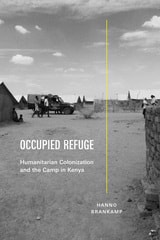
cover of Occupied Refuge: Humanitarian Colonization and the Camp in Kenya

Occupied Refuge

Humanitarian Colonization and the Camp in Kenya

Hanno Brankamp

Duke University Press, 2026

In a world shaped by war, climate disaster, and displacement, refugee camps are imagined as indispensable safe havens for millions of people fleeing crises. In Occupied Refuge, Hanno Brankamp challenges the presumed innocence of refugee humanitarianism as a system of civilian protection that can manage global inequalities and forced migration by peaceful means. He shows that although humanitarian missions aim to protect displaced populations in the global South, they often function as militarized occupations that treat camp inhabitants as new colonized subjects. Through ethnographic research in Kenya’s Kakuma refugee camp, Brankamp demonstrates how aid operations rely on a combination of infrastructural expansion, militarized policing, ethno-racial subjugation, indirect rule, and economic extraction. By co-managing these camps with international aid agencies, the Kenyan state becomes not only a willing accomplice in planetary humanitarian containment but seeks to pacify its own peripheral territories, securitize unwanted migrants, and impose national rule. Illuminating how refugee camps serve as key sites where carceral protectionism, postcolonial nation-building, and global mobility control intersect, Brankamp calls for abolitionist futures beyond the violent structures of encampment, borders, and citizenship.
[more]
cover of Officially Gay: The Political Construction Of Sexuality

Officially Gay

The Political Construction Of Sexuality

Gary L. Lehring

Temple University Press, 2003
In 1993, simply the idea that lesbians and gays should be able to serve openly in the military created a firestorm of protest from right-wing groups and powerful social conservatives that threatened to derail the entire agenda of a newly elected President. Nine short years later, in the wake of September 11, 2001, the Pentagon's suspension of discharge of gay and lesbians went largely overlooked and unremarked by political pundits, news organizations, military experts, religious leaders and gay activists. How can this collective cultural silence be explained? Officially Gay follows the military's century-long attempt to identify and exclude gays and lesbians. It traces how the military historically constructed definitions of homosexual identity relying upon religious, medical, and psychological discourses that defined homosexuals as evil, degenerate, and unstable, making their risk to national security obvious, and mandating their exclusion from the Armed Services. Officially Gay argues that this process made possible greater regulation and scrutiny of gays and lesbians both in and out of the military while simultaneously helping to create a gay and lesbian political movement and helped shape the direction that movement would take.
[more]
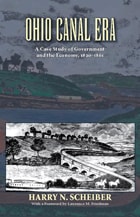
cover of Ohio Canal Era: A Case Study of Government and the Economy, 1820–1861

Ohio Canal Era

A Case Study of Government and the Economy, 1820–1861

Harry N. Scheiber

Ohio University Press, 2012

Ohio Canal Era, a rich analysis of state policies and their impact in directing economic change, is a classic on the subject of the pre–Civil War transportation revolution. This edition contains a new foreword by scholar Lawrence M. Friedman, Professor of Law, Stanford Law School, and a bibliographic note by the author.

Professor Scheiber explores how Ohio—as a “public enterprise state,” creating state agencies and mobilizing public resources for transport innovation and control—led in the process of economic change before the Civil War. No other historical account of the period provides so full and insightful a portrayal of “law in action.” Scheiber reveals the important roles of American nineteenth-century government in economic policy-making, finance, administration, and entrepreneurial activities in support of economic development.

His study is equally important as an economic history. Scheiber provides a full account of waves of technological innovation and of the transformation of Ohio’s commerce, agriculture, and industrialization in an era of hectic economic change. And he tells the intriguing story of how the earliest railroads of the Old Northwest were built and financed, finally confronting the state-owned canal system with a devastating competitive challenge.

Amid the current debate surrounding “privatization,” “deregulation,” and the appropriate use of “industrial policy” by government to shape and channel the economy. Scheiber’s landmark study gives vital historical context to issues of privatization and deregulation that we confront in new forms today.

[more]
cover of Ohio canal era: a case study of government and the economy, 1820-1861

Ohio canal era

a case study of government and the economy, 1820-1861

Harry N. Scheiber

Ohio University Press, 1987
[more]
cover of Oil, Banks, and Politics: The United States and Postrevolutionary Mexico, 1917–1924

Oil, Banks, and Politics

The United States and Postrevolutionary Mexico, 1917–1924

By Linda B. Hall

University of Texas Press, 1995

Mexico was second only to the United States as the world's largest oil producer in the years following the Mexican Revolution. As the revolutionary government became institutionalized, it sought to assure its control of Mexico's oil resources through the Constitution of 1917, which returned subsoil rights to the nation. This comprehensive study explores the resulting struggle between oil producers, many of which were U.S. companies, and the Mexican government.

Linda Hall goes beyond the diplomacy to look at the direct impact of a powerful, highly profitable foreign-controlled industry on a government and a nation trying to recover from a major civil war. She draws on extensive research in Mexican archives, including both government sources and the private papers of Presidents Alvaro Obregón and Plutarco Elías Calles, as well as U.S. government and private sources.

Since the North American Free Trade Agreement has expanded United States business ties to Mexico, this study of a crucial moment in U.S.-Mexican business relations will be of interest to a wide audience in business, diplomatic, and political history.
[more]
cover of Oneida Indian Journey: From New York to Wisconsin, 1784–1860

Oneida Indian Journey

From New York to Wisconsin, 1784–1860

Edited by Laurence M. Hauptman and L. Gordon McLester III

University of Wisconsin Press, 1999

For the first time, the traumatic removal of the Oneida Indians from New York to Wisconsin is examined in a groundbreaking collection of essays, The Oneida Indian Journey  from New York to Wisconsin, 1784–1860. To shed light on this vital period of Oneida history, editors Laurence Hauptman and L. Gordon McLester, III,  present a unique collaboration between an American Indian nation and the academic community. Two professional historians, a geographer, anthropologist, archivist and attorney join in with eighteen voices from the Oneida community—local historians, folklorists, genealogists, linguists, and tribal elders—discuss tribal dispossession and community; Oneida community perspectives of Oneida history; and the means of studying Oneida history.

Contributors include:  Debra Anderson, Eileen Antone, Jim Antone, Abrahms Archiquette, Oscar Archiquette, Jack Campisi, Richard Chrisjohn, Amelia Cornelius, Judy Cornelius, Katie Cornelius, Melissa Cornelius, Jonas Elm, James Folts, Reginald Horsman, Elizabeth Huff, Francis Jennings, Arlinda Locklear, Jo Margaret Mano, Loretta Metoxen, Liz Obomsawin, Jessie Peters, Sarah Summers, and Rachel Swamp
[more]
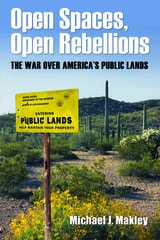
cover of Open Spaces, Open Rebellions: The War over America’s Public Lands

Open Spaces, Open Rebellions

The War over America’s Public Lands

Michael J. Makley

University of Massachusetts Press, 2017

In the spring of 2014, rancher Cliven Bundy and his armed supporters engaged in a standoff with Bureau of Land Management agents, and once again, the federal management of public lands was in the national spotlight. The conflict arose because Bundy had not paid required grazing fees and a federal judge ordered the confiscation of his cattle. The ensuing media coverage highlighted information that may have surprised those outside the rural West: the federal government manages 640 million acres of public land, with over 90 percent of it in the West.

In Open Spaces, Open Rebellions, Michael J. Makley offers a succinct and compelling history of the federal government's management of public lands. As Makley reveals, beginning in the nineteenth century and continuing to the present day, debates over how best to balance the use of these lands by the general public, fee-paying ranchers, and resource developers have always been complex and contentious. Indeed, these debates have often been met with demands for privatization or state control, best exemplified by the Sagebrush Rebellion of the 1980s and the 2016 occupation of Oregon's Malheur National Wildlife Refuge.

[more]
cover of Organ Transplantation Policy

Organ Transplantation Policy

James F. Blumstein and Frank A. Sloan, eds.

Duke University Press, 1989

Organ transplantation as a high-cost surgical and medical procedure poses an extraordinarily rich and complex set of social, ethical, and policy issues.
A June 1988 symposium at Vanderbilt University gathered leaders in a wide variety of fields to synthesize the current state of knowledge concerning organ transplantation policy and to access policy options. Collected here are the revised papers presented at that symposium; also included is one influential earlier paper on the same topic. Together, they constitute a major contribution to the debate on organ transplantation policy and its moral, legal, financial, and political implications.

[more]
cover of Overcoming Apartheid: Can Truth Reconcile a Divided Nation?

Overcoming Apartheid

Can Truth Reconcile a Divided Nation?

James L. Gibson

Russell Sage Foundation, 2004

Perhaps no country in history has so directly and thoroughly confronted its past in an effort to shape its future as has South Africa. Working from the belief that understanding the past will help build a more peaceful and democratic future, South Africa has made a concerted, institutionalized effort to come to grips with its history of apartheid through its Truth and Reconciliation Commission. In Overcoming Apartheid, James L. Gibson provides the first systematic assessment of whether South Africa's truth and reconciliation process has been successful. Has the process allowed South Africa to let go of its painful past and move on? Or has it exacerbated racial tensions by revisiting painful human rights violations and granting amnesty to their perpetrators? Overcoming Apartheid reports on the largest and most comprehensive study of post-apartheid attitudes in South Africa to date, involving a representative sample of all major racial, ethnic, and linguistic groups. Grounding his analysis of truth in theories of collective memory, Gibson discovers that the process has been most successful in creating a common understanding of the nature of apartheid. His analysis then demonstrates how this common understanding is helping to foster reconciliation, as defined by the acceptance of basic principles of human rights and political tolerance, rejection of racial prejudice, and acceptance of the institutions of a new political order. Gibson identifies key elements in the process—such as acknowledging shared responsibility for atrocities of the past—that are essential if reconciliation is to move forward. He concludes that without the truth and reconciliation process, the prospects for a reconciled, democratic South Africa would diminish considerably. Gibson also speculates about whether the South African experience provides any lessons for other countries around the globe trying to overcome their repressive pasts. A groundbreaking work of social science research, Overcoming Apartheid is also a primer for utilizing innovative conceptual and methodological tools in analyzing truth processes throughout the world. It is sure to be a valuable resource for political scientists, social scientists, group relations theorists, and students of transitional justice and human rights.
[more]
cover of Owners of the Sidewalk: Security and Survival in the Informal City

Owners of the Sidewalk

Security and Survival in the Informal City

Daniel M. Goldstein

Duke University Press, 2016

Many of Bolivia's poorest and most vulnerable citizens work as vendors in the Cancha mega-market in the city of Cochabamba, where they must navigate systems of informality and illegality in order to survive. In Owners of the Sidewalk Daniel M. Goldstein examines the ways these systems correlate in the marginal spaces of the Latin American city. Collaborating with the Cancha's legal and permanent stall vendors (fijos) and its illegal and itinerant street and sidewalk vendors (ambulantes), Goldstein shows how the state's deliberate neglect and criminalization of the Cancha's poor—a practice common to neoliberal modern cities—makes the poor exploitable, governable, and consigns them to an insecure existence. Goldstein's collaborative and engaged approach to ethnographic field research also opens up critical questions about what ethical scholarship entails.
 
 
[more]