Results by title
752 books match the query 'Illinois' and 9 start with o
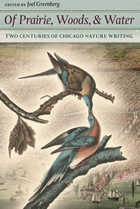
Of Prairie, Woods, and Water
Two Centuries of Chicago Nature WritingEdited by Joel Greenberg
University of Chicago Press, 2008
These writings tell the tale of a land in transition—one with abundant, unique, and incredibly lush flora and fauna, a natural history quite elusive today. Drawing on archives he uncovered while writing his acclaimed A Natural History of the Chicago Region, Greenberg hand-selected these first-person narratives, all written between 1721 and 1959. Not every author is familiar, but every contribution is distinctive. From a pioneer’s hilarious notes on life in the Kankakee marsh to Theodore Drieser’s poignant plea for conservation of the Tippecanoe River to infamous murderer Nathan Leopold’s charming description of a pet robin he kept in prison, the sources included are as diverse as the nature they describe.
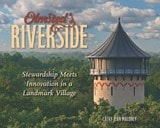
Olmsted's Riverside
Stewardship Meets Innovation in a Landmark VillageCathy Jean Maloney
Southern Illinois University Press, 2024
WINNER, Certificate of Excellence in “Scholarly Publications” from the Illinois State Historical Society’s 2025 Best of Illinois History Awards!
Honorable Mention, 2025 Society of Midland Authors Award in History!
The challenge to preserve Chicagoland’s unique haven
Just outside the bustling metropolis of Chicago lies the unlikely green oasis of Riverside, Illinois, a small village that has continued to directly influence American landscapes and suburbs since the 1870s. Once farmland, the location provided a blank canvas for preeminent designers Fredrick Law Olmsted and Calvert Vaux’s manifestation of a truly democratic society. Olmsted’s Riverside details the village’s historical significance, harmony with nature, and its nearly 150-year impact on American suburbs today.
Cathy Jean Maloney explores how Riverside’s layout and design presaged today’s urban planning goals of walkability, green space, public transportation access, sustainability, and resiliency. Houses in Riverside are set back from the road, sidewalks meander along gently curving roads, and public green spaces abound. Maloney shows how Riverside’s leaders and residents struggled with stewardship of Olmsted’s ideals by balancing competing interests in suburban development and Chicago sprawl from the 1870s to the 2020s. She details in chronological chapters how the village adapted to tragedies such as the Great Fire of 1871 and the Panic of 1873, as well as advancements in transportation, local civic life, urban policy, and environmental thought, all while staying true to the framework inherited from Olmsted and Vaux.
Olmsted’s Riverside provides engaging examples of how citizen involvement can protect a community’s ideals. This richly illustrated volume combines landscape architecture, regional history, and urban design to show how audacious civic planning and thoughtful conservation can provide a model for future American suburbs.

On the Mormon Frontier
The Diary of Hosea Stout, 1844-1889Juanita Brooks
University of Utah Press, 2009
This edition of On the Mormon Frontier presents Stout’s diary in a single volume, proving that it continues to be an essential work in the study of Mormon and American history.
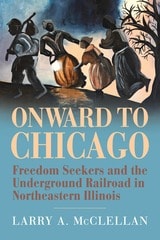
Onward to Chicago
Freedom Seekers and the Underground Railroad in Northeastern IllinoisLarry A. McClellan
Southern Illinois University Press, 2023
Uncovering stories of the freedom network in northeastern Illinois
Decades before the Civil War, Illinois’s status as a free state beckoned enslaved people, particularly those in Kentucky and Missouri, to cross porous river borders and travel toward new lives. While traditional histories of the Underground Railroad in Illinois start in 1839, and focus largely on the romanticized tales of white men, Larry A. McClellan reframes the story, not only introducing readers to earlier freedom seekers, but also illustrating that those who bravely aided them were Black and white, men and women. McClellan features dozens of individuals who made dangerous journeys to reach freedom as well as residents in Chicago and across northeastern Illinois who made a deliberate choice to break the law to help.
Onward to Chicago charts the evolution of the northeastern Illinois freedom network and shows how, despite its small Black community, Chicago emerged as a point of refuge. The 1848 completion of the I & M Canal and later the Chicago to Detroit train system created more opportunities for Black men, women, and children to escape slavery. From eluding authorities to confronting kidnapping bands working out of St. Louis and southern Illinois, these stories of valor are inherently personal. Through deep research into local sources, McClellan presents the engrossing, entwined journeys of freedom seekers and the activists in Chicagoland who supported them.
McClellan includes specific freedom seeker journey stories and introduces Black and white activists who provided aid in a range of communities along particular routes. This narrative highlights how significant biracial collaboration led to friendships as Black and white abolitionists worked together to provide support for freedom seekers traveling through the area and ultimately to combat slavery in the United States.
Organized Crime in Chicago
Beyond the MafiaRobert M. Lombardo
University of Illinois Press, 2013
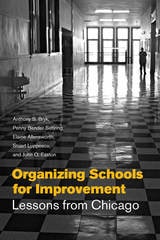
Organizing Schools for Improvement
Lessons from ChicagoAnthony S. Bryk, Penny Bender Sebring, Elaine Allensworth, Stuart Luppescu, and John Q. Easton
University of Chicago Press, 2009
In 1988, the Chicago public school system decentralized, granting parents and communities significant resources and authority to reform their schools in dramatic ways. To track the effects of this bold experiment, the authors of Organizing Schools for Improvement collected a wealth of data on elementary schools in Chicago. Over a seven-year period they identified one hundred elementary schools that had substantially improved—and one hundred that had not. What did the successful schools do to accelerate student learning?
The authors of this illuminating book identify a comprehensive set of practices and conditions that were key factors for improvement, including school leadership, the professional capacity of the faculty and staff, and a student-centered learning climate. In addition, they analyze the impact of social dynamics, including crime, critically examining the inextricable link between schools and their communities. Putting their data onto a more human scale, they also chronicle the stories of two neighboring schools with very different trajectories. The lessons gleaned from this groundbreaking study will be invaluable for anyone involved with urban education.
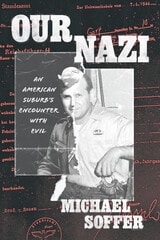
Our Nazi
An American Suburb’s Encounter with EvilMichael Soffer
University of Chicago Press, 2024
Reinhold Kulle seemed like the perfect school employee. But in 1982, as his retirement neared, his long-concealed secret came to light. The chief custodian at Oak Park and River Forest High School outside Chicago had been a Nazi, a member of the SS, and a guard at a brutal slave labor camp during World War II.
Similar revelations stunned communities across the country. Hundreds of Reinhold Kulles were gradually discovered: men who had patrolled concentration camps, selected Jews for execution, and participated in mass shootings—and who were now living ordinary suburban lives. As the Office of Special Investigations raced to uncover Hitler’s men in the United States, neighbors had to reconcile horrific accusations with the helpful, kind, and soft-spoken neighbors they thought they knew. Though Nazis loomed in the American consciousness as evil epitomized, in Oak Park—a Chicago suburb renowned for its liberalism—people rose to defend Reinhold Kulle, a war criminal.
Drawing on archival research and insider interviews, Oak Park and River Forest High School teacher Michael Soffer digs into his community’s tumultuous response to the Kulle affair. He explores the uncomfortable truths of how and why onetime Nazis found allies in American communities after their gruesome pasts were uncovered.
Our Politics
Reflections on Political LifeDouglas Kane, with a foreword by Mike Lawrence
Southern Illinois University Press, 2019
In Our Politics Kane reflects on his nearly fifty years of active engagement in state and local politics. In a series of essays, he seeks to understand the forces, motivations, incentives and technologies that shape our politics and produce the consequences that we live with every day. He describes how candidates and officeholders deal with the fundamental contradictions inherent in the democratic process, and how and why the political power structure has changed. He also explores the personal experience of being a legislator, from deciding how to vote to building relationships with party leaders, fellow legislators, the governor, and the voters in the district. Kane concludes by considering the possibility of change, how it might happen, and the steps that candidates, political parties, activists and others might take to better our politics with results more to our liking.
While many journalists record politics from the outside, and numerous political memoirs focus on personalities and what happened to whom and when, this book gives an insider’s view of politics at the level of state government. This book is not about those politicians but about our politics, which together we have created and together we must deal with.
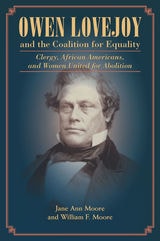
Owen Lovejoy and the Coalition for Equality
Clergy, African Americans, and Women United for AbolitionJane Ann Moore and William F. Moore
University of Illinois Press, 2019
Owen Lovejoy and the Coalition for Equality examines how these three distinct groups merged their agendas into a single antislavery, religious, political campaign for equality with Lovejoy at the helm. Combining scholarly biography, historiography, and primary source material, Jane Ann Moore and William F. Moore demonstrate Lovejoy's crucial role in nineteenth-century politics, the rise of antislavery sentiment in religious spaces, and the emerging congressional commitment to end slavery. Their compelling account explores how the immorality of slavery became a touchstone of political and religious action in the United States through the efforts of a synergetic coalition led by an essential abolitionist figure.