Results by title
944 books match the query 'Indians of North America' and 19 start with o
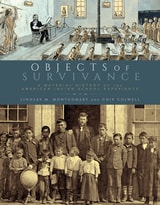
Objects of Survivance
A Material History of the American Indian School ExperienceLindsay M. Montgomery
University Press of Colorado, 2019
This visual and material archive serves as a lens through which to view a key moment in US history—when Native Americans were sequestered onto reservation lands, forced into unfamiliar labor economies, and attacked for their religious practices. Education, the government hoped, would be the final tool to permanently transform Indigenous bodies through moral instruction in Western dress, foodways, and living habits. Yet Lindsay Montgomery and Chip Colwell posit that Bratley’s collection constitutes “objects of survivance”—things and images that testify not to destruction and loss but to resistance and survival. Interwoven with documents and interviews, Objects of Survivance illuminates how the US government sought to control Native Americans and how Indigenous peoples endured in the face of such oppression.
Rejecting the narrative that such objects preserve dying Native cultures, Objects of Survivance reframes the Bratley Collection, showing how tribal members have reconnected to these items, embracing them as part of their past and reclaiming them as part of their contemporary identities. This unique visual and material record of the early American Indian school experience and story of tribal perseverance will be of value to anyone interested in US history, Native American studies, and social justice.
Co-published with the Denver Museum of Nature & Science
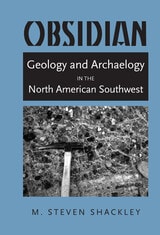
Obsidian
Geology and Archaeology in the North American SouthwestM. Steven Shackley
University of Arizona Press, 2005

Ocean Power
Poems from the DesertOfelia Zepeda
University of Arizona Press, 1995
Poet Ofelia Zepeda centers these poems on her own experiences growing up in a Tohono O'odham family, where desert climate profoundly influenced daily life, and on her perceptions as a contemporary Tohono O'odham woman. One section of poems deals with contemporary life, personal history, and the meeting of old and new ways. Another section deals with winter and human responses to light and air. The final group of poems focuses on the nature of women, the ocean, and the way the past relationship of the O'odham with the ocean may still inform present day experience. These fine poems will give the outside reader a rich insight into the daily life of the Tohono O'odham people.
Of Caves and Shell Mounds
Edited by Kenneth C. Carstens and Patty Jo Watson
University of Alabama Press, 1996
Ancient human groups in the Eastern Woodlands of North America were long viewed as homogeneous and stable hunter-gatherers, changing little until the late prehistoric period when Mesoamerican influences were thought to have stimulated important economic and social developments. The authors in this volume offer new, contrary evidence to dispute this earlier assumption, and their studies demonstrate the vigor and complexity of prehistoric peoples in the North American Midwest and Midsouth. These peoples gathered at favored places along midcontinental streams to harvest mussels and other wild foods and to inter their dead in the shell mounds that had resulted from their riverside activities. They created a highly successful, pre-maize agricultural system beginning more than 4,000 years ago, established far-flung trade networks, and explored and mined the world's longest cave—the Mammoth Cave System in Kentucky.
Contributors include:
Kenneth C. Carstens, Cheryl Ann Munson, Guy Prentice, Kenneth B. Tankersley, Philip J. DiBlasi, Mary C. Kennedy, Jan Marie Hemberger, Gail E. Wagner, Christine K. Hensley, Valerie A. Haskins, Nicholas P. Herrmann, Mary Lucas Powell, Cheryl Claassen, David H. Dye, and Patty Jo Watson
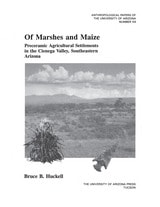
Of Marshes and Maize
Preceramic Agricultural Settlement in the Cienega Valley, Southeastern ArizonaBruce B. Huckell
University of Arizona Press, 1995
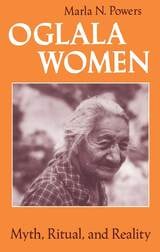
Oglala Women
Myth, Ritual, and RealityMarla N. Powers
University of Chicago Press, 1986
"It is a happy event when a fine scholarly work is rendered accessible to the general reader, especially so when none of the complexity of the subject matter is sacrificed. Oglala Women is a long overdue revisionary ethnography of Native American culture."—Penny Skillman, San Francisco Chronicle Review
"Marla N. Powers's fine study introduced me to Oglala women 'portrayed from the perspectives of Indians,' to women who did not pity themselves and want no pity from others. . . . A brave, thorough, and stimulating book."—Melody Graulich, Women's Review of Books
"Powers's new book is an intricate weaving . . . and her synthesis brings all of these pieces into a well-integrated and insightful whole, one which sheds new light on the importance of women and how they have adapted to the circumstances of the last century."—Elizabeth S. Grobsmith, Nebraska History
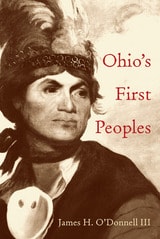
Ohio’s First Peoples
James H. O'Donnell
Ohio University Press, 2004
Although founders of the state like Rufus Putnam pointed to the remaining prehistoric earthworks at Marietta as evidence that the architects were a people of “ingenuity, industry, and elegance,” their words did not prevent a rivalry with the area’s Indian inhabitants that was settled only through decades of warfare and treaty-making.
Native American armies managed to win battles with Josiah Harmar and Arthur St. Clair, but not the war with Anthony Wayne. By the early nineteenth century only a few native peoples remained, still hoping to retain their homes. Pressures from federal and state governments as well as the settlers‘ desire for land, however, left the earlier inhabitants no refuge. By the mid-1840s they were gone, leaving behind relatively few markers on the land.
Ohio’s First Peoples depicts the Native Americans of the Buckeye State from the time of the well-known Hopewell peoples to the forced removal of the Wyandots in the 1840s.
Professor James O’Donnell presents the stories of the early Ohioans based on the archaeological record. In an accessible narrative style, he provides a detailed overview of the movements of Fort Ancient peoples driven out by economic and political forces in the seventeenth century. Ohio’s plentiful game and fertile farmlands soon lured tribes such as the Wyandots, Shawnees, and Delawares, which are familiar to observers of the historic period.
In celebrating the bicentennial of Ohio, we need to remember its earliest residents. Ohio’s First Peoples recounts their story and documents their contribution to Ohio’s full heritage.
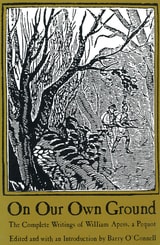
On Our Own Ground
The Complete Writings of William Apess, a PequotWilliam Apess
University of Massachusetts Press, 1992
William Apess was the first Native American to fully, and publicly, speak out regarding the racism and unfair treatment that he and others endured. The author's writing is eloquently delivered, instilling the reader with a realistic framework of a political, historical, and personal mindset.
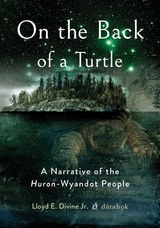
On the Back of a Turtle
A Narrative of the Huron-Wyandot PeopleLloyd Divine Jr.
The Ohio State University Press, 2019
As characters and tribes emerge in the Huron-Wyandot’s oral tradition of creation, and take their respective places upon the Great Island, the author reveals the most difficult element of the Huron-Wyandot’s history: how the tribal name was obtained. With the knowledge of how both Huron and Wyandot are relevant names for one tribe of people, the author then shares his tribe’s amazing history. The reader will be fascinated to learn how one of the smallest tribes, birthed amid the Iroquois Wars, rose to become one of the most respected and influential tribes of North America.

On the Eve of Conquest
The Chevalier de Raymond's Critique of New France in 1754Joseph L. Peyser
Michigan State University Press, 1997
In 1754, Charles de Raymond, chevalier of the Royal and Military Order of Saint Louis and a captain in the Troupes de la Marine wrote a bold, candid, and revealing expose; on the French colonial posts and settlements of New France. On the Eve of the Conquest, more than an annotated translation, includes a discussion on the historical background of the start of the French and Indian War, as well as a concise biography of Raymond and Michel Le Courtois de Surlaville, the army colonel at the French court to whom the report was sent. The events surrounding Raymond's controversial year as commandant of the post (now Fort Wayne, Indiana) in 1749-50, his disputed recall by Governor General Jacques-Pierre de Taffanel de La Jonquier, and the subsequent friction between La Jonquiere's successor, Ange de Menneville Duqesne, and Raymond are presented in detail and illustrated by translations of their correspondence.
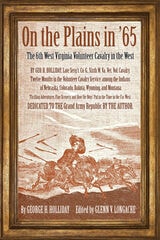
On the Plains in ’65
The 6th West Virginia Volunteer Cavalry in the WestGeorge H. Holliday
Ohio University Press, 2021
A new scholarly edition of an Ohio boy soldier’s revealing post-Civil War memoir.
This annotated edition of Holliday’s recollections—known primarily among historians of the American West—re-contextualizes his memoir to include his boyhood in southern Ohio and the largely untold story of the hundreds of Buckeyes who crossed the Ohio River to serve their country in Virginia (later West Virginia) regiments, ultimately traveling across Kansas, Nebraska, Colorado, and Wyoming to safeguard mail and stage routes along the celebrated Oregon Trail during a pivotal time in American history.
Glenn Longacre’s extensive research in federal, state, and local archives, manuscript collections, and period newspapers complements his correspondence with the living descendants of Holliday and other soldiers. His research integrates this story deservedly as part of Appalachian history before, during, and after the Civil War. From this perspective it addresses an entirely new audience of Appalachian studies scholars, Civil War and frontier history enthusiasts, students, and general readers.
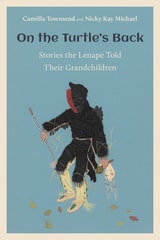
On the Turtle's Back
Stories the Lenape Told Their GrandchildrenCamilla Townsend
Rutgers University Press, 2023
The Lenape tribe, also known as the Delaware Nation, lived for centuries on the land that English colonists later called New Jersey. But once America gained its independence, they were forced to move further west: to Indiana, then Missouri, and finally to the territory that became Oklahoma. These reluctant migrants were not able to carry much from their ancestral homeland, but they managed to preserve the stories that had been passed down for generations.
On the Turtle’s Back is the first collection of Lenape folklore, originally compiled by anthropologist M. R. Harrington over a century ago but never published until now. In it, the Delaware share their cherished tales about the world’s creation, epic heroes, and ordinary human foibles. It features stories told to Harrington by two Lenape couples, Julius and Minnie Fouts and Charles and Susan Elkhair, who sought to officially record their legends before their language and cultural traditions died out. More recent interviews with Lenape elders are also included, as their reflections on hearing these stories as children speak to the status of the tribe and its culture today. Together, they welcome you into their rich and wondrous imaginative world.
Once a River
Bird Life and Habitat Changes on the Middle GilaAmadeo M. Rea
University of Arizona Press, 1983
It is no mystery how the desert swallowed up the Gila. Beaver trapping, overgrazing, and woodcutting first ruined natural watersheds, then damming confined the last drops of its surface flow. Historical sources and archaeological data inform us of the Gila's past, but its bird life further testifies to the changes.
Amadeo Rea traces the decline of bird life on the Middle Gila in a book that addresses the broader issue of habitat deterioration. Bird lovers will find it a storehouse of data on avian migration patterns and on ornithological classification based on skeletal structure. Anthropologists can draw on its Piman ethnoclassification of birds, which links the Gila River tribe with various other Uto-Aztecan peoples of Mexico's west coast.
But for all concerned with protecting our environment, Once a River offers evidence of change that might be apprehended elsewhere. It is a case history of a loss that perhaps need never have occurred.
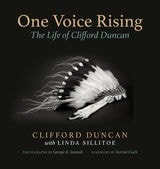
One Voice Rising
The Life of Clifford DuncanClifford Duncan with Linda Sillitoe, Photographs by George R. Janecek
University of Utah Press, 2019
“Everything was Indian then, when I was a boy. They had to explain to us about the white man's side. Now everything is in the white man's world and we teach Indian ways.”
—Clifford Duncan (from the book)

Ordered West
The Civil War Exploits of Charles A. CurtisAlan D. Gaff
University of North Texas Press, 2017
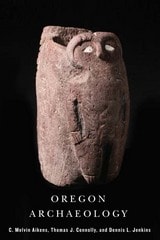
Oregon Archaeology
Melvin C. Aikens
Oregon State University Press, 2011
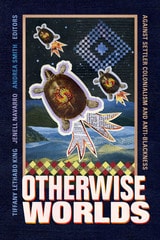
Otherwise Worlds
Against Settler Colonialism and Anti-BlacknessTiffany Lethabo King, Jenell Navarro, and Andrea Smith, editors
Duke University Press, 2020
Contributors. Maile Arvin, Marcus Briggs-Cloud, J. Kameron Carter, Ashon Crawley, Denise Ferreira da Silva, Chris Finley, Hotvlkuce Harjo, Sandra Harvey, Chad B. Infante, Tiffany Lethabo King, Jenell Navarro, Lindsay Nixon, Kimberly Robertson, Jared Sexton, Andrea Smith, Cedric Sunray, Se’mana Thompson, Frank B. Wilderson
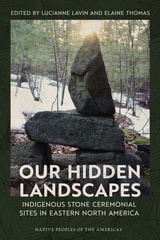
Our Hidden Landscapes
Indigenous Stone Ceremonial Sites in Eastern North AmericaLucianne Lavin
University of Arizona Press, 2023
This volume introduces readers to eastern North America’s Indigenous ceremonial stone landscapes (CSLs)—sacred sites whose principal identifying characteristics are built stone structures that cluster within specific physical landscapes. Our Hidden Landscapes presents these often unrecognized sites as significant cultural landscapes in need of protection and preservation.
In this book, Native American authors provide perspectives on the cultural meaning and significance of CSLs and their characteristics, while professional archaeologists and anthropologists provide a variety of approaches for better understanding, protecting, and preserving them. The chapters present overwhelming evidence in the form of oral tradition, historic documentation, ethnographies, and archaeological research that these important sites created and used by Indigenous peoples are deserving of protection.
This work enables archaeologists, historians, conservationists, foresters, and members of the general public to recognize these important ritual sites.
Contributors
Nohham Rolf Cachat-Schilling
Robert DeFosses
James Gage
Mary Gage
Doug Harris
Julia A. King
Lucianne Lavin
Johannes (Jannie) H. N. Loubser
Frederick W. Martin
Norman Muller
Charity Moore Norton
Paul A. Robinson
Laurie W. Rush
Scott M. Strickland
Elaine Thomas
Kathleen Patricia Thrane
Matthew Victor Weiss
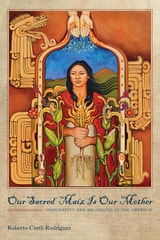
Our Sacred Maíz Is Our Mother
Indigeneity and Belonging in the AmericasRoberto Cintli Rodríguez
University of Arizona Press, 2014
Follow it he did, and his book Our Sacred Maíz Is Our Mother changes the way we look at Mexican Americans. Not so much peoples created as a result of war or invasion, they are people of the corn, connected through a seven-thousand-year old maíz culture to other Indigenous inhabitants of the continent. Using corn as the framework for discussing broader issues of knowledge production and history of belonging, the author looks at how corn was included in codices and Mayan texts, how it was discussed by elders, and how it is represented in theater and stories as a way of illustrating that Mexicans and Mexican Americans share a common culture.
Rodriguez brings together scholarly and traditional (elder) knowledge about the long history of maíz/corn cultivation and culture, its roots in Mesoamerica, and its living relationship to Indigenous peoples throughout the continent, including Mexicans and Central Americans now living in the United States. The author argues that, given the restrictive immigration policies and popular resentment toward migrants, a continued connection to maíz culture challenges the social exclusion and discrimination that frames migrants as outsiders and gives them a sense of belonging not encapsulated in the idea of citizenship. The “hidden transcripts” of corn in everyday culture—art, song, stories, dance, and cuisine (maíz-based foods like the tortilla)—have nurtured, even across centuries of colonialism, the living maíz culture of ancient knowledge.