Results by title
104 books match the query 'Japanese' and 3 start with o
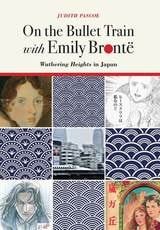
On the Bullet Train with Emily Brontë
Wuthering Heights in JapanJudith Pascoe
University of Michigan Press, 2017
While teaching in Japan, Judith Pascoe was fascinated to discover the popularity that Emily Brontë’s novel Wuthering Heights has enjoyed there. Nearly 100 years after its first formal introduction to the country, the novel continues to engage the imaginations of Japanese novelists, filmmakers, manga artists and others, resulting in numerous translations, adaptations, and dramatizations. On the Bullet Train with Emily Brontë is Pascoe’s lively account of her quest to discover the reasons for the continuous Japanese embrace of Wuthering Heights, including quite varied and surprising adaptations of the novel. At the same time, the book chronicles Pascoe’s experience as an adult student of Japanese. She contemplates the multiple Japanese translations of Brontë, as contrasted to the single (or non-existent) English translations of major Japanese writers. Carrying out a close reading of a distant country’s Wuthering Heights, Pascoe begins to see American literary culture as a small island on which readers are isolated from foreign literature.
In this and in her previous book, The Sarah Siddons Audio Files, Pascoe’s engaging narrative innovates a new scholarly form involving immersive research practice to attempt a cross-cultural version of reader-response criticism. On the Bullet Train with Emily Brontë will appeal to scholars in the fields of 19th-century British literature, adaptation studies, and Japanese literary history.
In this and in her previous book, The Sarah Siddons Audio Files, Pascoe’s engaging narrative innovates a new scholarly form involving immersive research practice to attempt a cross-cultural version of reader-response criticism. On the Bullet Train with Emily Brontë will appeal to scholars in the fields of 19th-century British literature, adaptation studies, and Japanese literary history.
[more]
Origins of Modern Japanese Literature
Karatani Kojin
Duke University Press, 1993
Since its publication in Japan ten years ago, Origins of Modern Japanese Literature has become a landmark book, playing a pivotal role in defining discussions of modernity in that country. Against a history of relative inattention on the part of Western translators to modern Asian critical theory, this first English publication is sure to have a profound effect on current cultural criticism in the West. It is both the boldest critique of modern Japanese literary history to appear in the post-war era and a major theoretical intervention, which calls into question the idea of modernity that informs Western consciousness.
In a sweeping reinterpretation of nineteenth-and twentieth-century Japanese literature, Karatani Kojin forces a reconsideration of the very assumptions underlying our concepts of modernity. In his analysis, such familiar terms as origin, modern, literature, and the state reveal themselves to be ideological constructs. Karatani weaves many separate strands into an argument that exposes what has been hidden in both Japanese and Western accounts of the development of modern culture. Among these strands are: the "discovery" of landscape in painting and literature and its relation to the inwardness of individual consciousness; the similar "discovery" in Japanese drama of the naked face as another kind of landscape produced by interiority; the challenge to the dominance of Chinese characters in writing; the emergence of confessional literature as an outgrowth of the repression of sexuality and the body; the conversion of the samurai class to Christianity; the mythologizing of tuberculosis, cancer, and illness in general as a producer of meaning; and the "discovery" of "the child" as an independent category of human being.
A work that will be important beyond the confines of literary studies, Karatani's analysis challenges basic Western presumptions of theoretical centrality and originality and disturbs the binary opposition of the "West" to its so-called "other." Origins of Modern Japanese Literature should be read by all those with an interest in the development of cultural concepts and in the interrelating factors that have determined modernity.
[more]
of Women
20 Japanese Female Poets / 20 Waka PoemsEdited by Naoko Fujimoto
Tupelo Press, 2026
A collection of translated Japanese waka-poems, including text collage and haibun-style discourses on translation.
Of Women is a collection of translations of Japanese waka-poems from the seventh century to the twelfth century, featuring twenty female poets from this period, when Japanese women’s literature flourished. This book includes poems by famous writers from the era, such as Sei Shonagon (The Pillow Book) and Murasaki Shikibu (The Tale of Genji), and introduces some lesser-known female poets as well.
Waka compacts much information in a short form: words with double meanings, unfamiliar phrases, habits foreign to non-Japanese speakers, and hidden historical backgrounds. Direct translations would fail to capture the author’s full intent, so Of Women takes several approaches to capture the original sensory images, including text collage and haibun, short essays that provide historical context and introduce the author before each waka.
[more]