301 books match the query 'Knowledge' and 8 start with o
cover of O'Neill's Shakespeare

O'Neill's Shakespeare

Normand Berlin

University of Michigan Press, 1993

In O'Neill's Shakespeare , Normand Berlin explores the relationship of William Shakespeare and Eugene O'Neill through detailed, often surprising, intertextual readings of the two great playwrights' work. "Of course, it would have been impossible for O'Neill not to have been influenced by Shakespeare," acknowledges Berlin. But this is an influence of an unusual and extraordinary sort, "a family romance" that transcends their obvious differences—a romance that "takes in all O'Neill's life and art."

In the first book-length study of this crucial literary and dramatic relationship, Berlin probes far beyond the usual listing of allusions and references. This is the exploration of an "essential, basic, even natural" connection, in which Shakespeare is shown to have fundamentally shaped O'Neill's creative imagination. Following O'Neill's career chronologically, Berlin divides his study into two parts. The "first career" (culminating in Mourning Becomes Electra) is explored through recurring themes that evoke Shakespeare: the sea, black and white, and the family. O'Neill's "second career" (from Ah! Wilderness until the last plays) is examined through Shakespearean genre classifications: comedy, history, tragedy, and tragicomedy. Though always grounded in close textual readings, Berlin's analysis spirals outward to encompass O'Neill's artistic and psychological development and touches on the questions of tradition, transcendence, and human nature inevitably raised when such literary connections across history are drawn.

O'Neill's Shakespeare is more than a reminder that Shakespeare continues to haunt Western culture; it is a careful and fascinating analysis of a particular legacy in American drama. The book has insights to offer to specialists in Shakespeare and O'Neill, and to any reader interested in the transmission of ideas through Western culture. Berlin's study of the unconscious and conscious uses of Shakespeare by O'Neill provide a valuable new understanding of O'Neill's artistry. It is also an eloquent, thoughtful account that blends the transcendence of Shakespeare's influence with the particular ways in which every era must refashion Shakespeare so that "the past becomes the present."
[more]
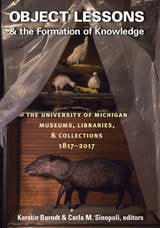
cover of Object Lessons and the Formation of Knowledge: The University of Michigan Museums, Libraries, and Collections 1817–2017

Object Lessons and the Formation of Knowledge

The University of Michigan Museums, Libraries, and Collections 1817–2017

Kerstin Barndt and Carla M. Sinopoli, editors

University of Michigan Press, 2017
Object Lessons and the Formation of Knowledge explores the museums, libraries, and special collections of the University of Michigan on its bicentennial. Since its inception, U-M has collected and preserved objects: biological and geological specimens; ethnographic and archaeological artifacts; photographs and artistic works; encyclopedia, textbooks, rare books, and documents; and many other items. These vast collections and libraries testify to an ambitious vision of the research university as a place where knowledge is accumulated, shared, and disseminated through teaching, exhibition, and publication. Today, two hundred years after the university’s founding, museums, libraries, and archives continue to be an important part of U-M, which maintains more than twenty distinct museums, libraries, and collections. Viewed from a historic perspective, they provide a window through which we can explore the transformation of the academy, its public role, and the development of scholarly disciplines over the last two centuries. Even as they speak to important facets of Michigan’s history, many of these collections also remain essential to academic research, knowledge production, and object-based pedagogy. Moreover, the university’s exhibitions and displays attract hundreds of thousands of visitors per year from the campus, regional, and global communities. Beautifully illustrated with color photographs of these world-renowned collections, this book will appeal to readers interested in the history of museums and collections, the formation of academic disciplines, and of course the University of Michigan.
[more]
cover of Octavio Paz: A Meditation

Octavio Paz

A Meditation

Ilan Stavans

University of Arizona Press, 2001
Octavio Paz: Nobel Prize winner, author of The Labyrinth of Solitude and Sor Juana, or, the Traps of Faith, precursor and pathfinder, a guiding light of the Mexican intelligentsia in the twentieth century. In this small, memorable meditation on Octavio Paz as a thinker and man of action, Ilan Stavans—described by the Washington Post as "one of our foremost cultural critics" and by the New York Times as "the czar of Latino culture in the United States"—ponders Paz's intellectual courage against the ideological tapestry of his epoch and shows us what lessons can be learned from him. He does so by exploring such timeless issues as the crossroads where literature and politics meet, the place of criticism in society, and Mexico’s difficult quest to come to terms with its own history. Stavans reflects on Paz's personal struggle with Marxism and surrealism, his reflections on pachucos, his analysis of love and eroticism, his study of the life and legacy of Sor Juana Inés de la Cruz, and his influence as a magazine editor. But this extraordinary rumination is not only a thought-provoking appraisal of Paz; it is also a feast for the myriad admirers of Stavans, himself a spirited, mordant essayist who is not afraid of controversy. This explains why Richard Rodriguez has portrayed Stavans as "the rarest of North American writers—he sees the Americas whole," and then added, "Not since Octavio Paz has Mexico given us an intellectual so able to violate borders with learning and grace." Octavio Paz: A Meditation is a fitting addition to Stavans’s own oeuvre that will stimulate discerning readers.
[more]
cover of Odyssey of the Psyche: Jungian Patterns in Joyce's Ulysses

Odyssey of the Psyche

Jungian Patterns in Joyce's Ulysses

Jean Kimball

Southern Illinois University Press, 1997

The result of the interaction between Bloom and Dedalus, Kimball argues as a central tenet in her unique reading of Ulysses, is the gradual development of a relationship between the two protagonists that parallels C. G. Jung’s descriptions of the encounter between the Ego and the Shadow in that stage of his theoretical individuation process called "the realization of the shadow." These parallels form a unifying strand of meaning that runs throughout this multidimensional novel and is supported by the text and contexts of Ulysses.

Kimball has provided the first comprehensive study of the relationship between Jungian psychology and Joyce’s Ulysses. Bucking critical trends, she focuses on Stephen rather than Bloom. She also notes certain parallels—synchronicities—in the lives of both Jung and Joyce, not because the men influenced one another but because they speculated about personality at the same historical time. Finally, noting that both Jung and Joyce came from strong Christian backgrounds, she asserts that the doubleness of the human personality fundamental to Christian theology is carried over into Jung’s psychology and Joyce’s fiction.
[more]
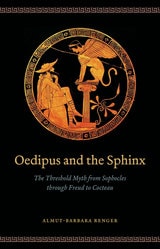
cover of Oedipus and the Sphinx: The Threshold Myth from Sophocles through Freud to Cocteau

Oedipus and the Sphinx

The Threshold Myth from Sophocles through Freud to Cocteau

Almut-Barbara Renger

University of Chicago Press, 2013
When Oedipus met the Sphinx on the road to Thebes, he did more than answer a riddle—he spawned a myth that, told and retold, would become one of Western culture’s central narratives about self-understanding. Identifying the story as a threshold myth—in which the hero crosses over into an unknown and dangerous realm where rules and limits are not known—Oedipus and the Sphinx offers a fresh account of this mythic encounter and how it deals with the concepts of liminality and otherness.
 
Almut-Barbara Renger assesses the story’s meanings and functions in classical antiquity—from its presence in ancient vase painting to its absence in Sophocles’s tragedy—before arriving at two of its major reworkings in European modernity: the psychoanalytic theory of Sigmund Freud and the poetics of Jean Cocteau. Through her readings, she highlights the ambiguous status of the Sphinx and reveals Oedipus himself to be a liminal creature, providing key insights into Sophocles’s portrayal and establishing a theoretical framework that organizes evaluations of the myth’s reception in the twentieth century. Revealing the narrative of Oedipus and the Sphinx to be the very paradigm of a key transition experienced by all of humankind, Renger situates myth between the competing claims of science and art in an engagement that has important implications for current debates in literary studies, psychoanalytic theory, cultural history, and aesthetics.
[more]
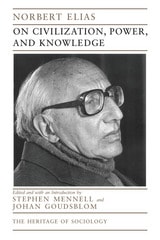
cover of On Civilization, Power, and Knowledge: Selected Writings

On Civilization, Power, and Knowledge

Selected Writings

Norbert Elias

University of Chicago Press, 1997

Nobert Elias (1897-1990) is among the great sociologists of the twentieth century. Born in Germany, Elias earned a doctorate in philosophy and then turned to sociology, working with Max Weber's younger brother, Alfred Weber, and with Karl Mannheim. He later fled the Nazi regime in 1935 and spent most of his life in Britain. He is best known for his book, The Civilizing Process, wherein he traces the subtle changes in manners among the European upper classes since the Middle Ages, and shows how those seemingly innocuous changes in etiquette reflected profound transformations of power relations in society. He later applied these insights to a wide range of subjects, from art and culture to the control of violence, the sociology of sports, the development of knowledge and the sciences, and the methodology of sociology.

This volume is a carefully chosen collection of Elias's most important writings and includes many of his most brilliant ideas. The development of Elias's thinking during the course of his long career is traced along with a discussion of how his work relates to other major sociologists and how the various selections are interconnected. The result is a consistent and stimulating look at one of sociology's founding thinkers.
[more]
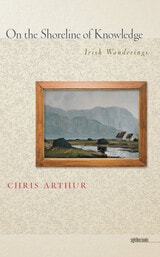
cover of On the Shoreline of Knowledge: Irish Wanderings

On the Shoreline of Knowledge

Irish Wanderings

Chris Arthur

University of Iowa Press, 2012

The carefully crafted, meditative essays in On the Shoreline of Knowledge sometimes start from unlikely objects or thoughts, a pencil or some fragments of commonplace conversation, but they soon lead the reader to consider fundamental themes in human experience. The unexpected circumnavigation of the ordinary unerringly gets to the heart of the matter.
 

Bringing a diverse range of material into play, from fifteenth-century Japanese Zen Buddhism to how we look at paintings, and from the nature of a briefcase to the ancient nest-sites of gyrfalcons, Chris Arthur reveals the extraordinary dimensions woven invisibly into the ordinary things around us.  Compared to Loren Eiseley, George Eliot, Seamus Heaney, Aldo Leopold, V. S. Naipaul, W. G. Sebald, W. B. Yeats, and other literary luminaries, he is a master essayist whose work has quietly been gathering an impressive cargo of critical acclaim. Arthur speaks with an Irish accent, rooting the book in his own unique vision of the world, but he addresses elemental issues of life and death, love and loss, that circle the world and entwine us all. 
[more]
cover of Orientalism and Modernism: The Legacy of China in Pound and Williams

Orientalism and Modernism

The Legacy of China in Pound and Williams

Zhaoming Qian

Duke University Press, 1995

Chinese culture held a well-known fascination for modernist poets like Ezra Pound and William Carlos Williams. What is less known but is made fully clear by Zhaoming Qian is the degree to which oriental culture made these poets the modernists they became. This ambitious and illuminating study shows that Orientalism, no less than French symbolism and Italian culture, is a constitutive element of Modernism.
Consulting rare and unpublished materials, Qian traces Pound’s and Williams’s remarkable dialogues with the great Chinese poets—Qu Yuan, Li Bo, Wang Wei, and Bo Juyi—between 1913 and 1923. His investigation reveals that these exchanges contributed more than topical and thematic ideas to the Americans’ work and suggests that their progressively modernist style is directly linked to a steadily growing contact and affinity for similar Chinese styles. He demonstrates, for example, how such influences as the ethics of pictorial representation, the style of ellipsis, allusion, and juxtaposition, and the Taoist/Zen–Buddhist notion of nonbeing/being made their way into Pound’s pre-Fenollosan Chinese adaptations, Cathay, Lustra, and the Early Cantos, as well as Williams’s Sour Grapes and Spring and All. Developing a new interpretation of important work by Pound and Williams, Orientalism and Modernism fills a significant gap in accounts of American Modernism, which can be seen here for the first time in its truly multicultural character.
[more]